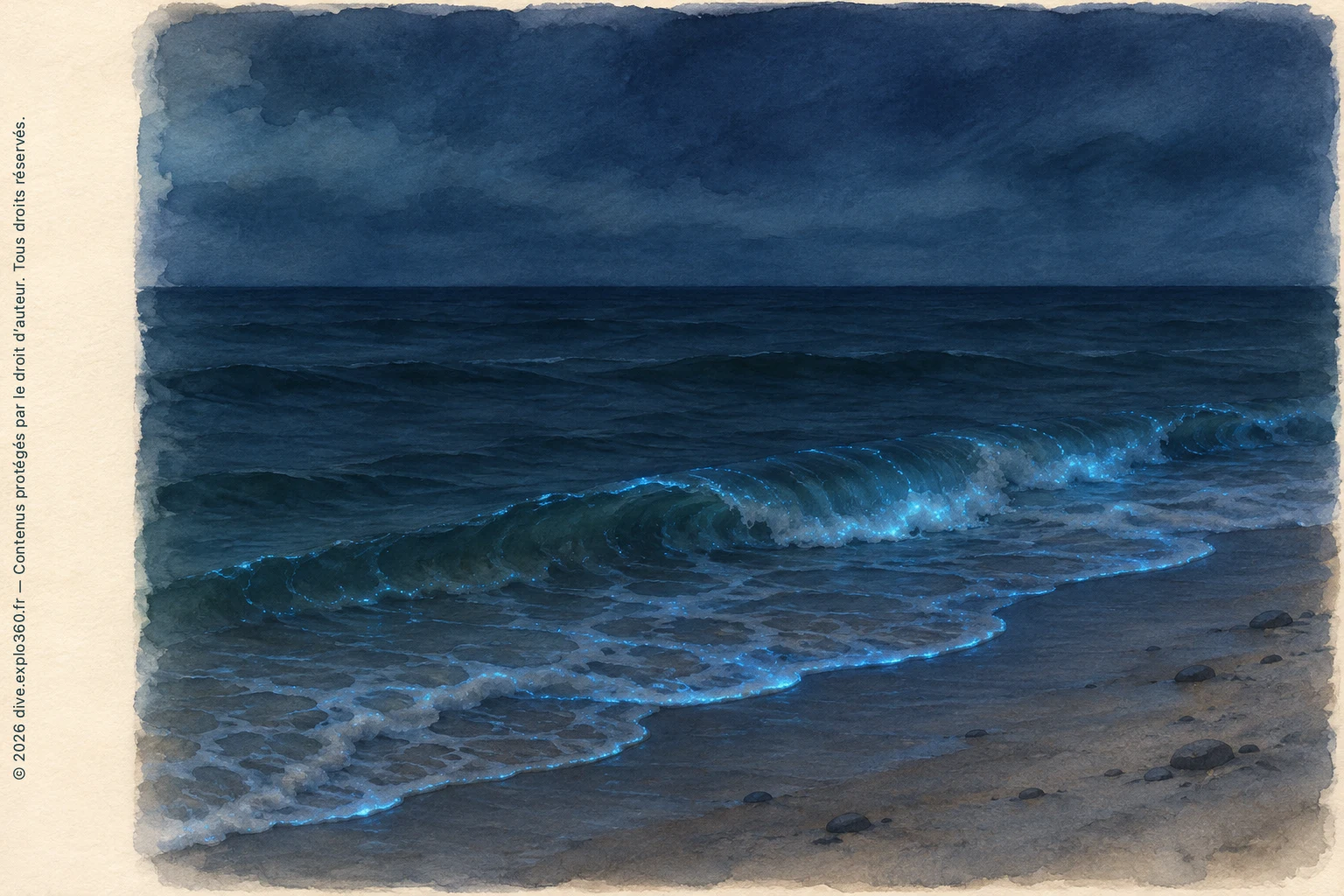
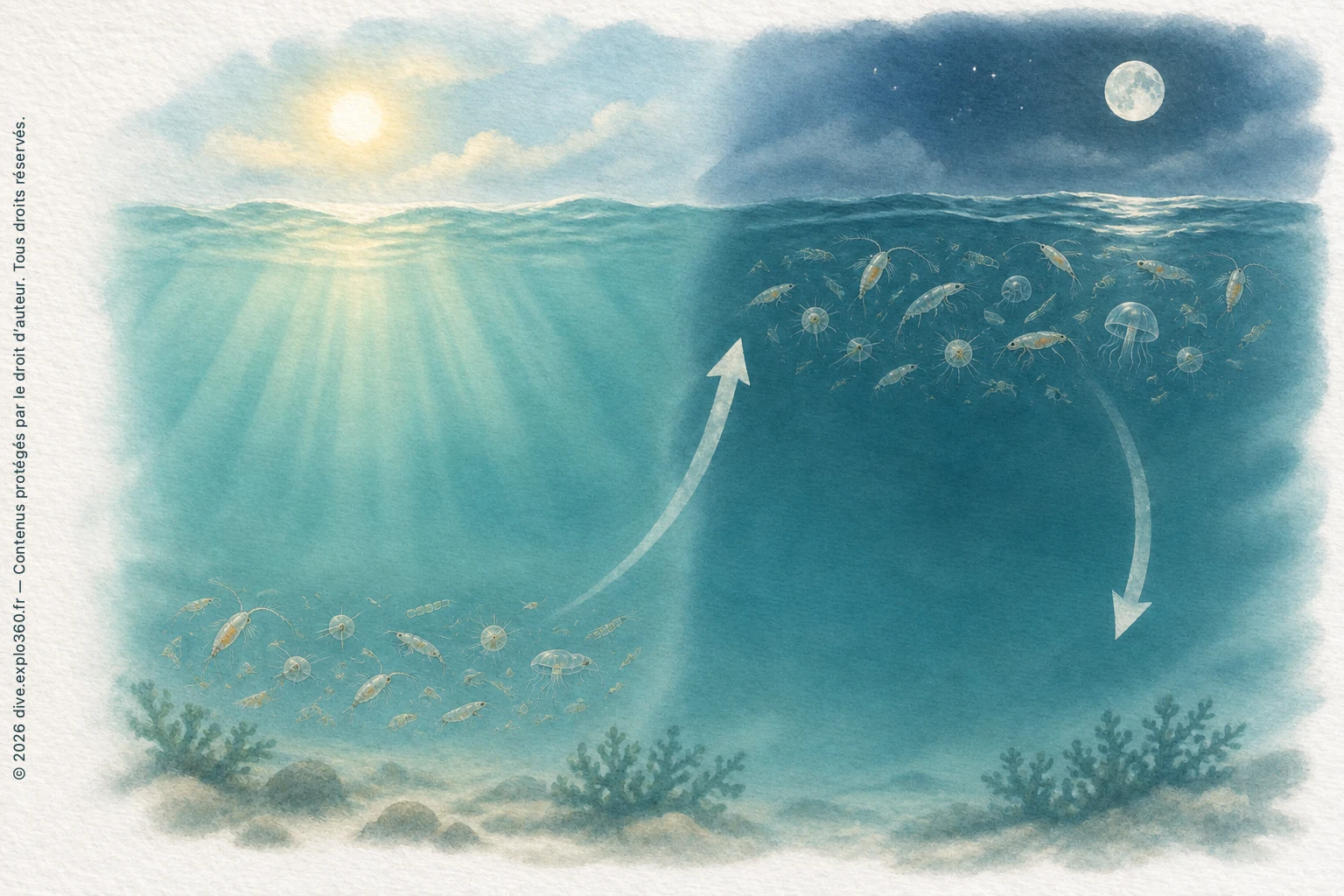
A vast migration begins each evening
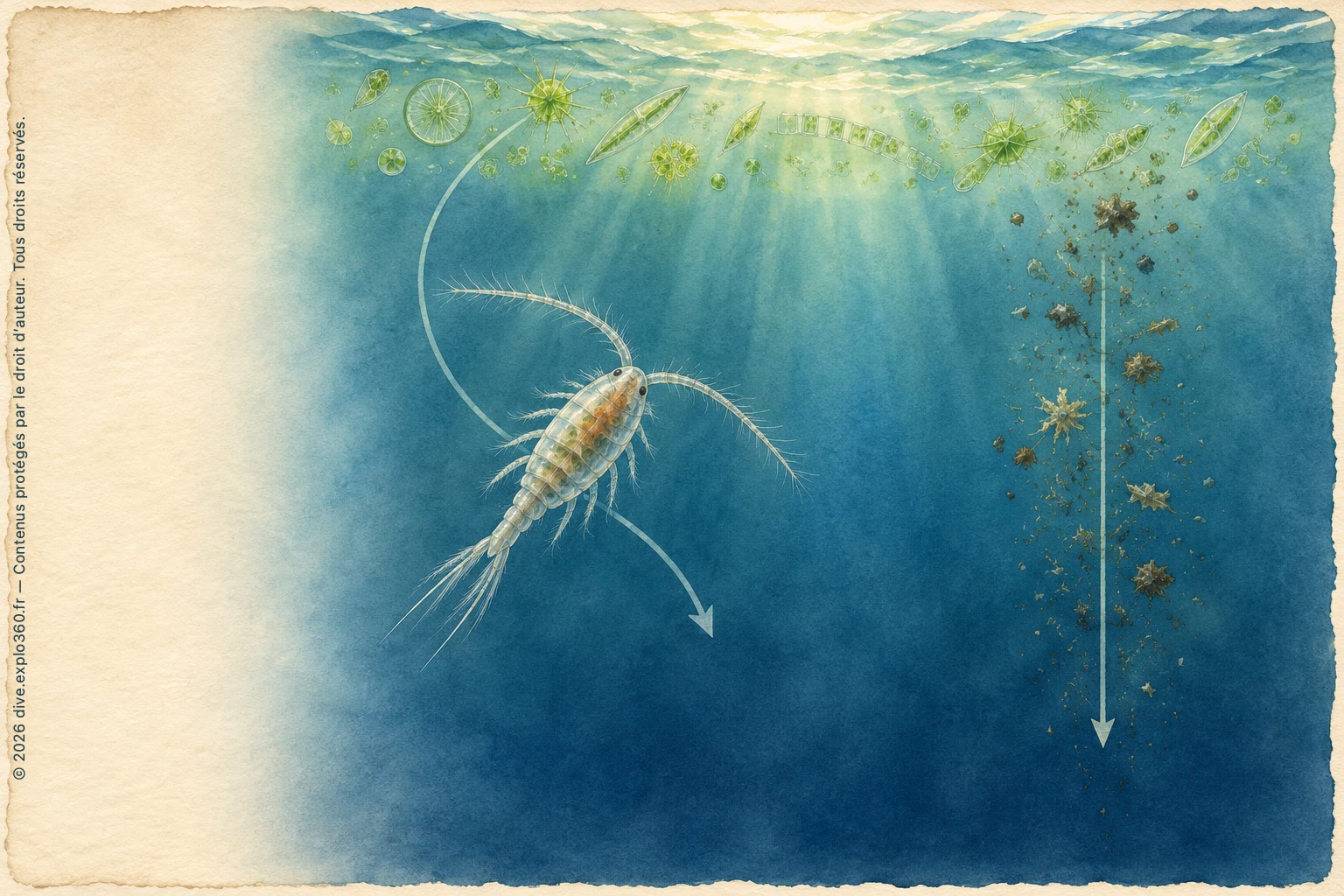
Copepods and other zooplankton can stay in deeper water during the day and rise in the evening. Near the surface, they find food such as phytoplankton, which includes tiny algae.
A migration that feeds the depths
Phytoplankton use light to turn dissolved carbon into part of their own bodies. A copepod that eats them and swims down carries some of that carbon into deeper water. It can release carbon there through respiration or waste, or pass it on to a predator that eats it. Sinking particles carry carbon down under gravity, too.