Dusk on the reef

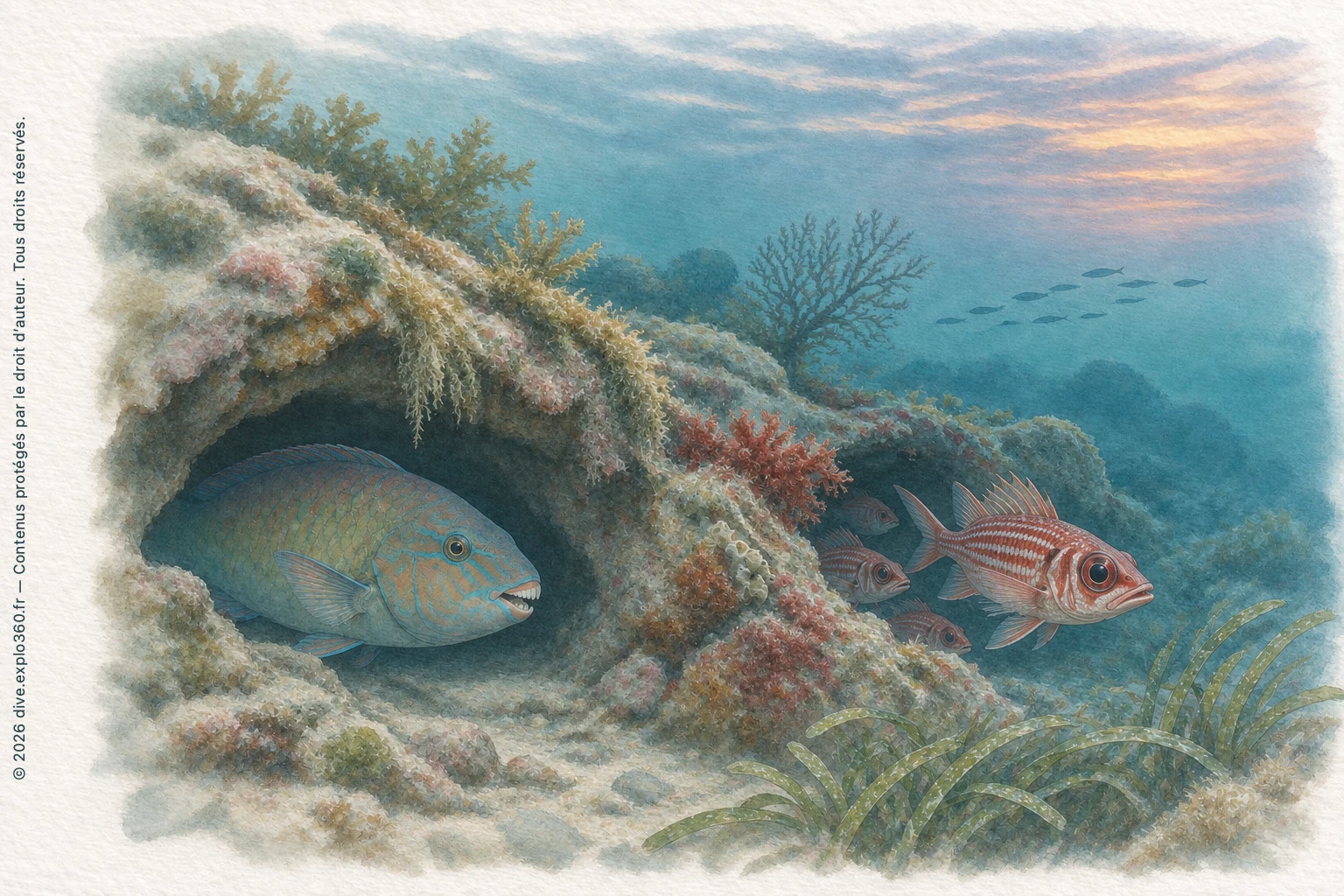
At dusk, parrotfish typically stop feeding and head for shelter. Some species spend the night in a mucus cocoon. Soldierfish and squirrelfish often leave the cavities they occupied by day. Different feeding schedules let these fish use the same stretch of reef.

One shelter, two visits. Imagine watching a cavity just before sunset and again an hour later. Which animals went in? Which came out?
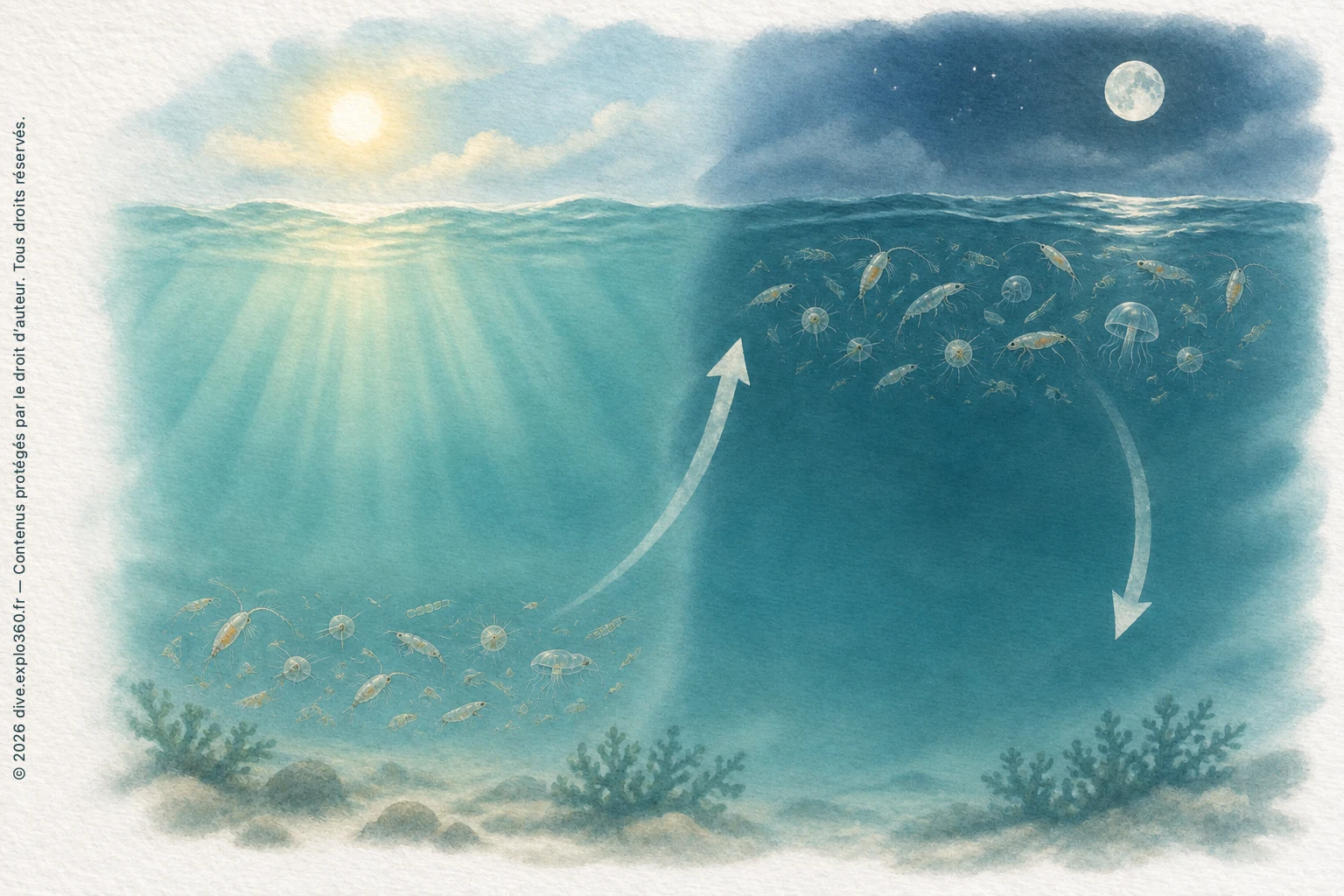
Day–night diagram: zooplankton deeper by day and near the surface by night.
The arrows show daily vertical migration, rising at dusk and descending at dawn. © dive.explo360.fr — All rights reserved. Reproduction requires permission.

A vast migration begins each evening

Many copepods and krill travel between depths on a daily cycle. In the most familiar pattern of diel vertical migration, they spend the day in deeper water, rise at dusk and descend around dawn.

A migration that feeds the depths

Phytoplankton fix dissolved inorganic carbon into organic matter through photosynthesis. That carbon passes to the animals that eat them. A migrant that feeds near the surface and then descends can release carbon at depth through respiration or excretion, or transfer it to a predator. Particles also carry carbon down as they sink. How much each process contributes varies, and some of the carbon reaching deeper water can return to the surface.
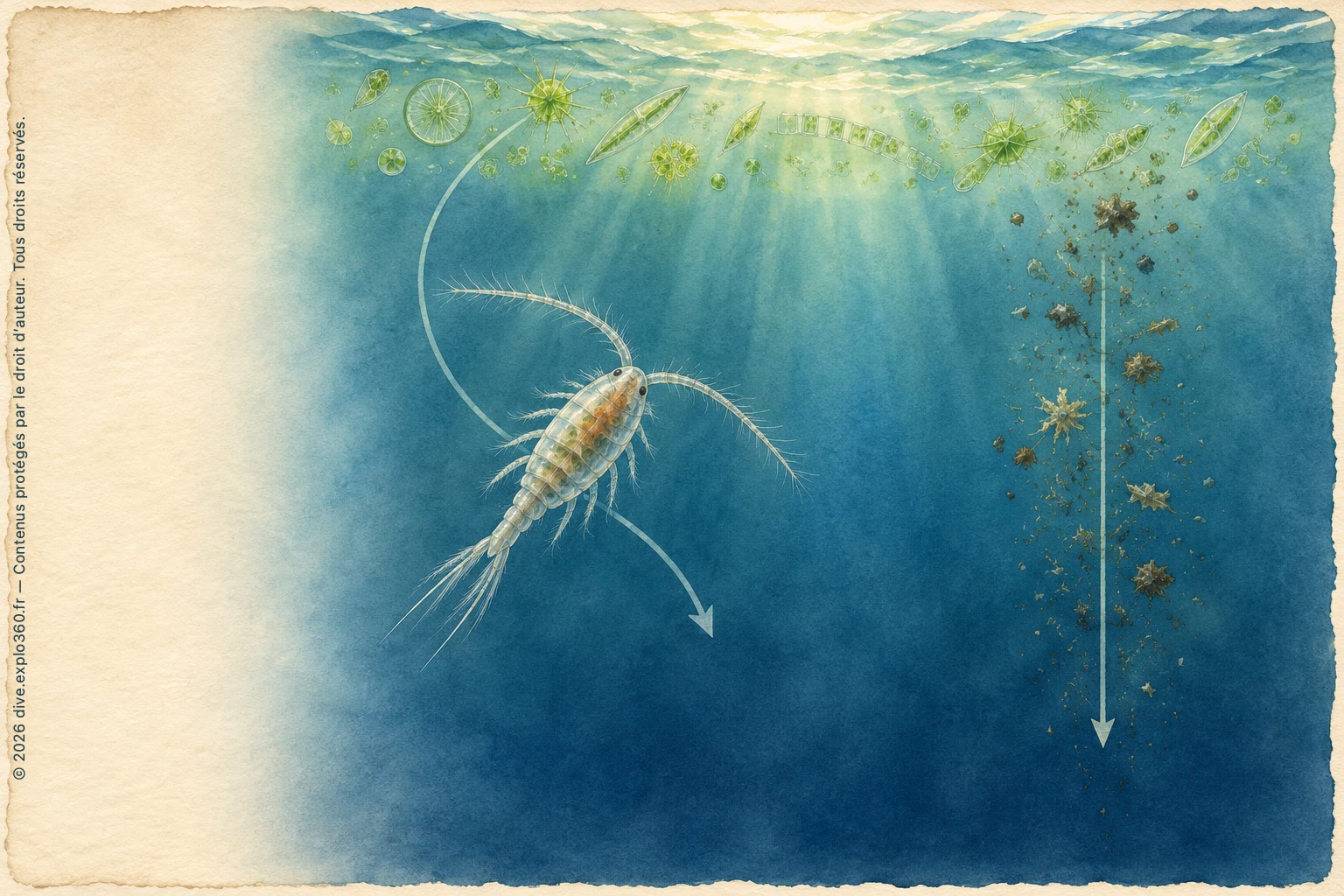
A copepod swims towards deeper water as particles sink beside it.
Active transport by migrating animals complements the sinking of particles into deeper waters. © dive.explo360.fr — All rights reserved. Reproduction requires permission.

Night reshuffles prey and predators

Follow a copepod. As it swims up, it leaves dark water, reaches a rich feeding area and may encounter a different set of hunters.

When zooplankton change depth, the chance of encountering predators also changes. Fish and squid may follow concentrations of prey. The risk depends on the hunter’s sensory abilities, the light and the prey’s behaviour.

Continue reading

AMIGANSEAU CONTENT

The rest of this article is for subscribers

Log in with your AMIGANSEAU licence to continue reading.

All active AMIGANSEAU licences give access to the full article.

Explore the same world

Explore further