Autumn arrives under the sea too
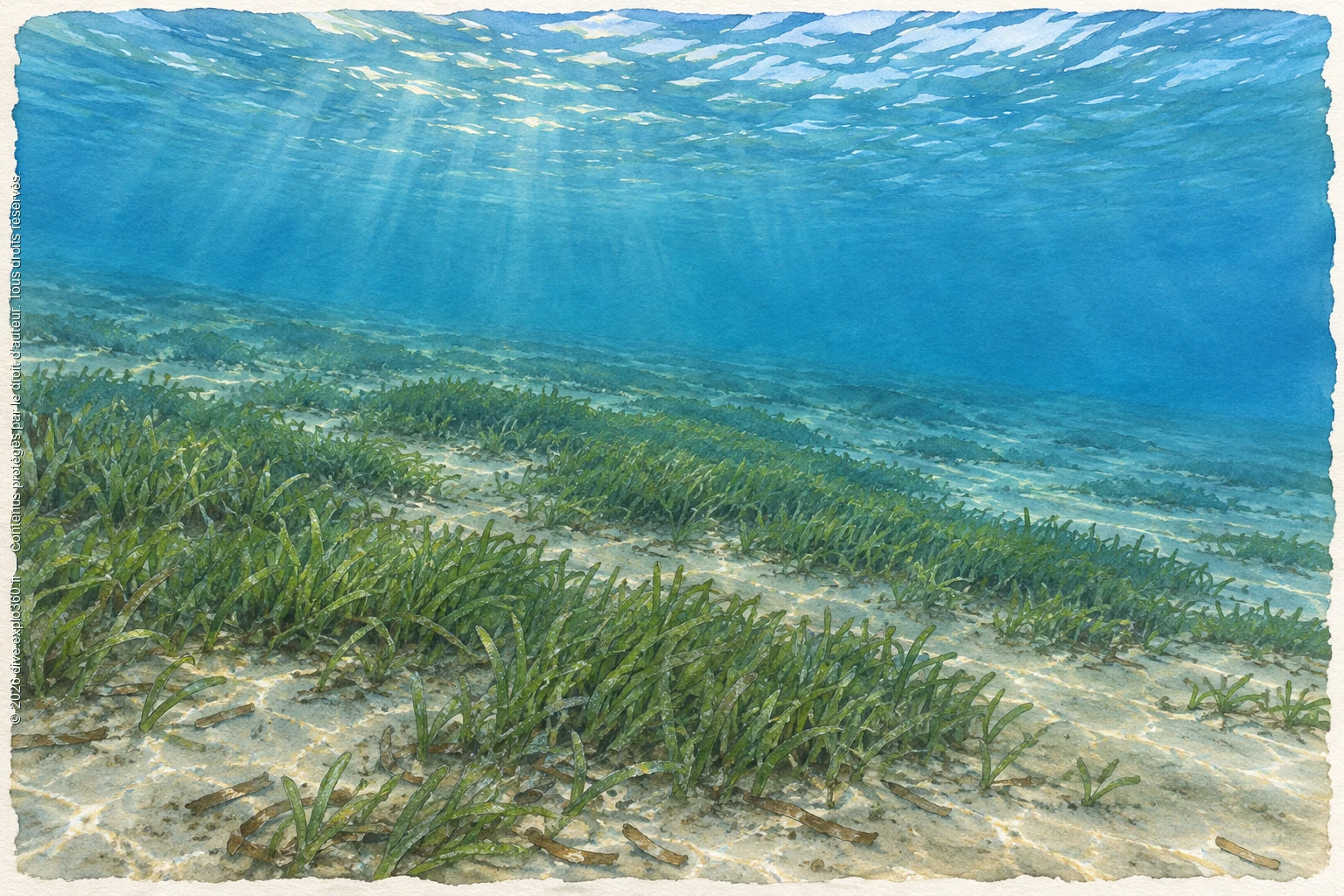
In spring and early summer, Posidonia meadows often have abundant foliage. Long green leaves sway in the waves and currents.
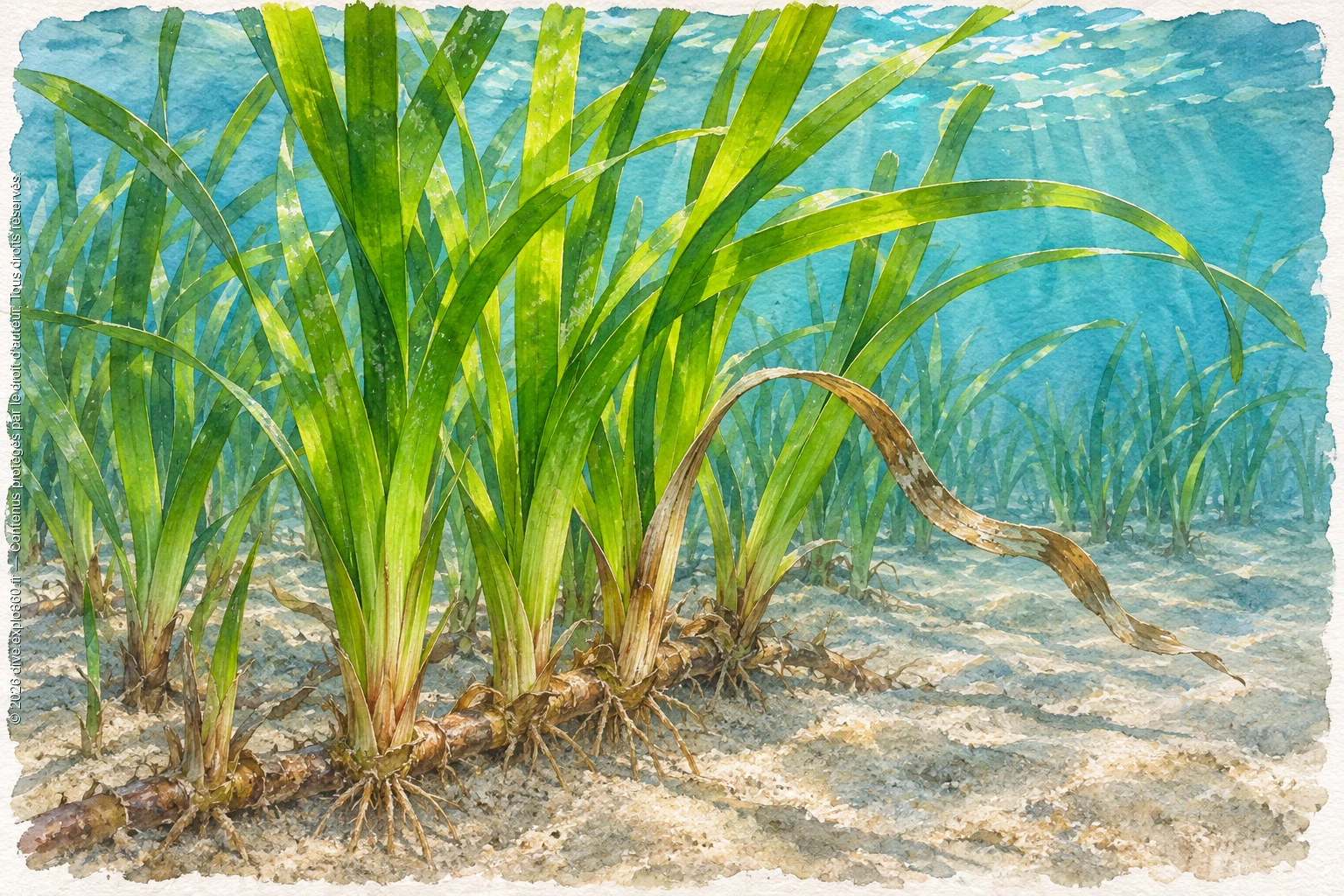
Like leaves on trees, Posidonia leaves age and die. The plant replaces them throughout the year, with a pronounced seasonal rhythm in the Mediterranean. The oldest leaves are generally on the outside of each shoot. They turn yellow, then brown, and detach.
Leaf loss is often greatest in late summer and autumn. Storms strip and scatter leaves that are already weakened. The plant itself survives. Its stems, called rhizomes, stay in place, the roots anchor it to the seabed and new leaves grow from living shoots. The meadow can therefore maintain its structure from one year to the next.
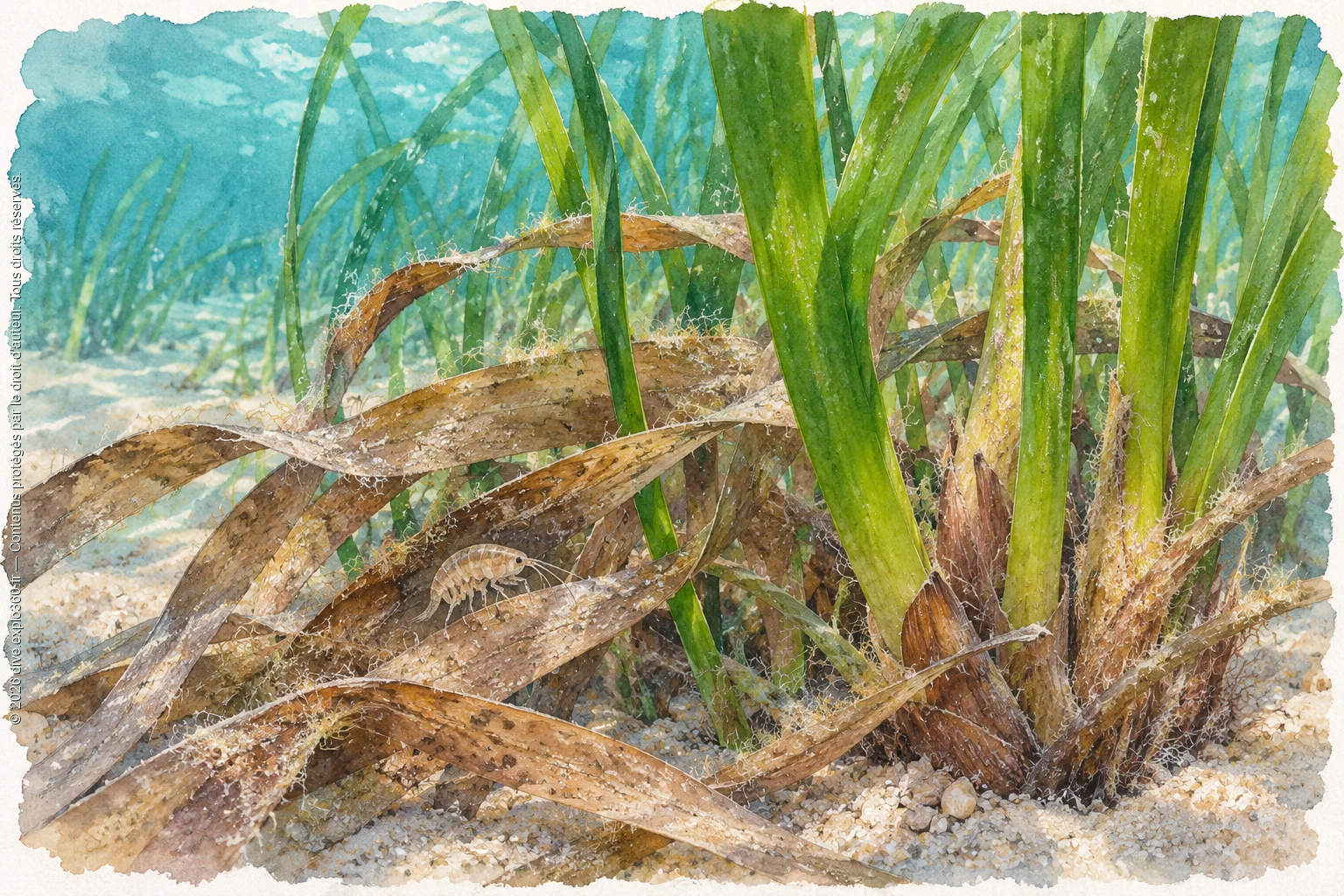
A diver can see green leaves, older blades with brown tips and detached pieces lying between shoots. Some of those fragments will never leave the meadow.
The first journey takes place among the leaves
A dead leaf falls into the meadow. The shoots slow water movement locally and can trap debris. Leaves collect among the rhizomes or lie on the sediment. Other fragments settle in small hollows, where they may be partly buried by sand or exposed to the current.
Small crustaceans move among the debris, worms live in the organic-rich sediment and microbes colonise the decaying leaves. Some animals shelter in the litter. Others feed on the microorganisms and organic particles that accumulate there, rather than on the leaf itself.
A fallen leaf can offer shelter and carry food long after it stops growing. Posidonia leaves can take months or longer to break down. That helps explain why so many leaves reach Mediterranean beaches with their shape still recognisable.
Why do the leaves take so long to decay?
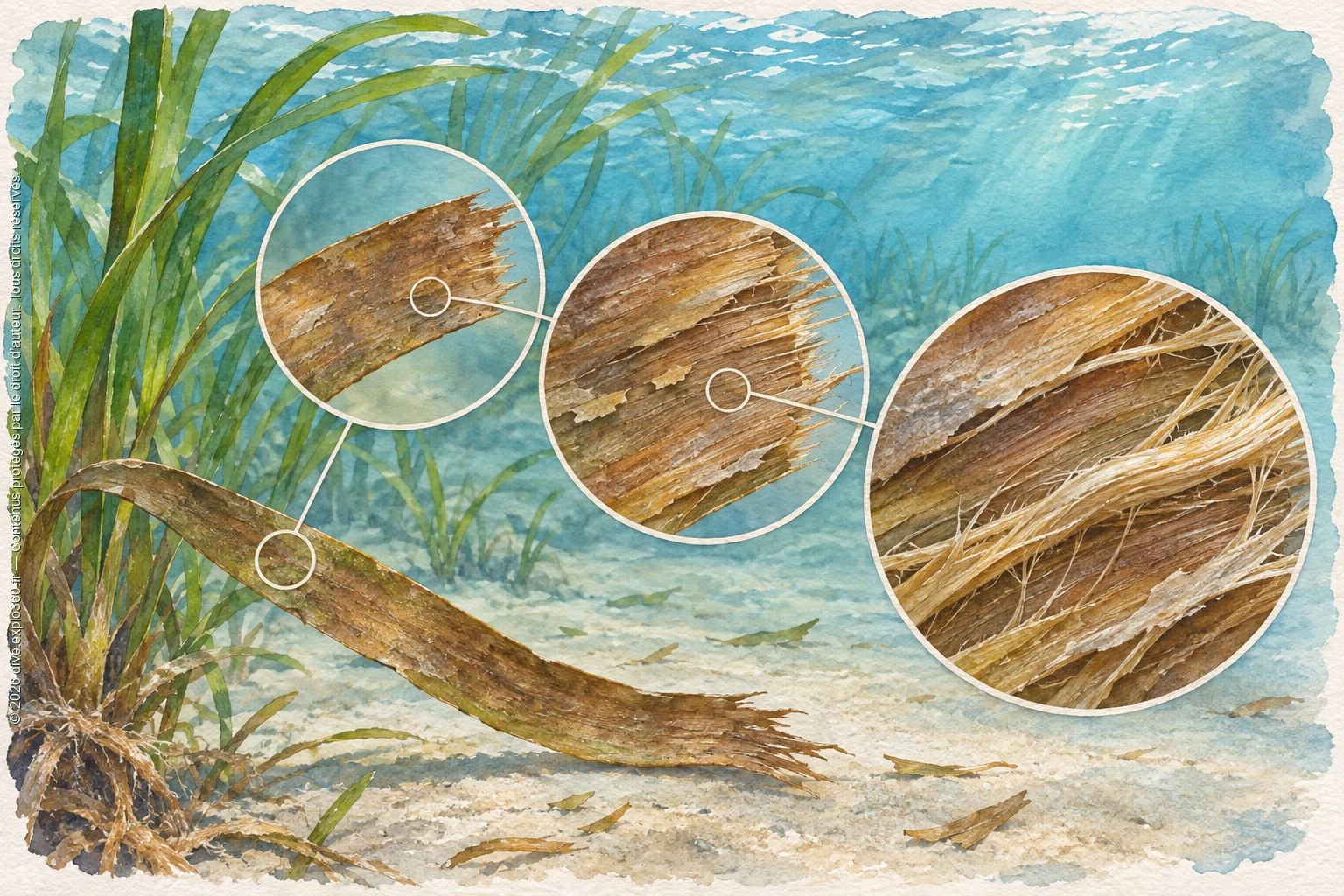
Posidonia leaves are long, tough and rich in plant fibres. They contain cellulose and other structural compounds that are slow to break down. Phenolic compounds may also affect decomposer activity. A dead leaf can keep its shape as a brown ribbon even after travelling several kilometres.
Bacteria and marine fungi colonise the tissues and transform the organic material. Water movement, contact with sand grains and animal activity all help tear the leaves apart. Long ribbons become shorter strips and eventually smaller particles.
Storms carry leaves to other habitats
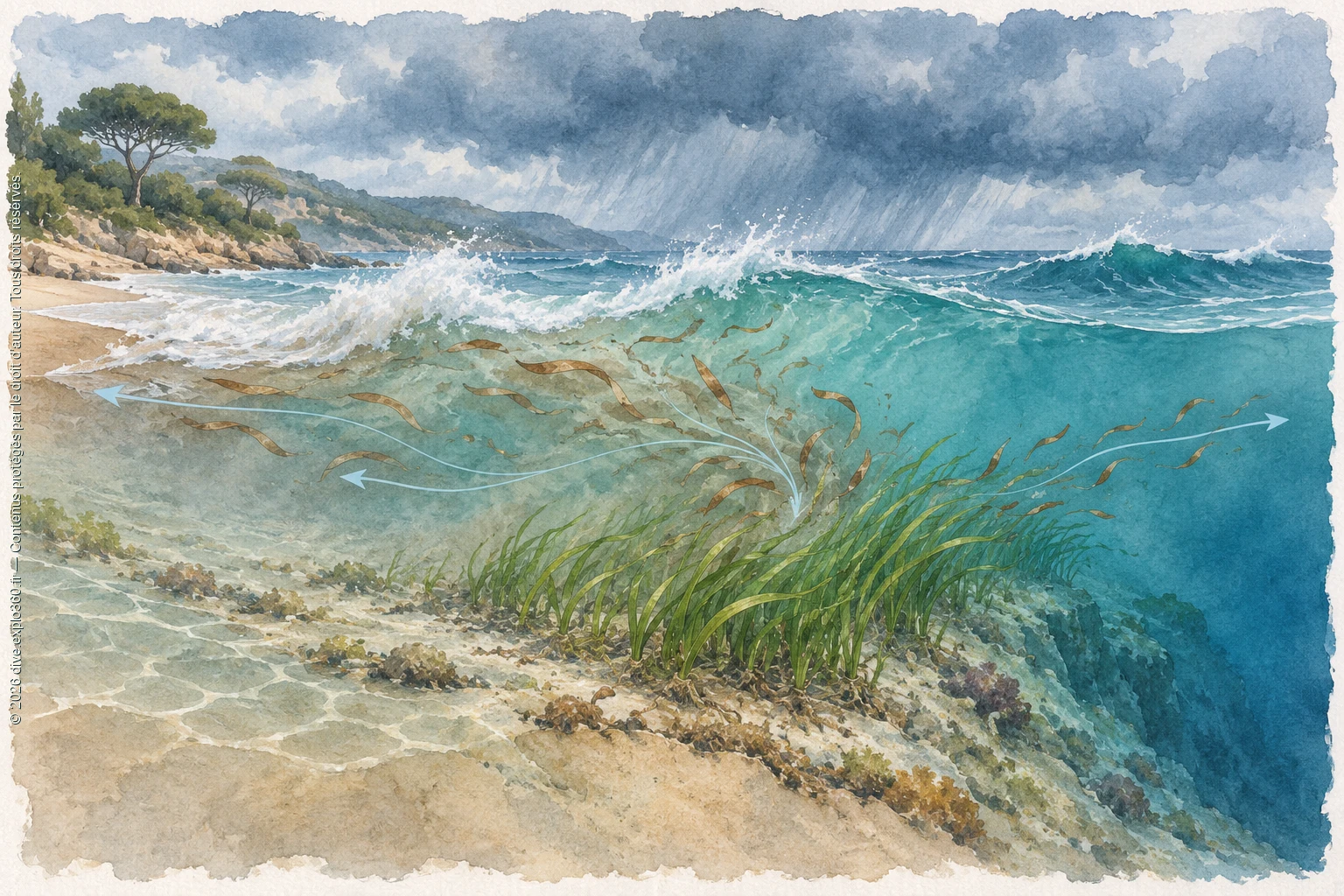
Heavy swell can lift dead leaves from between the shoots and sweep them out of the meadow. They slide over sand, collect in hollows and move again with the current.
Some accumulate on nearby soft seabeds. Others reach rocky areas or depths well beyond those where living Posidonia grows. This material carries organic matter from shallow coastal waters to deeper habitats. Animals in or on the sediment can use it directly or indirectly. Some leaves reach submarine canyons that receive debris from the continental shelf.
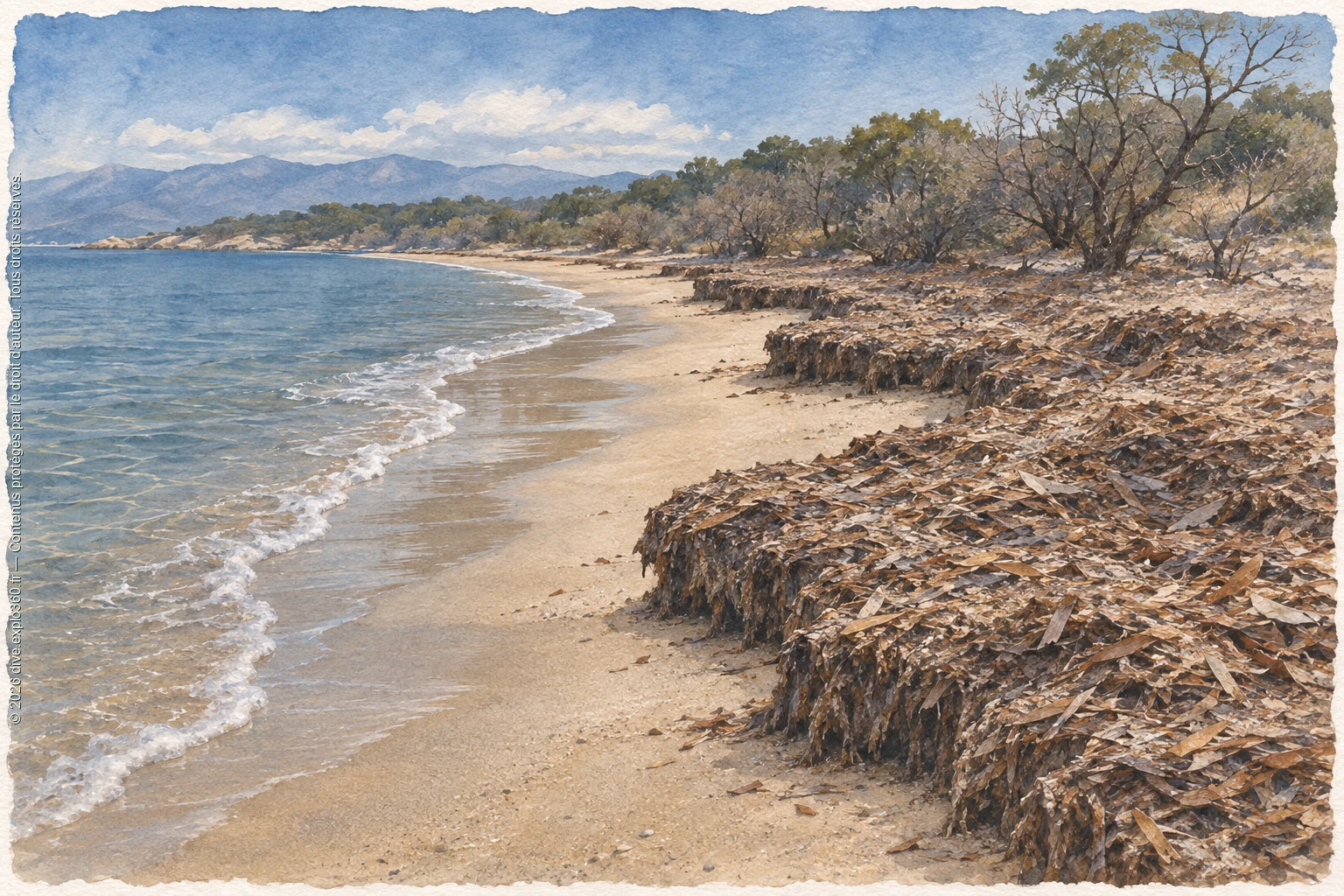
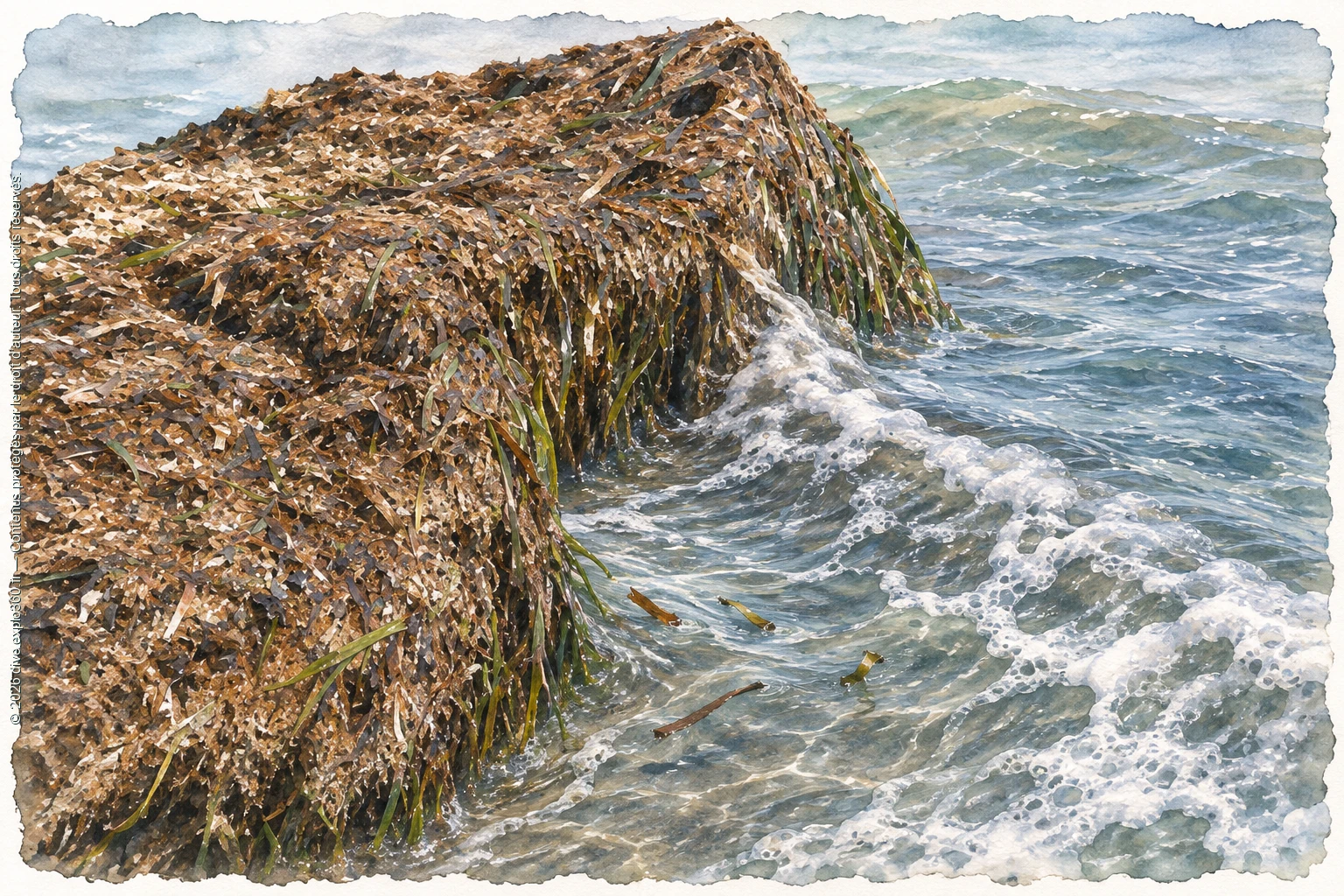
The beach is the most conspicuous destination. Waves push leaves up the shore, where they mix with sand and pack down into banks known as Posidonia banquettes.
A bank built by the sea
Each set of waves can add another layer of wet leaves and sand to a banquette. Leaves tangle, catch particles and compact under later deposits. The bank can grow quickly during a storm. The sea can also erode it and rebuild it weeks later.
Some banquettes last only part of the year. Others persist across several seasons. In some places, they can be several metres thick.
Banks of leaves can absorb some wave energy and help retain sand. Their influence on erosion varies with the shape and exposure of the beach, the amount of litter and the severity of storms. Severe storms can still erode a beach. The leaves also provide habitat for another community.
Life beneath the dead leaves
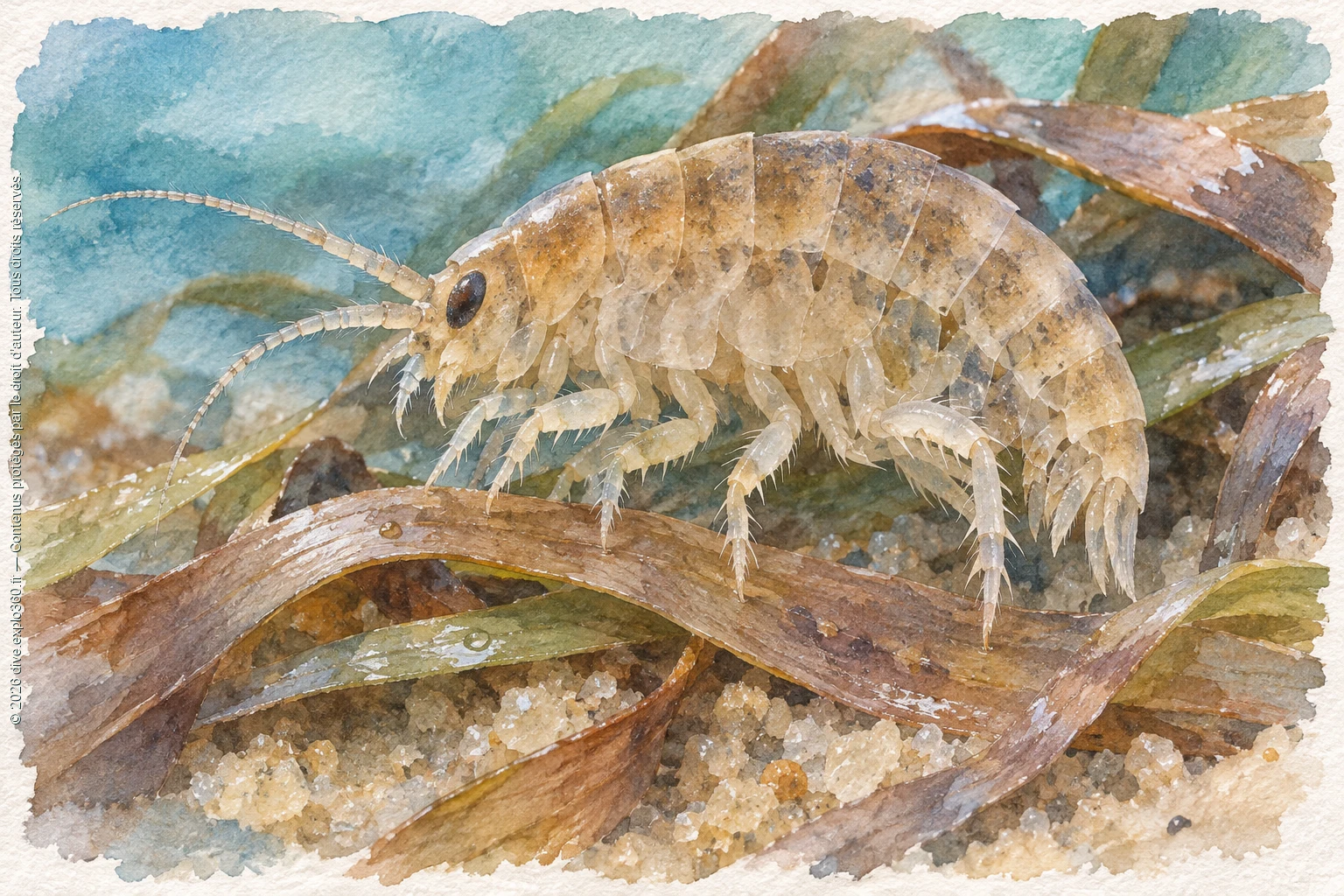
The top of a banquette can dry quickly in the sun while leaves a few centimetres below stay damp. Small invertebrates live in those sheltered layers, including amphipods that use organic debris as food.
Sandhoppers, small jumping crustaceans, move through the litter and across damp sand. They help fragment and consume the stranded material. Insects and their larvae also use decaying leaves. When predators on the beach eat these animals, material from the meadow passes into the food web on land.
Back to sea
Another storm reaches the beach. Waves pull fragments from the banquette and return leaves that have been on land for weeks to the water. They may settle further along the shore, reach the shallows or be swept offshore. These trips can happen repeatedly, and leaves may pass through several habitats before fully breaking down.
Some fragments are consumed. Others settle into sediment or move into deeper water. How long their carbon stays there depends on how quickly the material decomposes and whether it is buried. Some of the carbon quickly passes into other organisms or back into the water. Some can stay buried much longer.
Dead roots and rhizomes have a different fate. They can accumulate for much longer in the matte, the layer of sediment, roots and rhizomes beneath the meadow. Leaves carried out of the meadow and onto beaches are more exposed to transport and decomposition.
Small brown balls on the sand
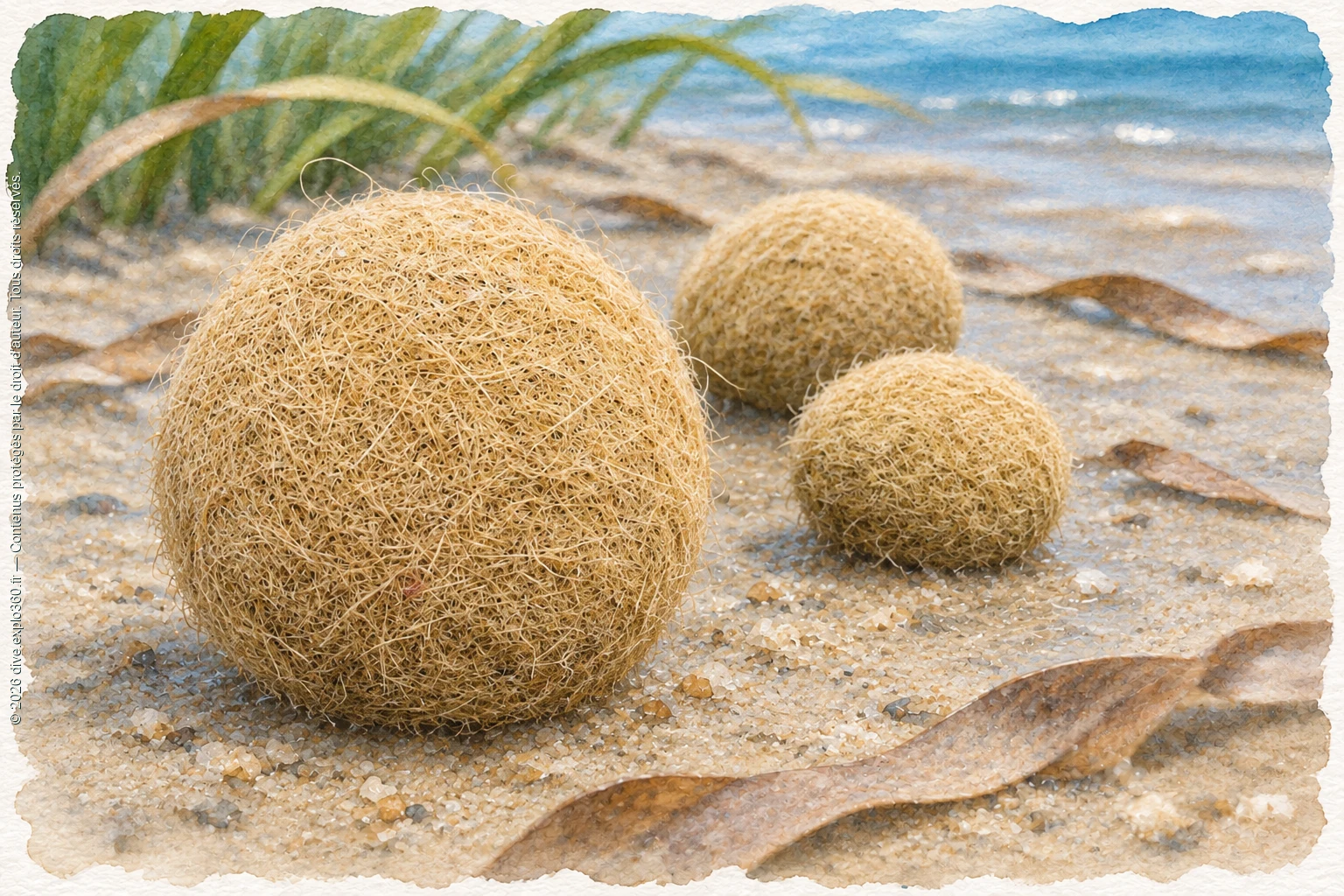
Among the stranded leaves, beachgoers sometimes find light, fibrous brown balls. Some are almost spherical, others elongated or irregular. They are known as egagropiles. They form when water movement tangles fibres from dead parts of Posidonia. Waves and currents roll them across the seabed, and rubbing helps give them their compact, rounded shape. They can then wash ashore.
They are bundles of dead plant fibres. Pick one up and look closely at the tangled strands. Each ball is another trace of the meadow offshore.
Interactive quiz
Quiz on Posidonia
5 question(s) to test your knowledge.
Interactive quiz
Quiz on Posidonia
Question 1 out of 5Score: 0
How can dead leaves provide food indirectly?
Why can leaf decay speed change after transport?
Why is the presence of a banquette alone insufficient to predict erosion?
What distinction matters for the fate of the carbon?
How do loose Posidonia fibres become a compact ball?
Final result
Quiz completed
correct answers
Conclusion – A dead leaf stays connected to the sea
The wind has dropped. A thick brown ridge still lies on the beach. A few leaves float at the water’s edge. Others have dried on the sand, and the waves are slowly taking some back.
Underwater, the meadows have kept their roots and rhizomes. New leaves keep growing. The fallen leaves have begun a different journey.
Some feed organisms among the debris. Some reach the beach, where they shelter small animals and help retain sand. Others travel to deep seabeds far from the meadow where they grew.
Over time, their tissues break into fragments and the material within them keeps moving through marine and coastal habitats. A dead leaf can no longer capture sunlight. The material it made while alive can still feed organisms and sometimes accumulate in sediment.
Next time a storm washes thousands of brown leaves onto a Mediterranean beach, think of the living plants offshore. Those leaves are the visible traces of a meadow renewing itself and of a journey that goes far beyond it.
Scientific references
Seasonal leaf fall, transport by currents, the formation of banquettes and feeding by detritivores are well documented. The proportion that remains in the meadow, reaches beaches, decomposes or reaches the deep seabed varies with the site, the season and water movement.