How the plant replaces its leaves
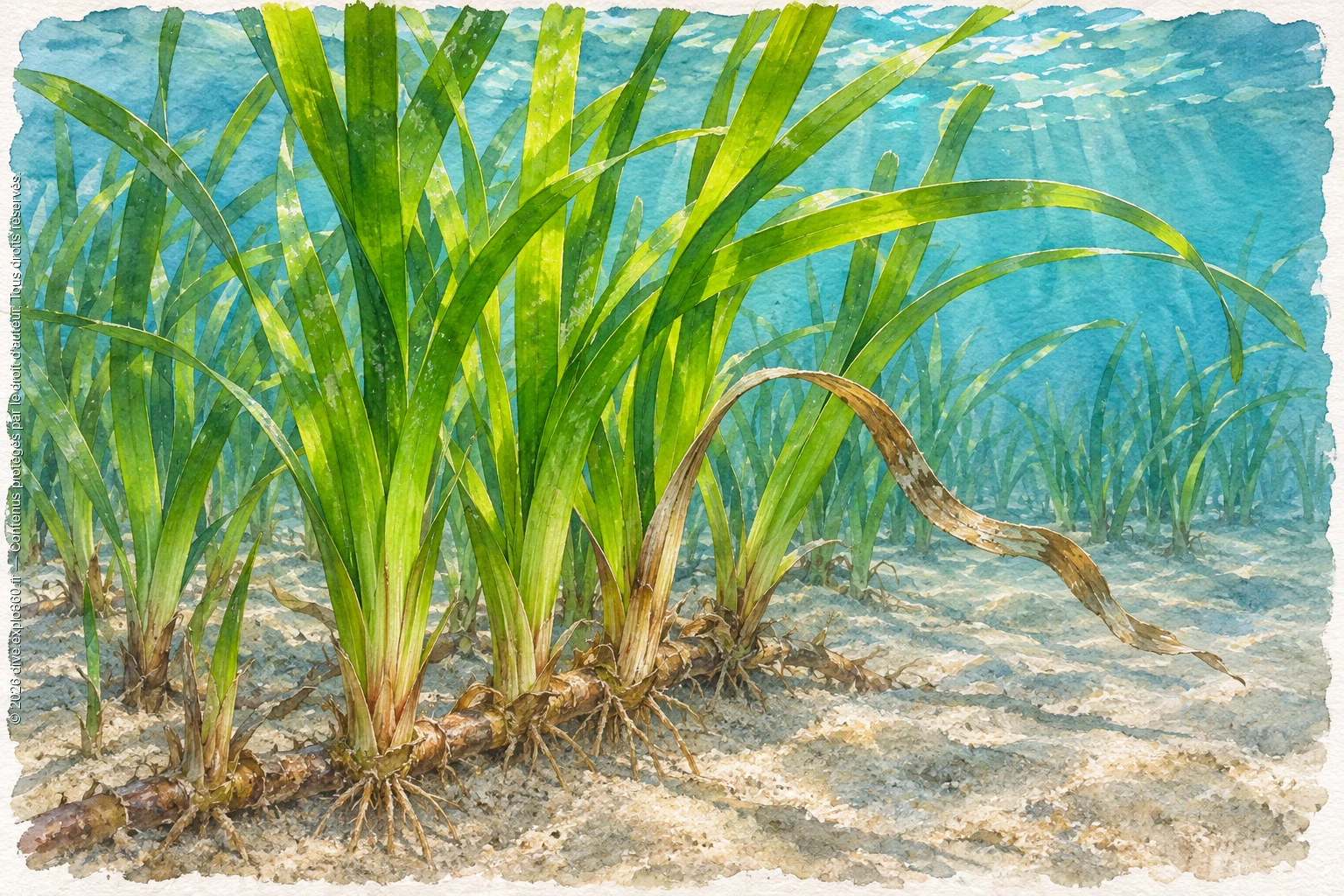
Posidonia renews its leaves throughout the year. Older leaves on the outside of each shoot turn yellow, then brown, and fall off, often in large numbers in late summer and autumn. Storms help scatter them. Roots and rhizomes stay anchored while new leaves grow.
Debris trapped underwater
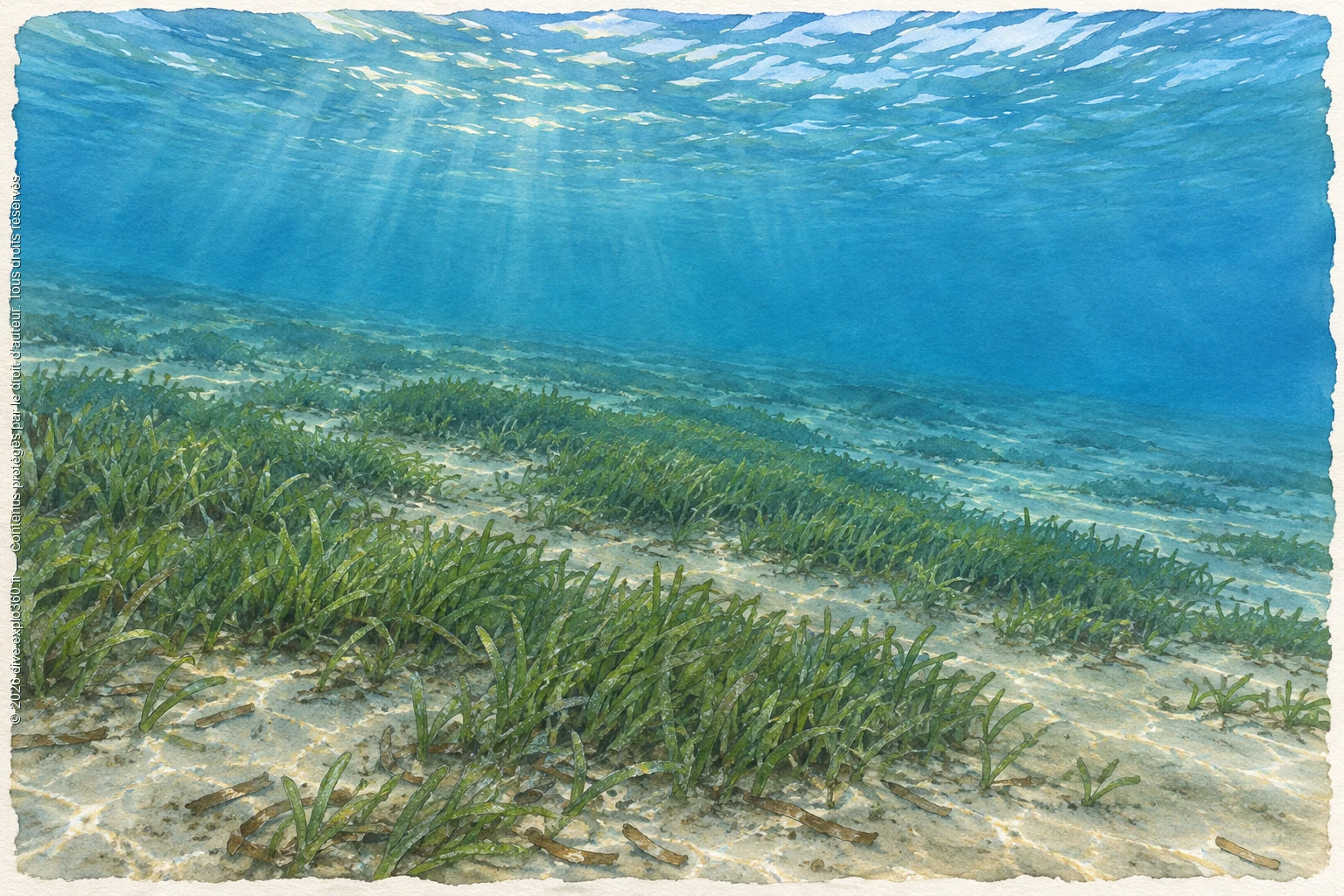
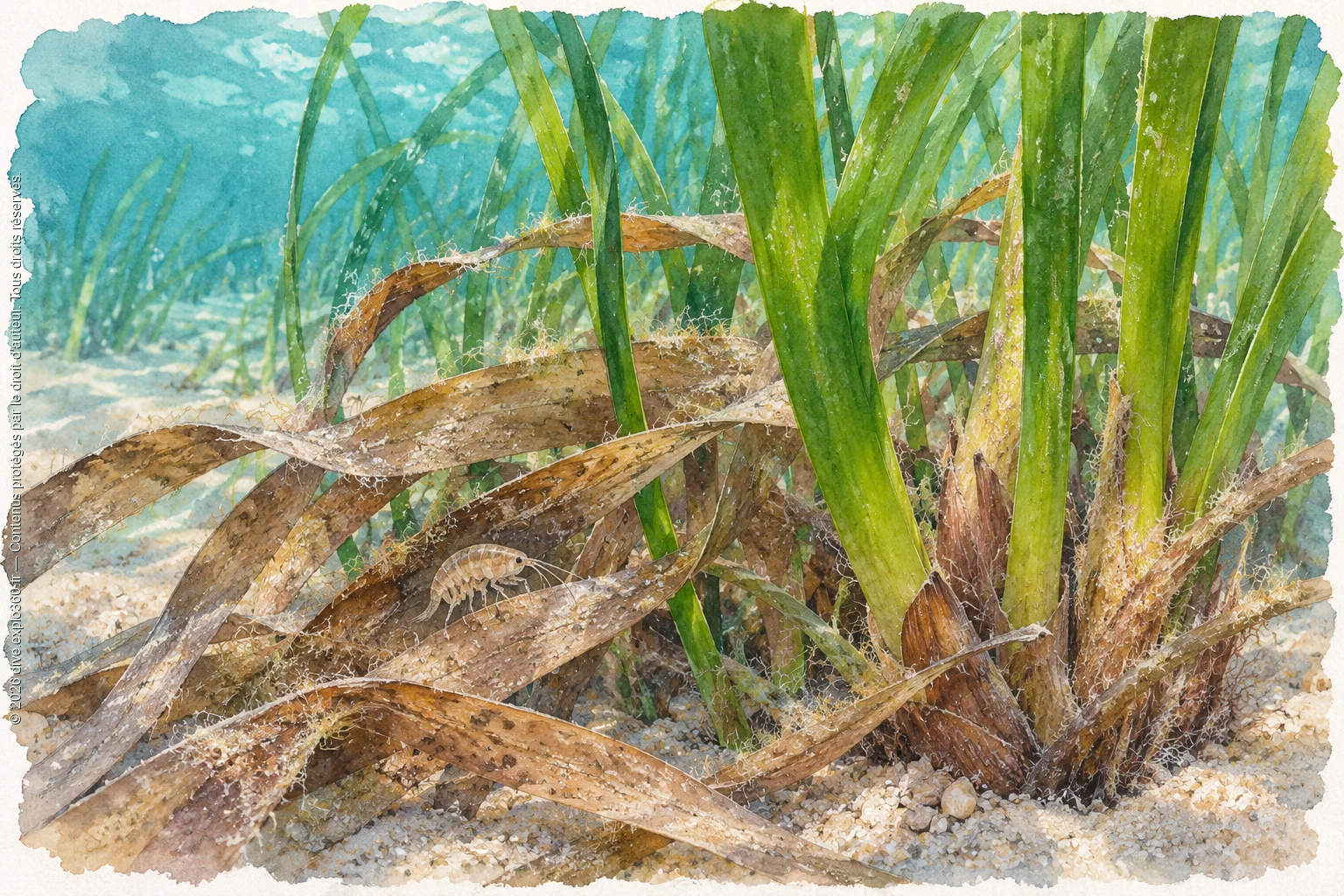
The shoots slow the current and catch fallen leaves. Some settle around the stems, called rhizomes, or become partly buried in sand. The litter gives small animals a place to hide. Some feed on the microbes and scraps that collect on the leaves. It can take months for the leaves to break down.
Slow decay
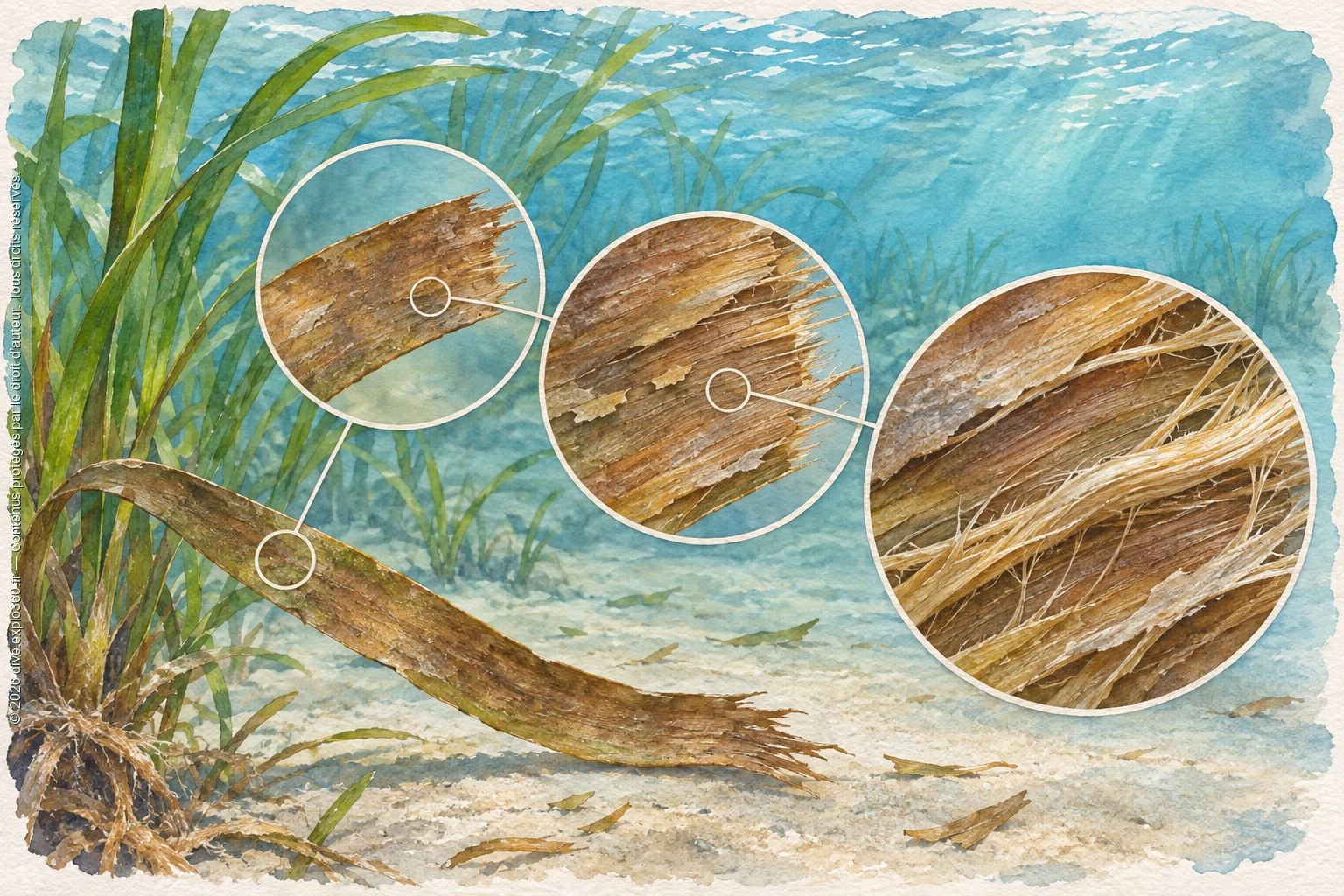
Cellulose and other fibres make the ribbons tough. Phenolic compounds can affect decomposers. Bacteria and fungi transform the tissue, while rubbing against sand, moving water and animals break the leaves into pieces. Temperature, oxygen and burial change the rate of decay.
Waves scatter the leaves
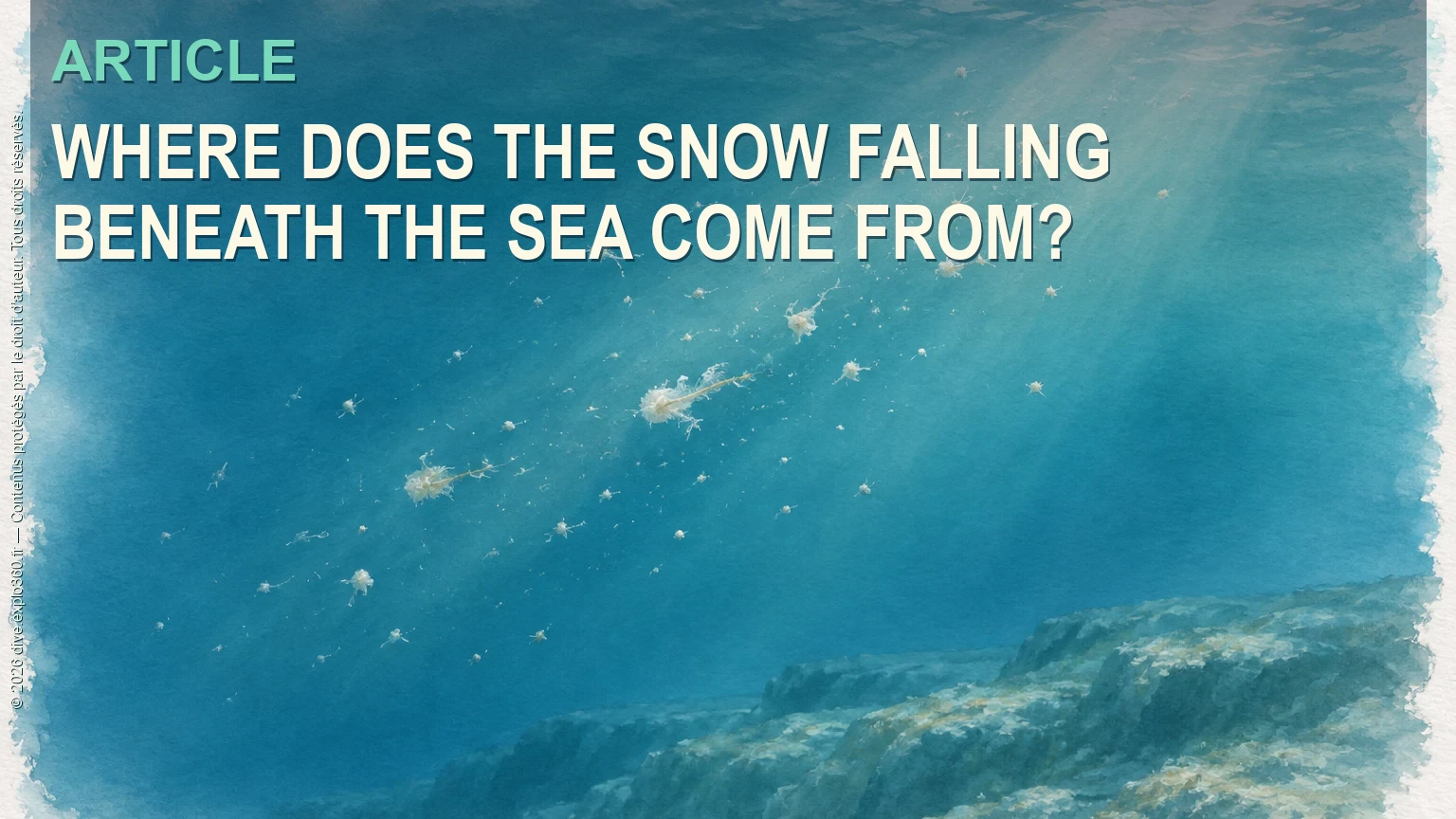
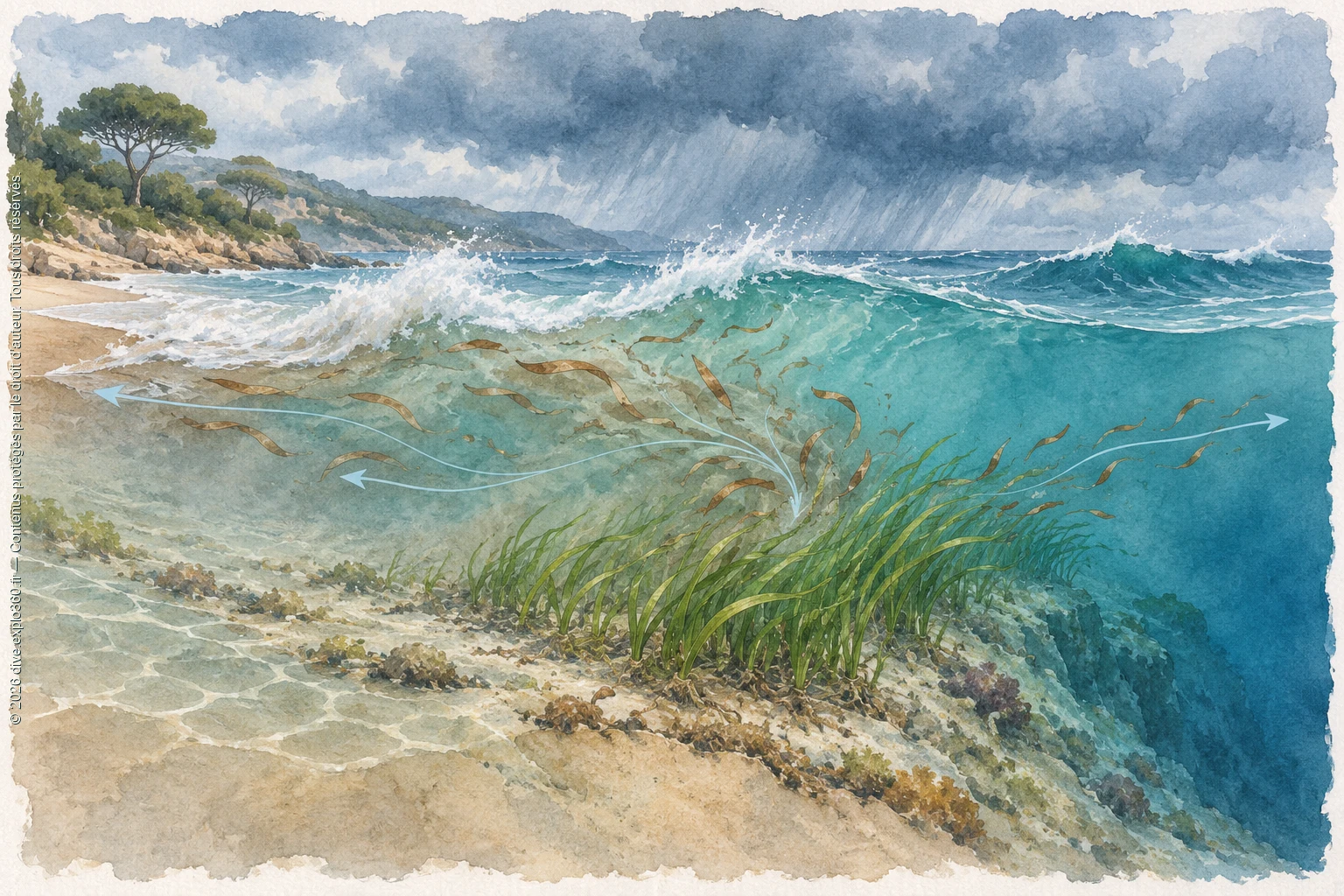
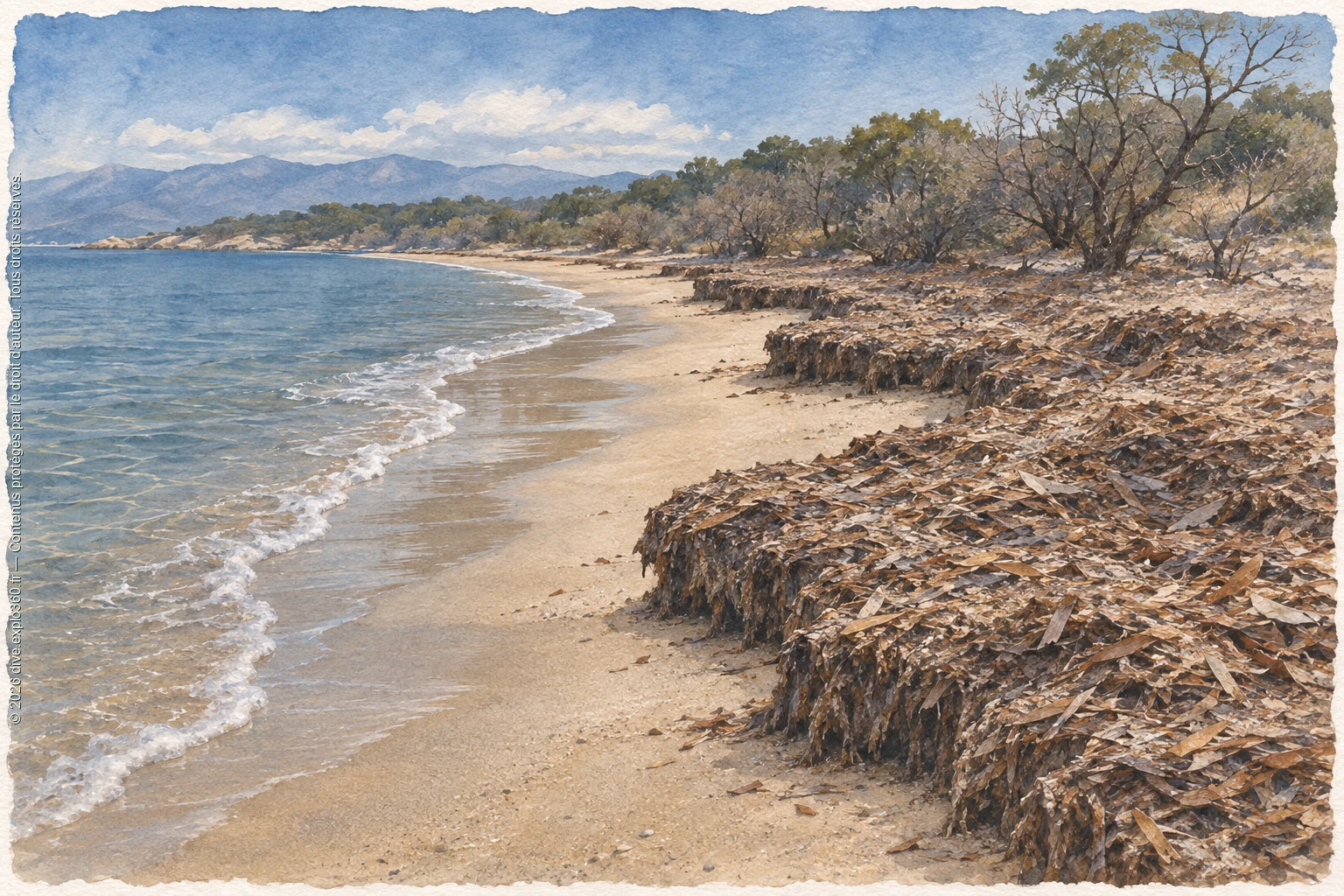
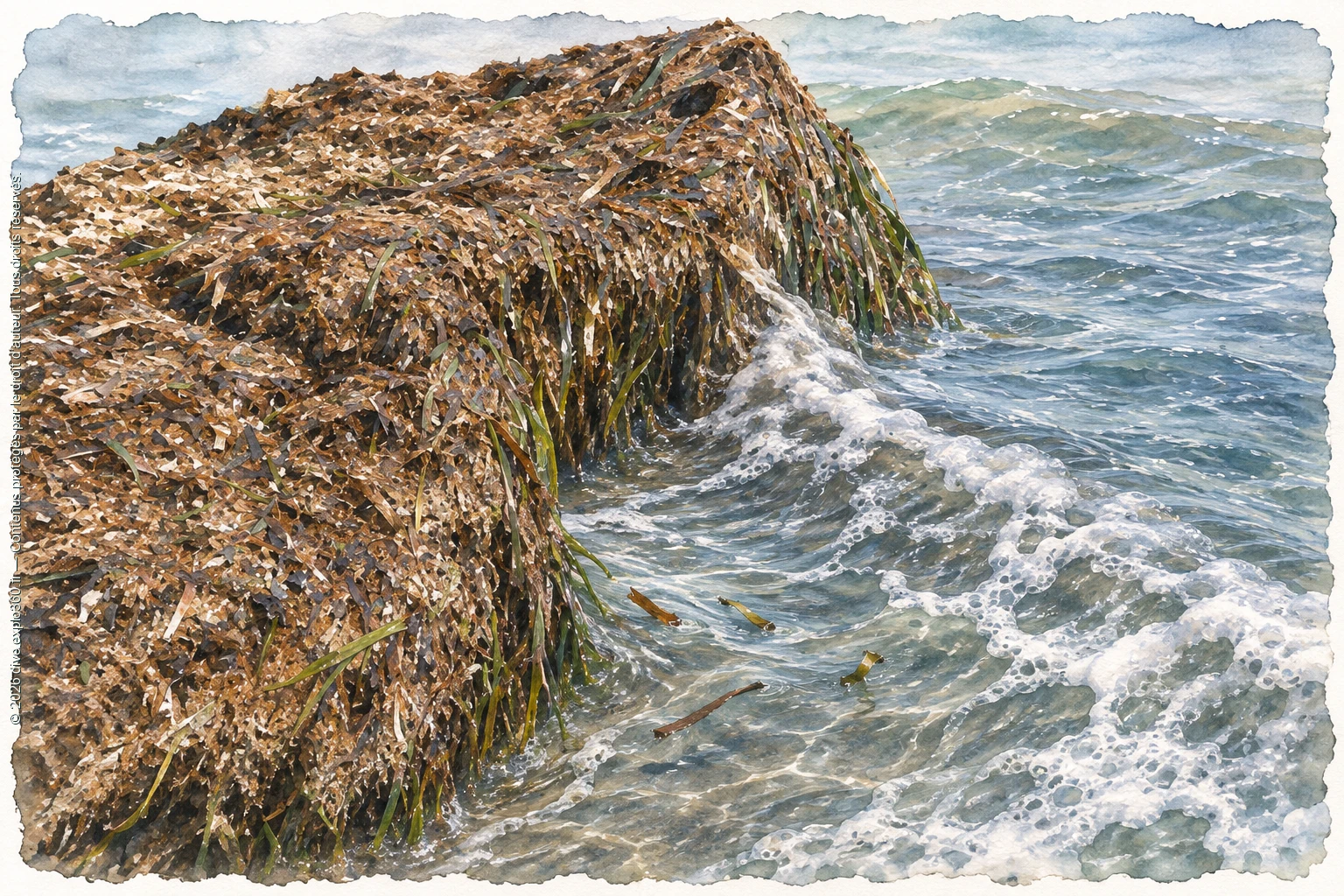
Heavy swell can lift dead leaves. They settle on sandy or rocky seabeds, sometimes reaching submarine canyons where they supply organic matter to animals. Others accumulate on the beach, mixing with sand to form banks called banquettes.
How a banquette builds up
Waves bring in more leaves and sand, pressing the older layers down. A banquette can grow in a storm, wash away and build up again. Some last several seasons. The bank can take some of the force out of the waves and trap sand, depending on the shape of the beach and how exposed it is.
Life in the damp layers
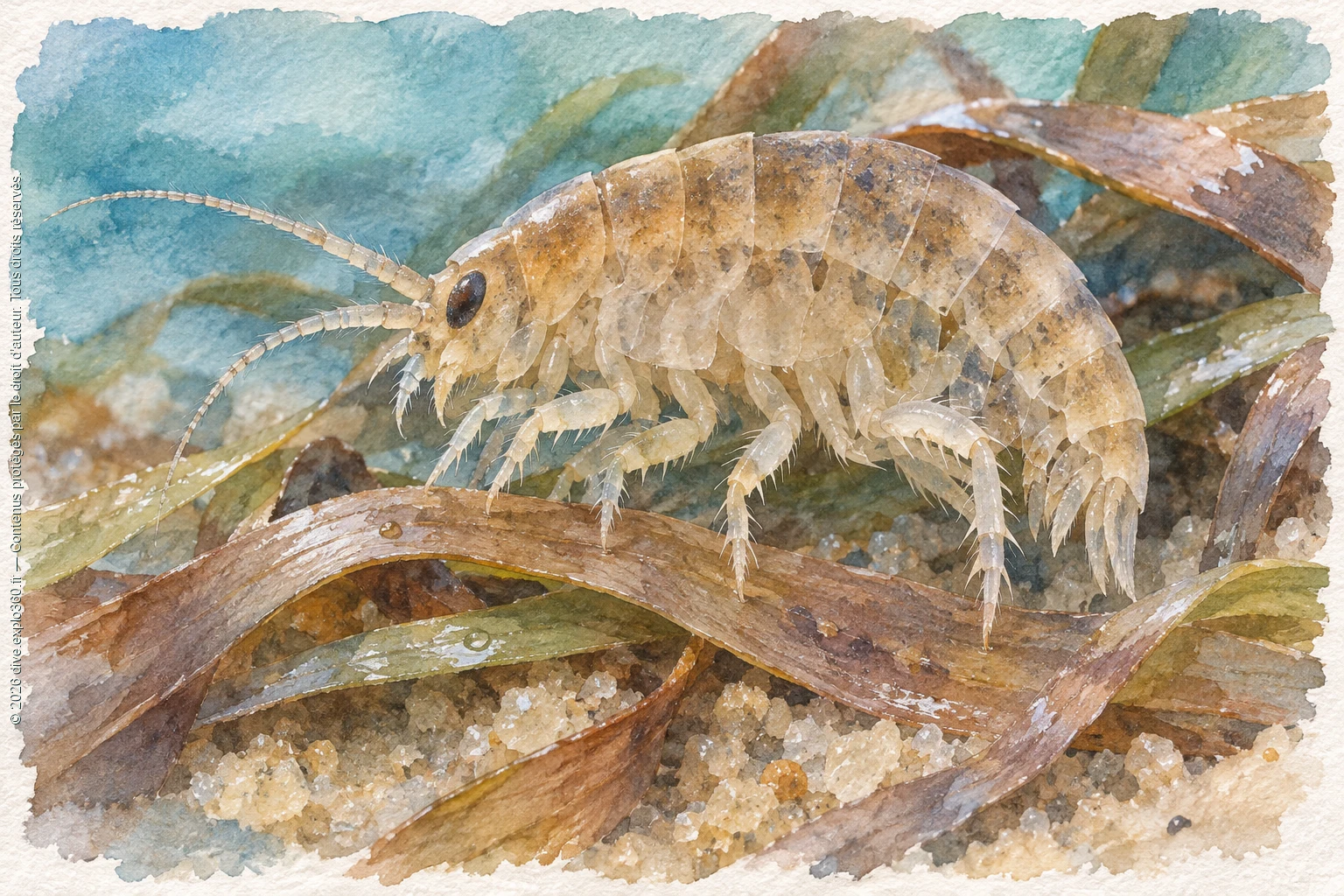
Below the dry leaves, the banquette can stay damp. Amphipods such as sandhoppers, as well as insects and their larvae, use the debris and can feed predators. Material from the sea enters coastal food chains. Bacteria and fungi break the leaves down. Carbon can return to the environment as CO₂ or remain in fragments and sediment.
Between the shore and the sea
The next storm can take leaves off the beach and carry them along the shore, into shallow water or farther out to sea. Animals can eat them, microbes can break them down, or fragments can be buried, keeping some carbon in the sediment. Beneath the meadow, dead roots and rhizomes build up in a layer called the matte and can stay there much longer.
Fibres rolled into balls
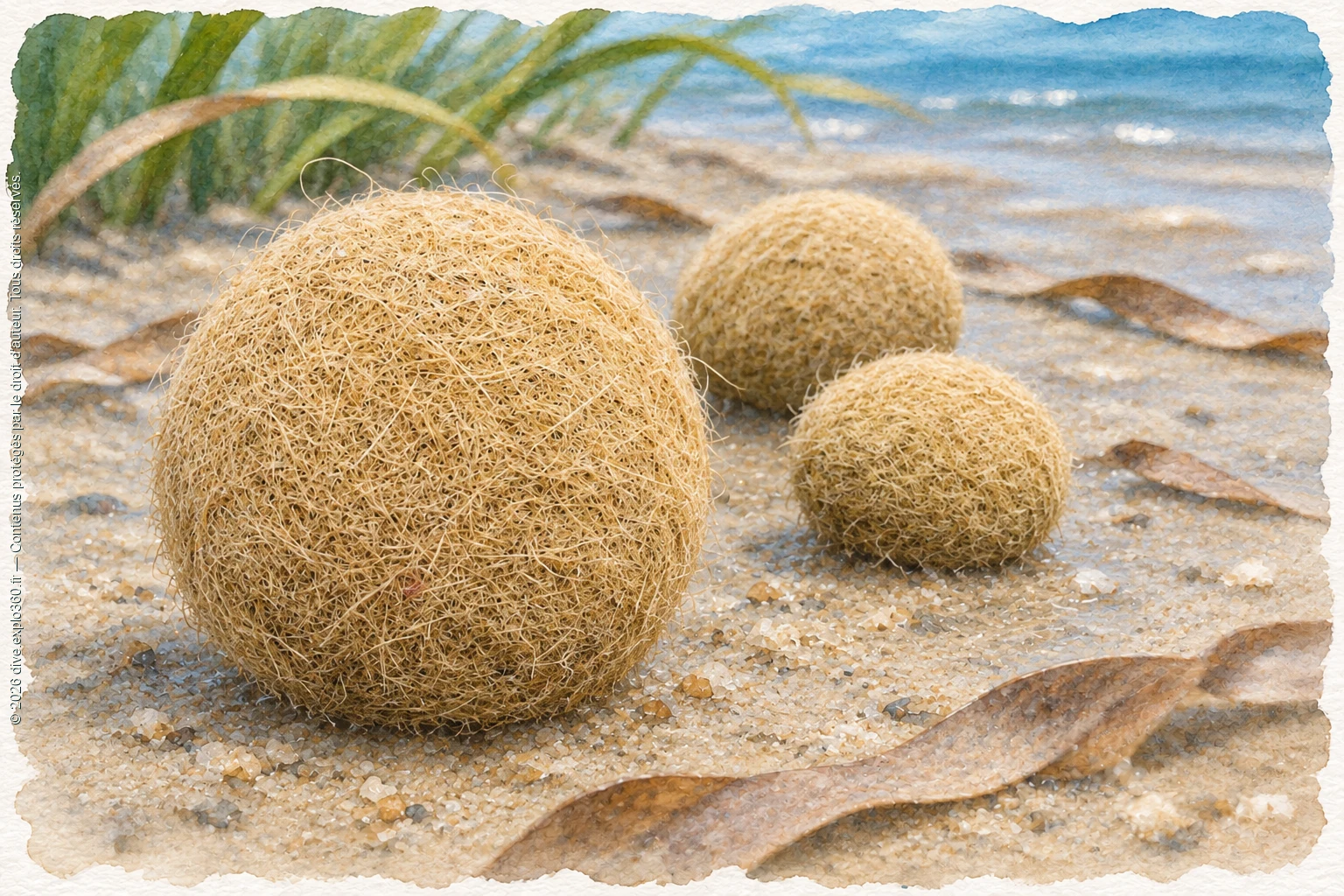
Waves and currents tangle Posidonia fibres and roll them over the seabed. Rubbing helps form round or oval balls called egagropiles. These balls of dead fibres can wash up on the beach.
Interactive quiz
Quiz on Posidonia
5 question(s) to test your knowledge.
Interactive quiz
Quiz on Posidonia
Question 1 out of 5Score: 0
Why do some leaves stay in the meadow?
Why do leaves keep their shape for so long?
What is a banquette?
How can a pile of leaves help feed animals that hunt on the beach?
How does the matte differ from a banquette?
Final result
Quiz completed
correct answers
From the meadow to the beach and beyond
A brown ribbon on the beach is a sign that new leaves are growing underwater. The old ones can feed animals, give them shelter or trap sand. As the leaves move and break down, they carry carbon from the meadow to other habitats.
Scientific references
Seasonal leaf fall, transport by currents, the formation of banquettes and feeding by detritivores are well documented. The proportion that remains in the meadow, reaches beaches, decomposes or reaches the deep seabed varies with the site, the season and water movement.