New leaves replace old ones
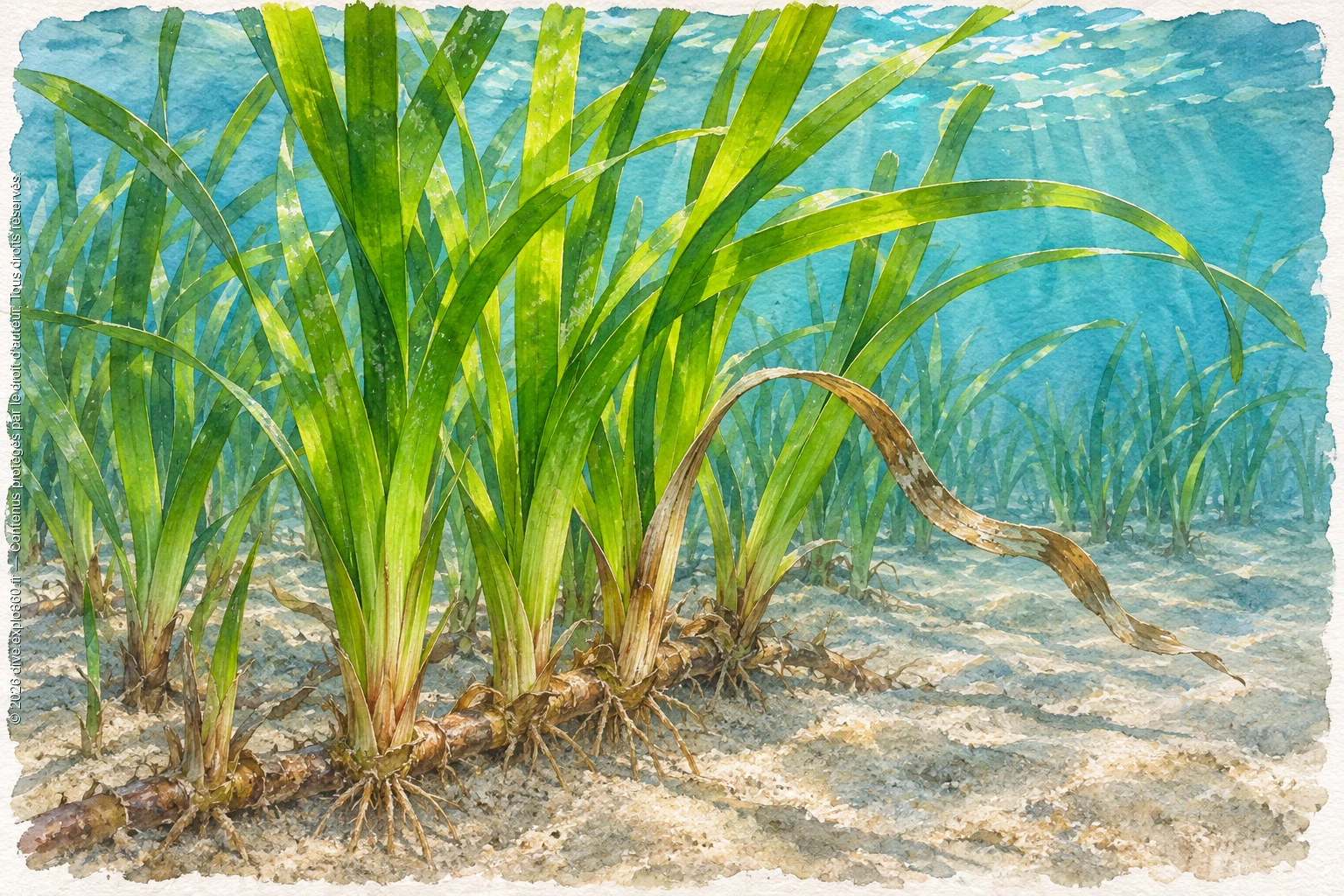
Green leaves grow in bunches. The oldest leaves turn brown on the outside of each bunch. Many fall off in late summer and autumn, especially in rough seas. The roots and stems, called rhizomes, stay in the seabed. New leaves grow.
Shelter in the meadow
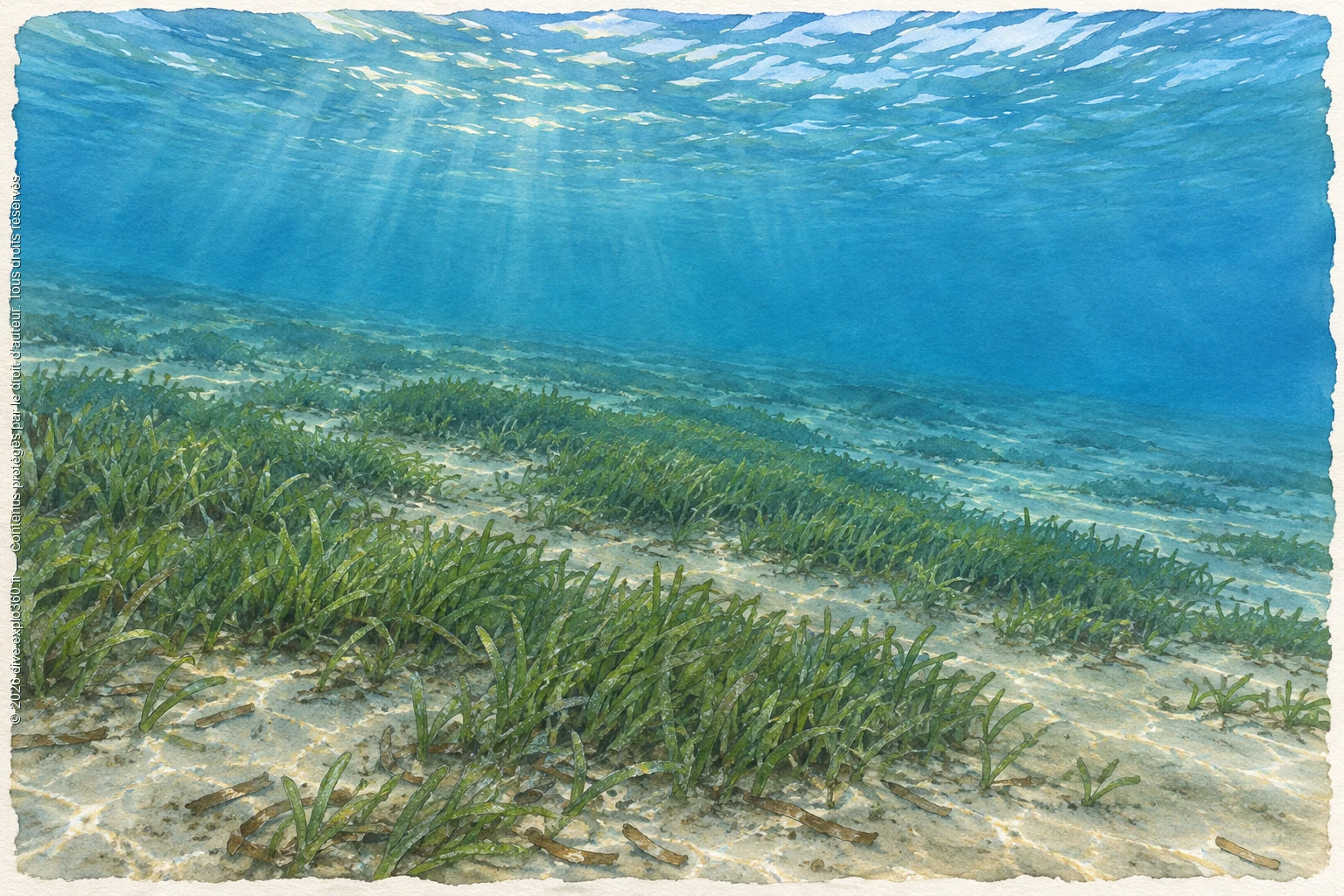
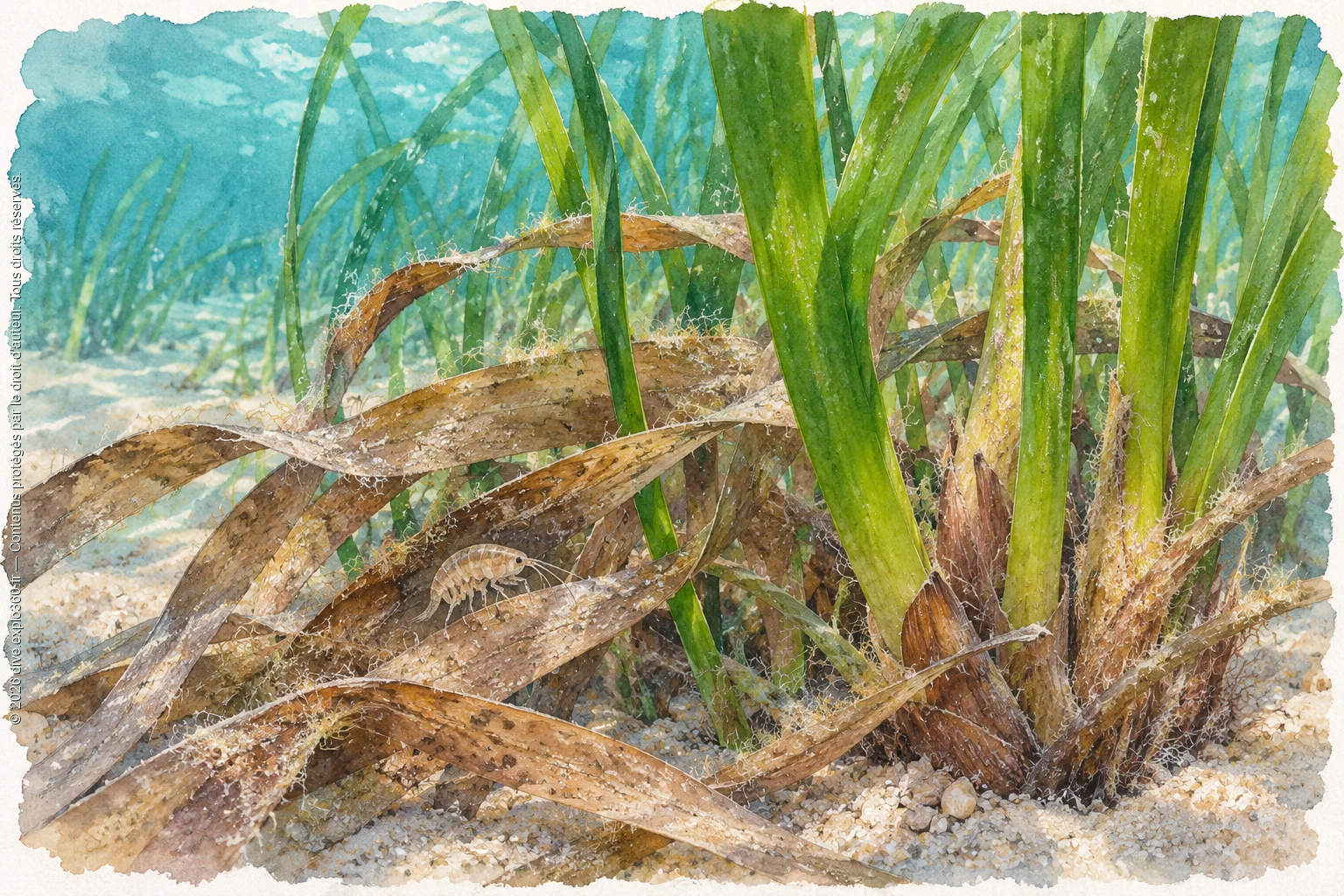
The long green leaves slow the water and catch some of the brown ones. Look between the stems or under a little sand. Worms and other small animals can hide there, and some eat the tiny scraps that collect on the leaves. The leaves can keep their shape for months.
Ribbons that break down slowly
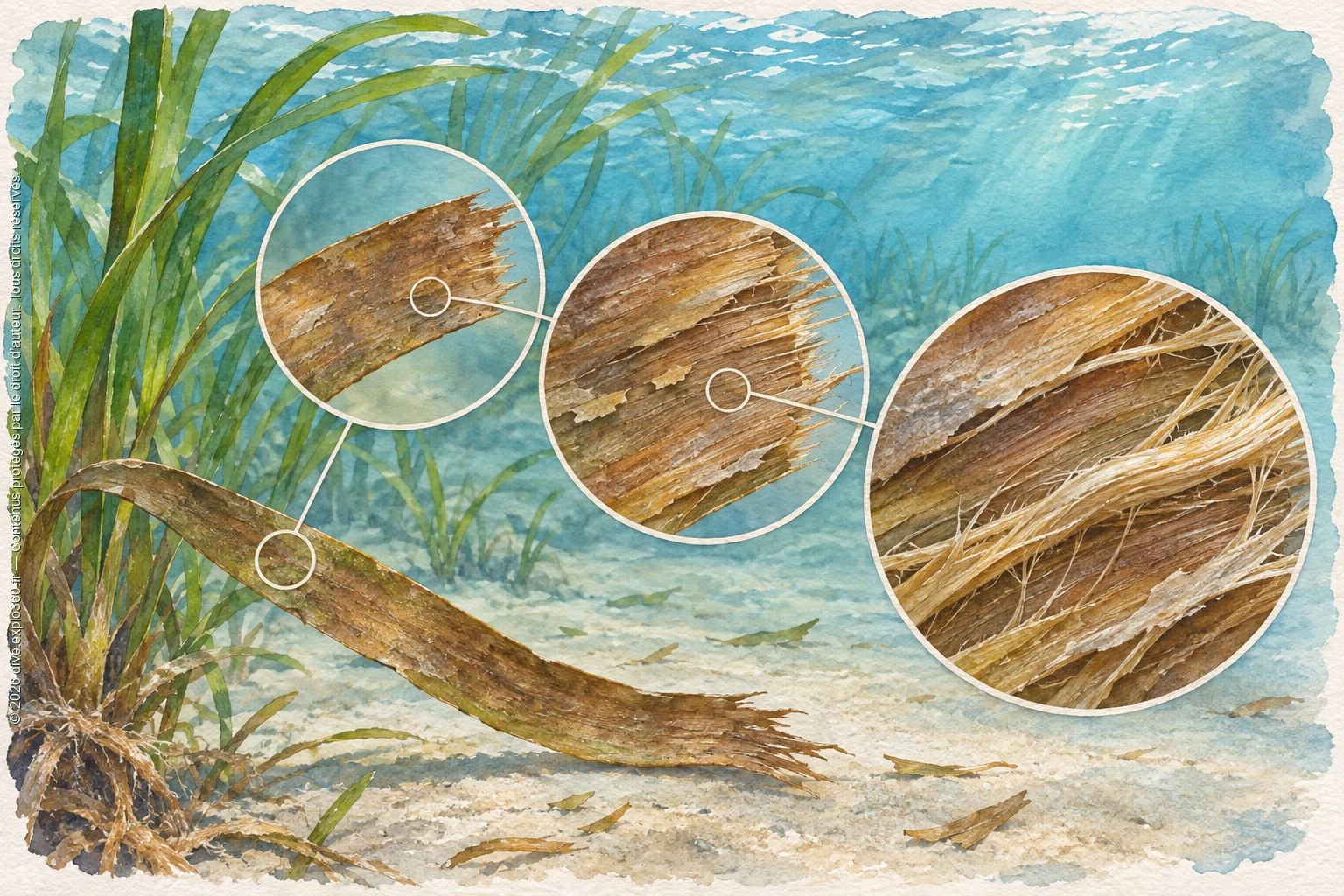
Fibres make Posidonia leaves tough. Some substances in them can slow microbes down too. Waves, sand and animals wear the leaves away. Bacteria and fungi break them down. How long it takes depends on warmth and oxygen, especially if a leaf is buried.
Waves carry the leaves away
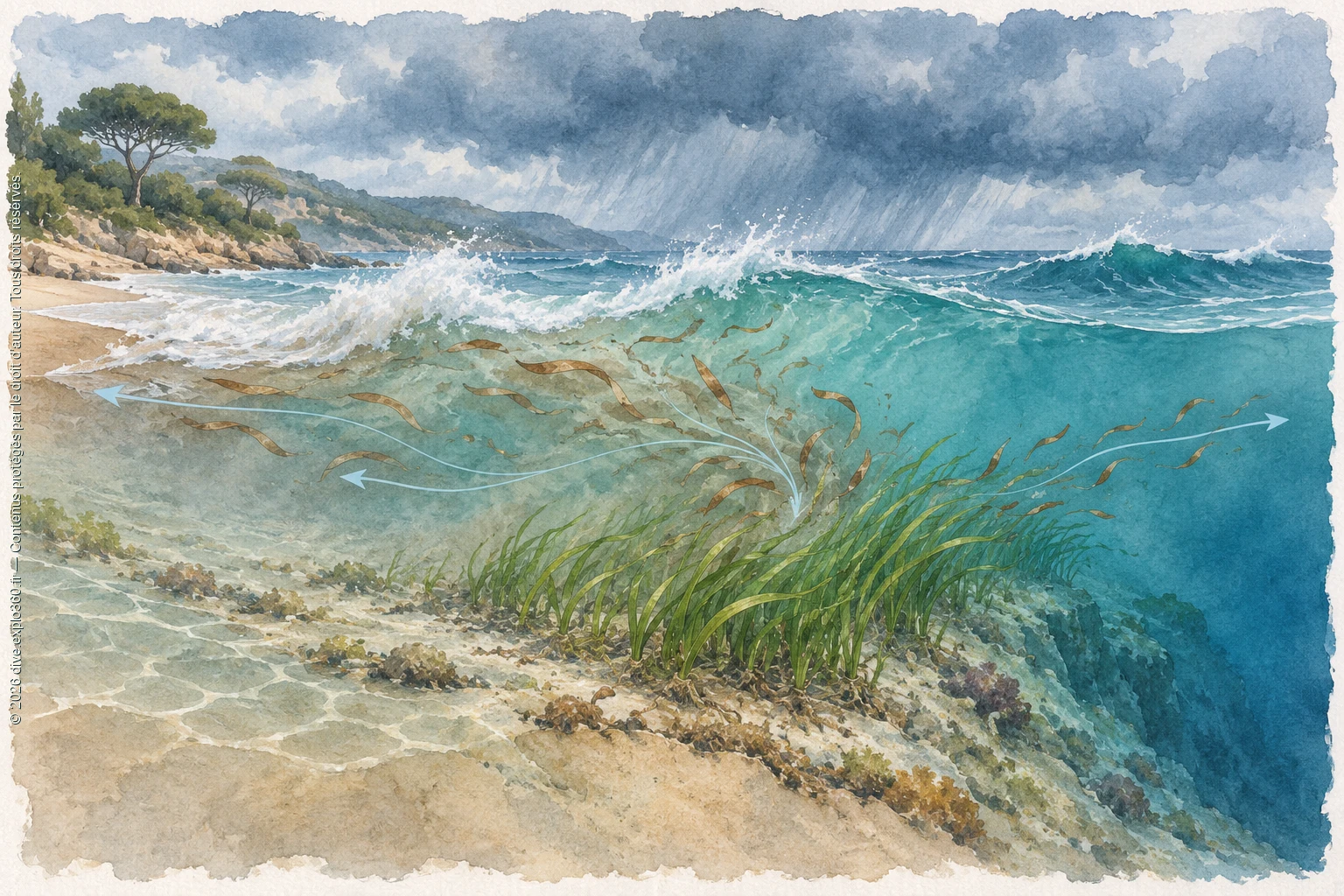
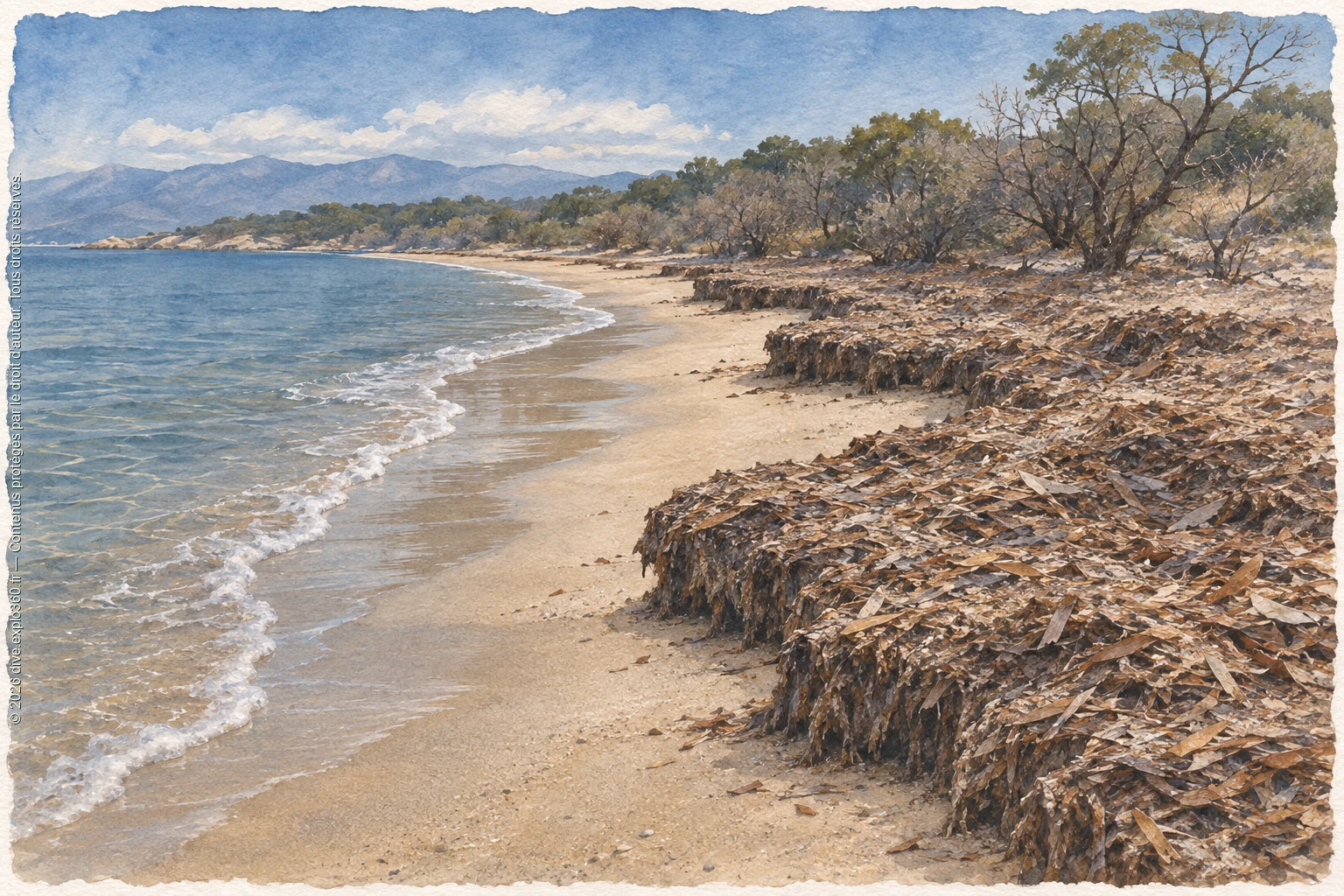
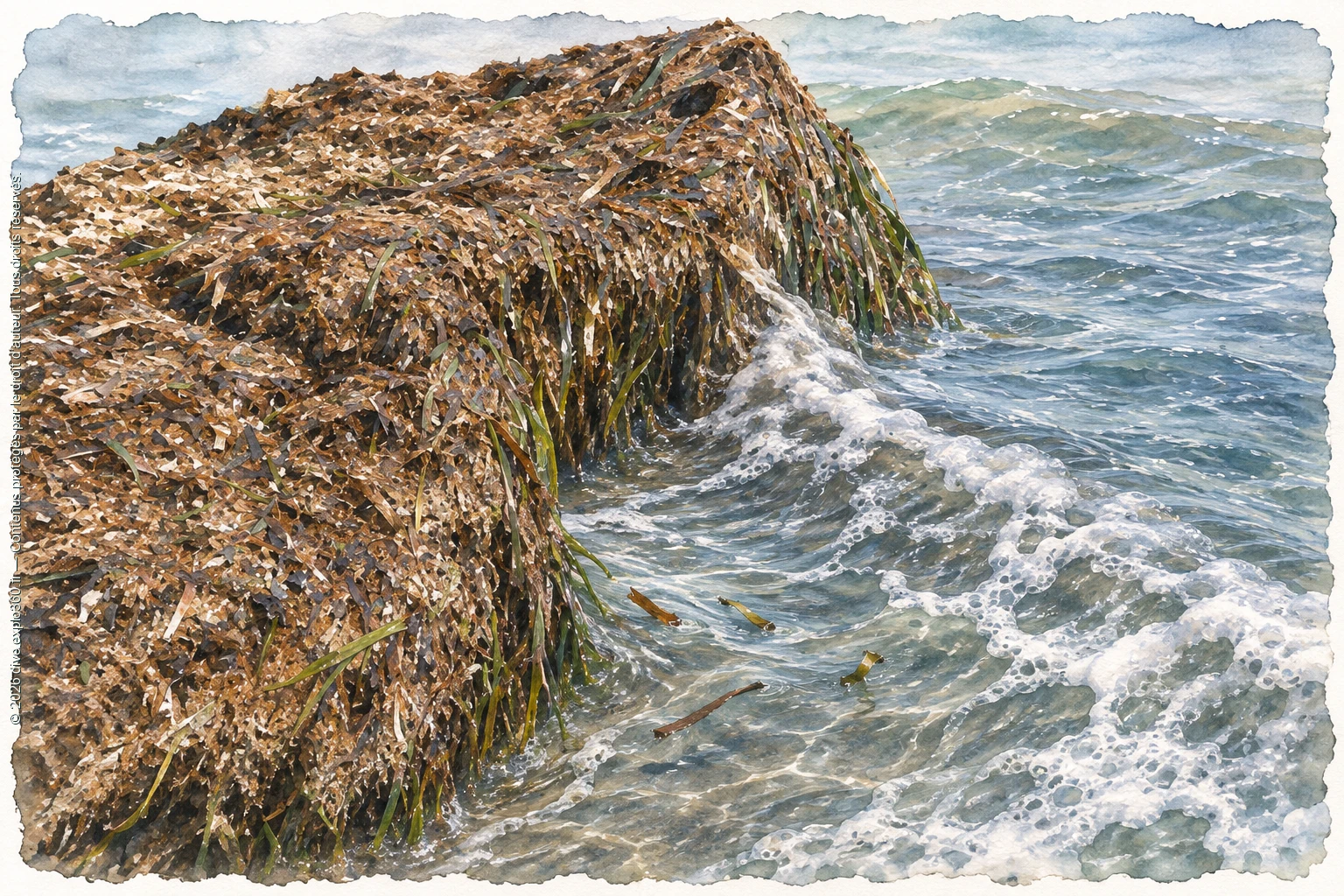
A storm can lift old leaves off the seabed. Some land on sand or rocks underwater. Others reach deep valleys where Posidonia can’t grow, and animals there can feed on the scraps. When waves pile leaves and sand on the beach, the bank they make is called a banquette.
A bank of leaves and sand
Each wave can bring more leaves and sand. The pile gets packed down and may stay for several seasons. The sea can wash it away, then build it up again. A thick bank can slow the waves and hold some sand in place.
Small animals under the leaves
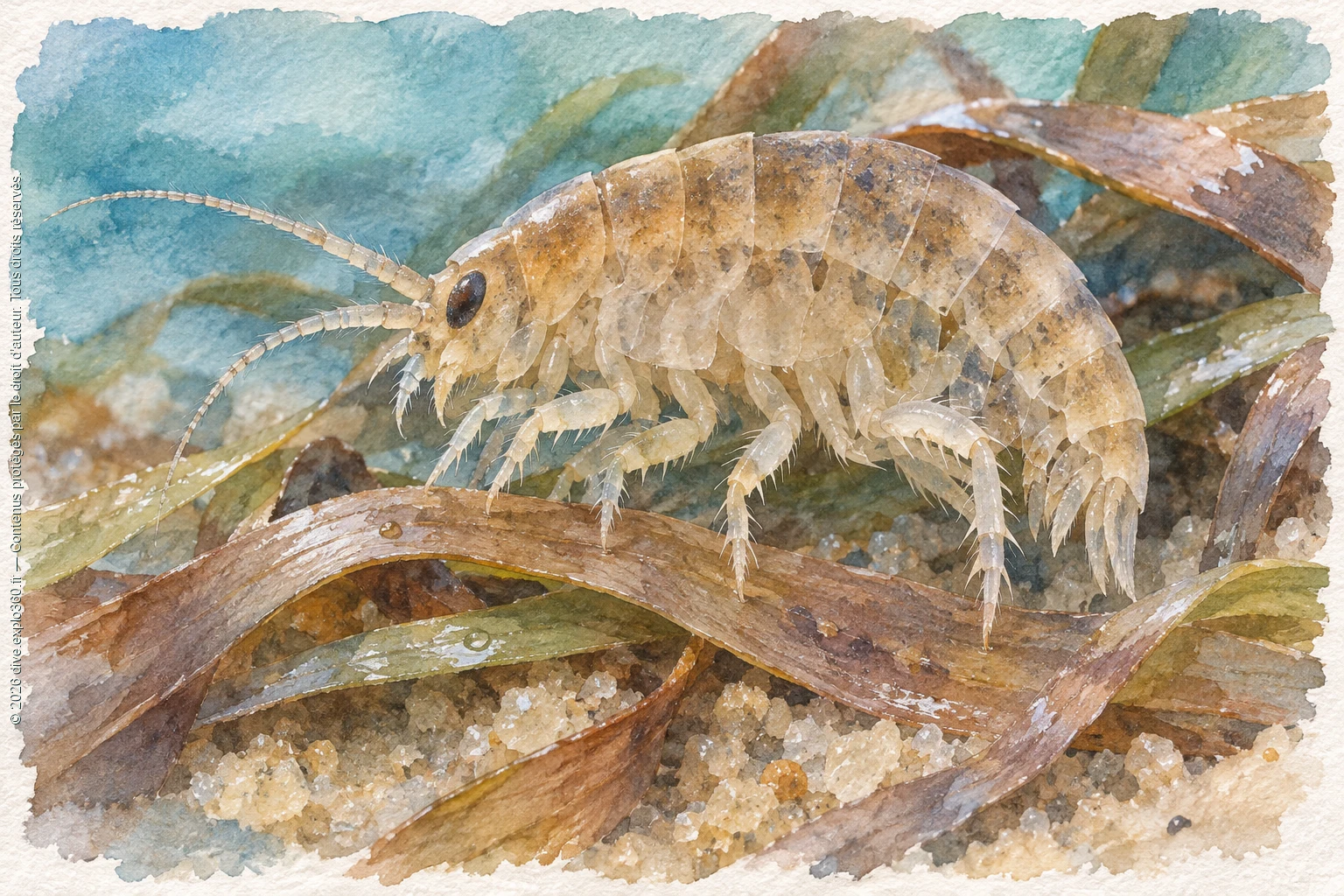
Lift your eyes from the dry top of the pile and imagine what’s underneath. Some leaves stay damp. Tiny animals called sandhoppers jump between them, and insects find food there too. Other animals come to eat them. As microbes break down the leaves, some of their carbon goes back into the water or air as carbon dioxide.
Leaves go back into the sea
Waves can pick up leaves that have been on the beach. Some move along the shore or head out to sea. Animals can eat them, or they can break up or be buried. Some carbon can stay in the sand. Dead roots and stems build up for much longer beneath the meadow, mixed with sediment. This layer is called the matte.
Where do the brown balls come from?
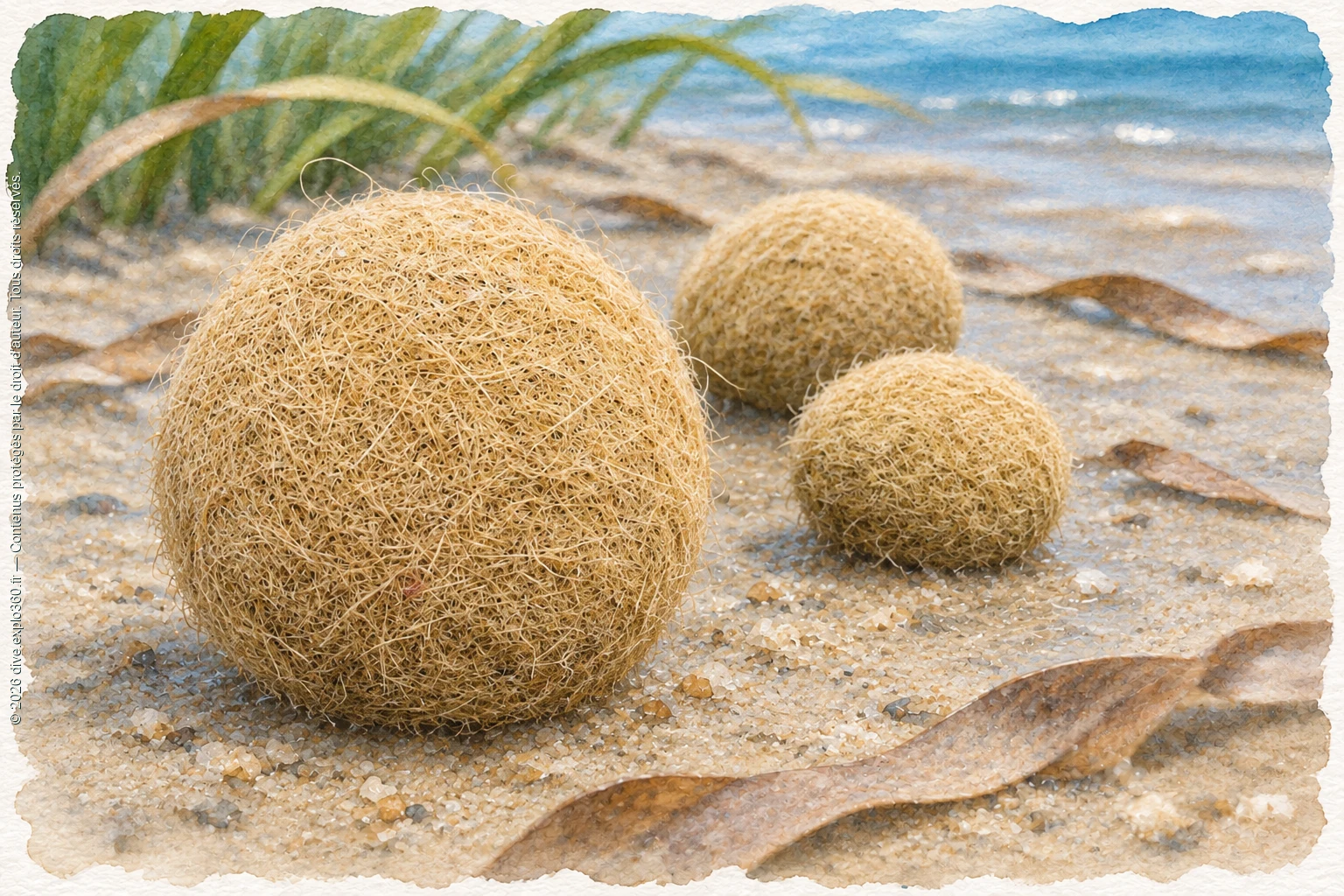
Have you found a little brown ball on the beach? Waves roll dead Posidonia fibres along the seabed. The fibres get tangled into round or oval balls called egagropiles, and some wash up on the sand.
Interactive quiz
Quiz on Posidonia
5 question(s) to test your knowledge.
Interactive quiz
Quiz on Posidonia
Question 1 out of 5Score: 0
Where do the brown ribbons on the beach come from?
What stays in the seabed when leaves fall?
What can jump among the damp leaves?
What can waves do to leaves already on the beach?
What’s inside the little brown balls you might find on the beach?
Final result
Quiz completed
correct answers
A fallen leaf keeps travelling
New leaves are already growing in the meadow. The old ones can still feed an animal, give a sandhopper a place to hide or help hold sand on the beach. A brown ribbon can have a long journey after it falls.
Scientific references
Seasonal leaf fall, transport by currents, the formation of banquettes and feeding by detritivores are well documented. The proportion that remains in the meadow, reaches beaches, decomposes or reaches the deep seabed varies with the site, the season and water movement.