A gathering in the deep
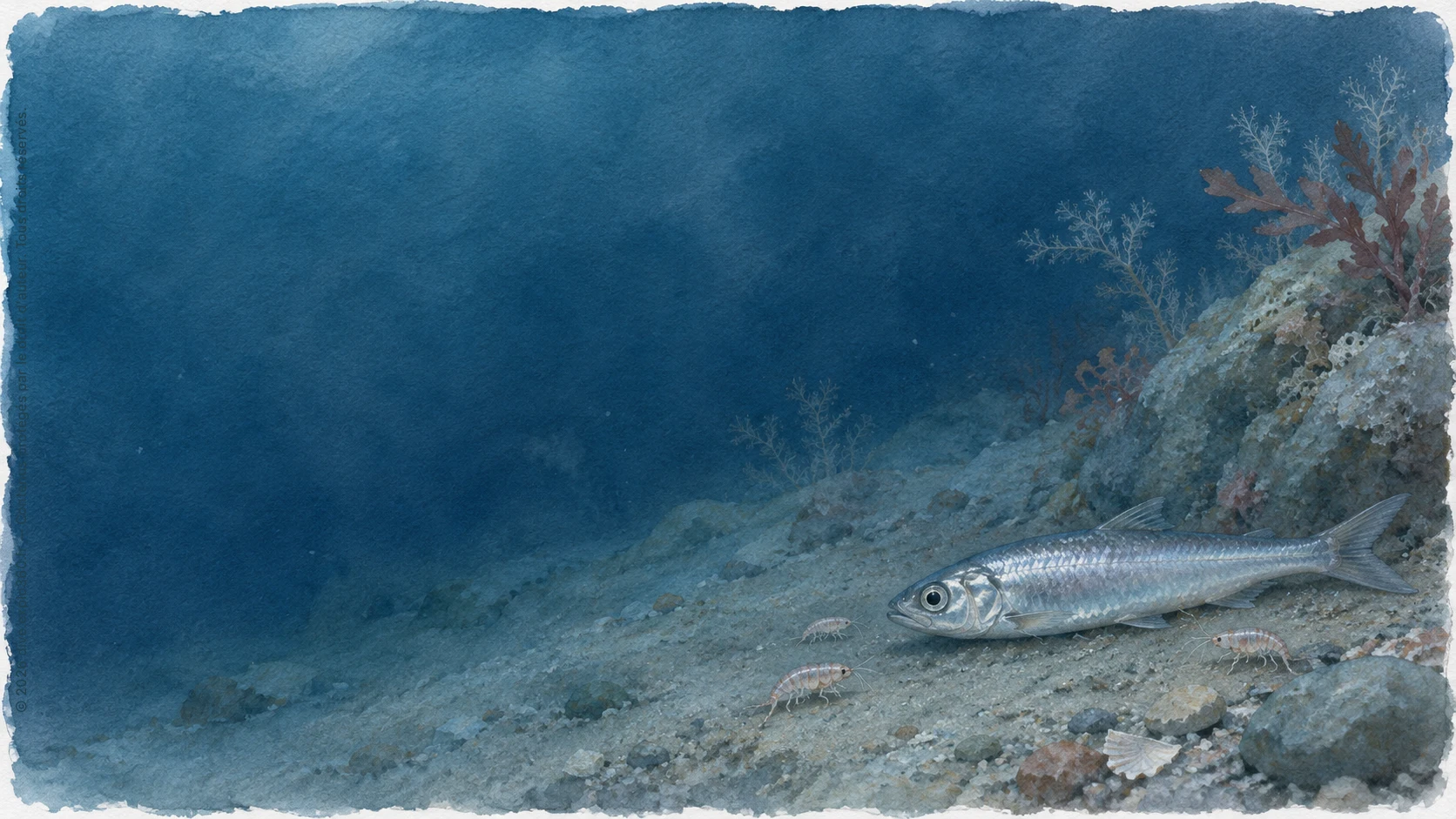
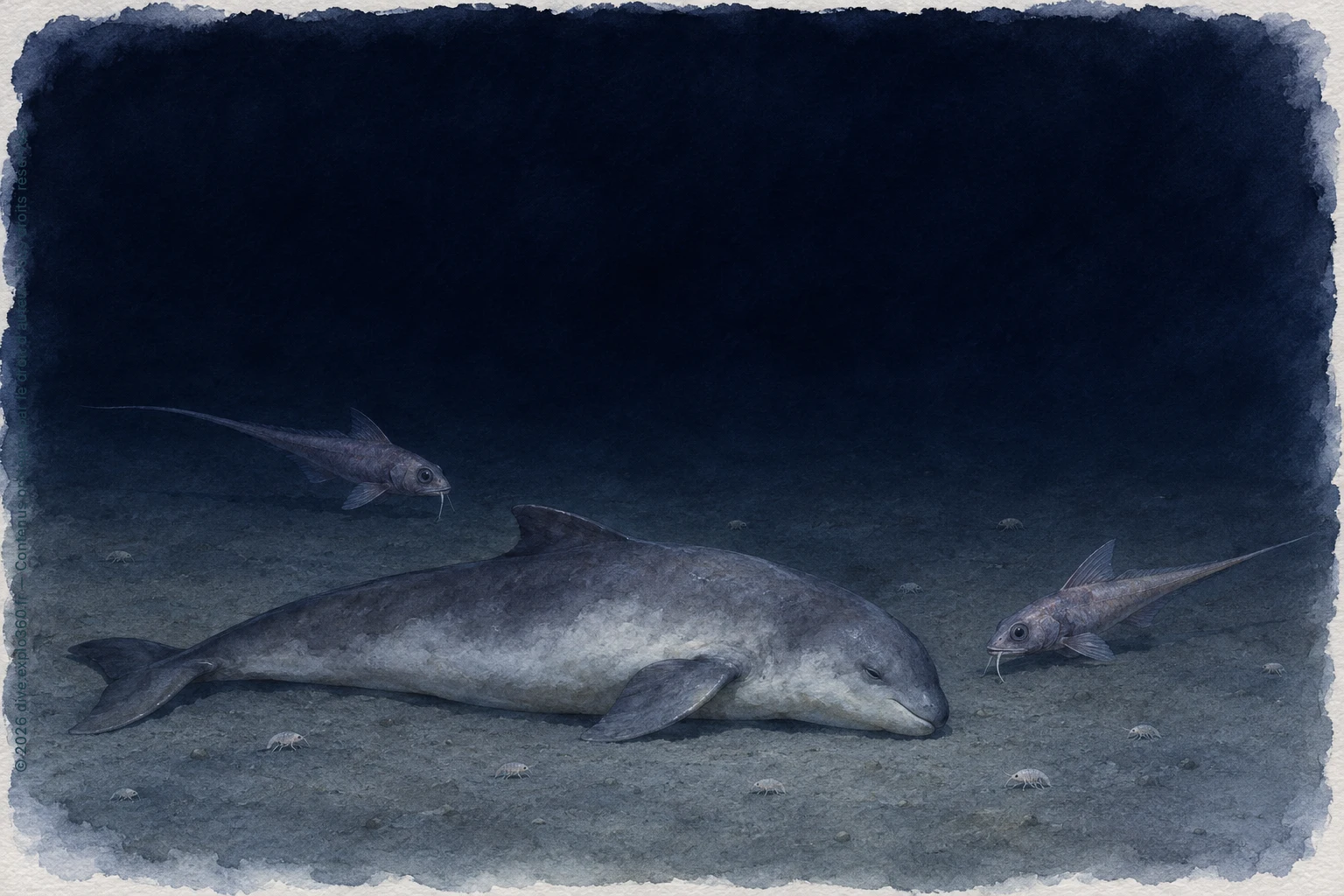
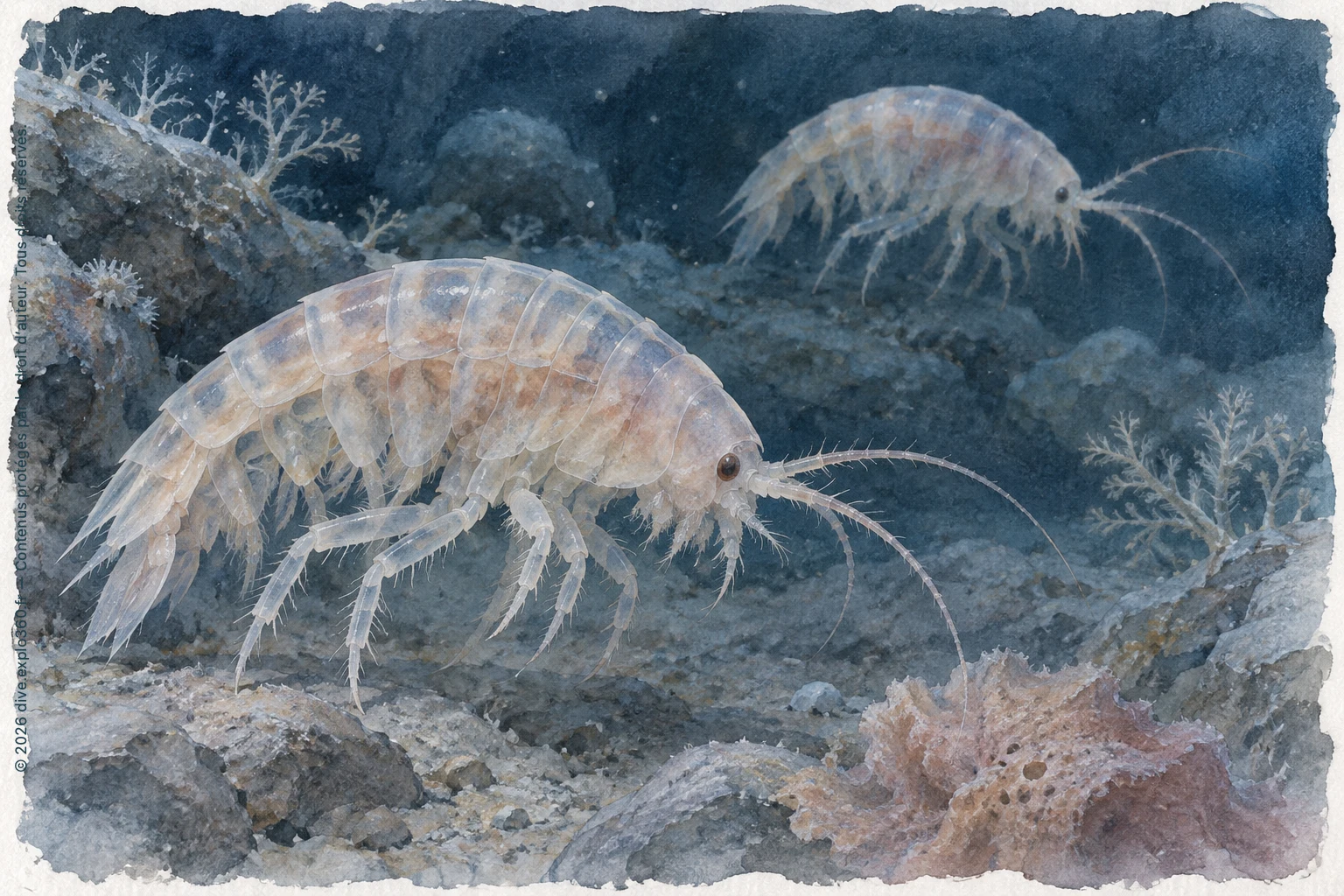
At experimental cetacean carcasses in the abyssal Atlantic, amphipods fed on the remains and fish preyed on the amphipods. The same carcass supplied food directly to the crustaceans and indirectly to their predators.
When the flesh disappears
At 170 metres in the Strait of Georgia, different scavengers dominated the spring and autumn trials, and the flesh disappeared at different rates. The time measured for one carcass depends on the conditions and the animals able to reach it.
Changes too small to see
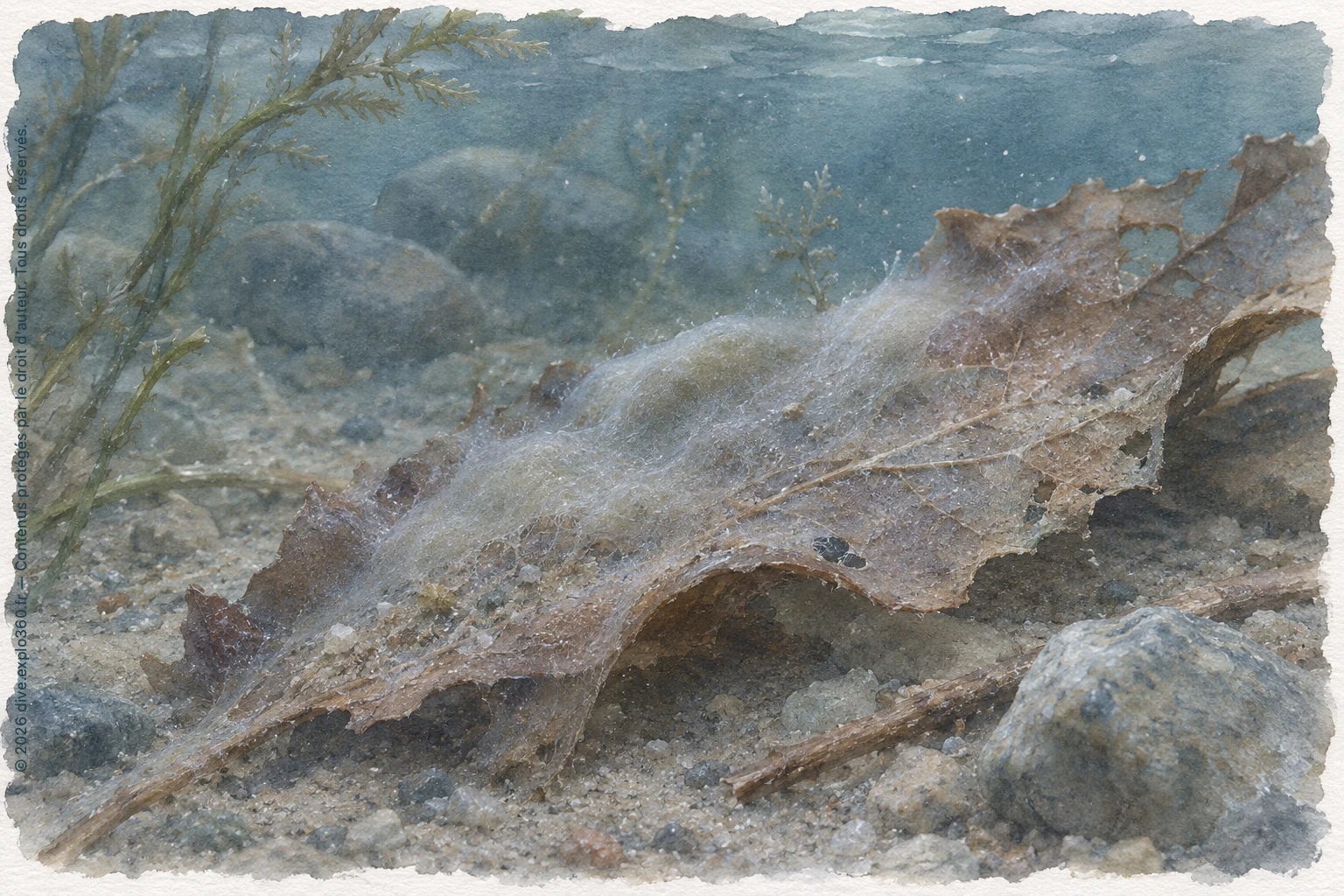
After death, enzymes already present in cells begin breaking down their internal structures, a process called autolysis. Microbes are active at the same time. As oxygen becomes scarce, processes that work without it can account for more of the breakdown.