A gathering in the deep
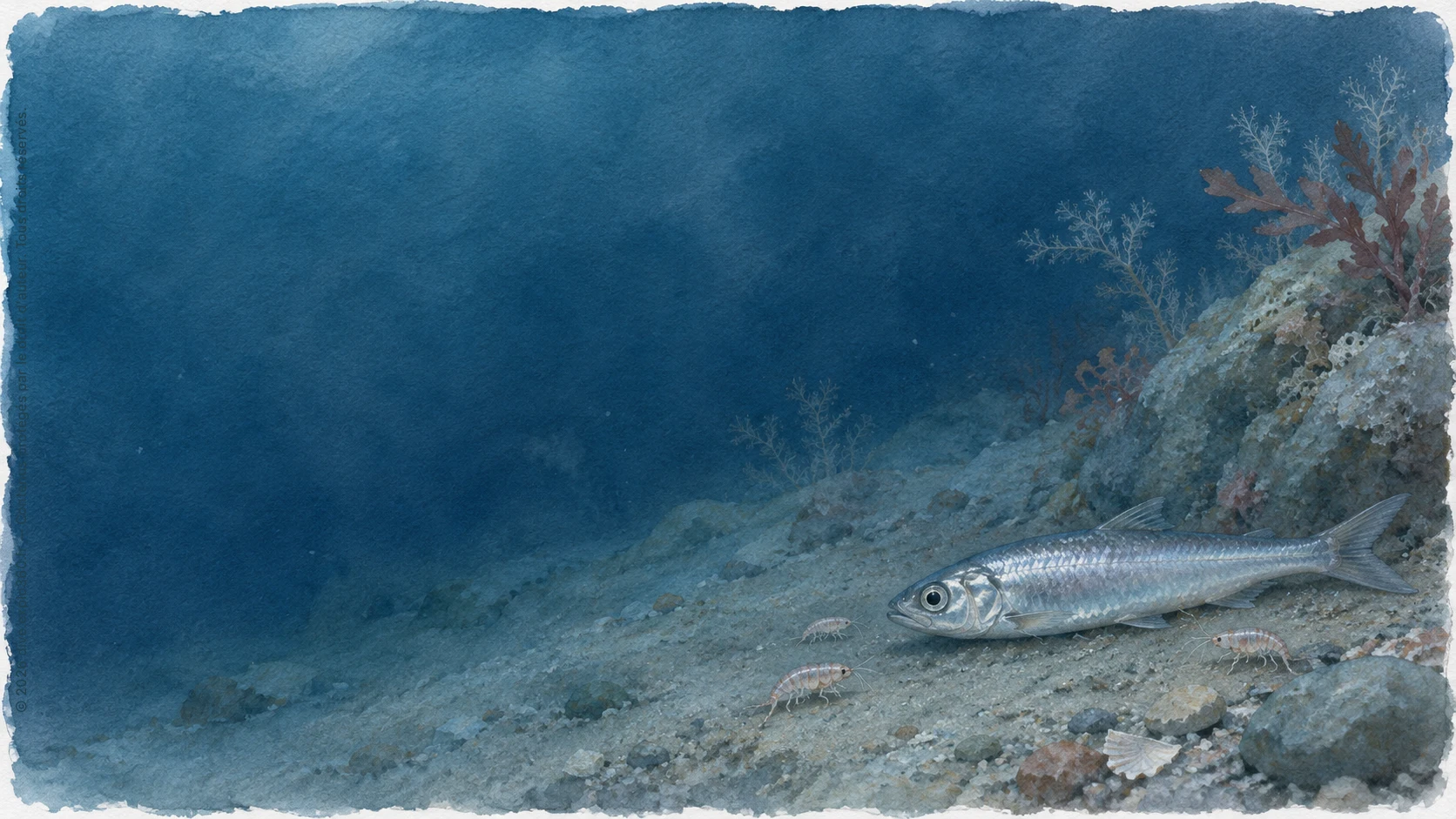
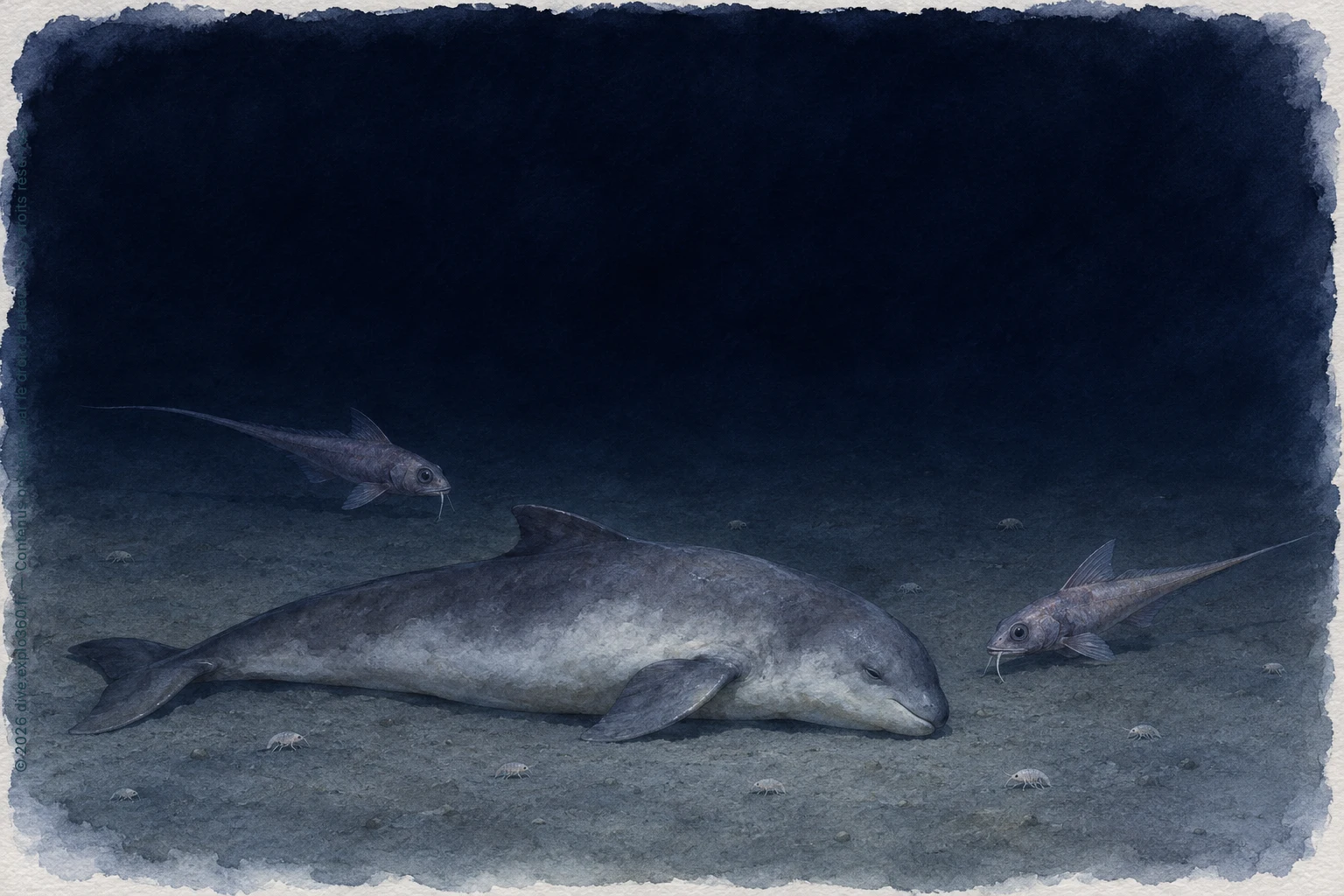
Four thousand metres below the Atlantic surface, sunlight never reaches the seabed and food is scarce. Much of what sustains the animals there comes from organic matter sinking from above, the prey they encounter and whatever food they can find locally. When researchers placed a cetacean carcass on the bottom, grenadiers and numerous small crustaceans arrived within about an hour.
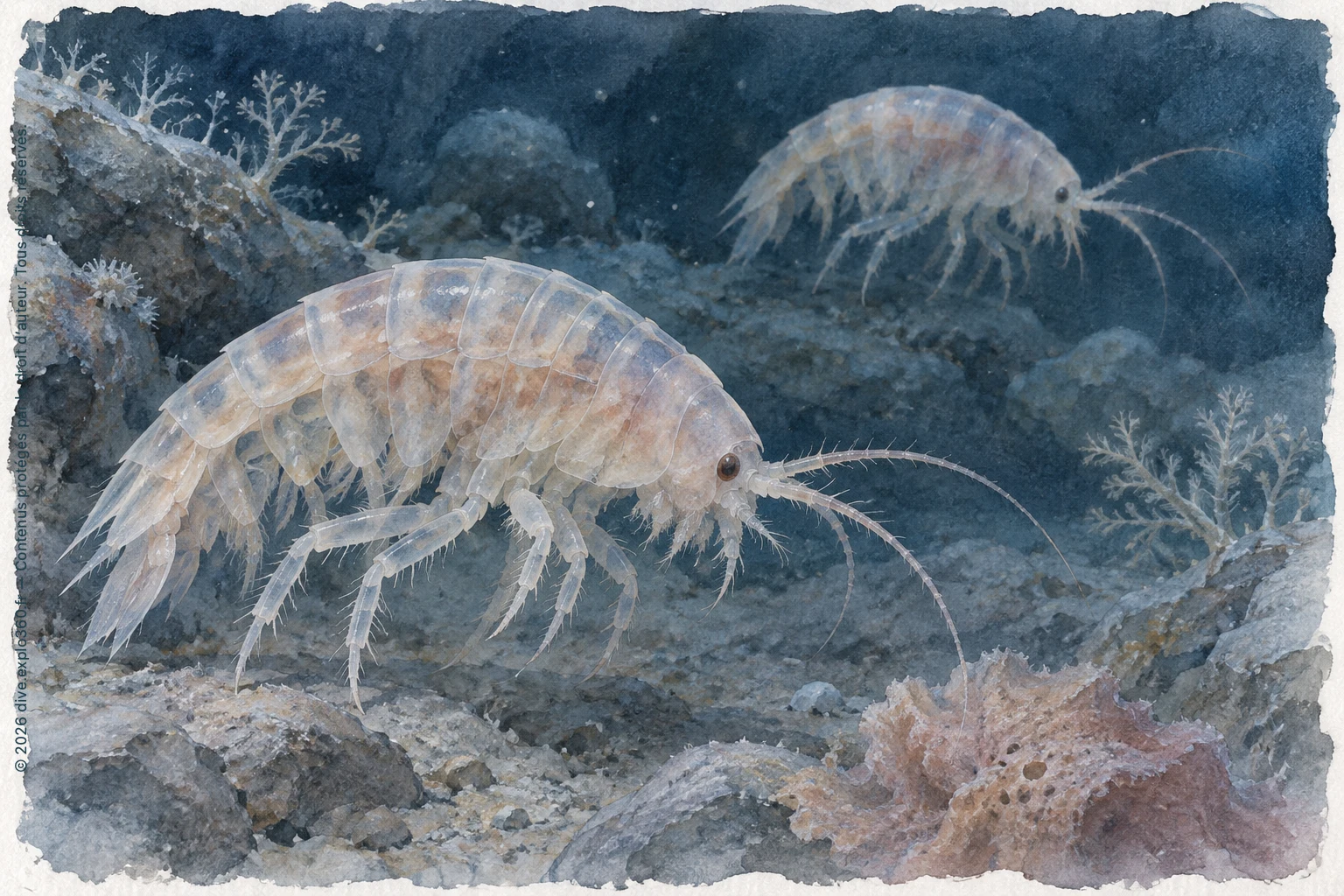
The grenadiers appeared to be feeding mainly on amphipods drawn to the carcass, rather than on the flesh itself. The carcass had brought small crustaceans within reach of fish that prey on them.
Around a fresh carcass, a stretch of seabed can briefly become a busy feeding ground. As the flesh disappears, much of what happens next becomes harder to see.
Which scavengers get to the carcass first depends on where it lies, its size and condition, and sometimes the season.
When the flesh disappears
At 170 metres in the Strait of Georgia, off British Columbia, researchers set cameras to watch submerged pig carcasses. In spring, amphipods and shrimps soon began feeding. The amphipods worked their way into the tissues, while shrimps tore away pieces of skin and flesh.
The carcasses were being eaten from the inside as well as the outside. One was reduced to a skeleton by day eight and the other by day ten.
At the same site in autumn, Dungeness crabs, Metacarcinus magister, did much of the early feeding. Amphipods began building up from day fifteen. By days twenty-two and twenty-four, only the skeletons remained.
Even at the same site and depth, the scavengers arrived in a different order. Water temperature, currents and oxygen can all affect what happens, as can the species present and how easily they can reach the flesh.
Size matters too. A fish weighing a few hundred grams offers a very different meal from a large marine mammal. Even in deep water, a substantial carcass can lose its flesh quickly.
In experiments in the north-east Atlantic, researchers placed cetacean remains at depths of 4,000 to 4,800 metres. In the longest trial, one was stripped to the skeleton within five days.
Amphipods did much of the work. Some species specialise in feeding on dead animals. When they gather in large numbers and can get into the tissues, they can remove a great deal of flesh.
The species feeding at a carcass can change as it breaks down. Early arrivals can include specialist scavengers. Later, crustaceans with a broader diet may become more common.
As the easiest flesh to reach is eaten, fragments scatter across the seabed and become available to other animals. The bones begin to show.
By then, much of the remaining work is taking place at a scale the cameras cannot show.
Changes too small to see
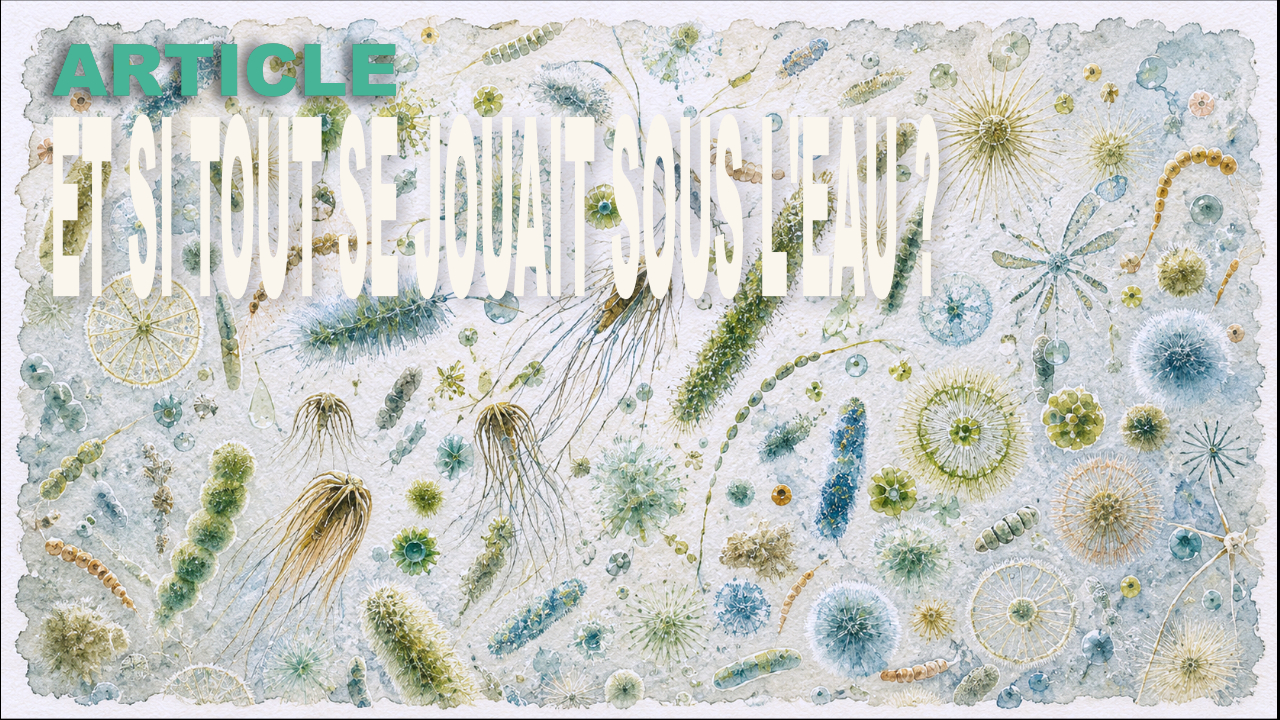
While crustaceans tear away the flesh, changes are already taking place inside the tissues. After death, cells lose the processes that maintain them. Their membranes begin to break down and enzymes degrade internal structures.
This is autolysis. At the same time, microbes already in the body and others from the surrounding water or sediment break down proteins, fats and other compounds.
Some of the products become available to other organisms. Others break down further into simpler compounds. Where oxygen is plentiful, aerobic microbes can use it to break down organic matter.
In thick tissue or sediment rich in organic matter, oxygen can run low. Some bacteria then use other compounds in their metabolism, including sulphate, which is abundant in seawater.
Reducing sulphate can release hydrogen sulphide. In a small fish, microbial breakdown can proceed quickly alongside scavenging. Around a large carcass, these processes can change the chemistry of the seabed for an extended period.
Meanwhile, some of the material the scavengers leave behind is settling into the sediment.
Explore the same world