


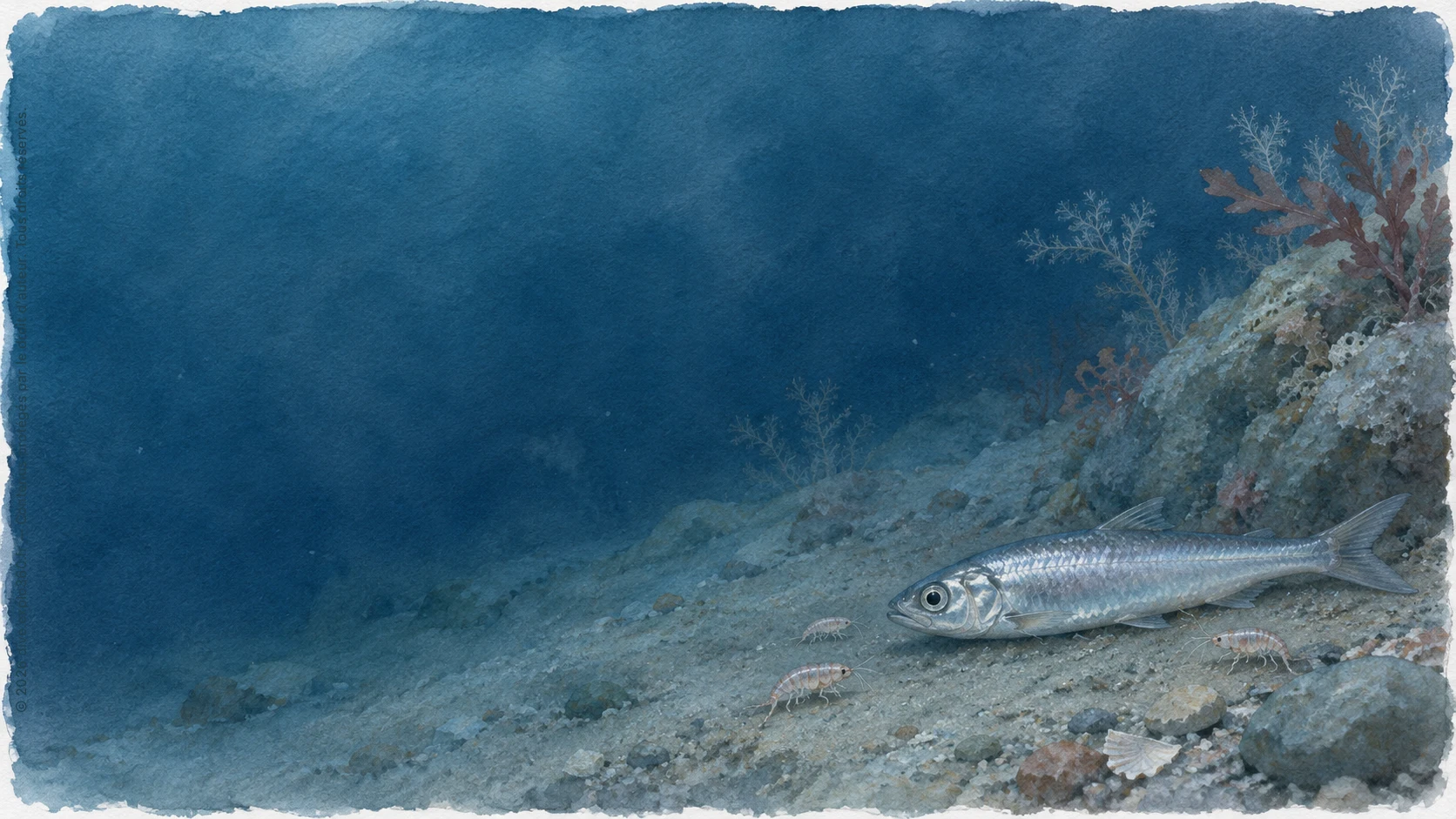
A gathering in the deep

When researchers placed a cetacean carcass on the deep Atlantic seabed, small crustaceans called amphipods gathered around it. Fish caught the amphipods, so even hunters that left the flesh alone could find a meal there.
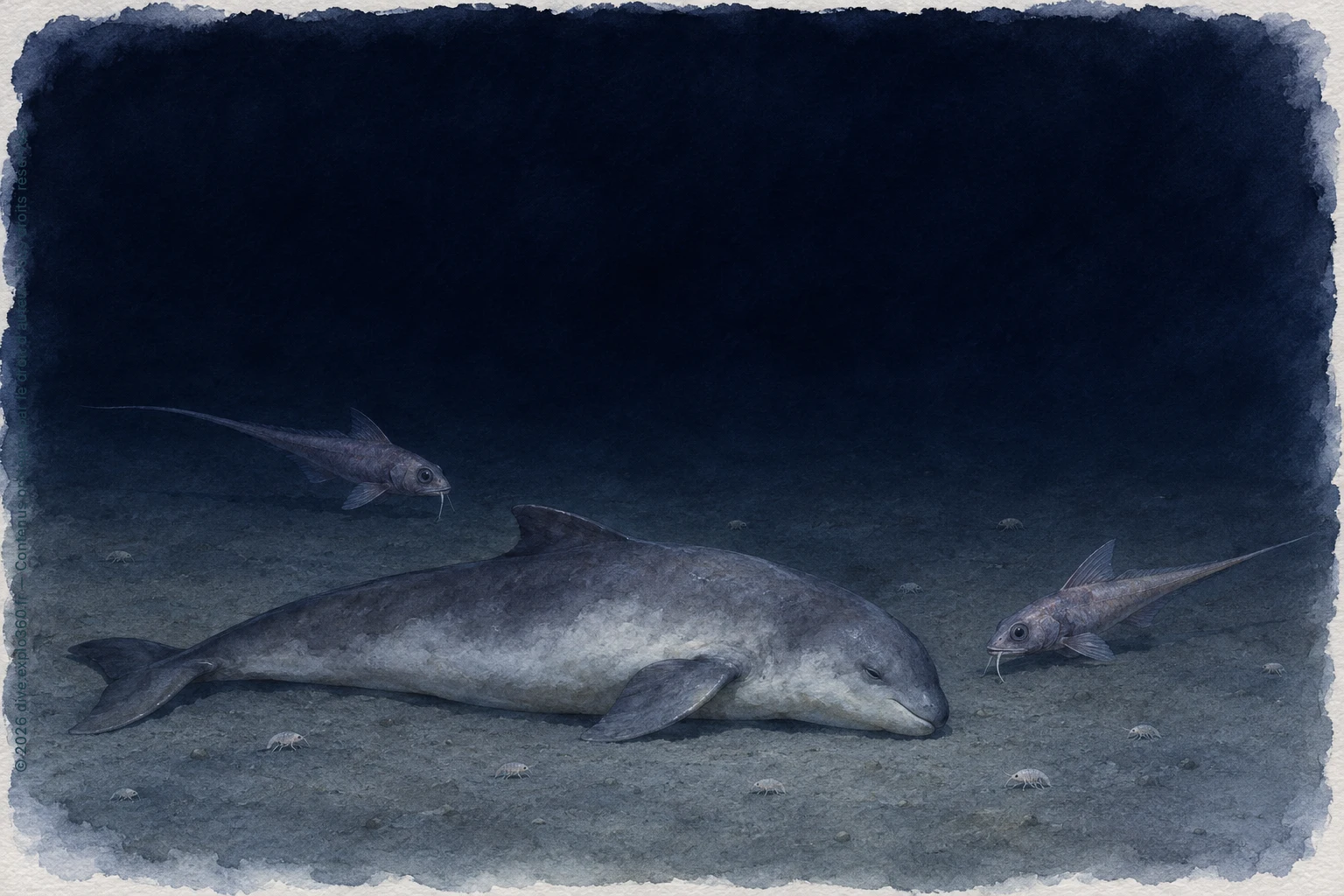
Fish near a cetacean carcass.
In this illustration, deep-sea fish approach a whale carcass to feed on amphipods gathered around it. © dive.explo360.fr — All rights reserved. Reproduction requires permission.
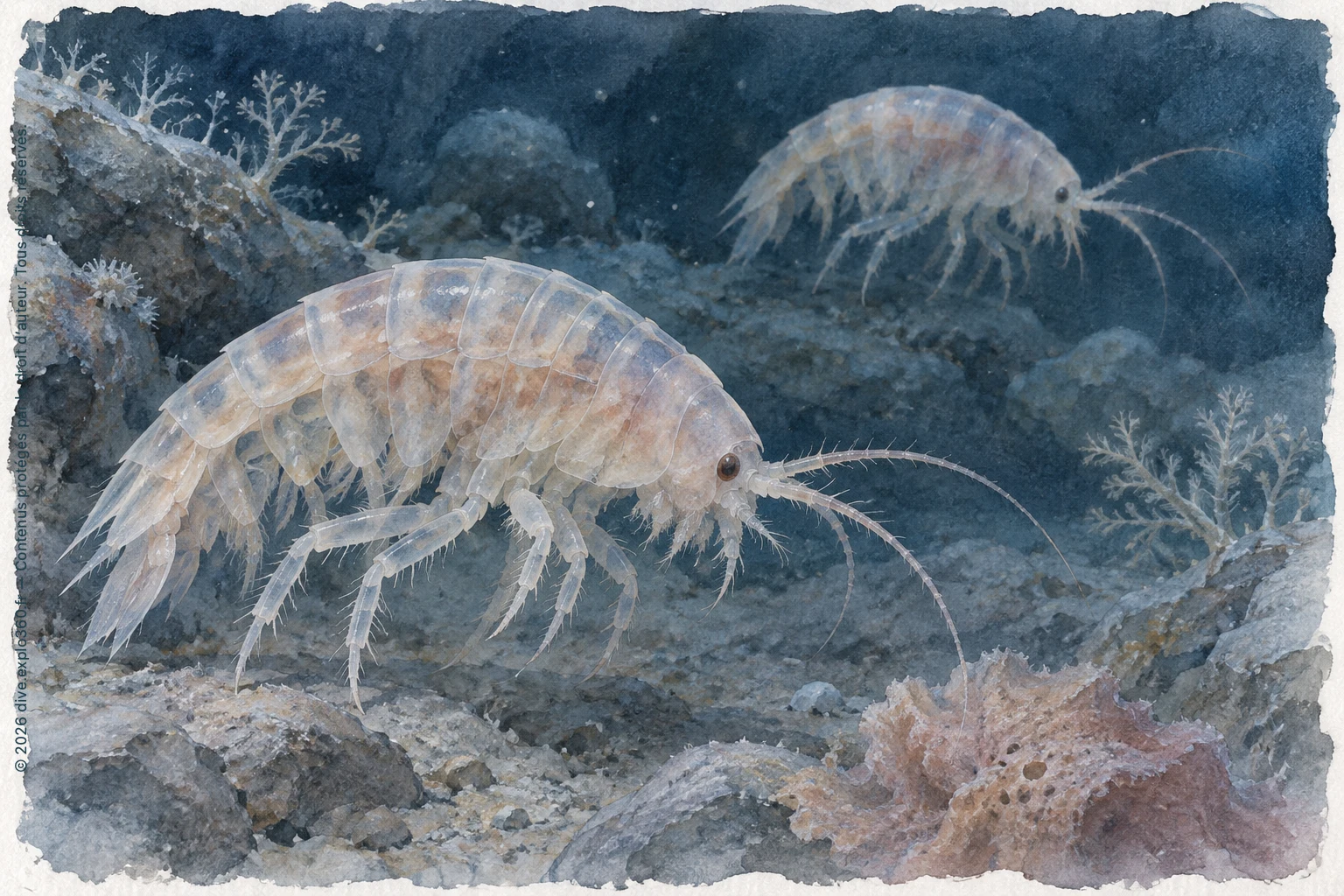
Small segmented crustaceans with antennae.
Some amphipod species feed on the tissues of dead animals. © dive.explo360.fr — All rights reserved. Reproduction requires permission.

When the flesh disappears

Researchers in the Strait of Georgia filmed experimental carcasses in spring and autumn. In spring, small crustaceans started feeding soon after the bodies reached the seabed. In autumn, crabs did much of the early feeding and the flesh took longer to disappear.

Three places the material can go

1

Living organisms

Some material enters the tissues of consumers.
2

Sediment

Fragments settle and may be buried.
3

Water

Dissolved substances can move with the water.

Changes too small to see

Some of the first changes take place inside the cells. Enzymes already there help break them down. Microbes use the material at the same time as scavengers are feeding.
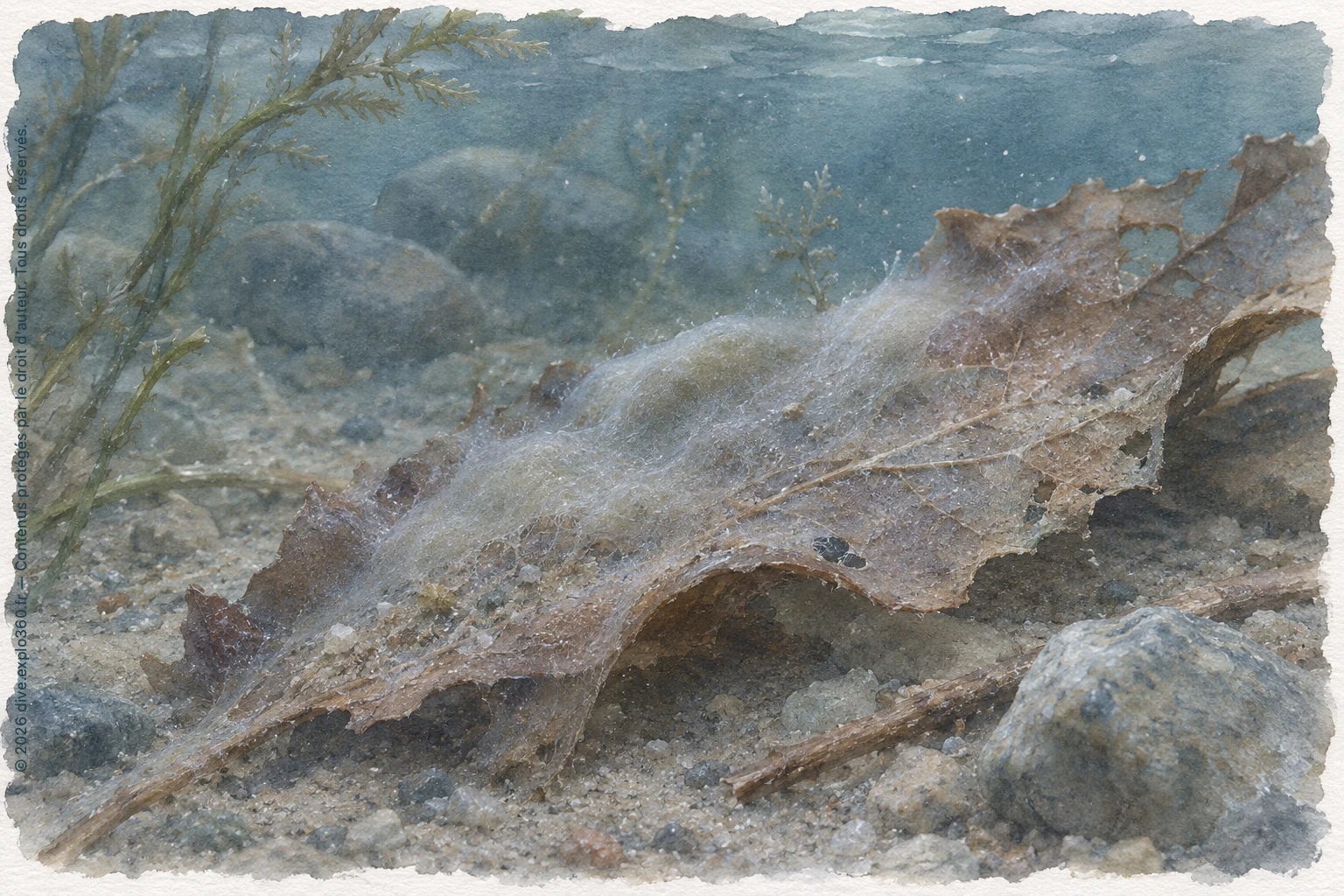

Close-up of organic material on the seabed.
Tiny organisms break down what the larger animals did not eat. Microorganisms break down some of the organic matter left after scavengers have fed. © dive.explo360.fr — All rights reserved. Reproduction requires permission.

Continue reading

AMIGANSEAU CONTENT

The rest of this article is for subscribers

Log in with your AMIGANSEAU licence to continue reading.

All active AMIGANSEAU licences give access to the full article.