Food hidden in the sediment
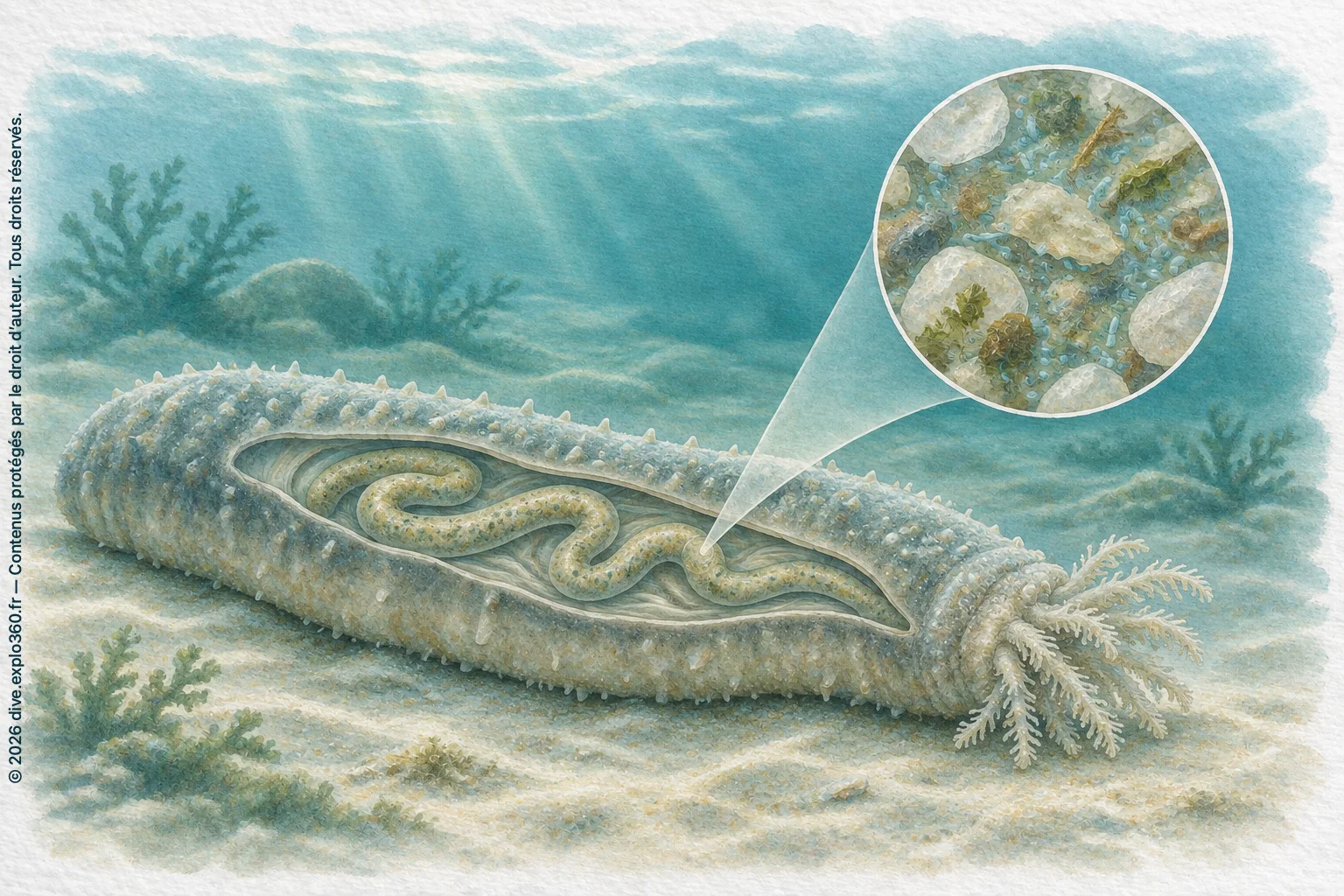
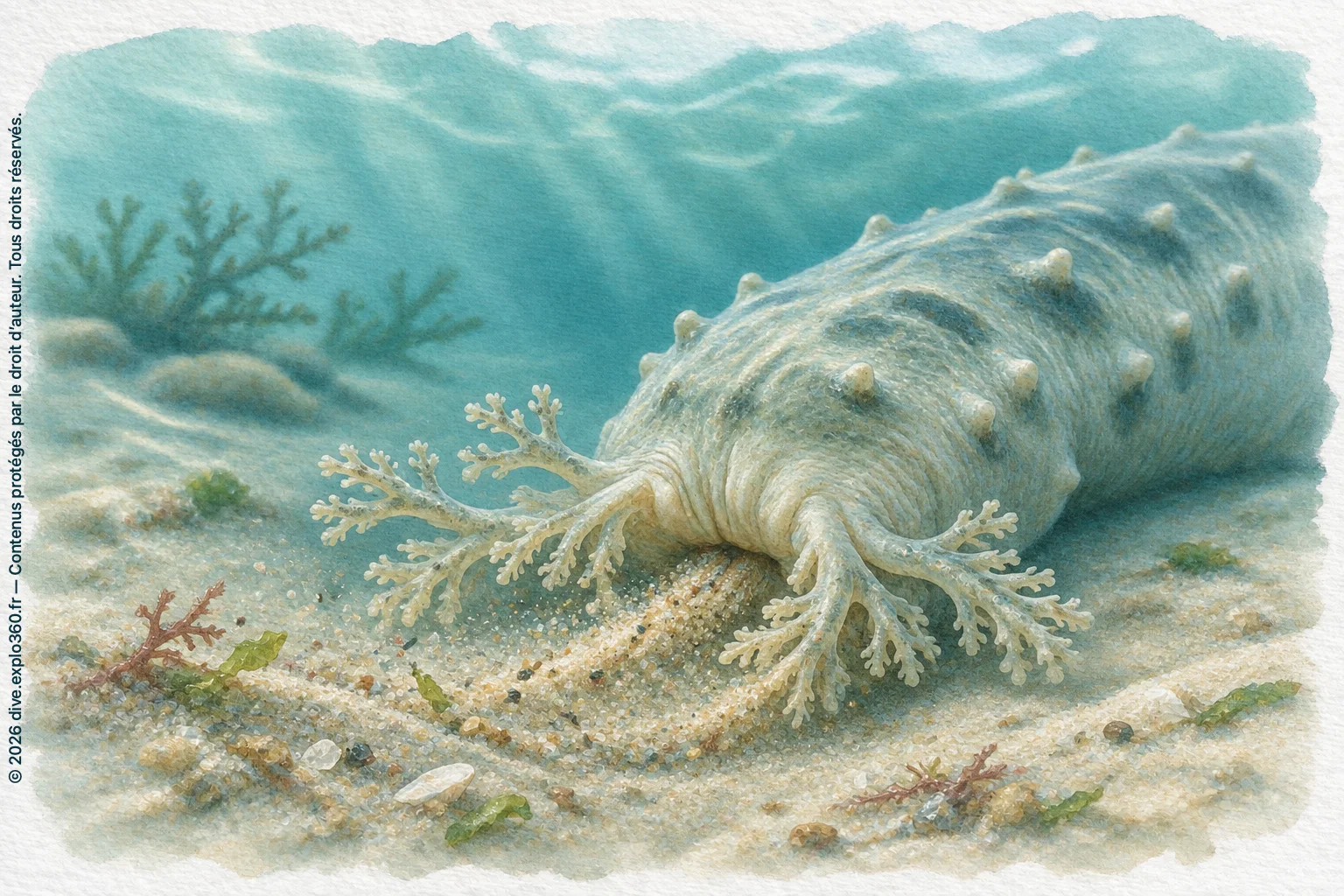
In the top few centimetres of the seabed, scraps of algae and dead organisms lie between the grains. Bacteria grow on the grains, and tiny algae produce organic matter. Sea cucumbers called deposit feeders collect the mixture with short, branching tentacles that evolved from tube feet. Other sea cucumbers spread their tentacles to catch food drifting in the water.
Through the digestive tract
Muscles squeeze the sediment along the digestive tract, from the oesophagus through the stomach and intestine to the cloaca. Enzymes break down proteins, sugars and fats so the gut can absorb nutrients. Some microbes get digested, while others pass through with most of the sand.