The meal begins between the grains
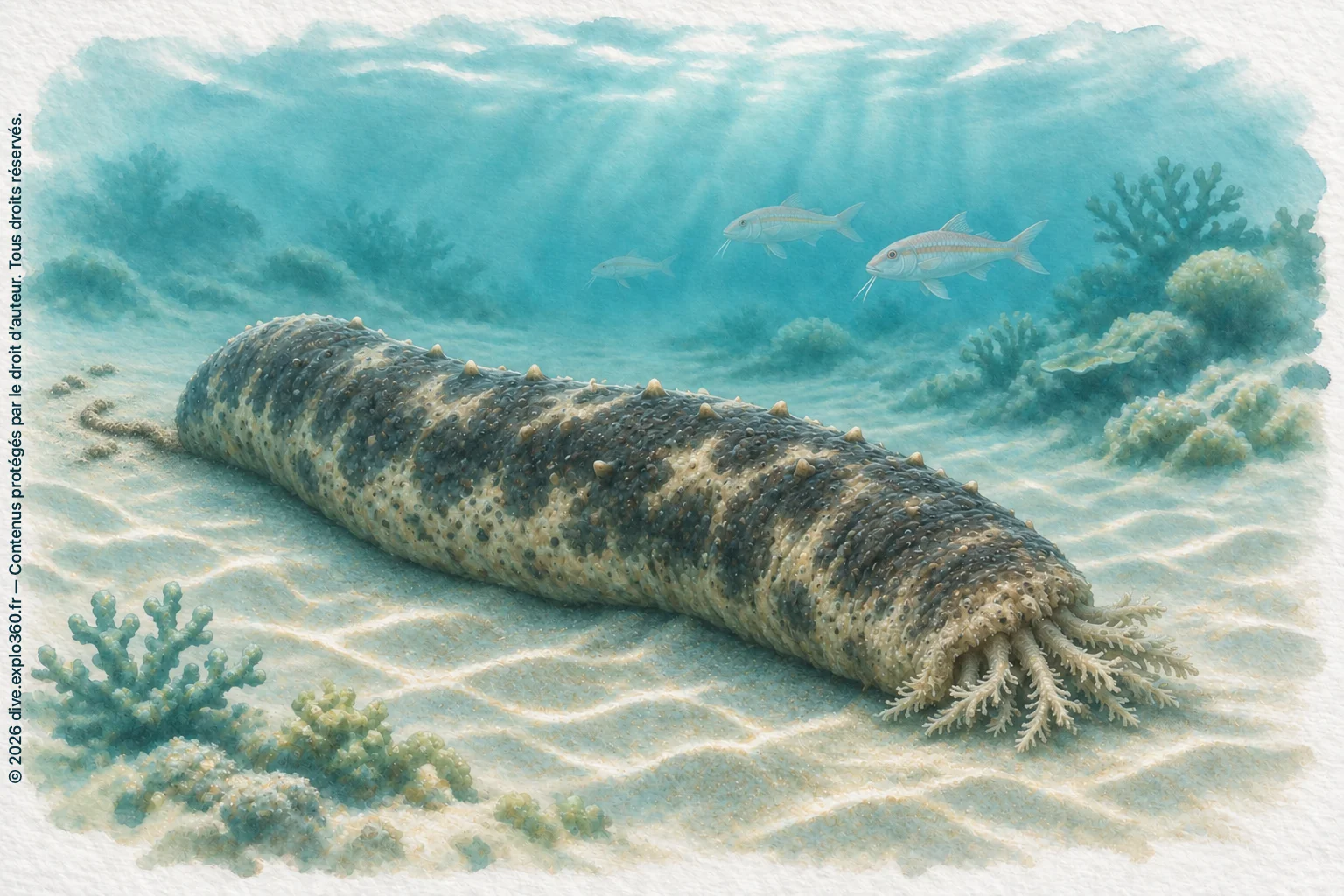
A deposit-feeding sea cucumber gets its food from material at the surface of the sediment or in its top few centimetres.
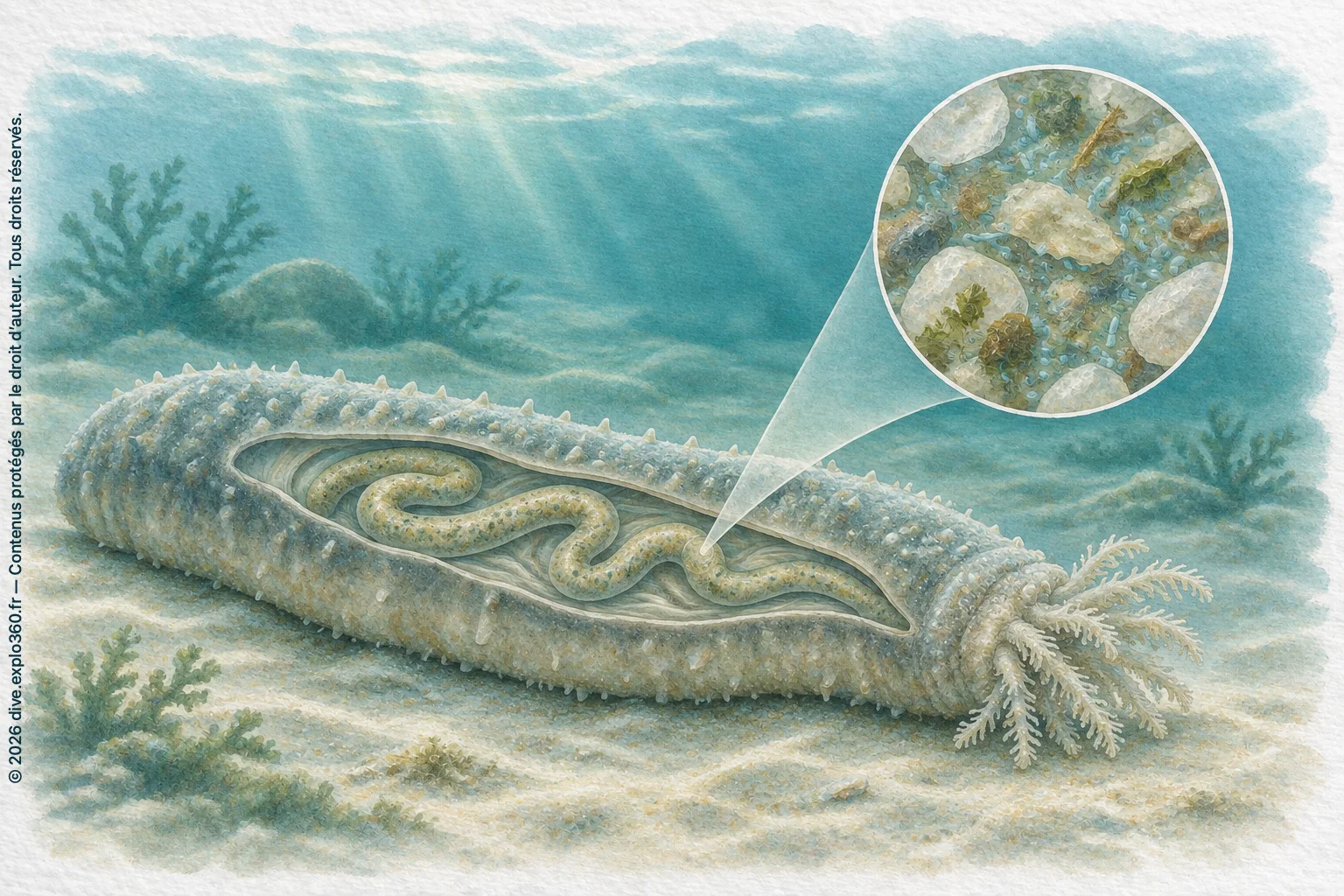
Look closely at the sand and you’ll find scraps of algae, fragments of dead organisms and a host of microorganisms. Bacteria can colonise the surfaces of grains, forming communities associated with organic substances. In some places, tiny algae living on the seabed also produce organic matter.
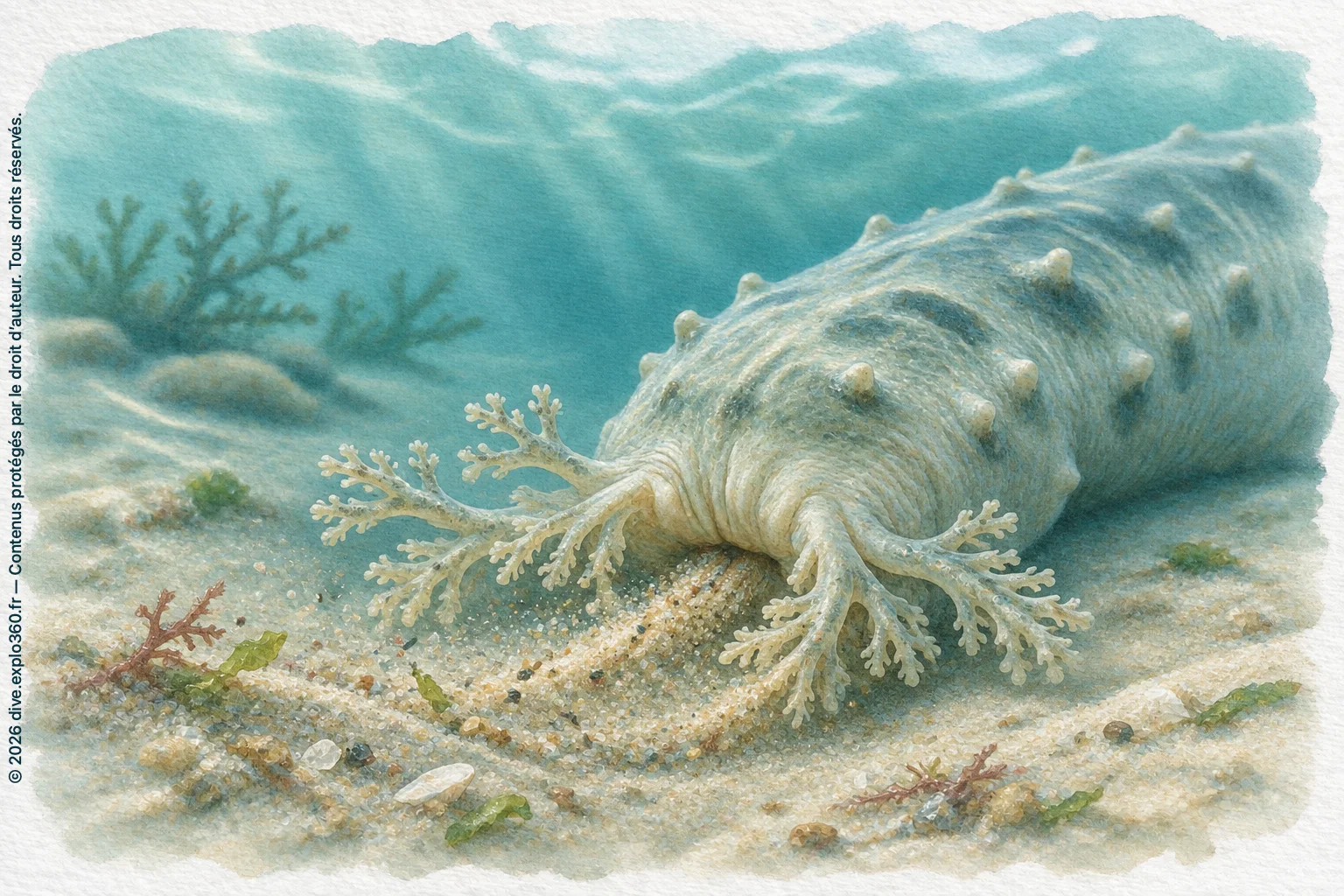
The sea cucumber swallows this mixture along with the grains. Its mouth is surrounded by tentacles that evolved from modified tube feet. In deposit feeders they are often short and branched, well suited to gathering particles from the seabed.
Watch it press each tentacle into the sediment and then draw it to its mouth. It repeats the movement, taking in the surface layer grain by grain. Some sea cucumbers feed by spreading their tentacles to catch particles suspended in the water. The species that swallow large quantities of sediment are mainly deposit feeders.
A long journey through the gut
Once swallowed, the sediment travels through a relatively long digestive tract. It passes along the oesophagus, through a stomach that is more distinct in some species than in others, and through an intestine whose final section opens into the cloaca. Muscular contractions move the sediment along.
Digestive enzymes break down accessible organic molecules. Proteins, carbohydrates and fats in biological debris can be broken into simpler substances that the gut tissues can absorb. The swallowed microorganisms are another potential food source.
Much of the food arrives attached to the grains or mixed in among them. Conditions inside the gut differ physically and chemically from those on the seabed. Some organic particles break down. Some microbes are digested, while others survive the journey. What happens depends on the species, its microbiota and the sediment it swallows.
Most mineral grains emerge intact. Digestion chiefly changes the organic matter and microbes that travel with them.