An entrance that looks like a pile of debris
The common octopus inhabits rocky ground, seagrass beds, sand and areas where scattered boulders provide shelter. Its flexible body can squeeze through surprisingly narrow openings. It has no rigid skeleton, although the hard beak at the centre of its arms limits what it can get through.
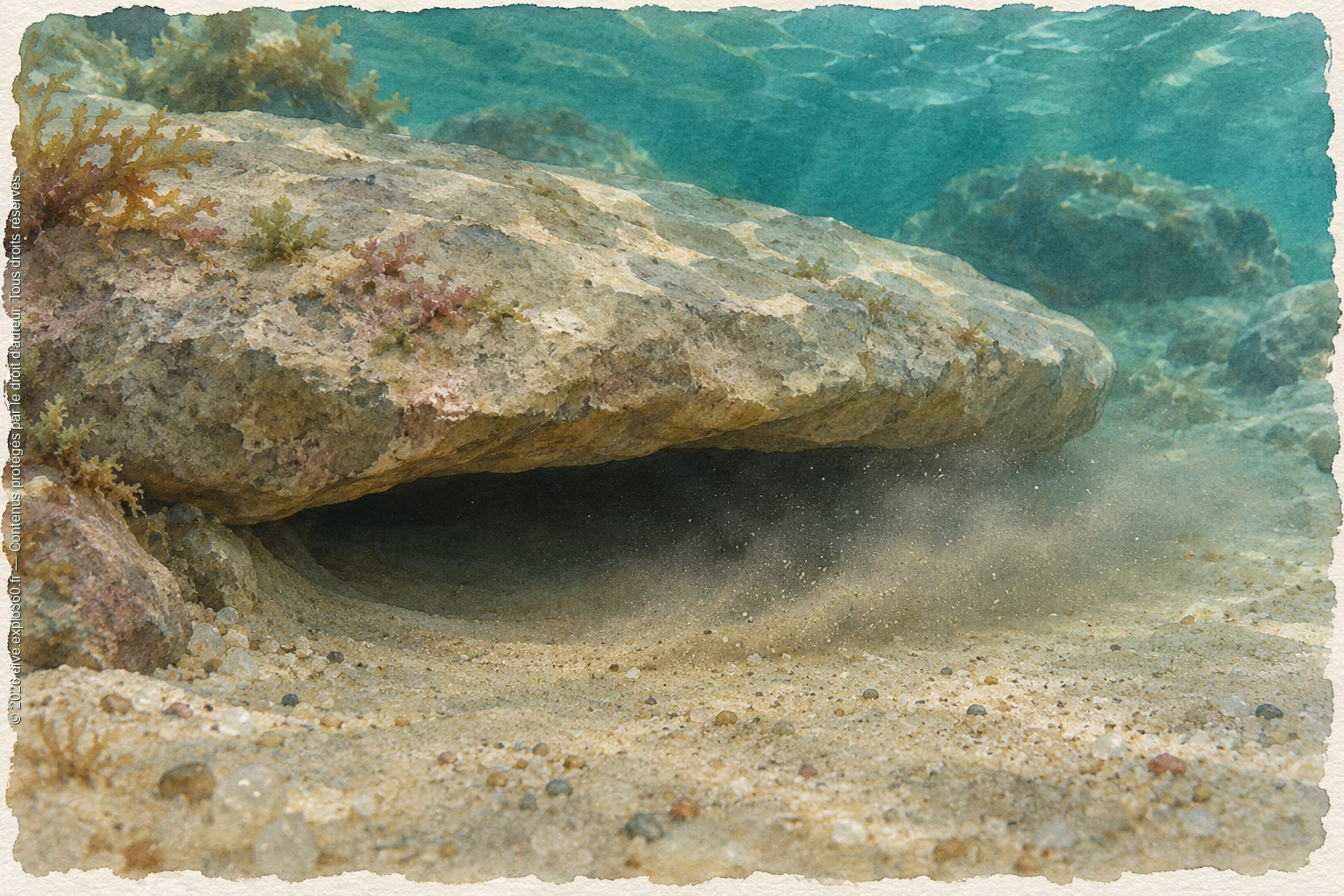
A crevice, a gap beneath a rock or a cavity in the sediment may serve as a den. An octopus can alter the entrance with its arms and suckers. It can also expel sand and debris with a jet from its siphon, clearing the interior or reshaping the opening.
On a soft seabed, some octopuses dig beneath stable rocks. Others use empty shells or solid objects already on the seabed. The materials available shape where they can settle. A rock lying on sand can provide the roof of a shelter.
Why pile stones outside the door?
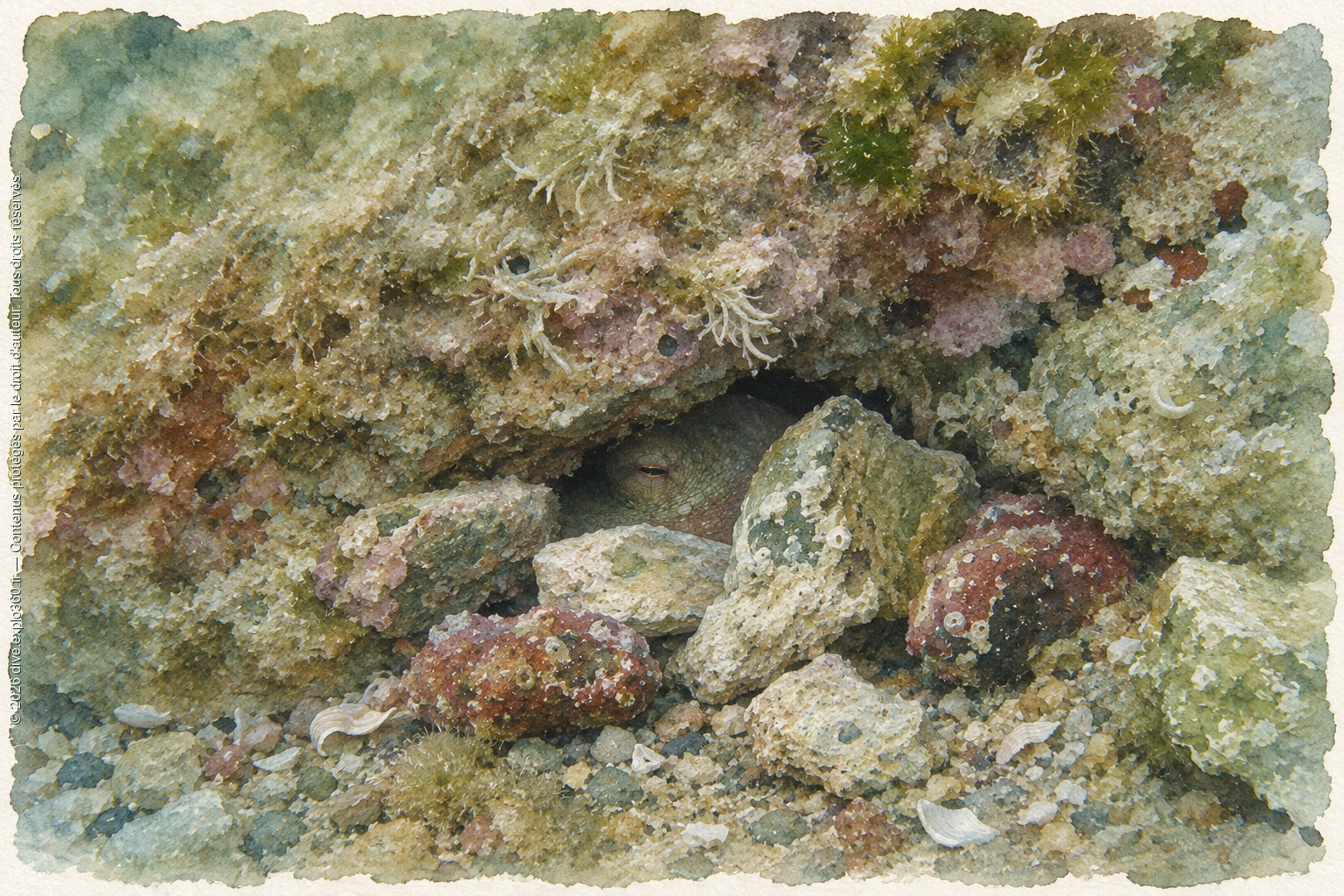
A stone or shell across the entrance can leave the octopus a smaller opening to defend. With its suckers, an octopus can grip an object and pull it into place. A few pebbles around a crevice, a shell across a gap or fragments partly hiding the entrance may all serve a purpose.
On soft seabeds where natural shelters are scarce, objects already present can make a difference. A Mediterranean study recorded common octopuses in holes in sand, under stones, inside large empty shells and in objects discarded by people. The animals adapt their dens to the materials at hand.
A pile of stones could be a barrier, the result of digging or a natural accumulation. The arrangement gives a clue. To work out the reason for a particular movement, it helps to watch the animal handling the objects.
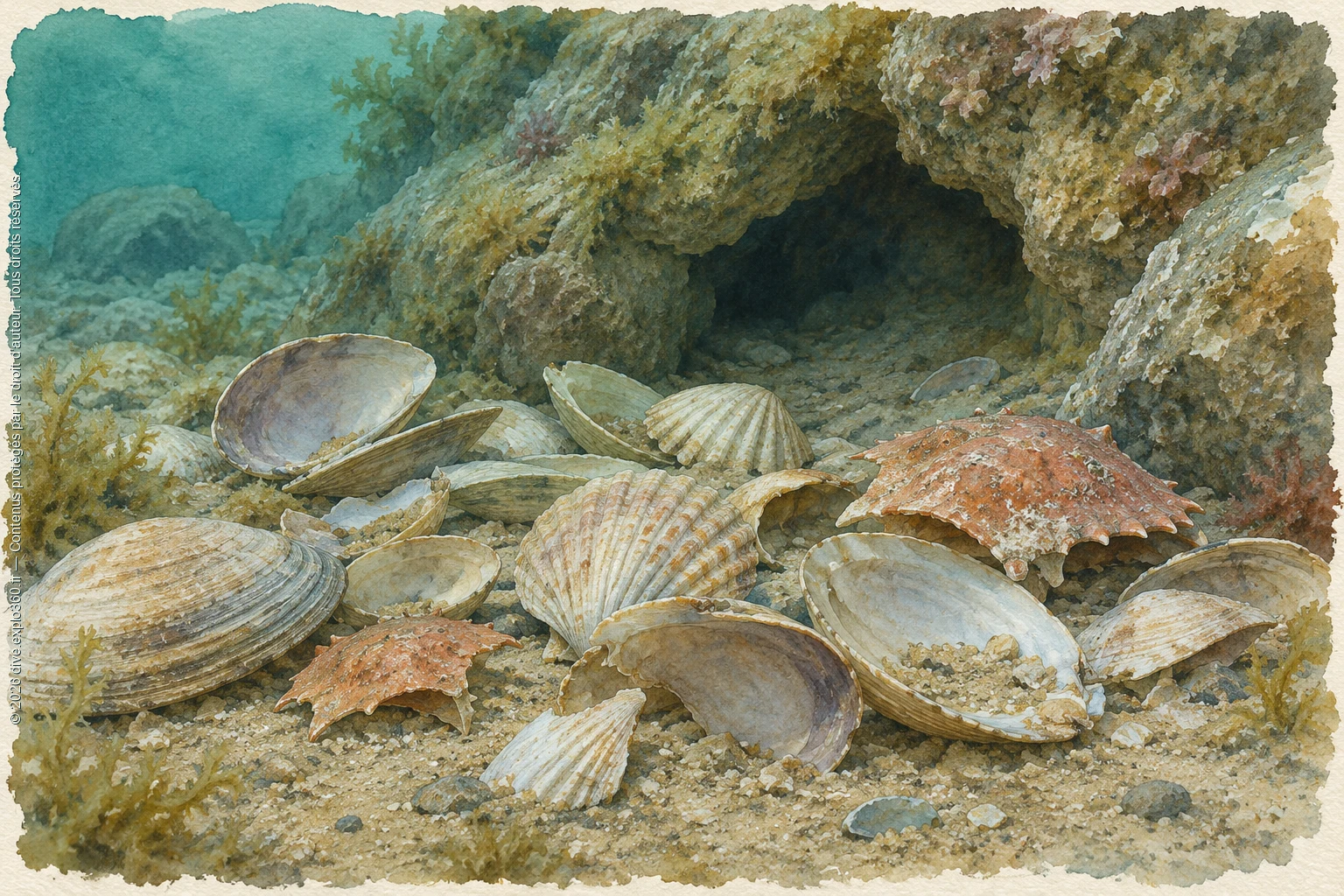
Shells left over from a meal
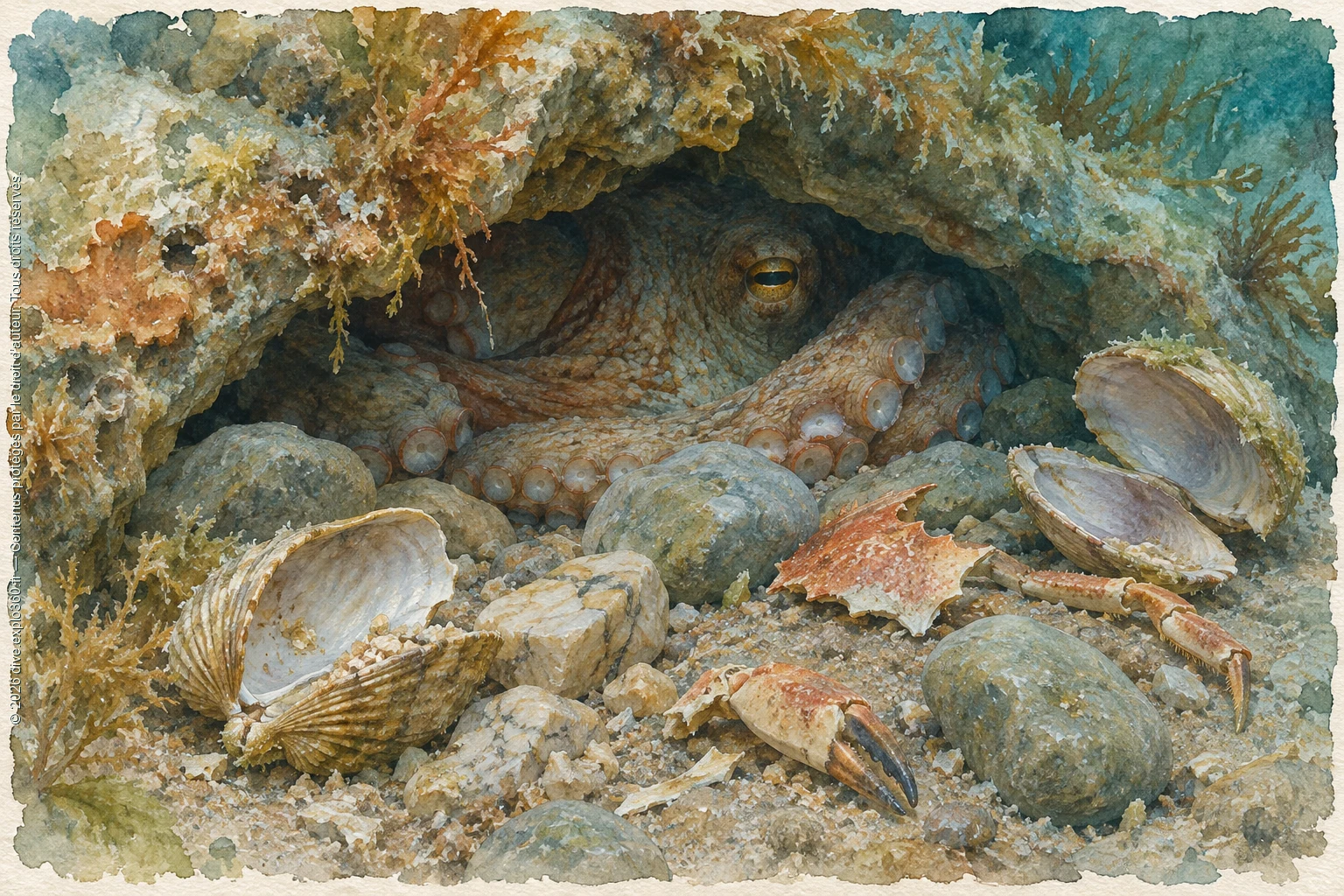
Some dens are easier to spot by their shells than by the stones around them. Bivalve valves accumulate, sometimes with fragments of crab carapaces. Researchers call a pile of prey remains like this a midden.
Octopuses are carnivores. They eat crustaceans, molluscs and other marine animals when the opportunity arises. An octopus may carry prey back to its den to eat, leaving hard parts outside. The remains build up over successive meals.