A remodelled entrance
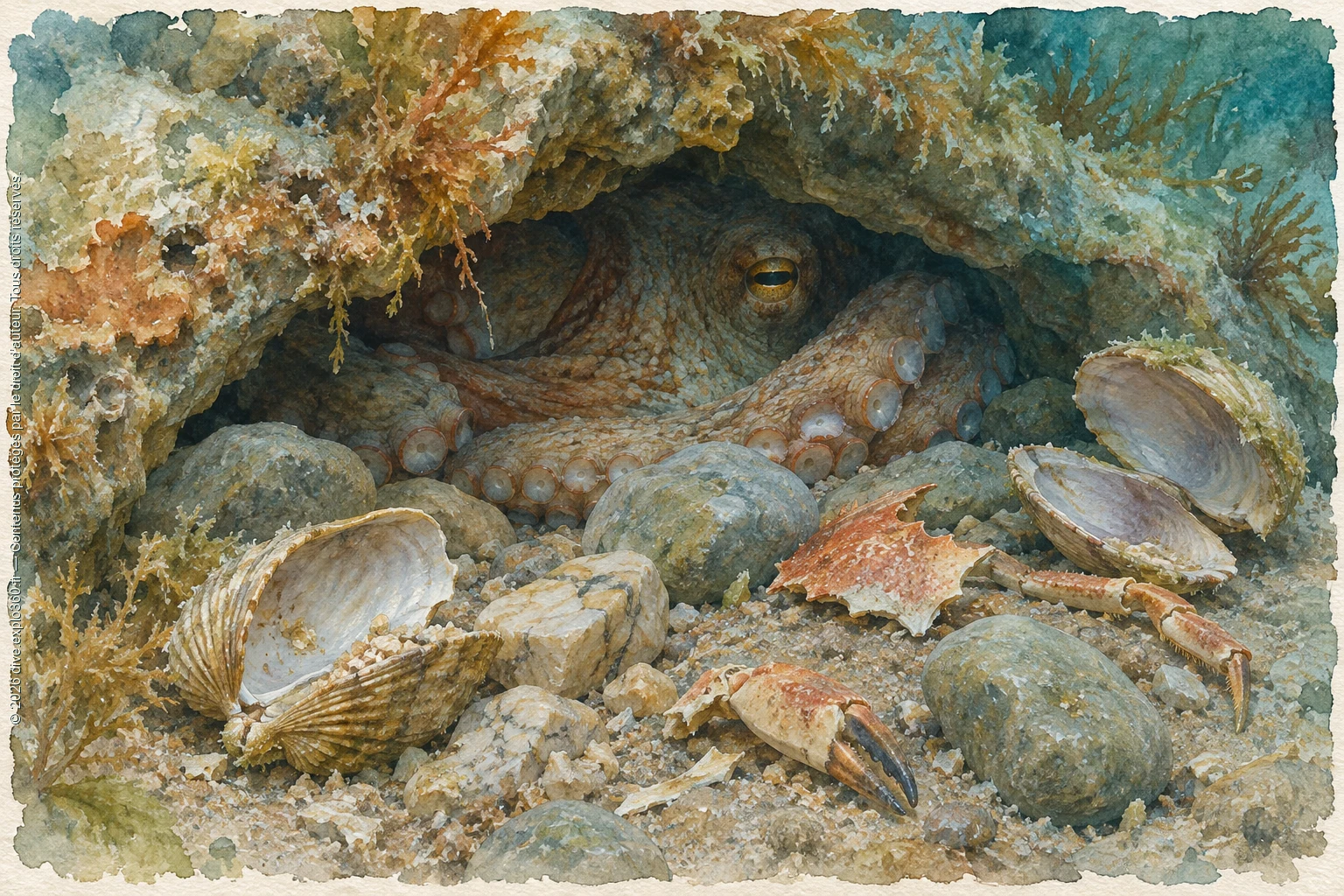
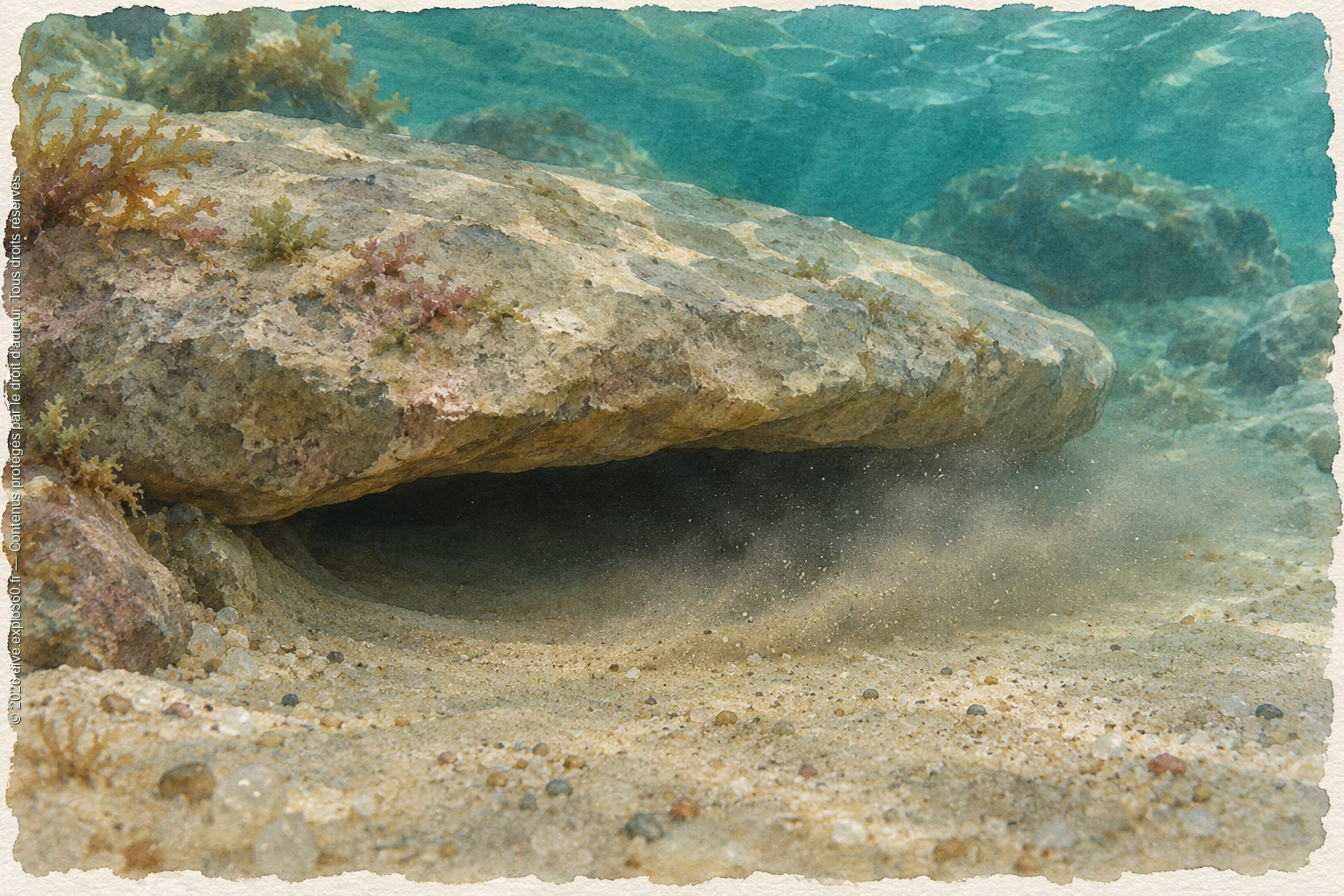
A common octopus can make a den among rocks, in seagrass or on sand. Its body is soft enough to fit through a narrow gap as long as its hard beak can get through. It can grip stones with its suckers and squirt water through its siphon to clear sand. A solid rock or an empty shell can provide shelter on soft sand.
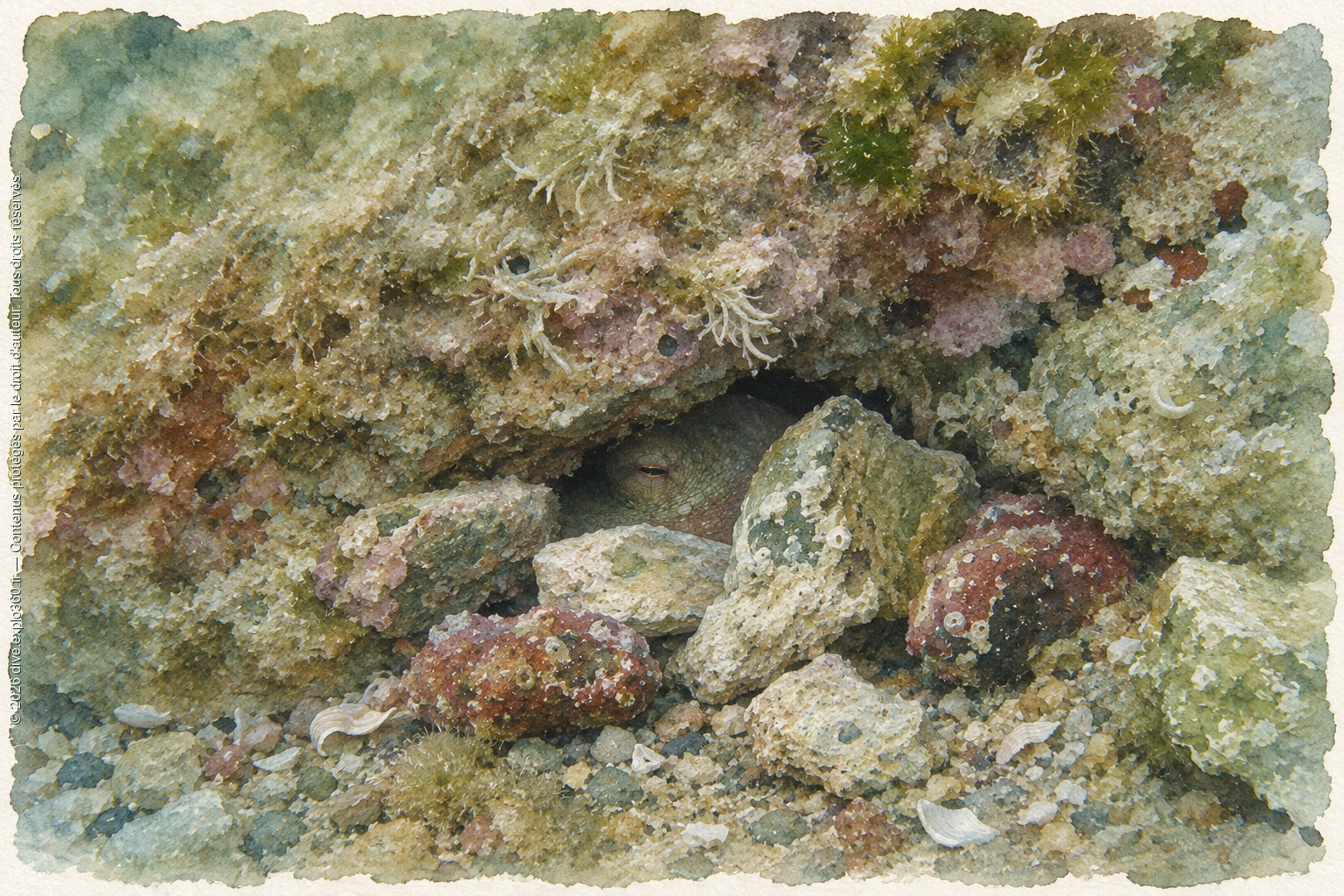
Objects reshape the opening
Stones and shells can narrow or shield the entrance. A Mediterranean study recorded dens in sand, beneath rocks, in shells and in discarded objects. Stones can gather naturally or be shifted during excavation. To tell these explanations apart, we would need to watch what the octopus does.
Leftovers around the den
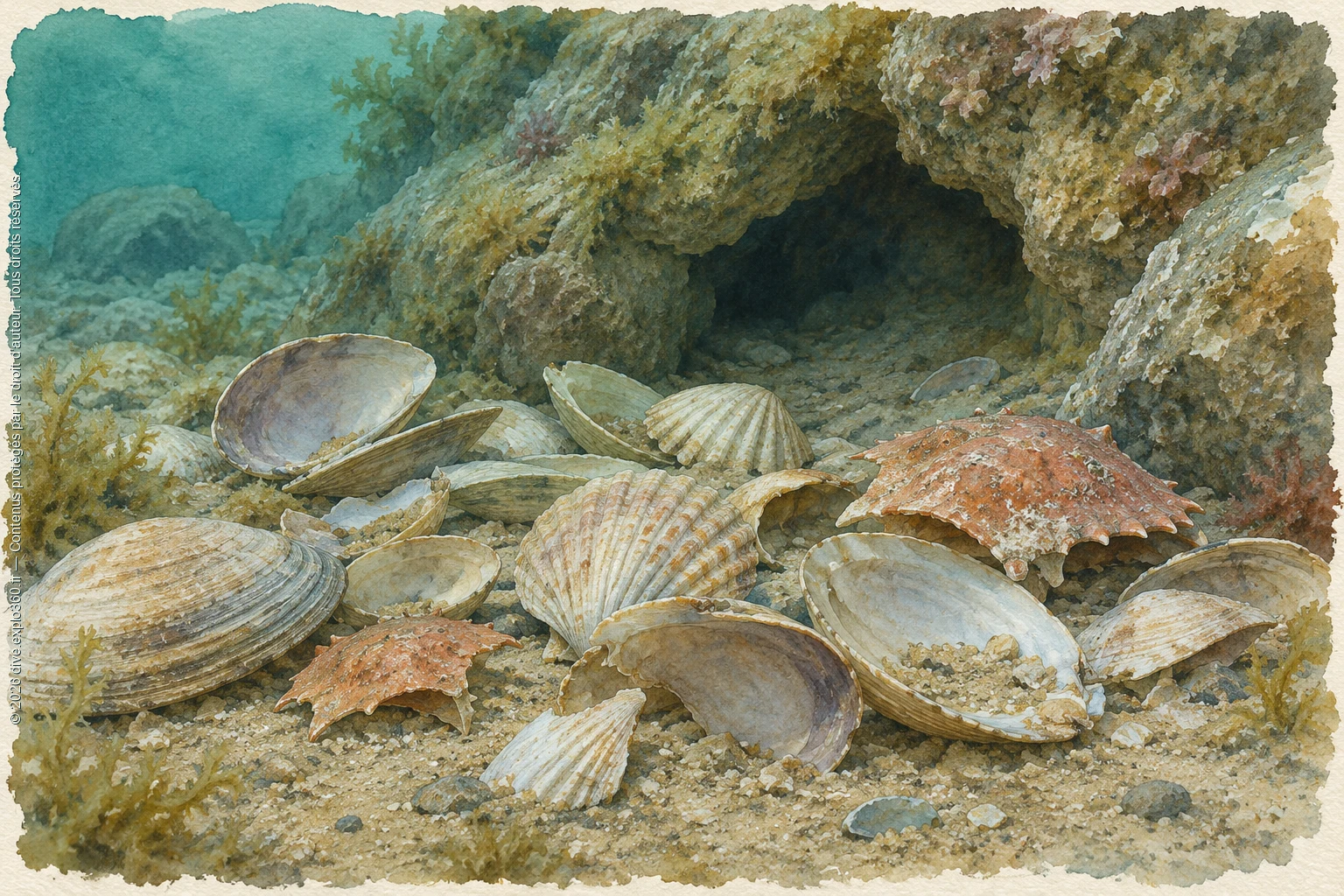
An octopus may take a crab or shellfish back to its den to eat. The hard parts it leaves behind can build up into a pile called a midden. That pile gives you a glimpse of its diet. Small scraps can wash away, and some prey is eaten away from the den.