A shelter that can be modified
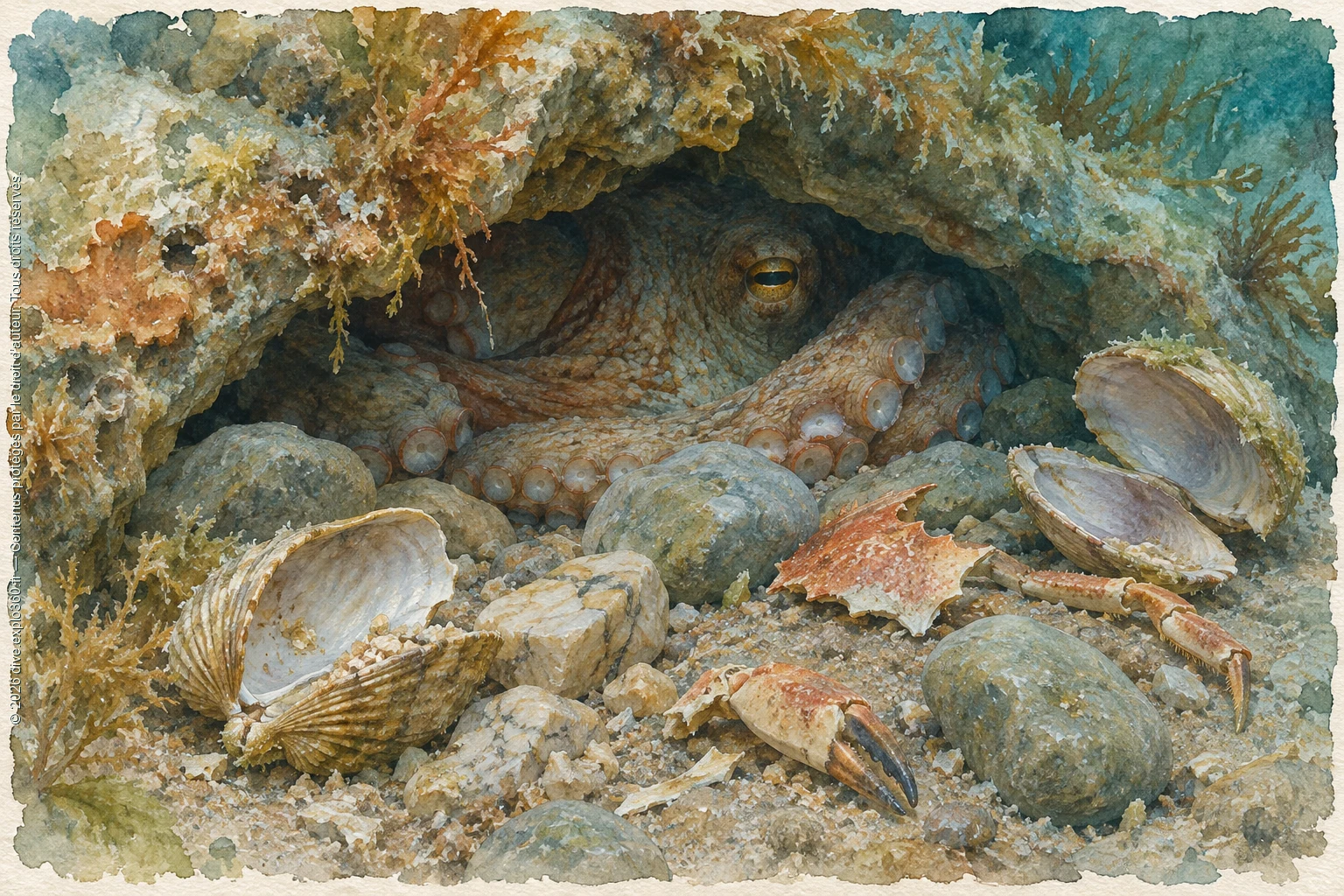
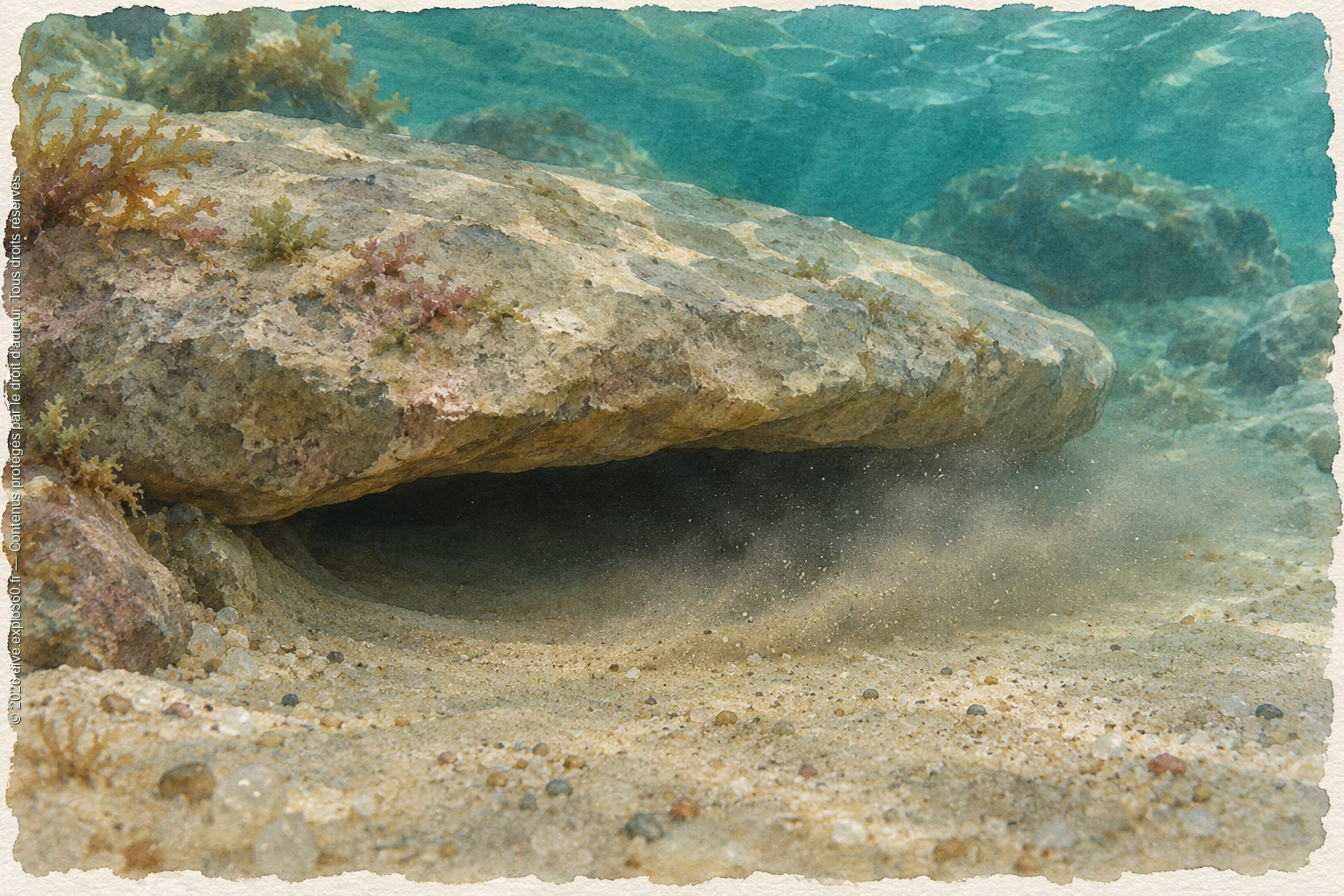
The octopus uses cavities on rocky or sandy seabeds and in seagrass. Its soft body fits through narrow gaps, with the hard beak setting a limit. Suckers grip stones, while a jet from the siphon clears sediment. A stable rock, large shell or other solid object can provide a framework for the den.
Protection is one possible use
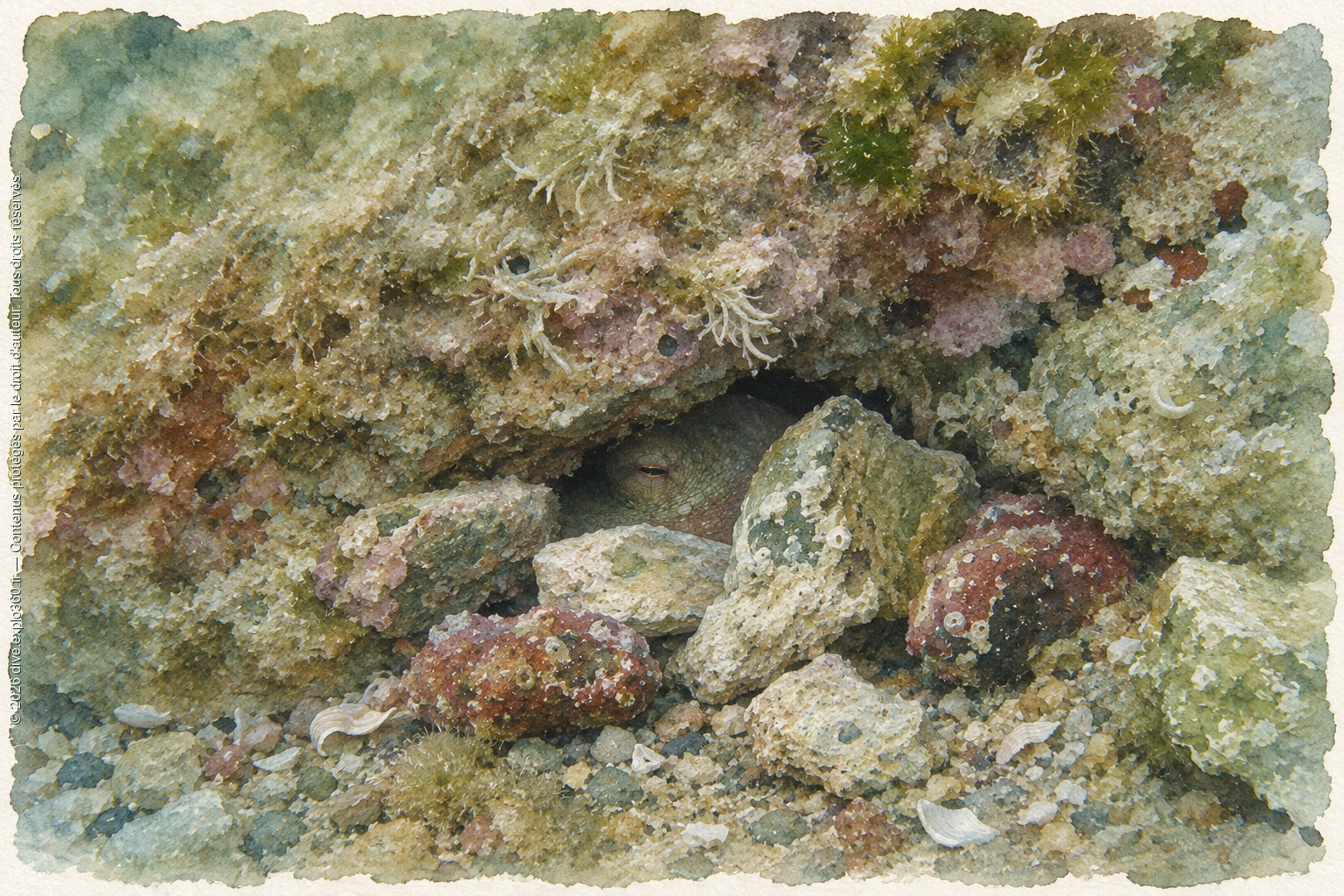
An octopus can narrow the entrance by moving stones or shells. On soft Mediterranean seabeds, it may excavate a den or use a rock, shell or discarded object as shelter. A pile at the doorway can result from construction, digging or water movement. Direct observations can help distinguish those possibilities.
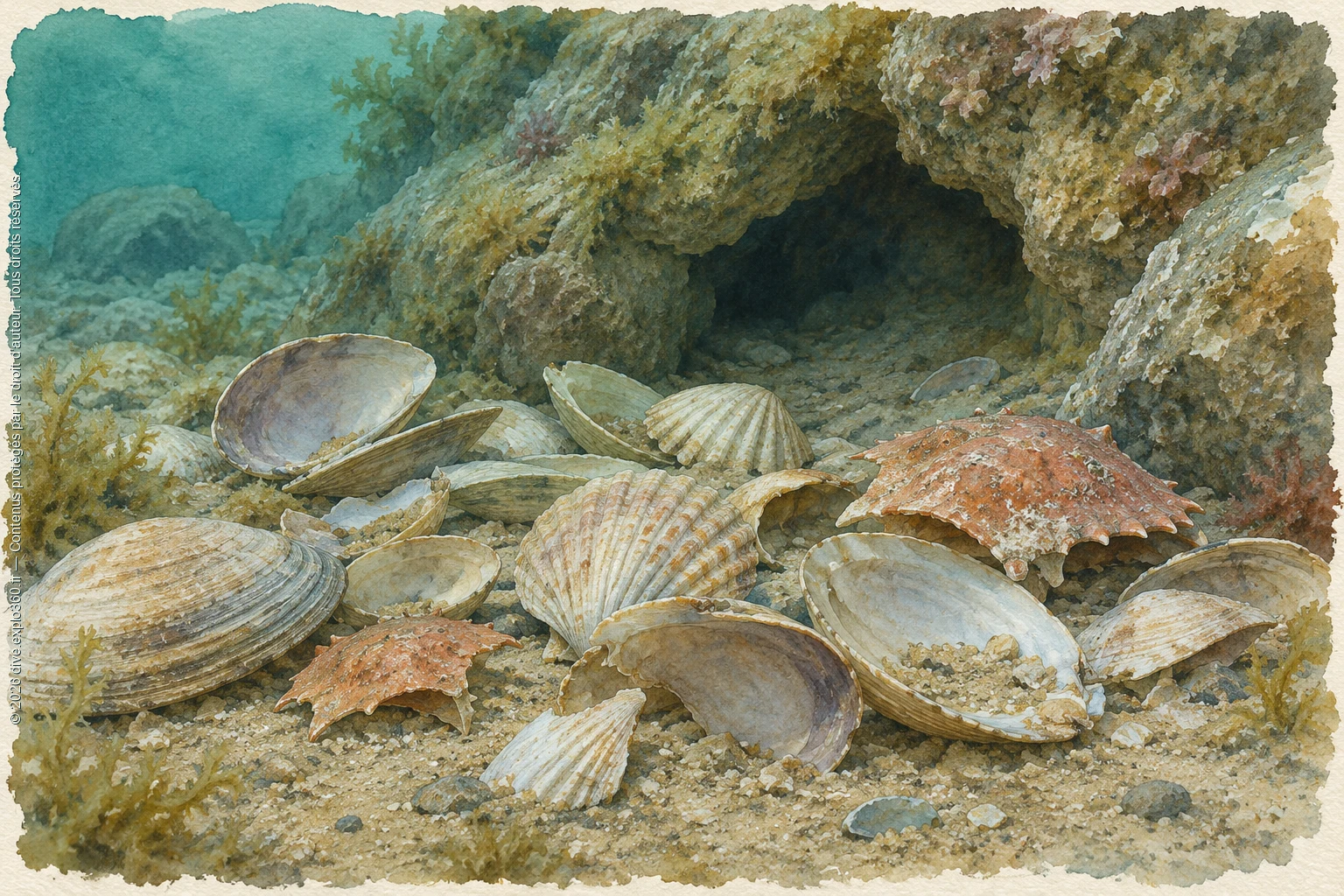
Reconstructing part of the diet
Octopuses can carry crustaceans and molluscs back to the den, where the hard remains build up in a midden. Studies of juvenile common octopuses use these piles to identify some of their prey. What persists is easier to record. Lighter fragments may wash away and prey eaten elsewhere leaves no trace at the den.