A den under a rock
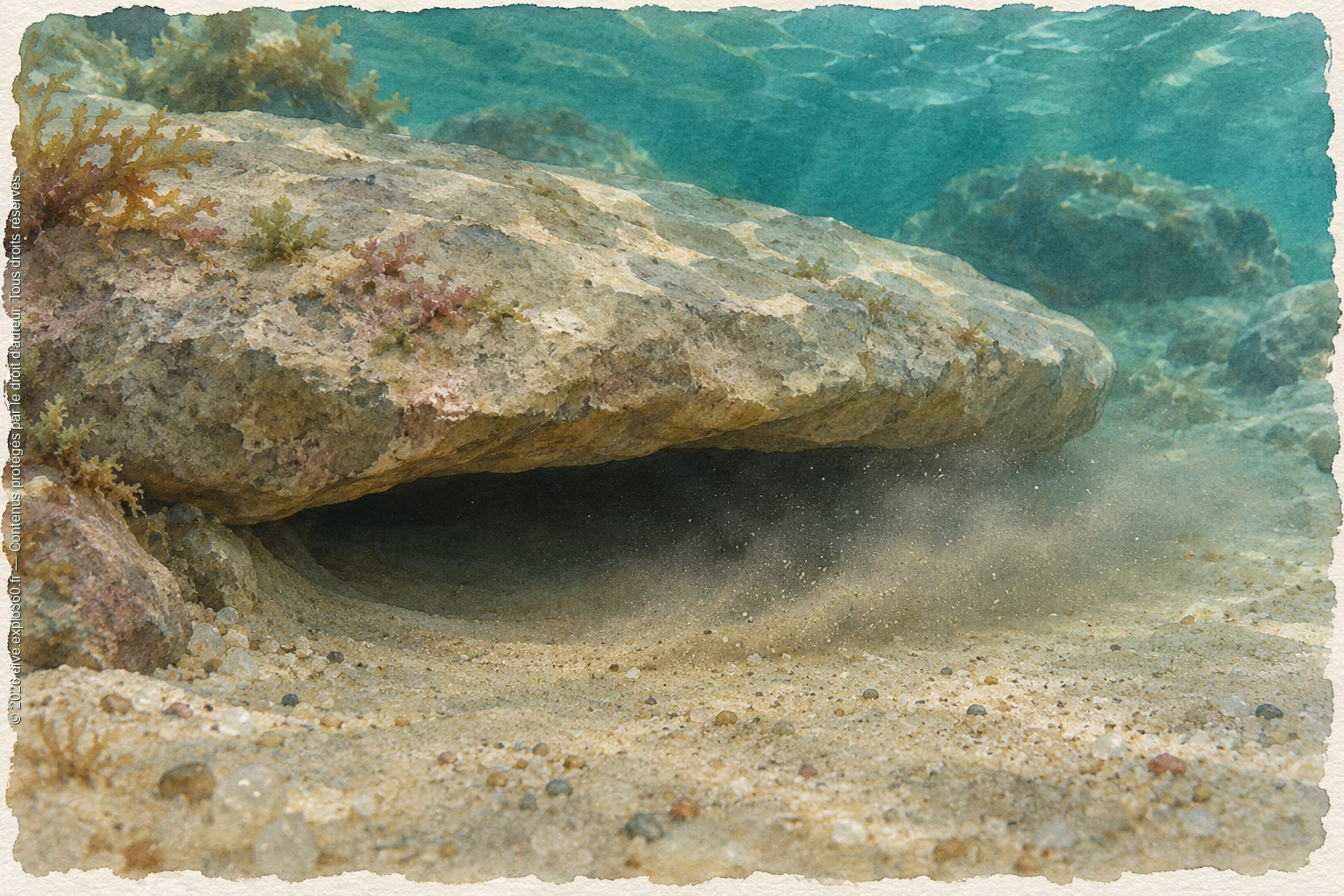
A common octopus can live among rocks, in seagrass or on sand. Its soft body can squeeze into a narrow gap if its hard beak fits. It grips stones with its suckers and squirts water to blow sand away. A solid rock can make a roof over its hiding place.
Pebbles at the entrance
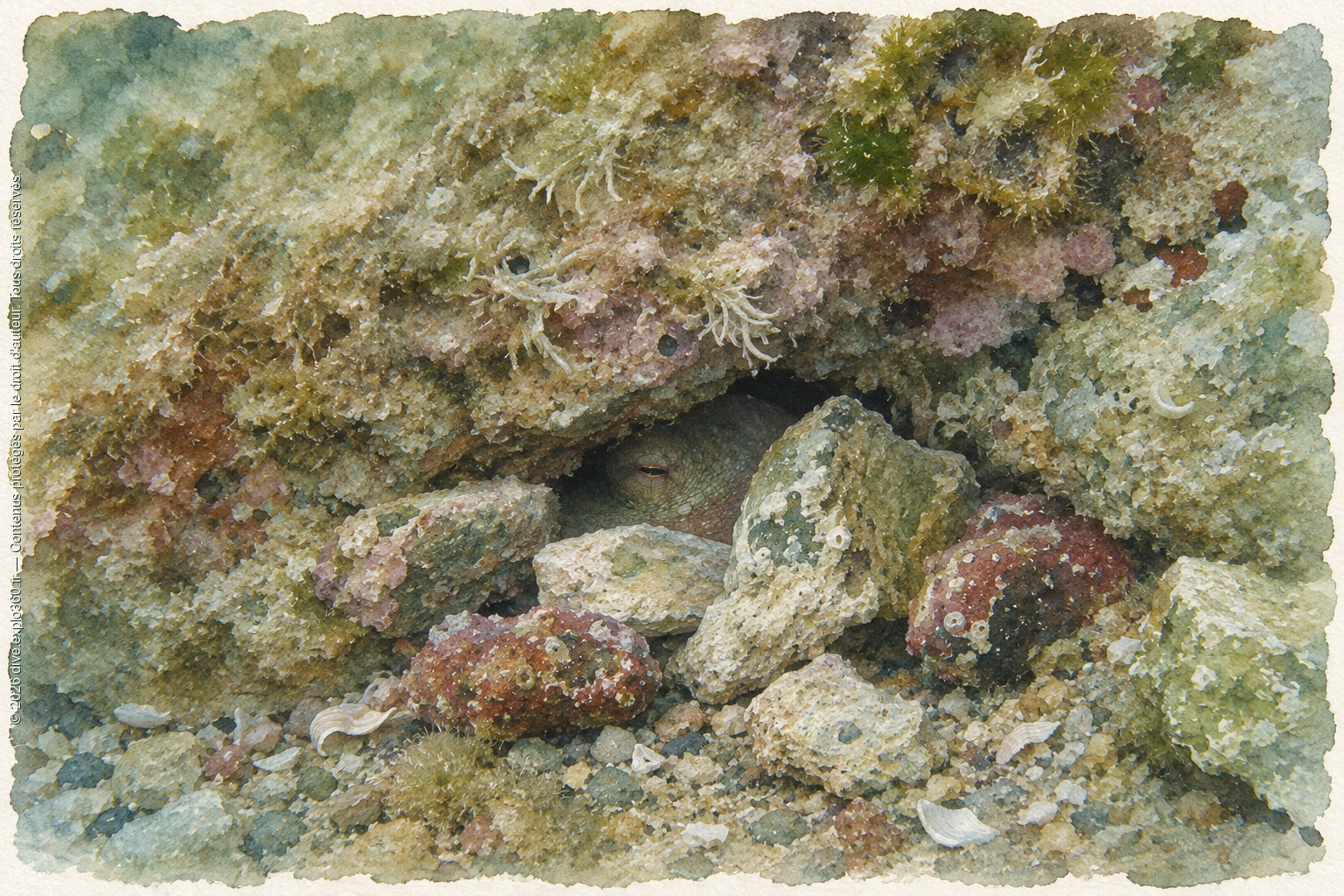
An octopus can pull a stone or shell across part of its doorway. On sand, even something people have left behind might make a shelter. A stone can also end up outside when the octopus clears its den or when water shifts it. Watch the entrance and you might see what happened.
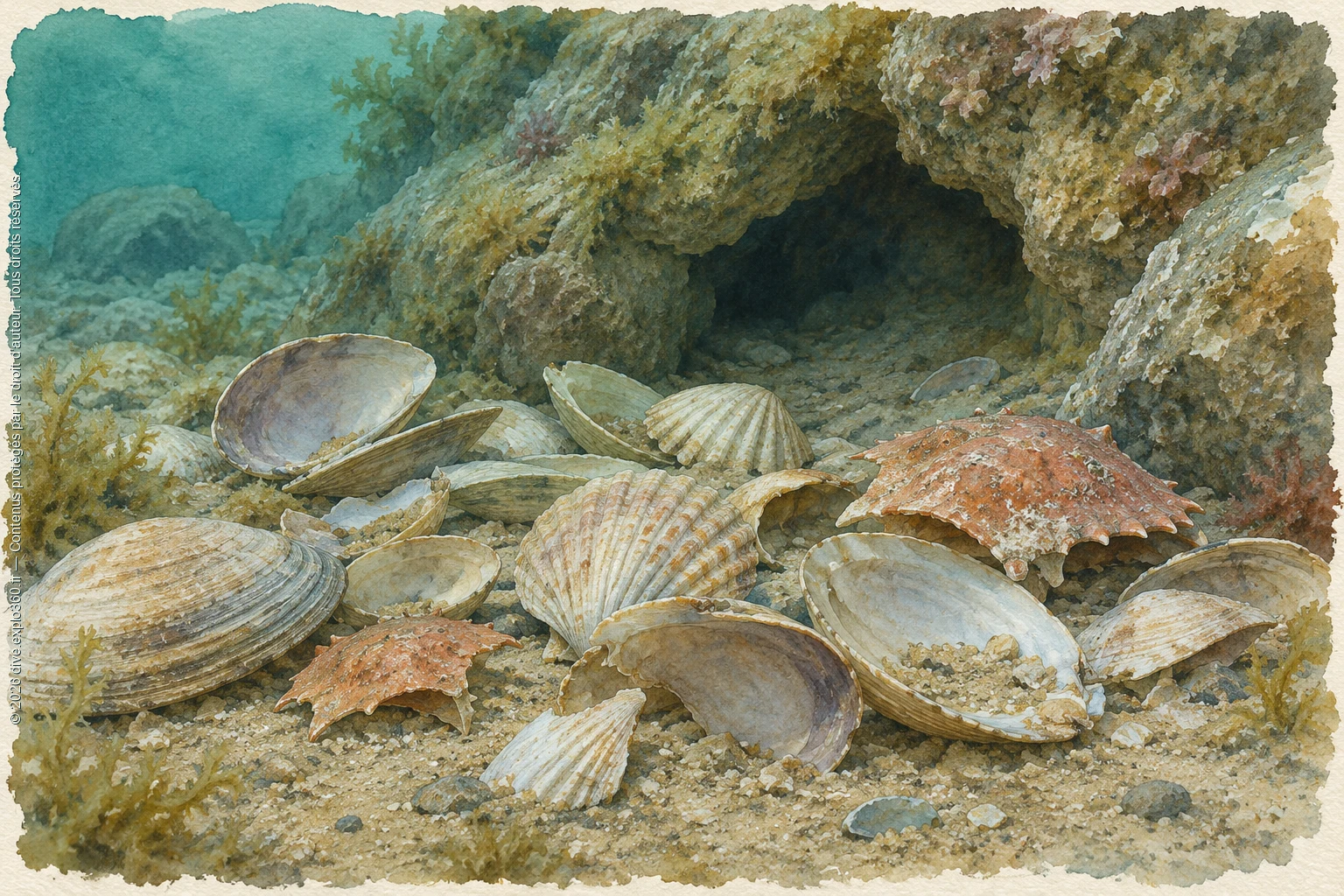
Leftovers from dinner
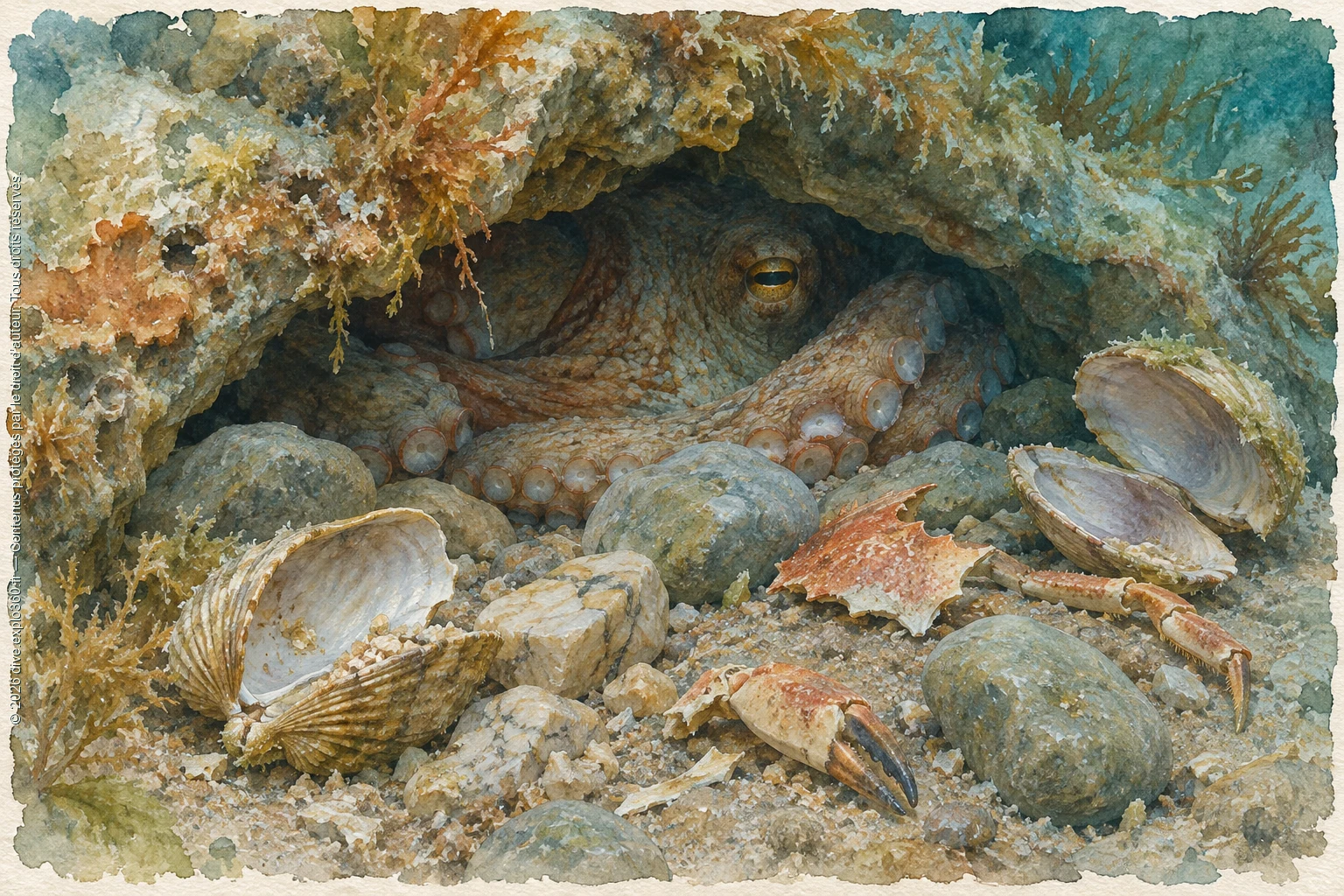
An octopus eats crabs and shellfish. It may carry a crab back to its den and leave the hard shell outside. A pile of leftovers is called a midden. The current can take away the light scraps, and the octopus may eat some meals somewhere else.