A colony with thousands of partners
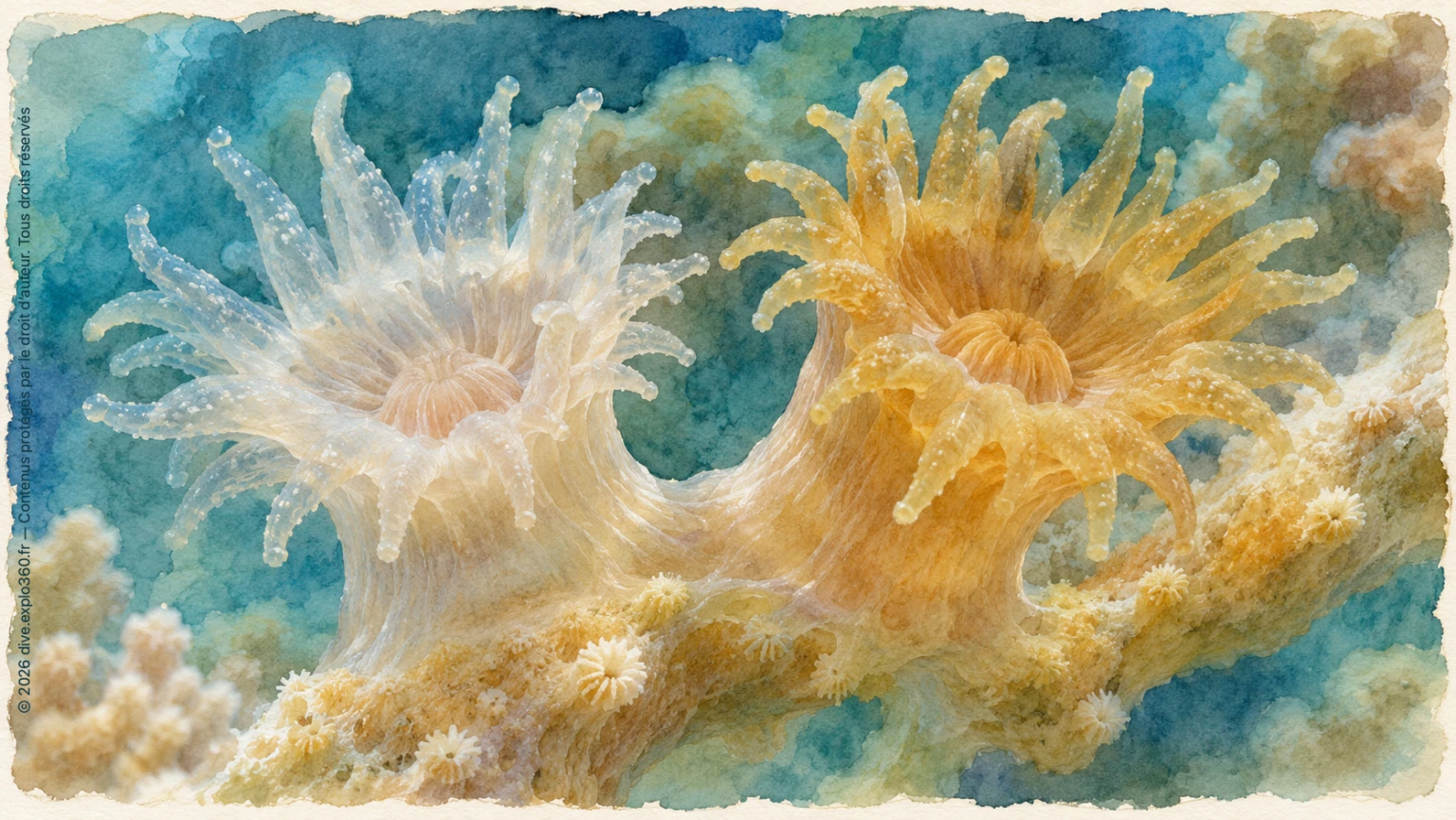
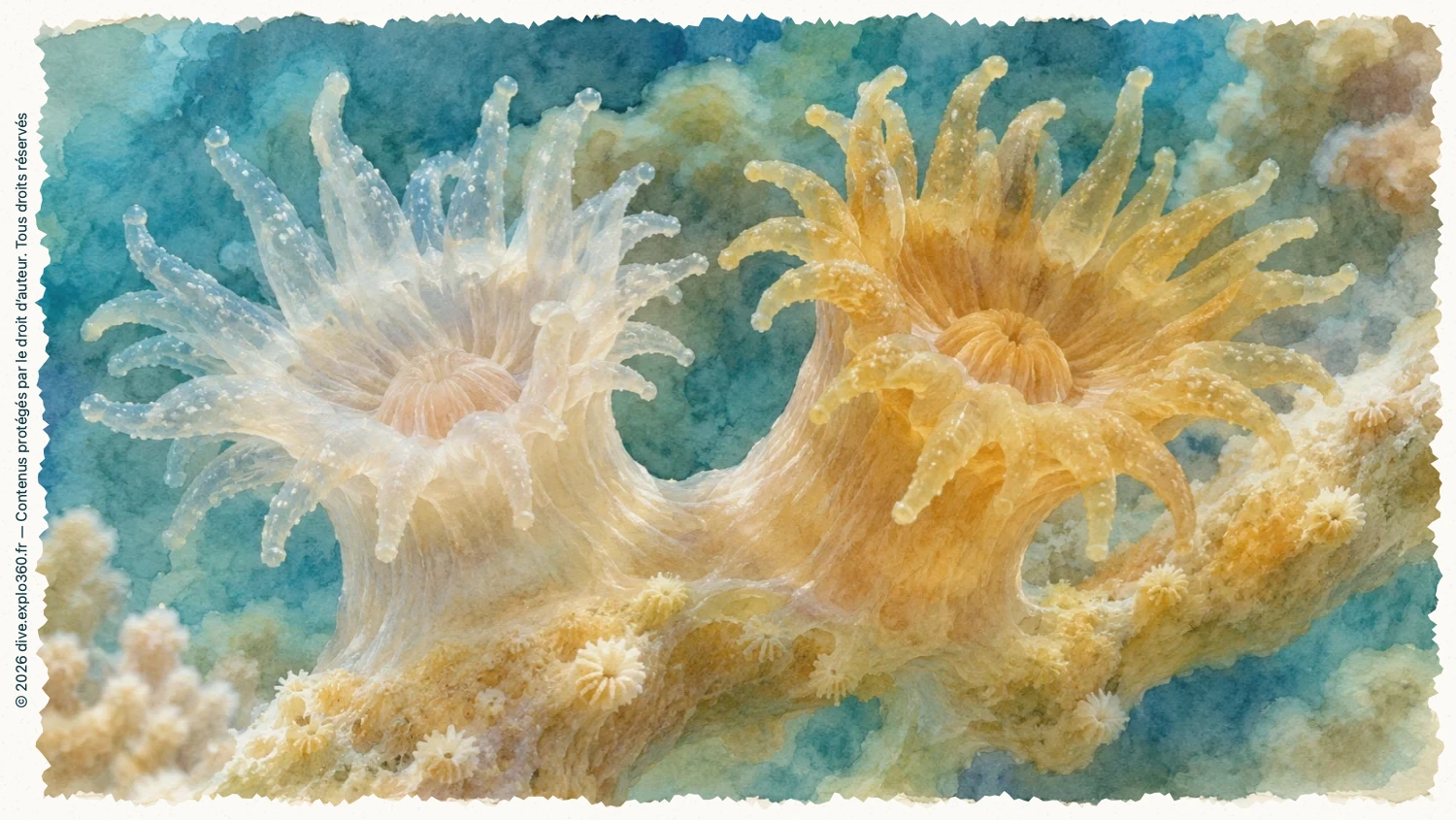
A reef-building coral is an animal. Each of its polyps has a mouth, tentacles and a digestive cavity. It captures small prey, absorbs dissolved substances and produces a skeleton of calcium carbonate. But in many tropical species living in sunlit waters, a large part of the energy they need comes from organisms living inside them.
Inside the polyps’ cells are photosynthetic dinoflagellates belonging to the family Symbiodiniaceae, often referred to as zooxanthelles. These microorganisms use light energy to produce organic compounds from mineral substances. The coral receives some of these compounds and uses them to sustain itself, grow and reproduce. The symbionts get a relatively sheltered place to live and resources they need to function.
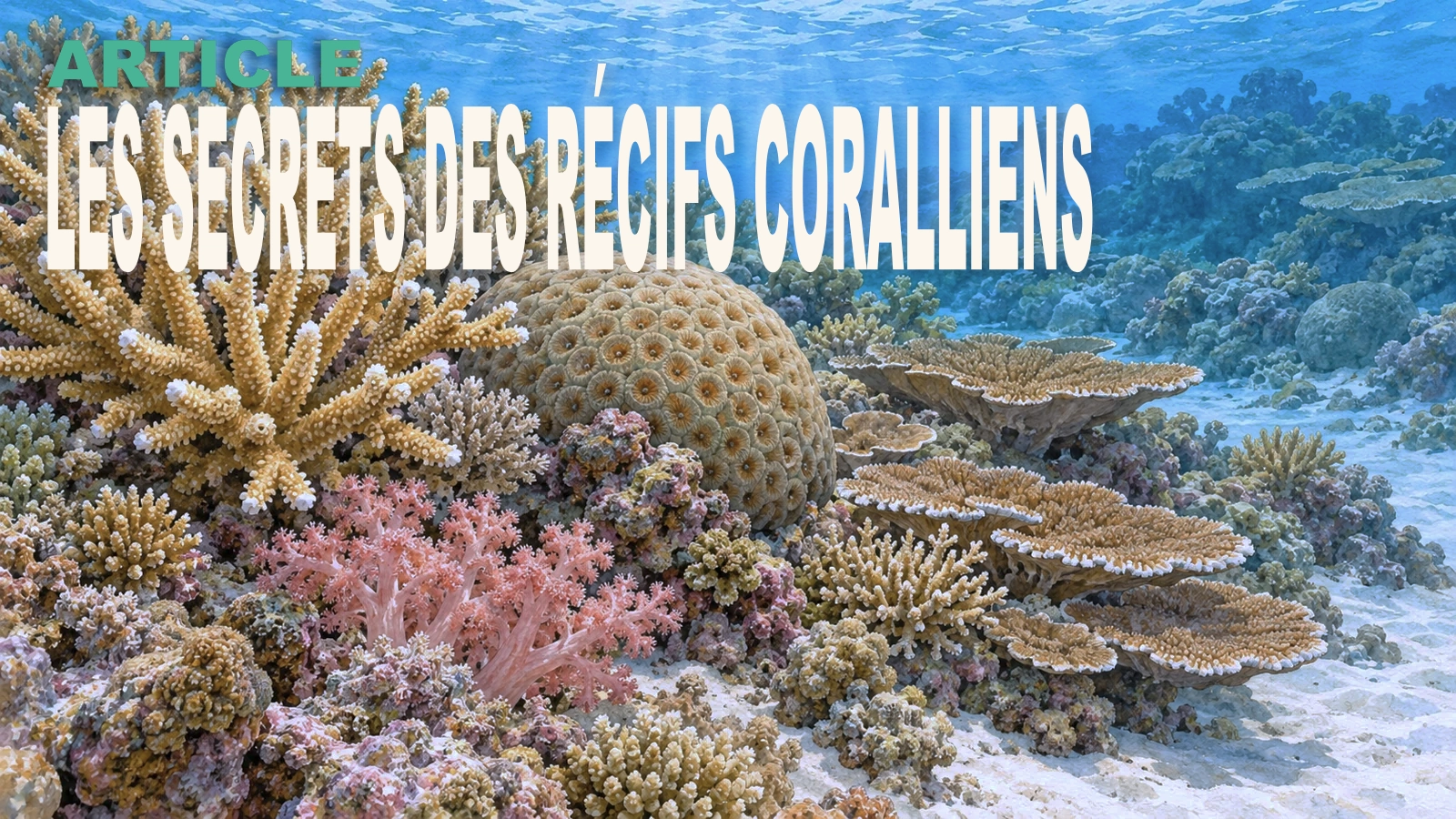
This association allows many corals to build their skeletons in tropical waters where dissolved nutrient concentrations are often low. It also explains a large part of their usual colours. The photosynthetic pigments of symbionts contribute to the brown, golden or greenish hues of many corals. Other colours, including some pink, violet or fluorescent shades, come from pigment proteins produced by the animal itself.
A colony’s colour comes from pigments made by both partners. When symbionts disappear or lose their pigments, the appearance of the colony can change radically.
When the water gets too warm
A temperature rise of a few degrees may seem modest. For a coral already living near the upper limit of its thermal tolerance, however, it can cause a major imbalance. The danger depends on the intensity of the warming, but also on its duration. A brief exposure does not necessarily have the same consequences as unusually high temperatures that persist for several weeks.
Photosynthesis relies on a series of reactions inside the symbiont cells. Too much heat can disrupt parts of that process. The cells can become less efficient at using the light they absorb. Under some conditions, they produce more oxidising molecules than their defences can handle. These molecules, especially some reactive oxygen species, can damage cellular components.
Heat also affects the coral’s own cells, changing their metabolism, membranes and defences. Light also plays a role. High light exposure can aggravate photosynthetic disturbances when temperatures are high. But bleaching does not always result from a single mechanism. Depending on species and conditions, several cellular processes can occur simultaneously. By the time a reef looks paler, changes have already taken place inside its cells.
How the colours fade
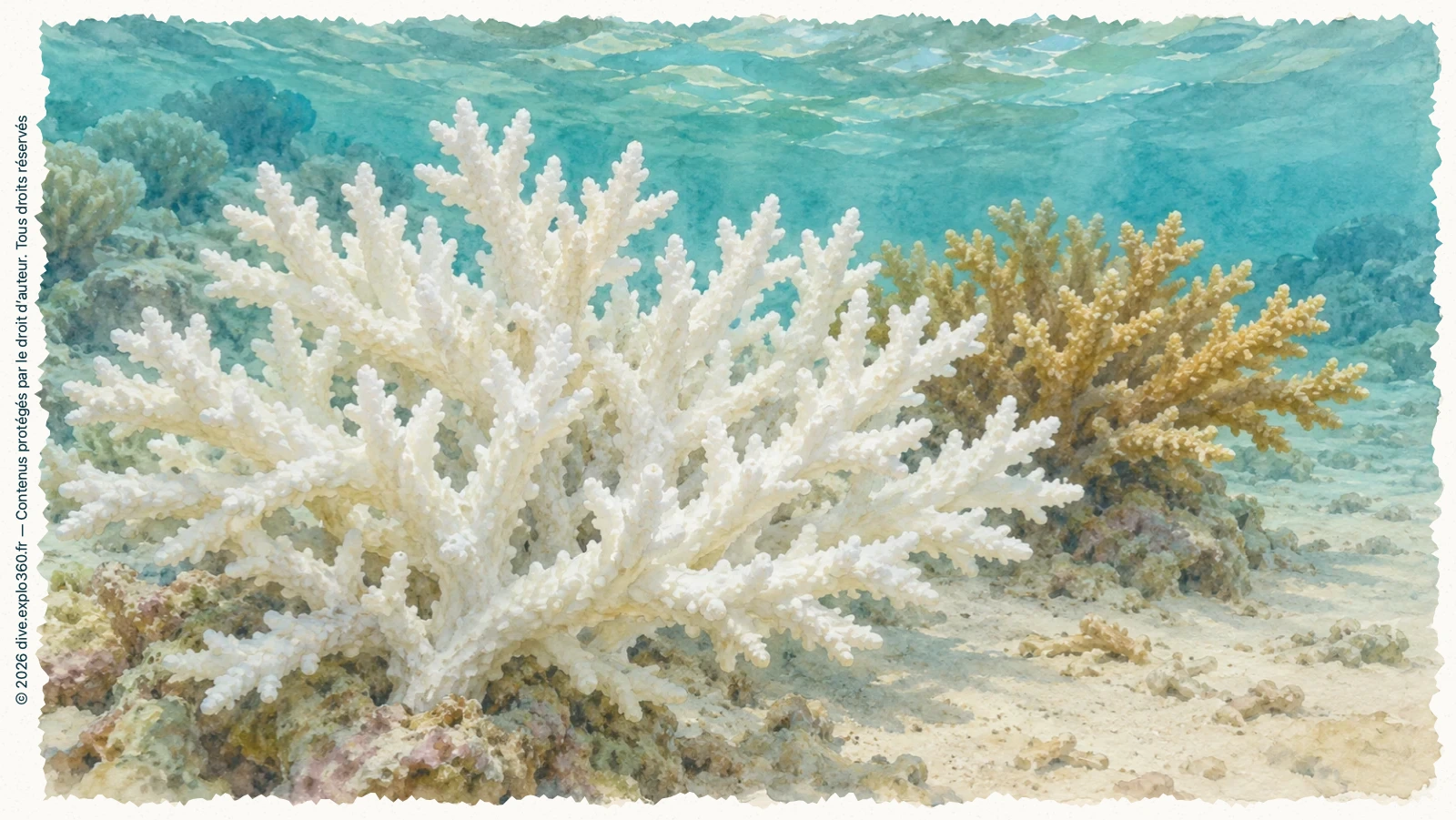
Bleaching can develop gradually. A colony may first grow paler, lose its brown or golden hues, and then become almost entirely white. Inside the tissues, the number of photosynthetic symbionts decreases. Some are expelled from coral cells. Others are broken down inside the tissue. Some coral cells that contain symbionts can also be shed or die.
The loss of photosynthetic pigments can also contribute to colour change, even when some symbionts remain. These mechanisms do not necessarily occur in the same proportions in all species. As the tissue becomes more transparent, the white skeleton shows through. The skeleton was white all along. The pigments in the tissue normally hide it.
That thin layer of tissue can still be alive. On the surface of its branches, polyps are still present. They can keep their tentacles, mouth and some ability to feed, but their functioning is now deeply disturbed. When polyps die and disappear, their skeleton is exposed directly to the water. Algae and other organisms can quickly colonise it.
Two colonies of a similar white may therefore be in very different biological situations.