A symbiosis that feeds the reef
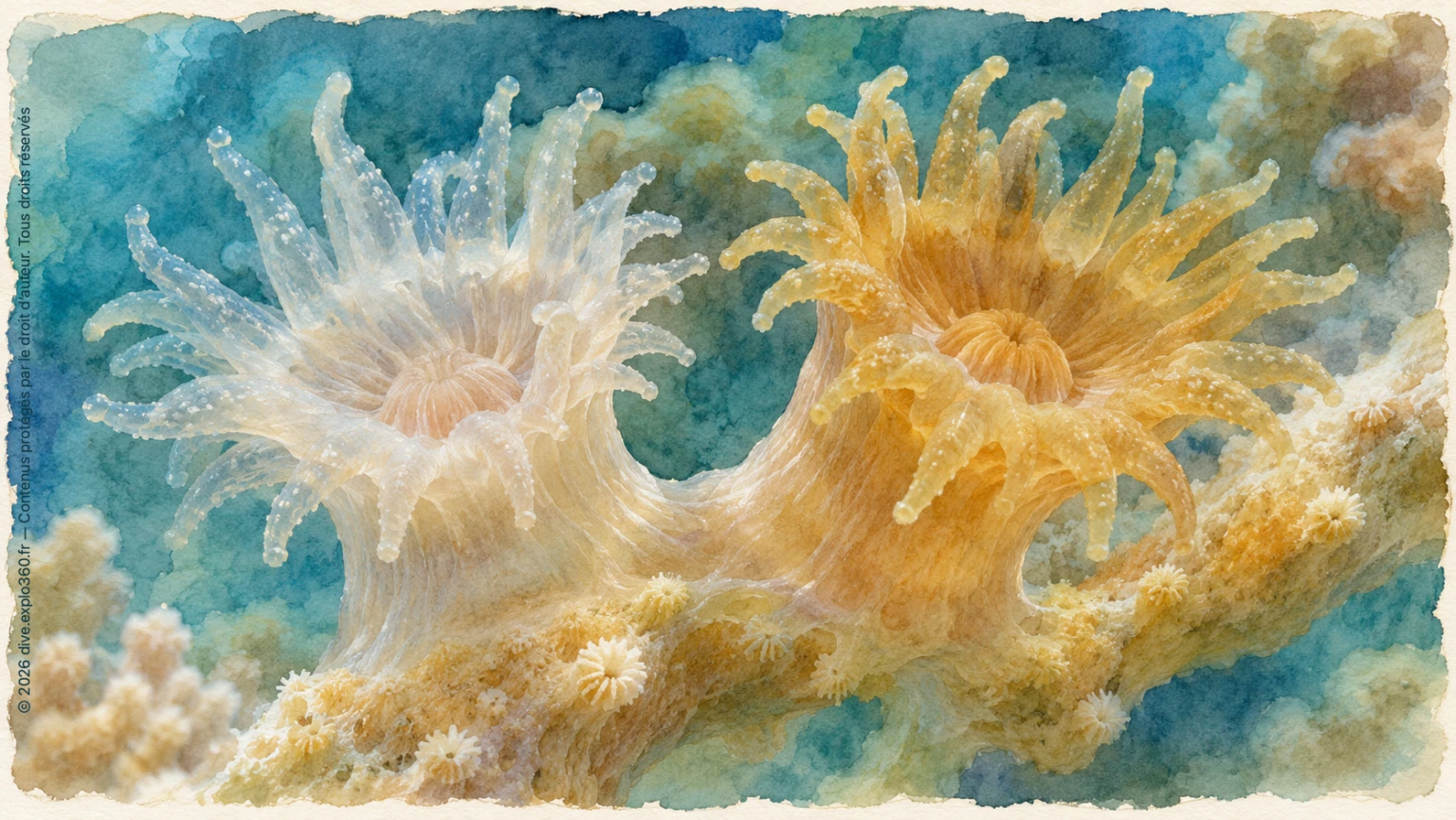
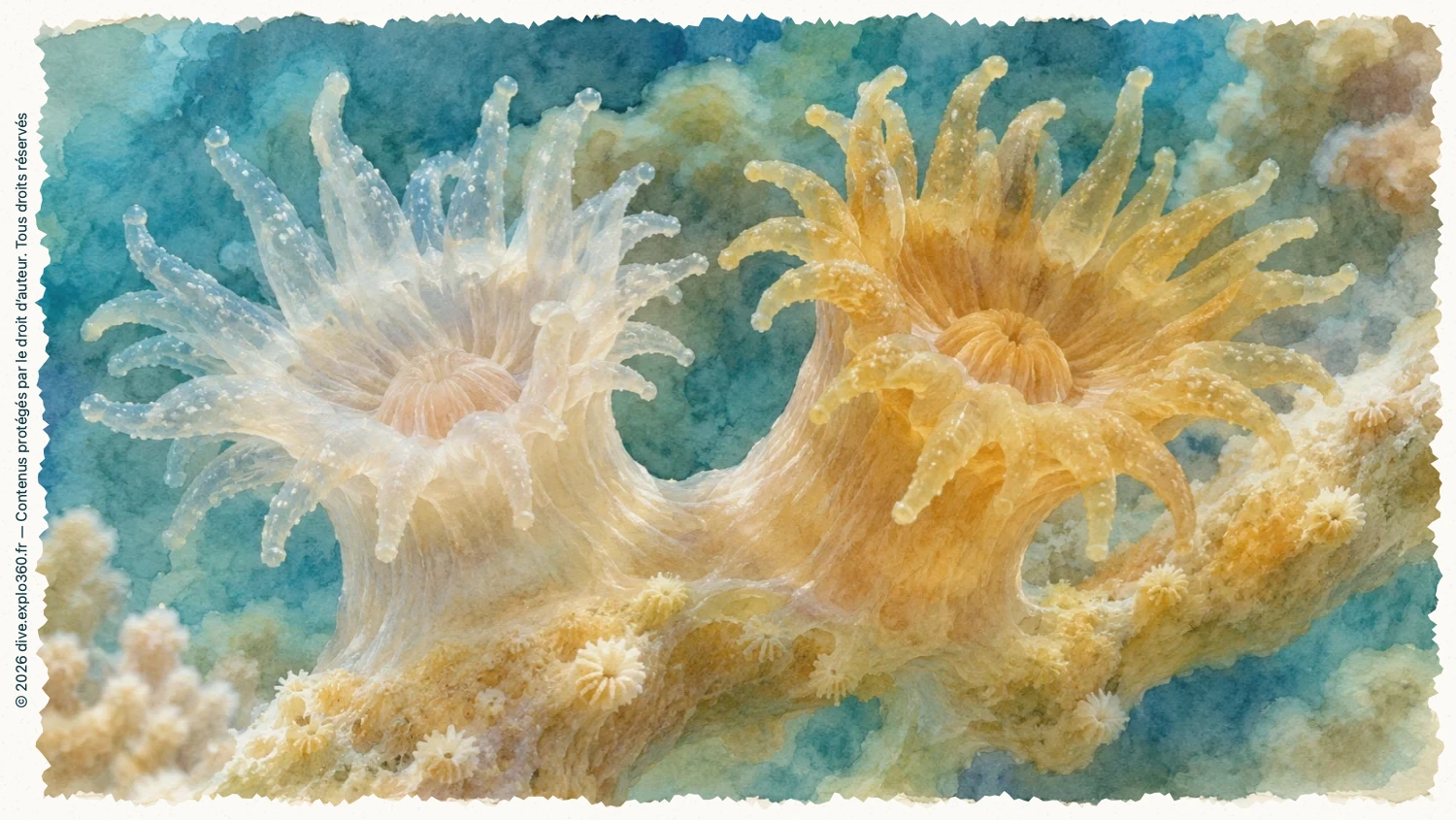
Algae in the family Symbiodiniaceae live inside polyp cells. They photosynthesise and pass some of the organic compounds they make to the coral. Their pigments give many colonies brown or golden tones. The coral’s own proteins account for some other colours.
From heat stress to bleaching
How much heat the coral experiences and for how long both matter. Strong light can compound the effects of heat on photosynthesis and increase oxidative stress. Several cellular processes can reduce the number of symbionts, and a loss of pigment can also expose the colour of the skeleton through the tissue.
Why does it look white?
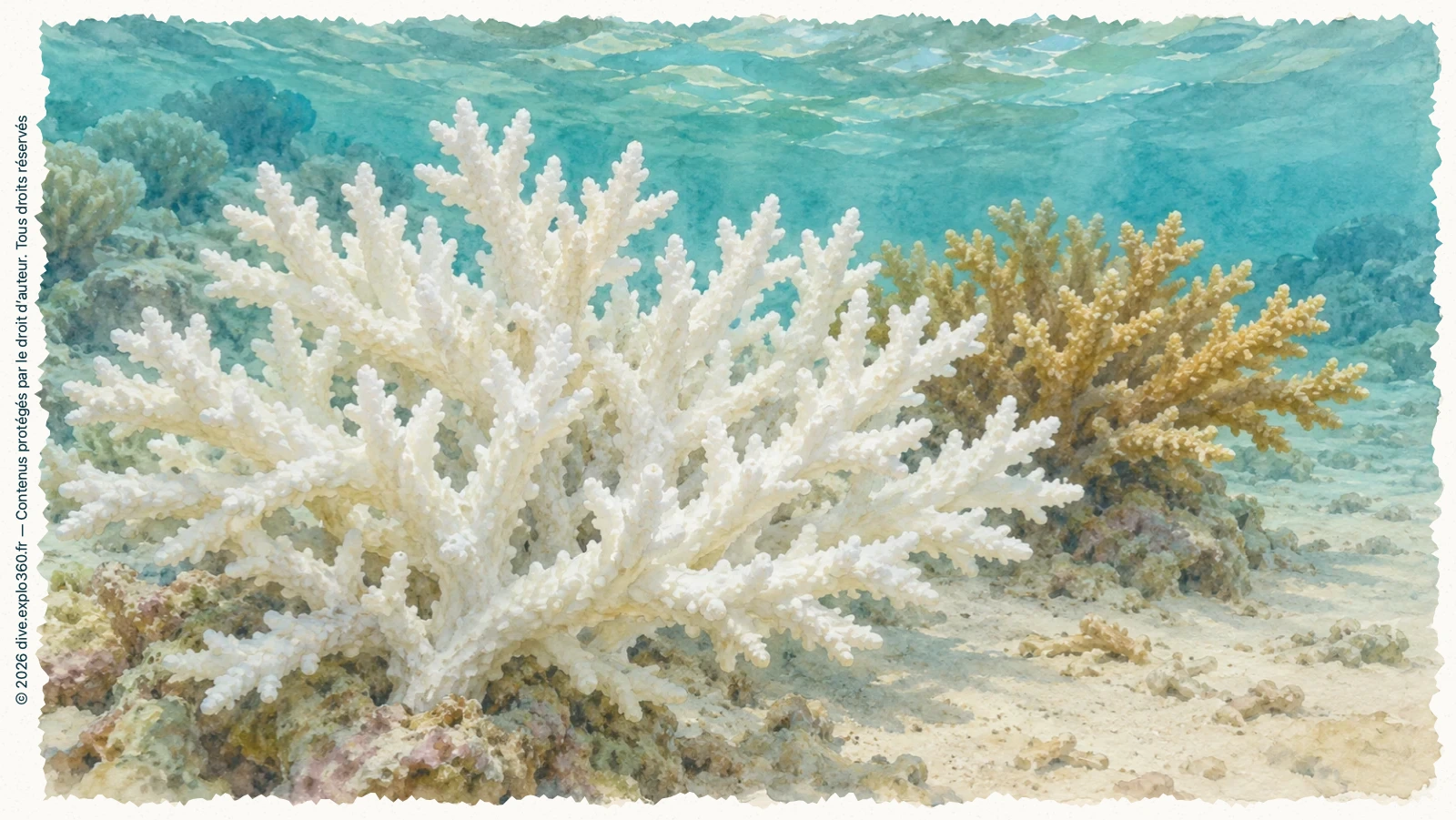
Bleaching involves a reduction in symbionts or their pigments. As the tissue becomes more transparent, the skeleton underneath shows through.