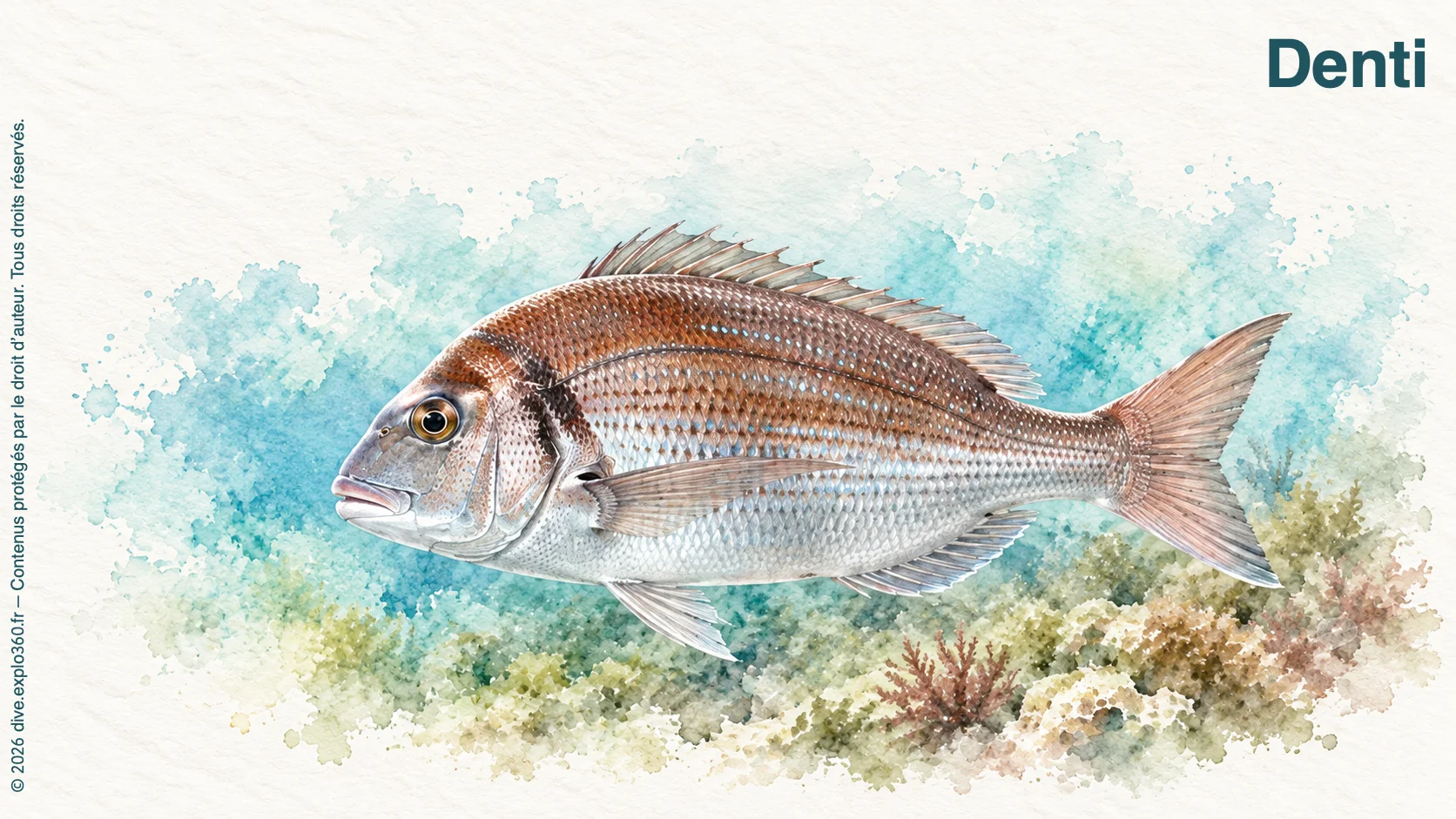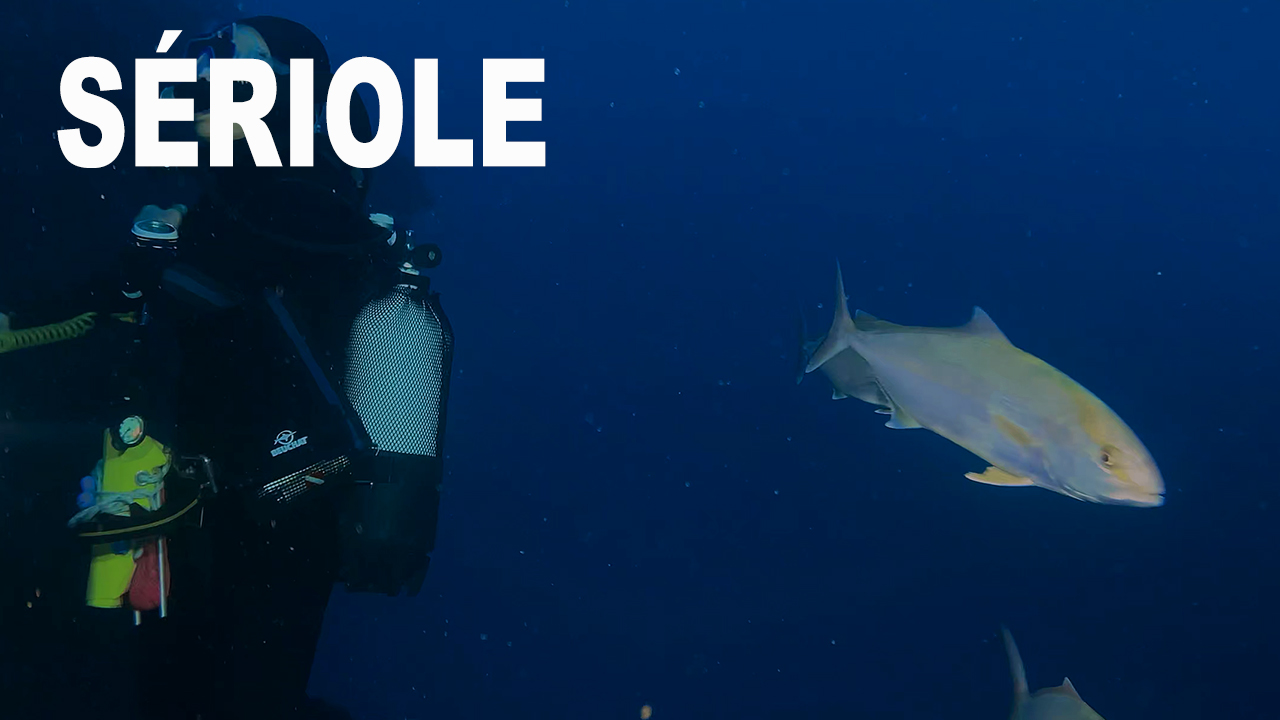

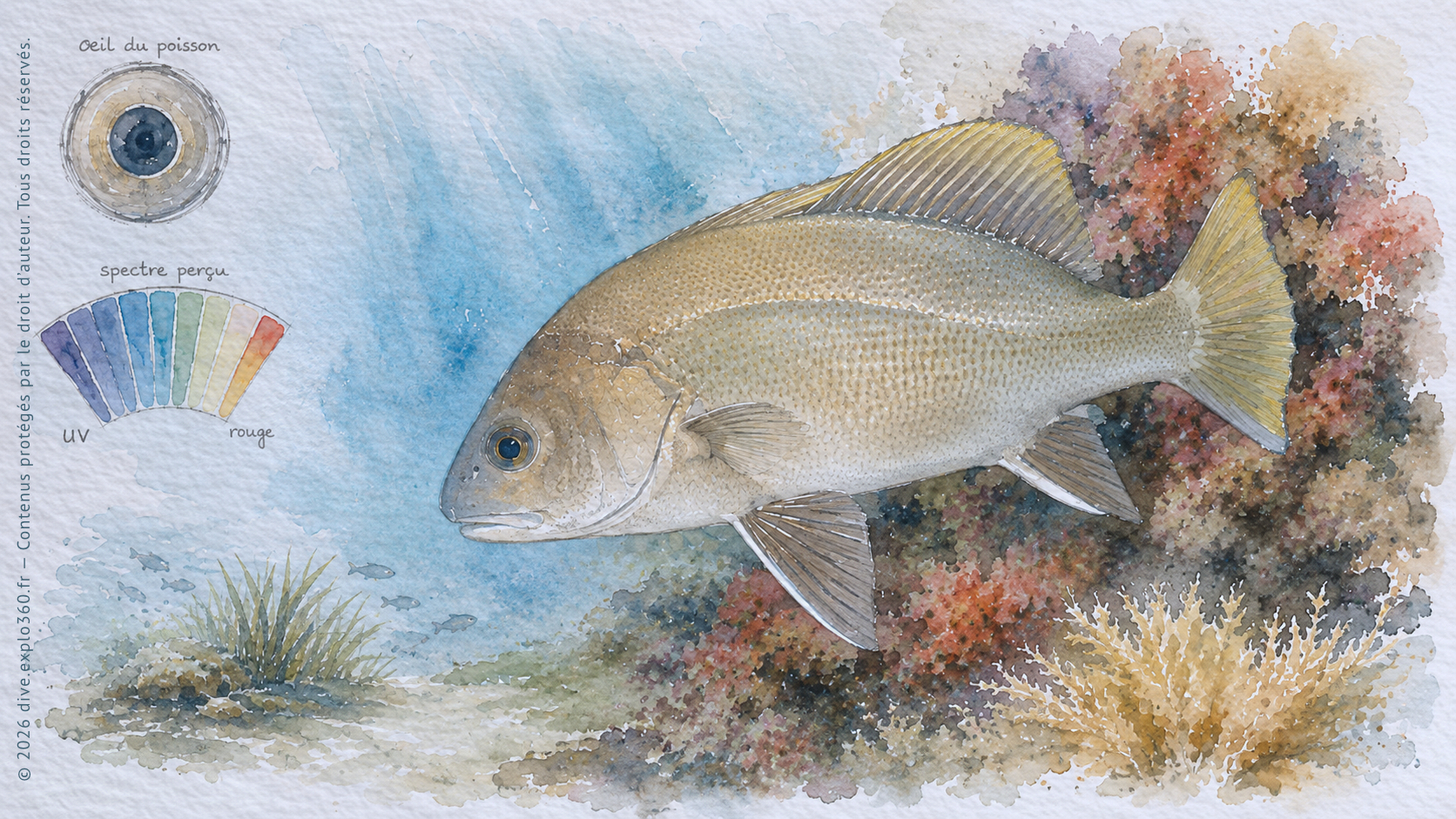
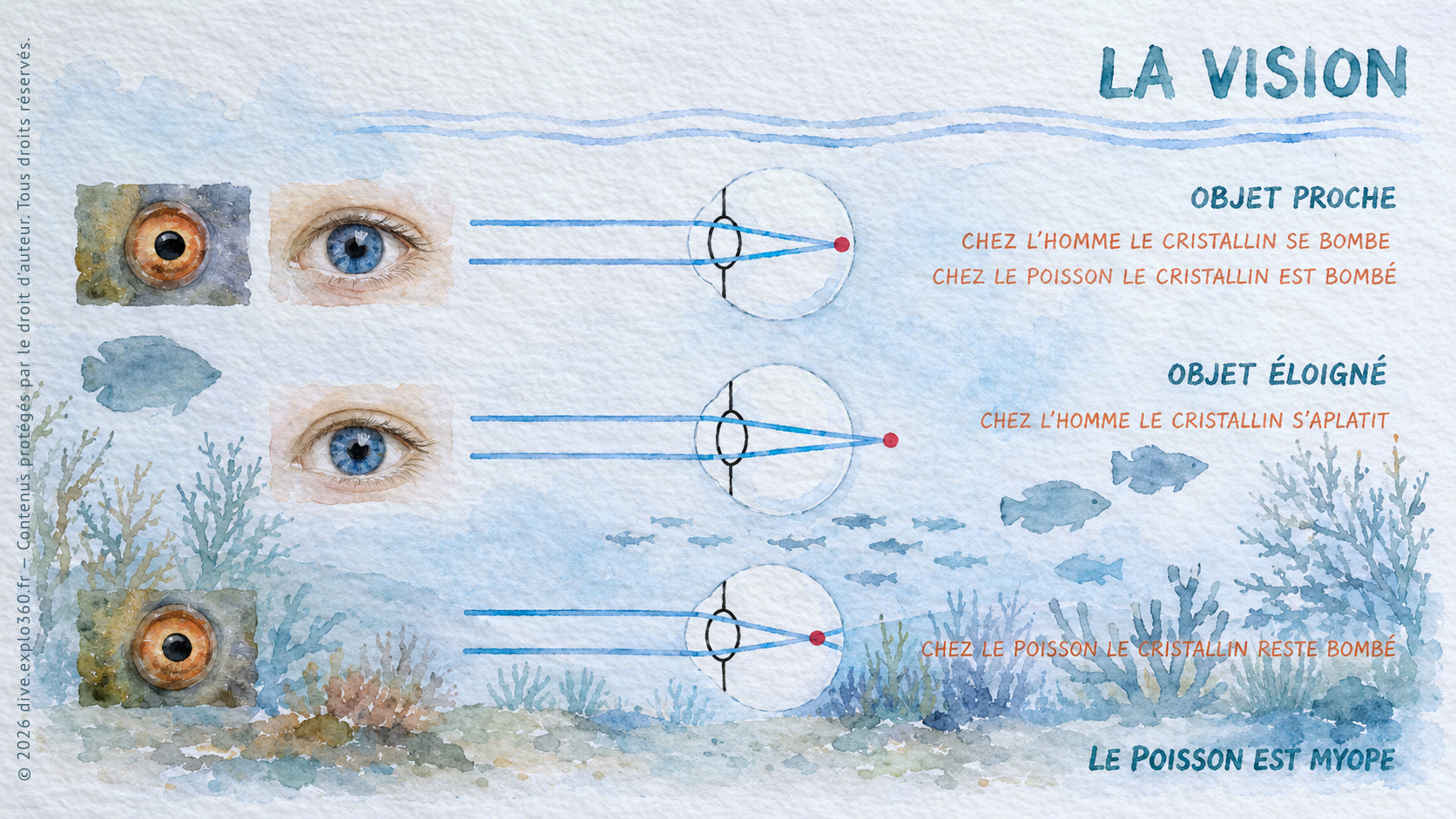
Its lens is generally almost spherical. To focus, the lens can be moved inside the eye.
Not all fish see the same colours either. Some species can even perceive ultraviolet light, which is invisible to our eyes.
Each species therefore has vision adapted to its environment and way of life.
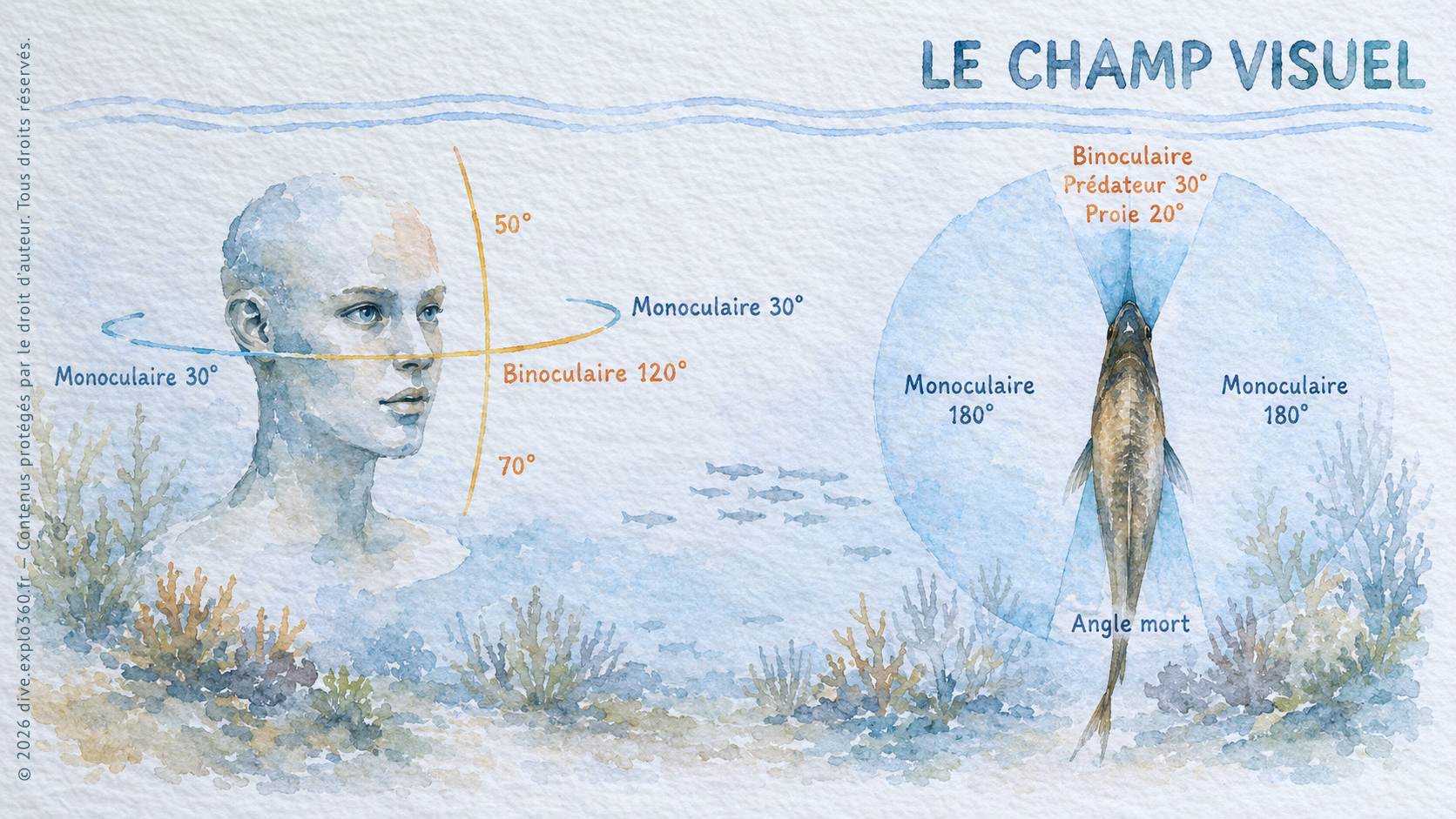
This allows them to watch a very large part of their surroundings without turning their heads. It is very useful for spotting danger quickly.
However, the area seen by both eyes at the same time is smaller than ours.
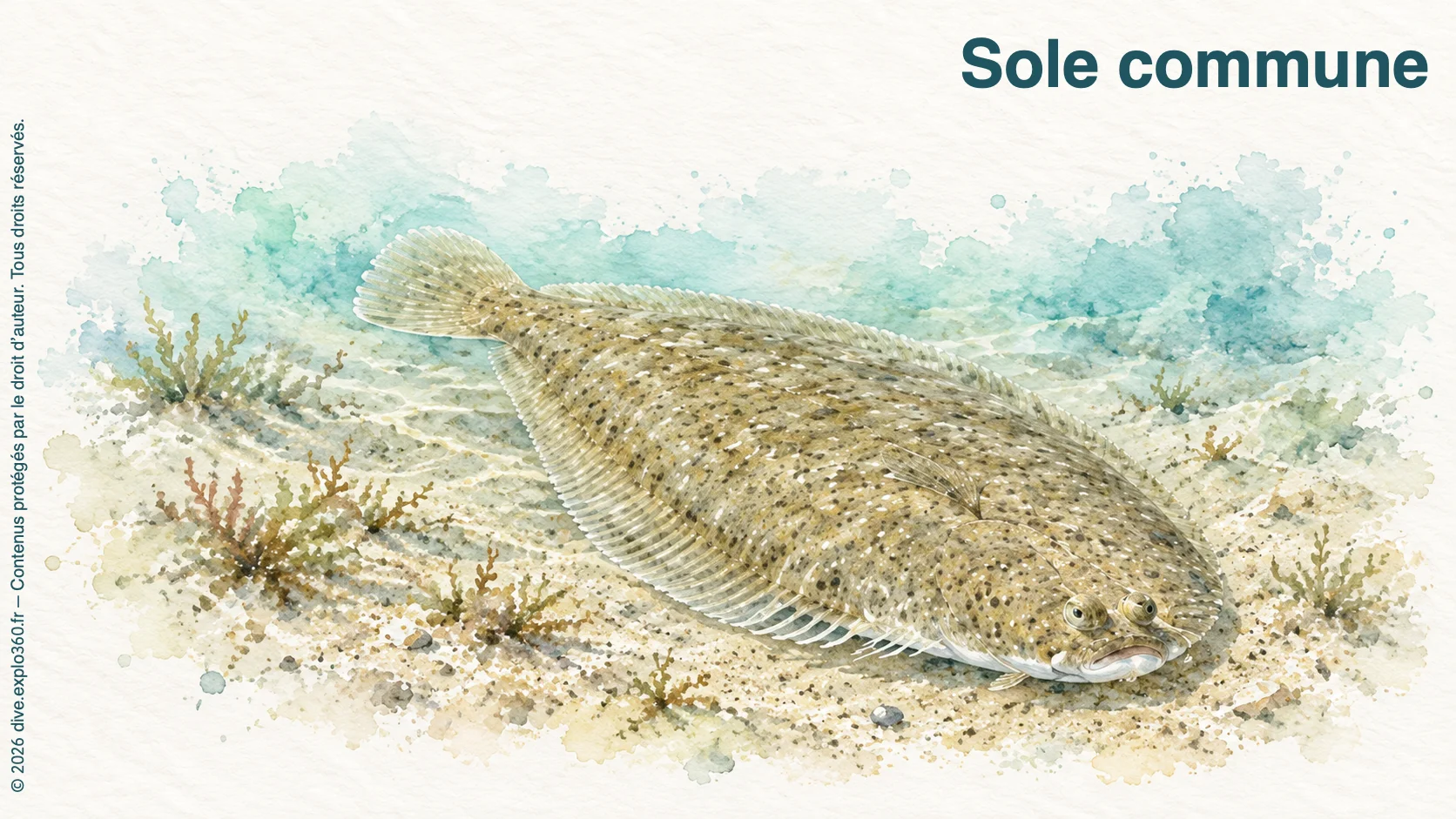
Eye position also depends on lifestyle. Adult flatfish, for example, have both eyes on the same side of the body, allowing them to watch what happens above them while resting on the seabed.
AMIGANSEAU CONTENT
The rest of this article is for subscribers
Log in with your AMIGANSEAU licence to continue reading.
All active AMIGANSEAU licences give access to the full article.Explore the same world