WHAT DO FISH SEE UNDERWATER?
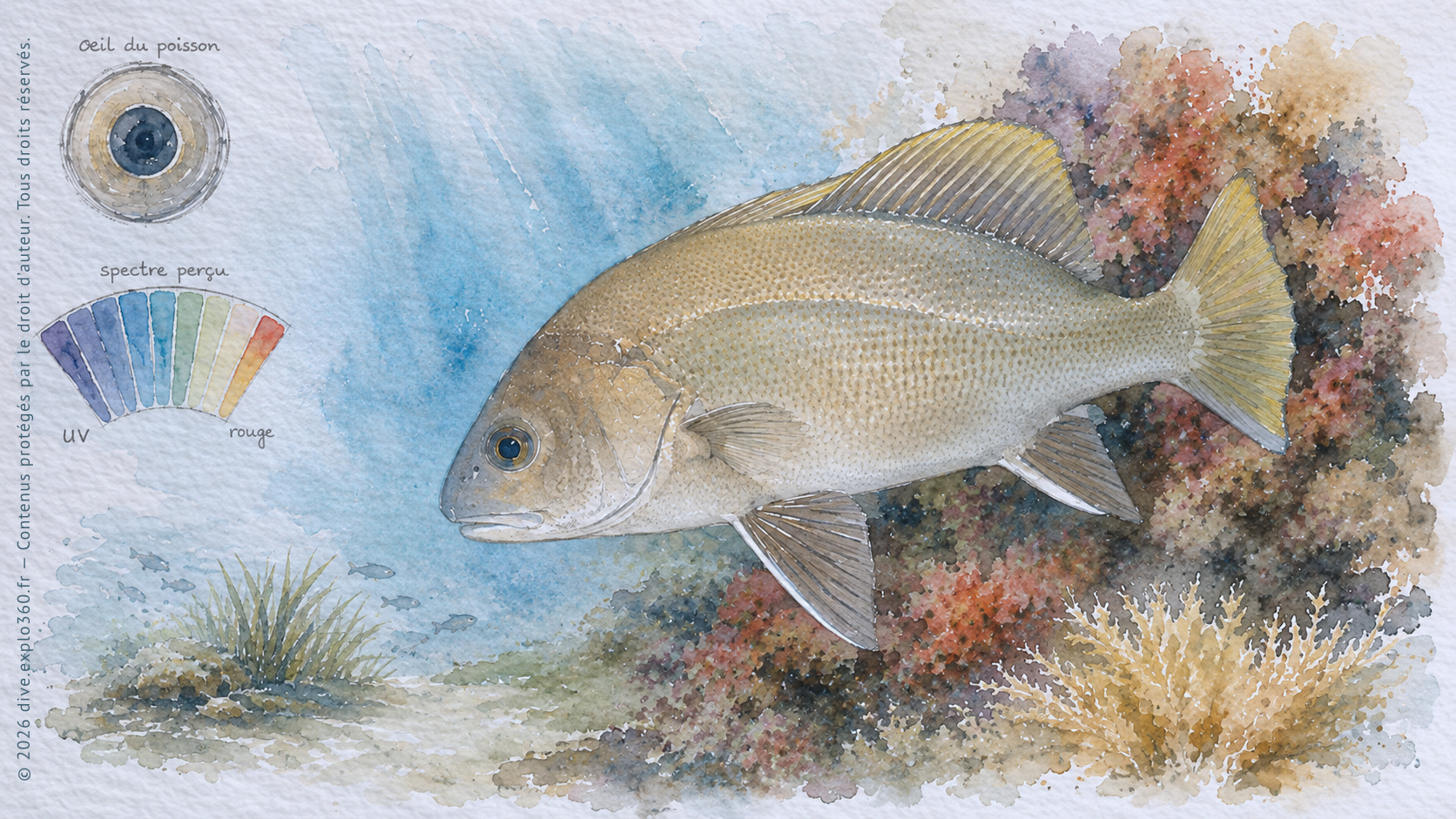
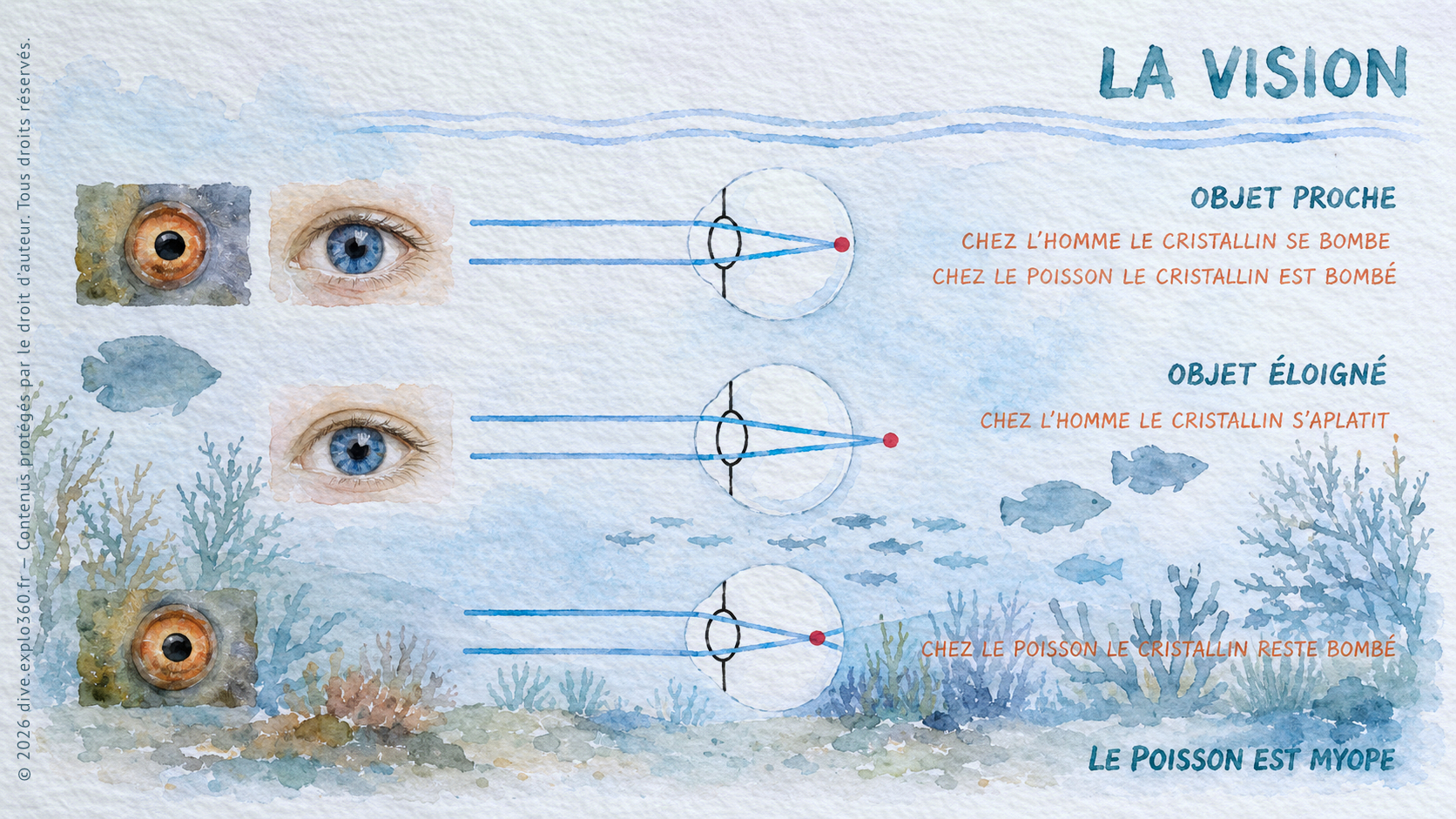
Inside the eye, a lens focuses light on the retina, the layer at the back that detects light. In many fish the lens is almost round like a ball. The fish focuses by moving it inside the eye.
A lens can stay the same shape and still bring distant objects into focus. How clearly a fish sees them also depends on the light and on how much is floating in the water.
FIELD OF VIEW
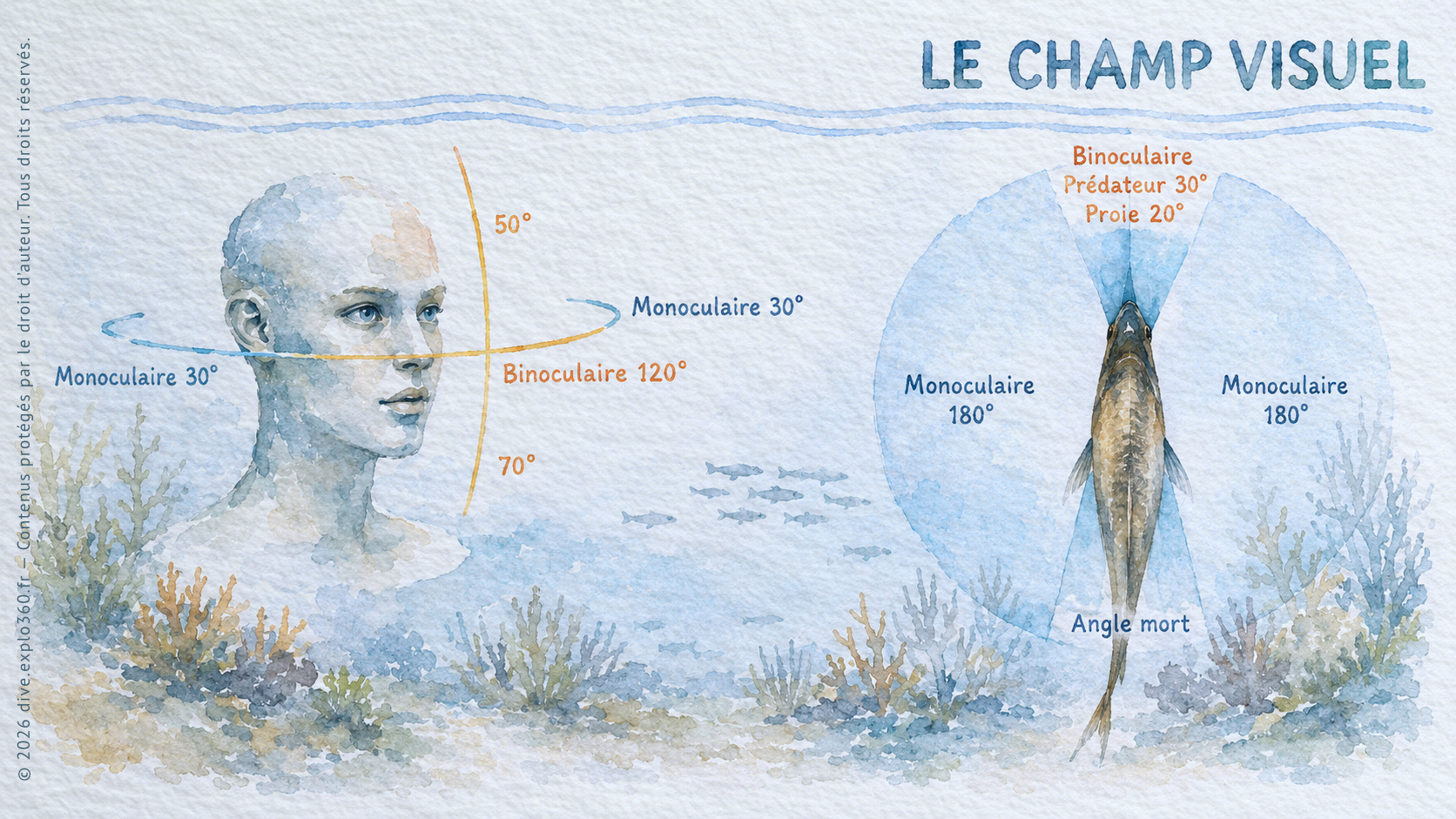
Eyes on either side of the head let many fish see over a wide area. How far that view extends depends on the species.
The two views can overlap in front of the fish. That overlap, along with clues from movement, can help the fish tell where things are.
Explore the same world