
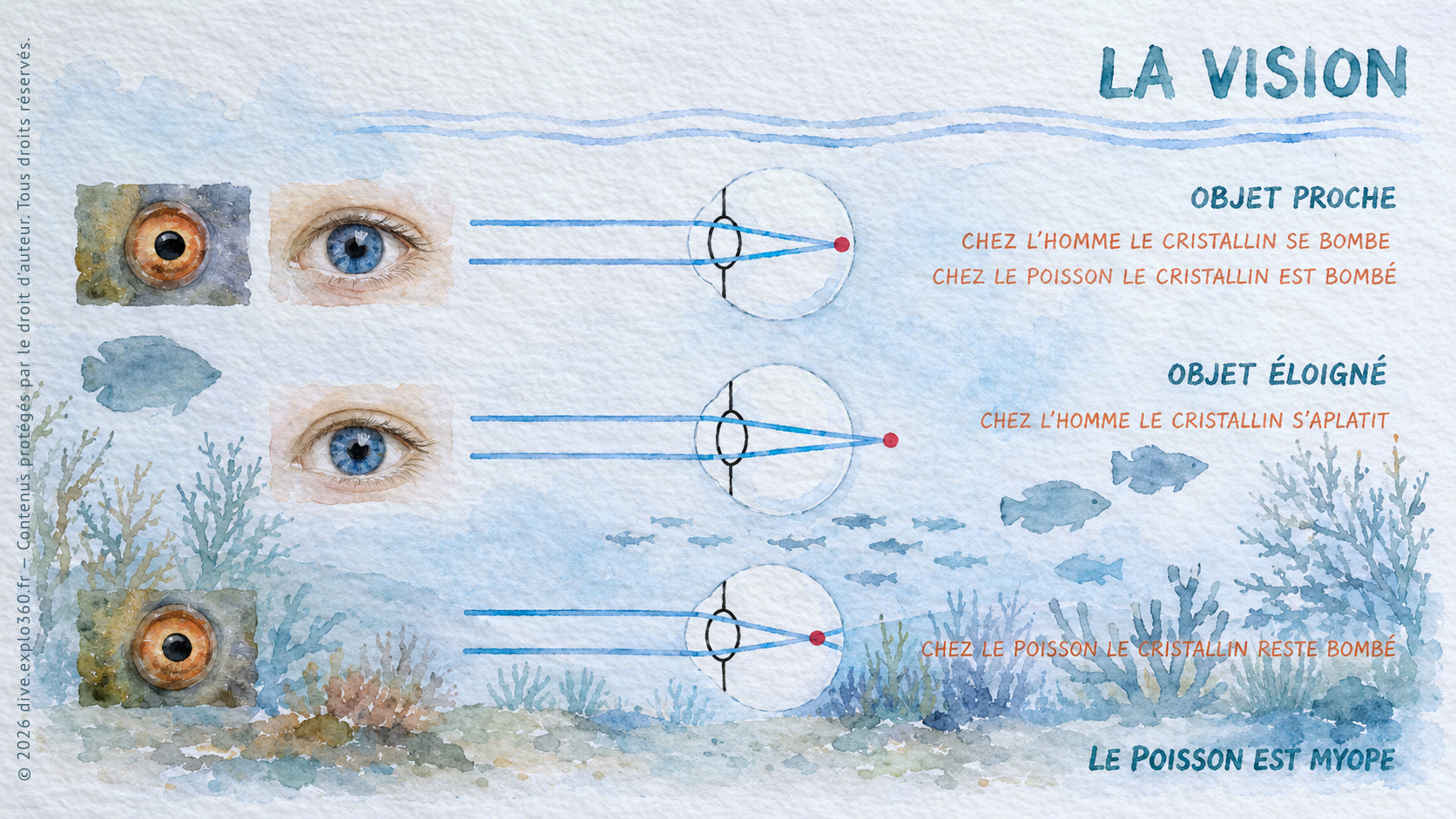
In fish, the lens is generally almost spherical. Unlike ours, it does not change shape to focus: accommodation is achieved mainly by moving the lens relative to the retina.
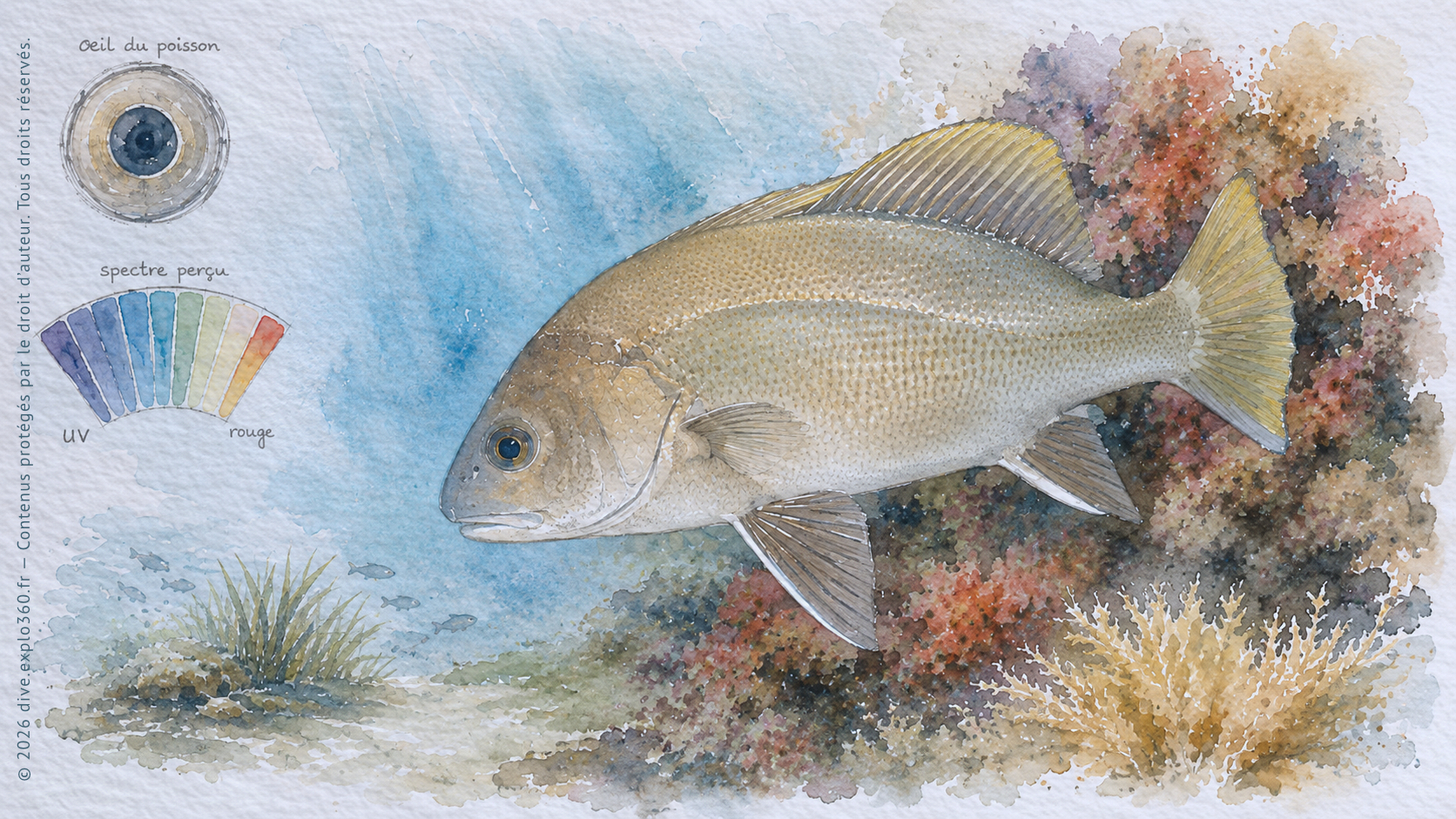
Colour perception varies greatly between species. Some fish can perceive wavelengths we cannot see, particularly ultraviolet light.
Others have visual systems that favour particular parts of the light spectrum. A fish’s vision therefore depends on its species, habitat and lifestyle.
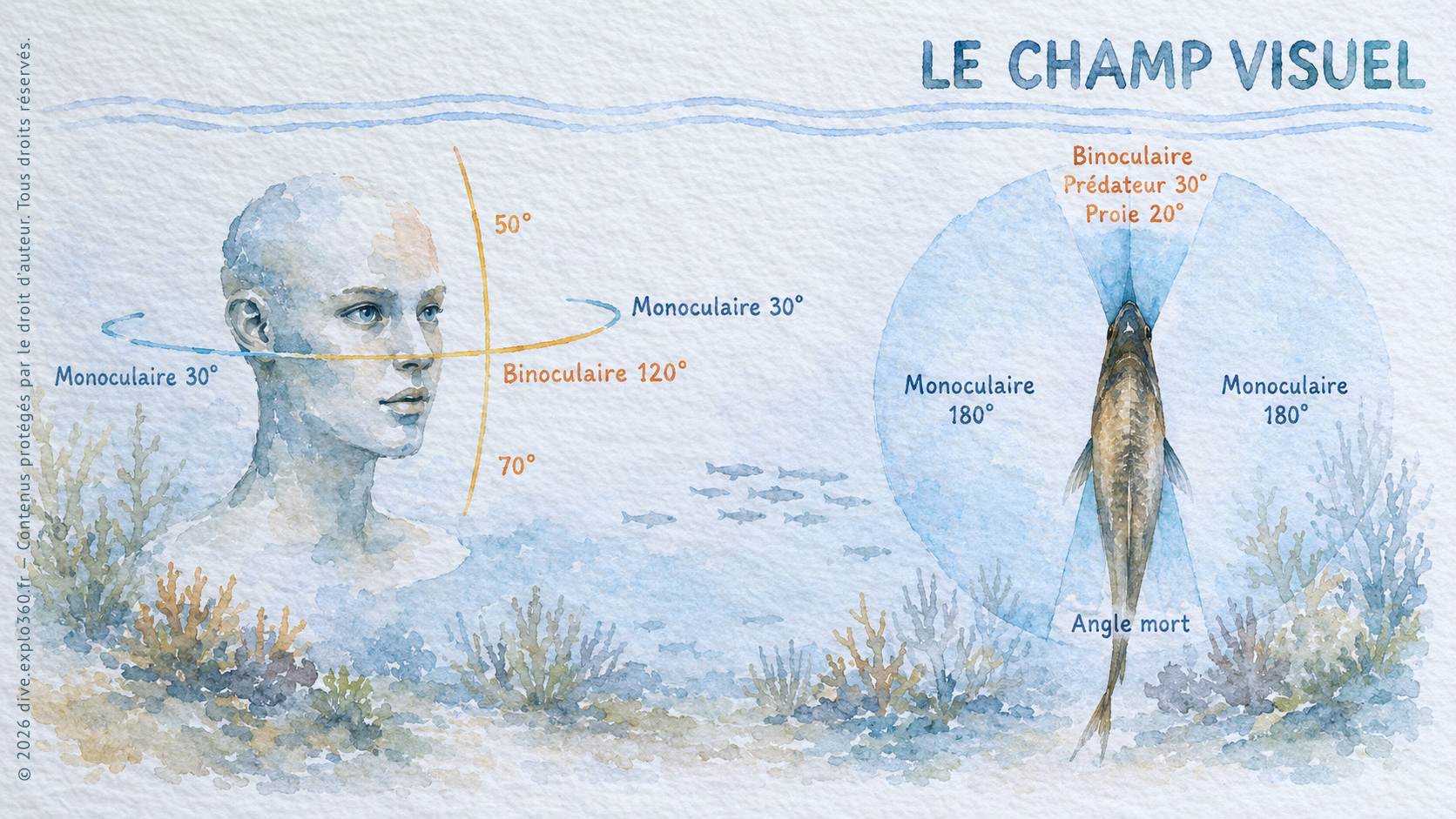
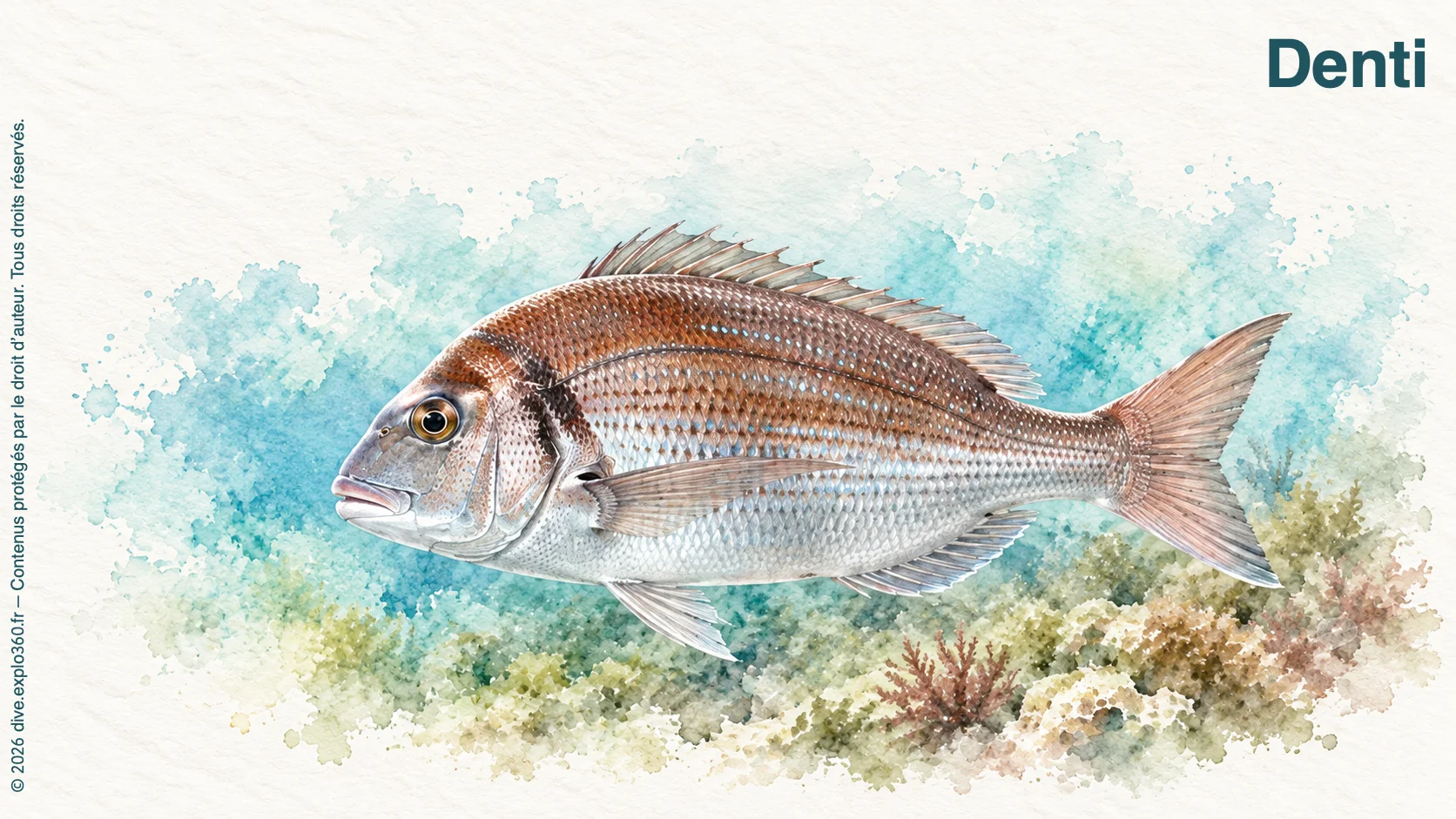
In many fish, the eyes are positioned on the sides of the head. This arrangement gives them a very wide field of view, particularly useful for quickly detecting a predator or prey.
However, the area in which both eyes view the same space simultaneously is smaller. This binocular vision is involved, among other things, in judging distances.
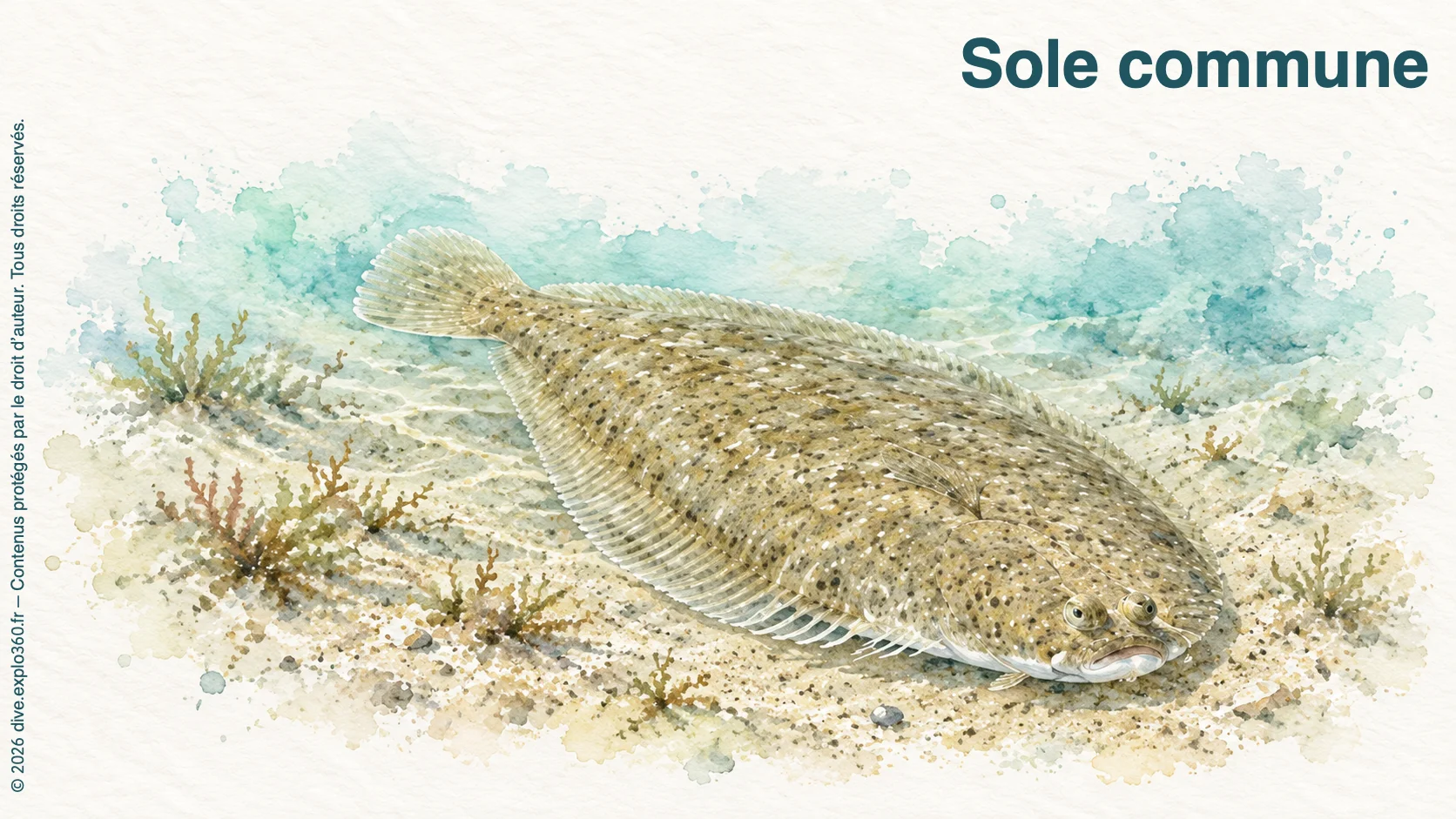
Eye position varies with lifestyle. In some predators, it favours greater binocular vision. In flatfish, both eyes lie on the same side of the body, an adaptation to life on the seabed.
AMIGANSEAU CONTENT
The rest of this article is for subscribers
Log in with your AMIGANSEAU licence to continue reading.
All active AMIGANSEAU licences give access to the full article.Explore the same world