How can an animal make light?

Some living things can glow because substances inside them react and give off light. That’s called bioluminescence.

The first clue is the source of the energy. The flash begins inside a living organism.

The wave that lights up

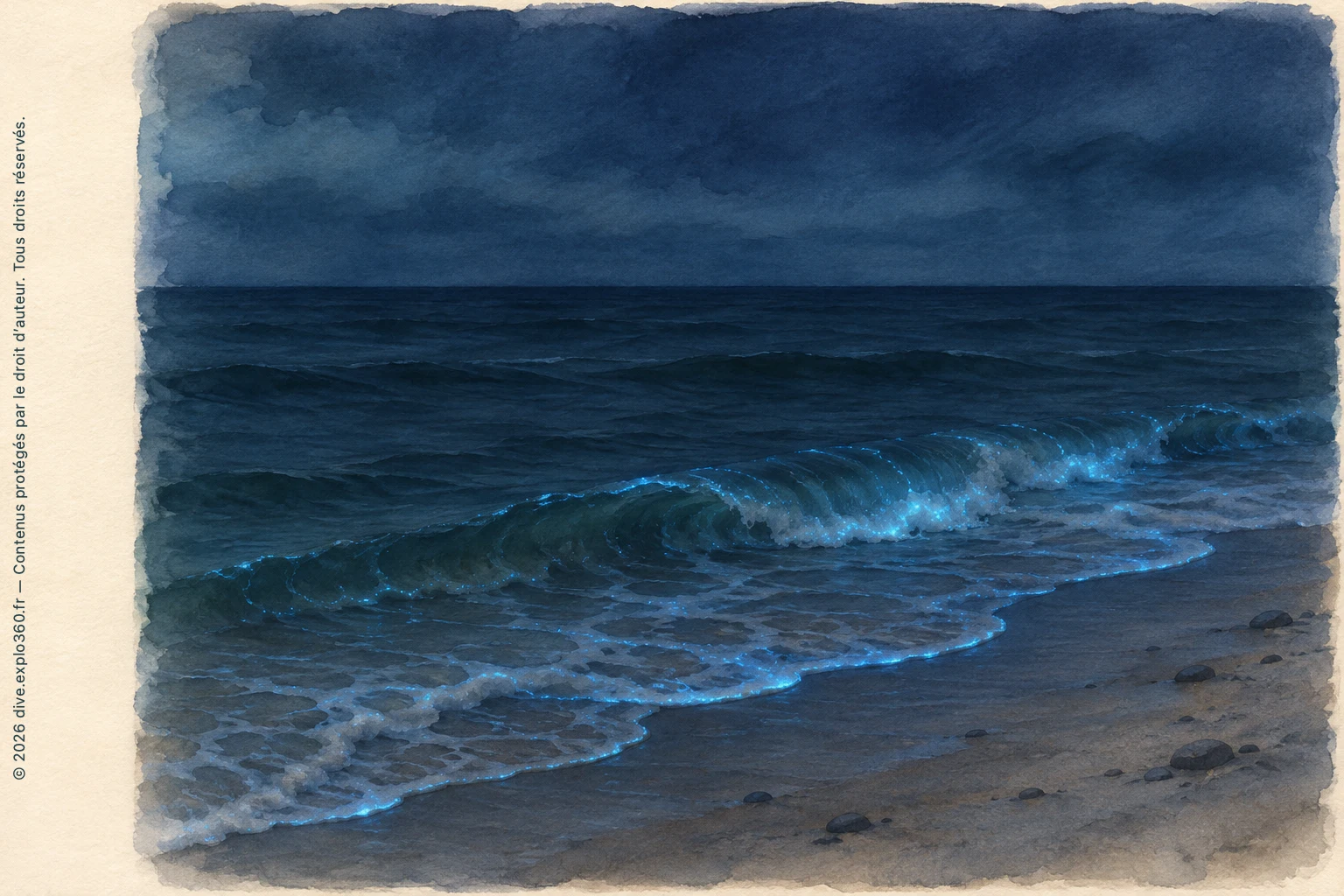
Watch the path of the light. It follows the breaking wave, fades and starts again with the next one.

A wave can jostle tiny living cells in the water. If enough of them flash at once, you can see a blue line that fades as quickly as it appeared.

A jellyfish that flashes

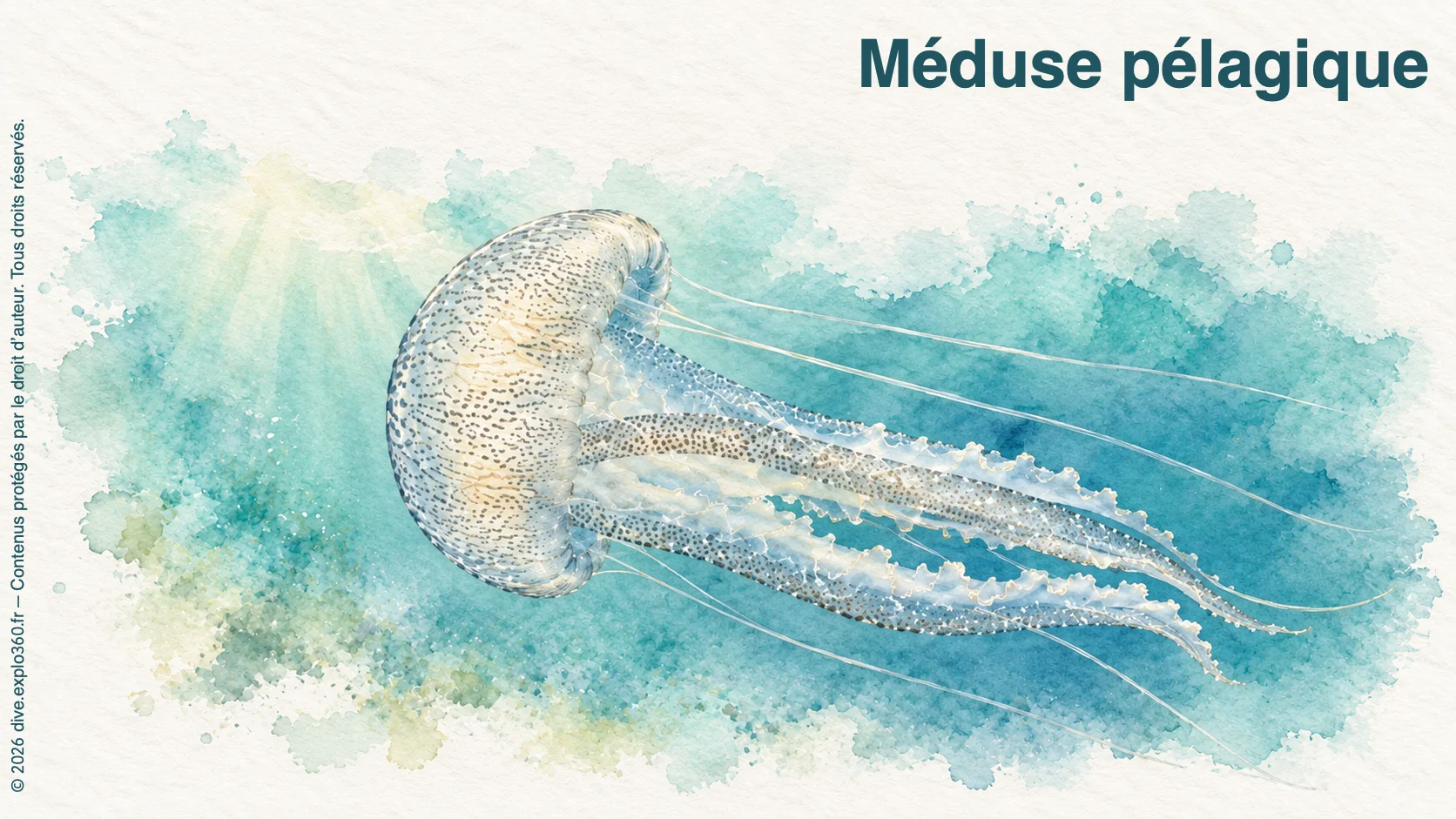
The mauve stinger is a pink or purple jellyfish. You see that colour when light shines on it. When it flashes in the dark, it is making its own light.
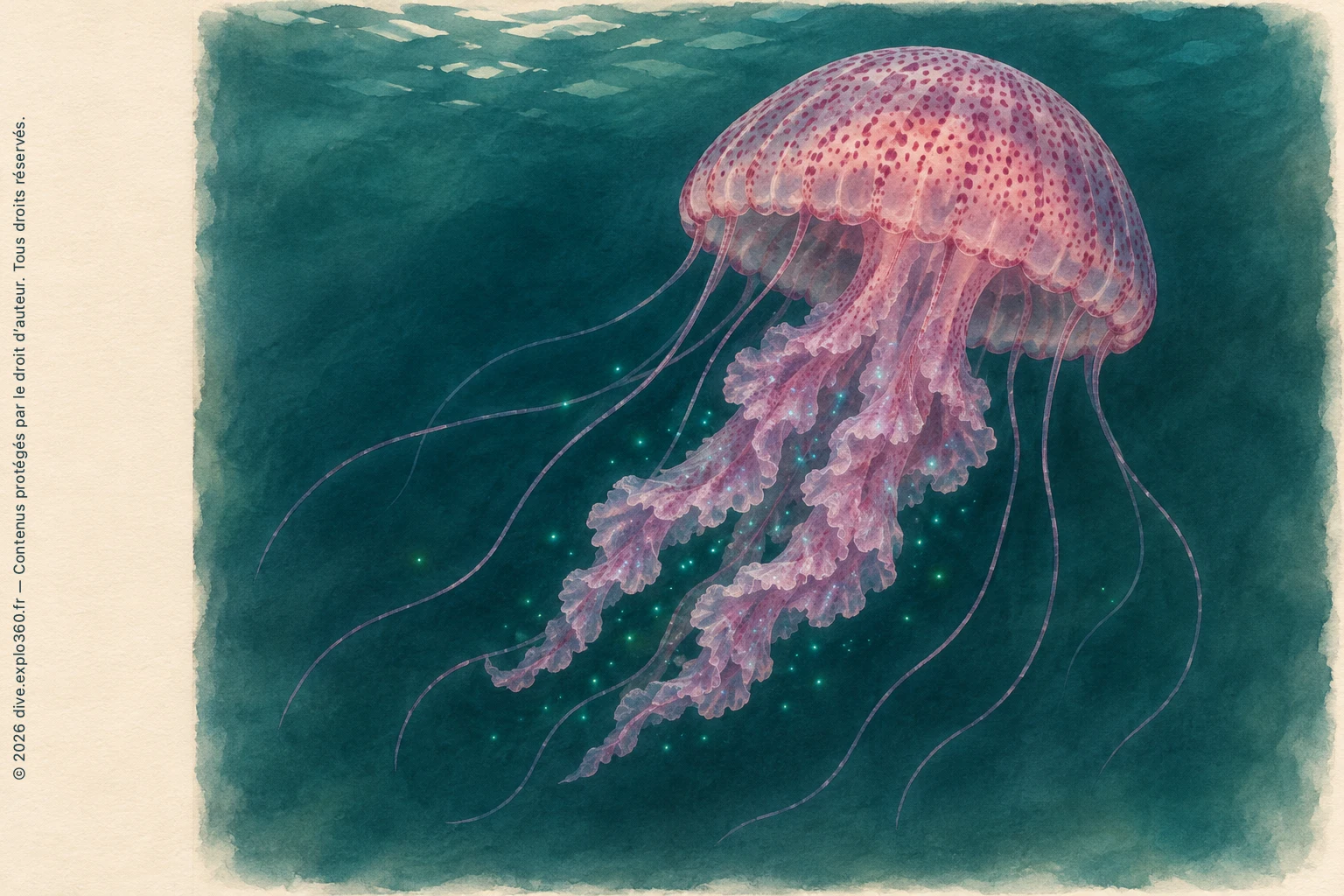
A mauve stinger jellyfish in dark water.
The mauve stinger looks pink or mauve under external light. The glowing points represent an emission triggered by disturbance. This is an illustrative reconstruction. © dive.explo360.fr — All rights reserved. Reproduction requires permission.
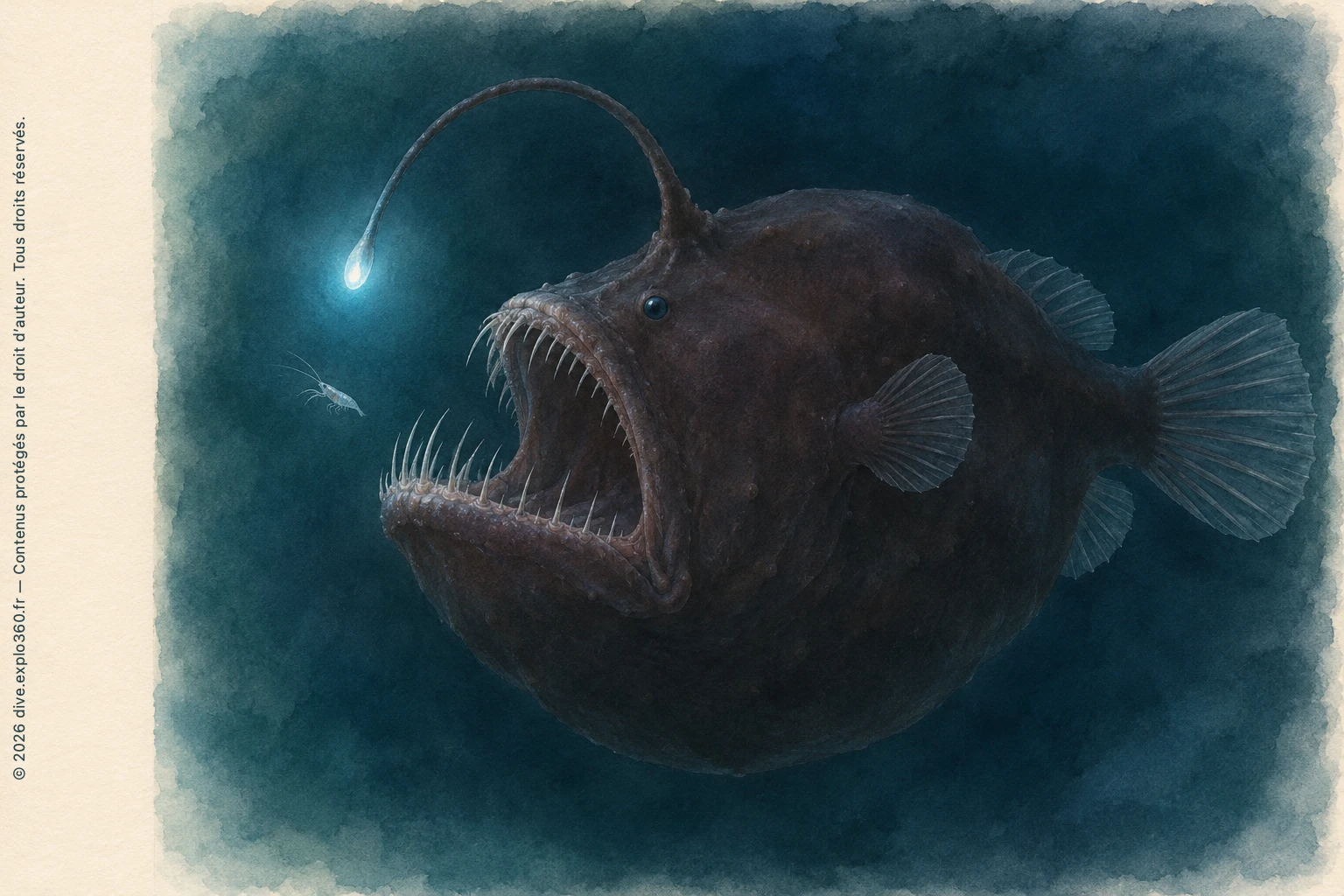
Female humpback blackdevil with a glowing lure above its mouth.
In the female humpback blackdevil, the organ at the tip of the stalk houses luminous bacteria. Prey approaching the lure may come within reach of the mouth. © dive.explo360.fr — All rights reserved. Reproduction requires permission.

A light beside the mouth

A female anglerfish has a little glow at the tip of a stalk near her mouth. Tiny bacteria living in the tip make the light. If a small animal comes to investigate, it may come close enough to be caught.

Lighting up to hide

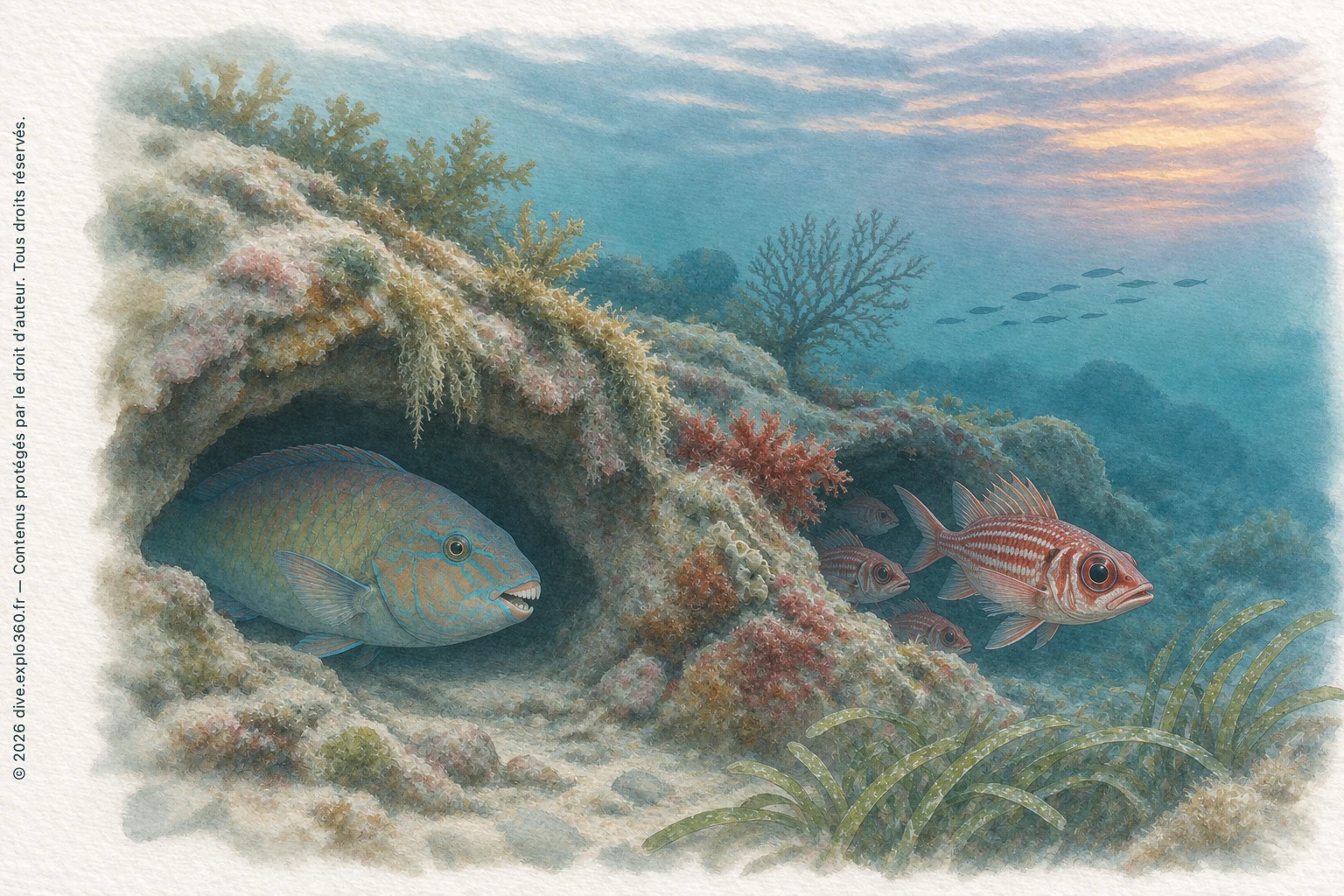
Look up from below a fish and you may see a dark shape against the brighter water. Some fish glow on their bellies. When that glow matches the light above, the fish is harder to spot from below.

Continue reading

AMIGANSEAU CONTENT

The rest of this article is for subscribers

Log in with your AMIGANSEAU licence to continue reading.

All active AMIGANSEAU licences give access to the full article.