Above the leaves, fish passing through
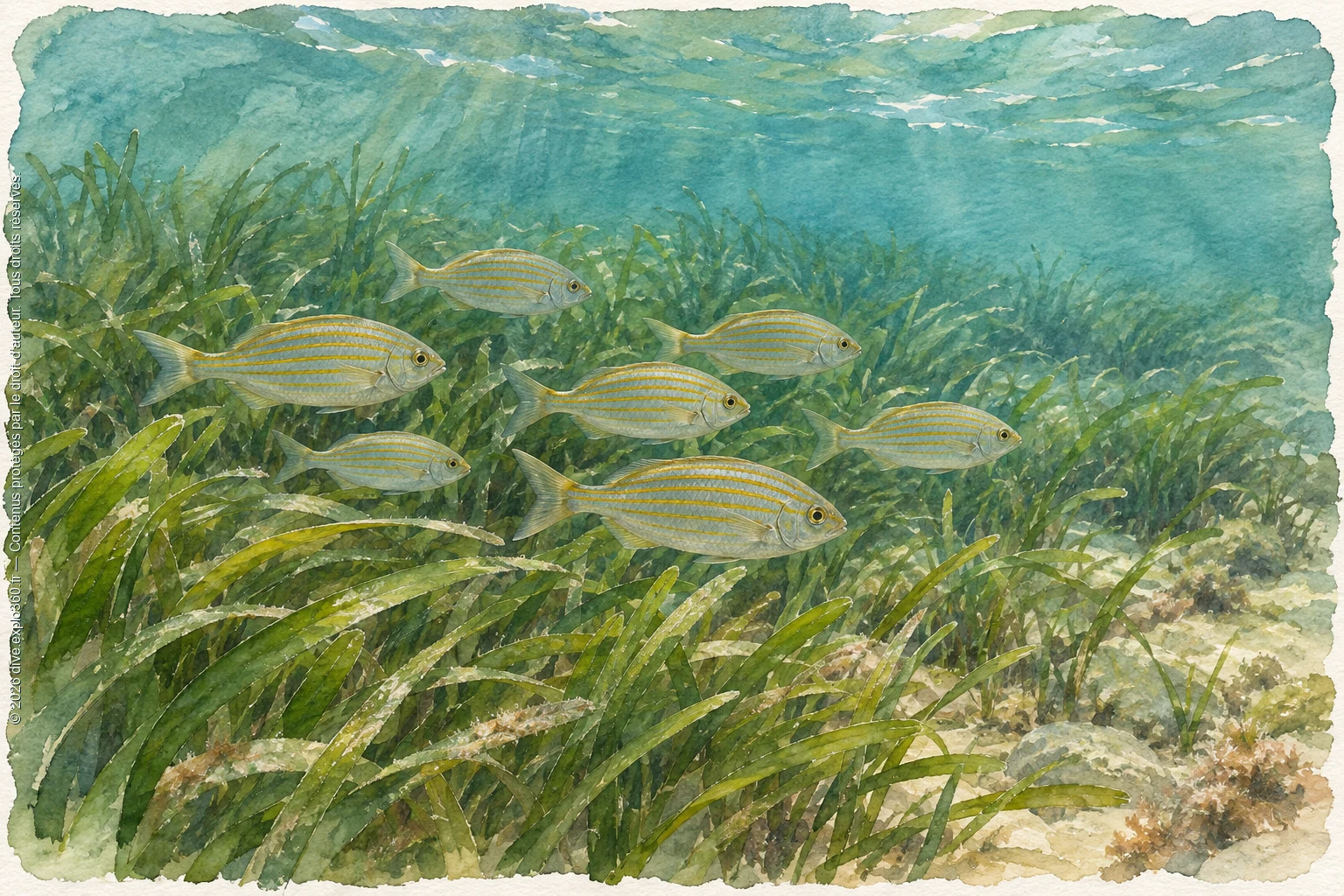
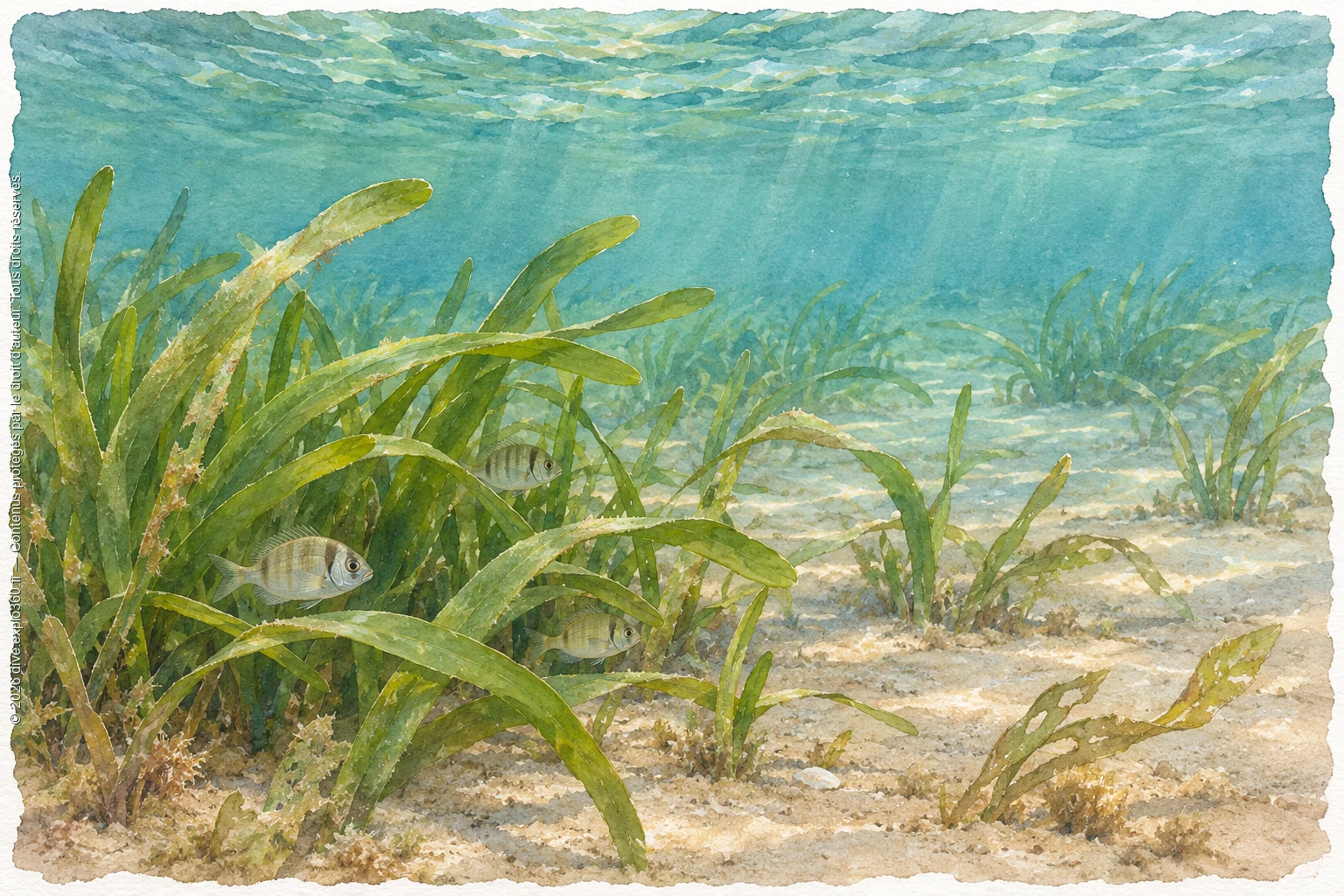
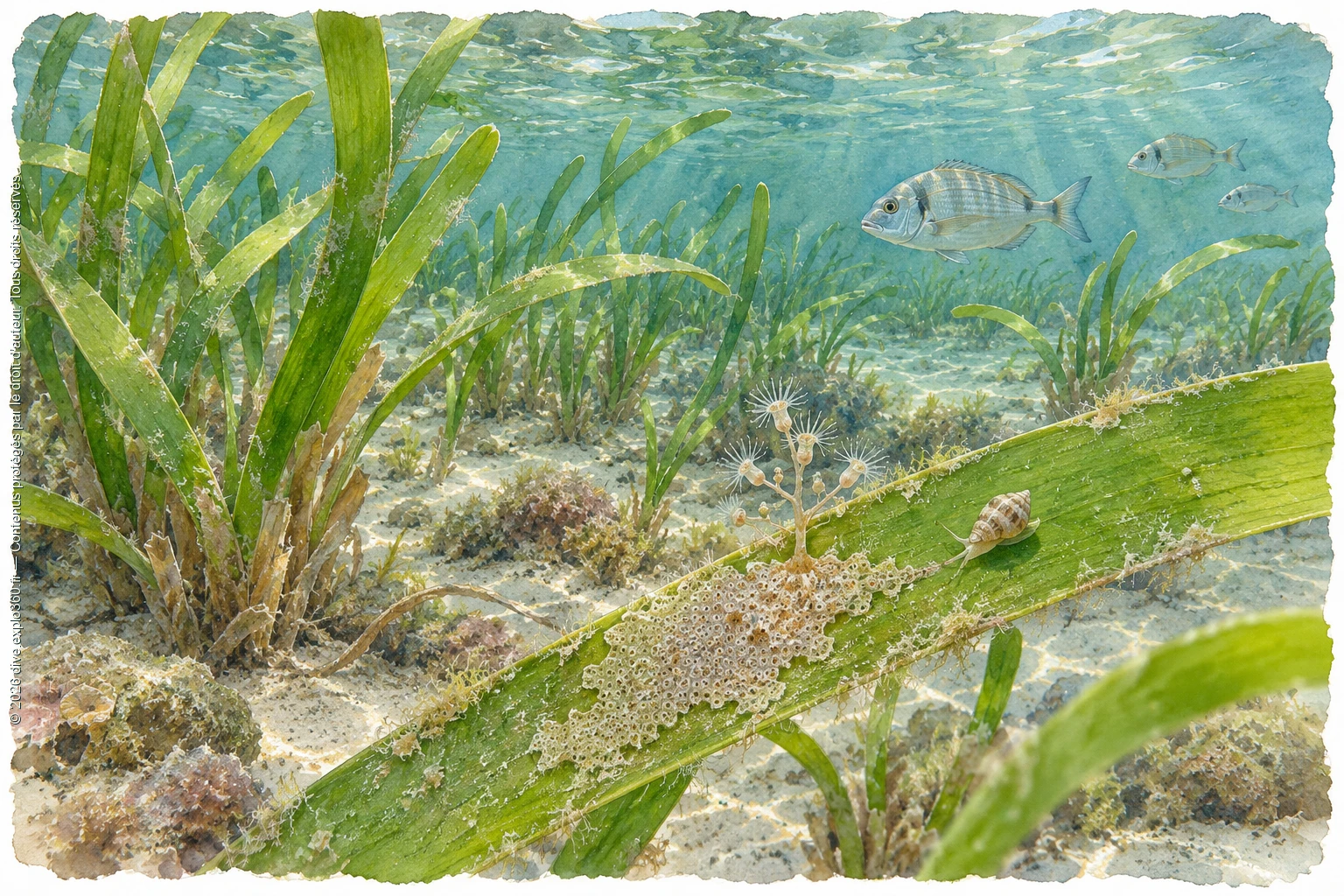
Start with the fish you can see swimming above the leaves. Some of the fish swimming above the leaves spend only part of their lives there. Sea bream look for food, wrasse weave among the shoots and salema, Sarpa salpa, can gather in large shoals to graze.
The fish use the meadow in different ways. Some feed there, while others cross it to reach neighbouring rocks or sand. Salema is among the Mediterranean fish that can eat living Posidonia leaves. Other fish hunt small crustaceans, molluscs and other animals hiding among the plants.
A fish can move from rock to sand to seagrass in a single trip. The close proximity of these habitats helps explain the variety of fish you may see. Some of the inhabitants most dependent on the meadow are considerably smaller.
Between the leaves, a nursery hard to see
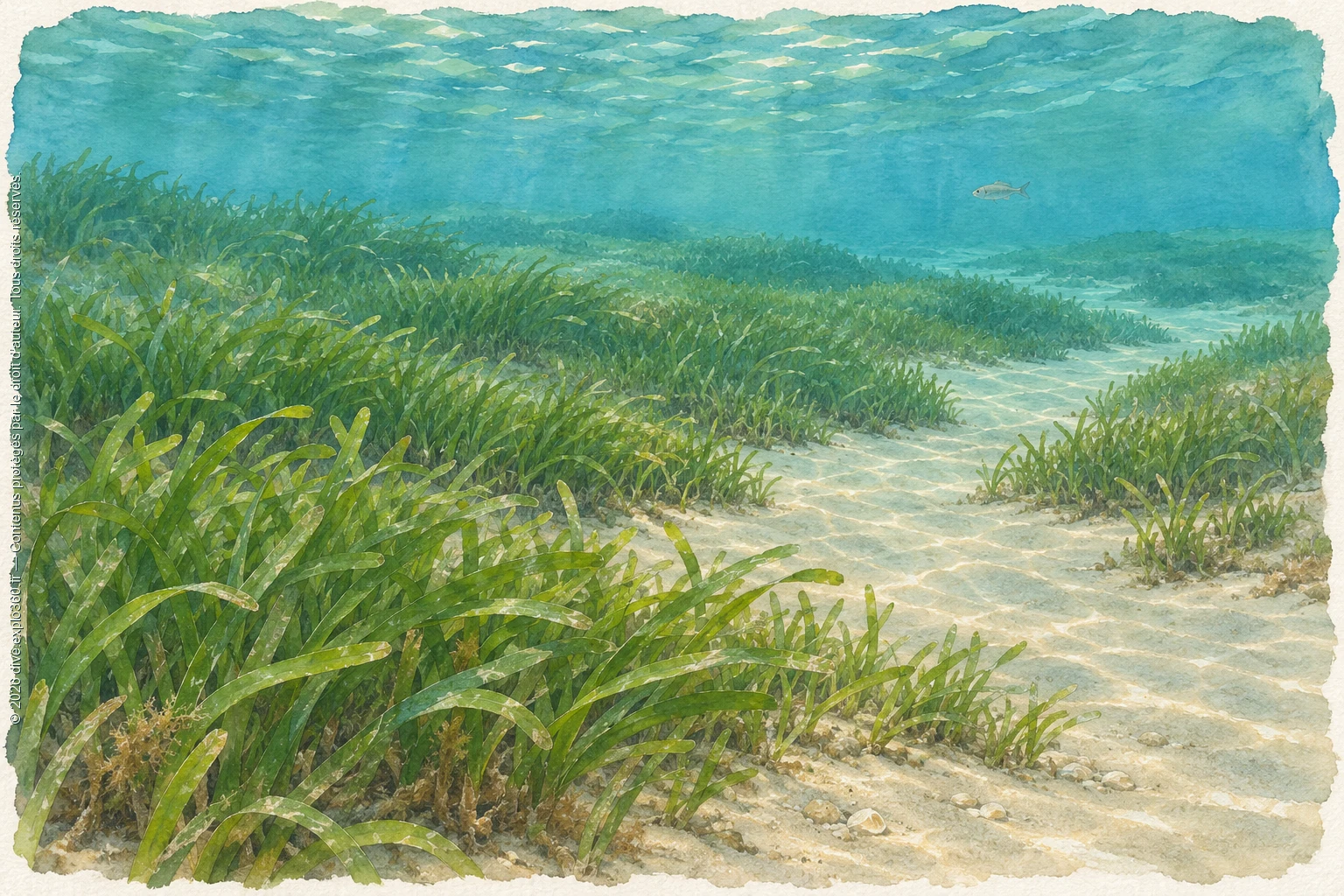
A small fish crossing open sand is exposed to predators. Among the shoots of Posidonia, it has more places to slip out of sight. The leaves interrupt lines of sight and put obstacles between predators and prey. They can also alter water movement within the meadow.
Some Mediterranean fish, including several sea bream species, use the meadow while young and move to other habitats as they grow. Other species use sandy shallows, rocks, harbours or other coastal habitats.
Young fish are unevenly distributed even within a meadow. Leaf density, depth, nearby rock or sand and local conditions all affect where they occur. Dense cover provides many places to hide, but the benefits for food and protection vary with species and size. To see this quieter part of the meadow, look between the shoots.
A Posidonia leaf is rarely bare
A new leaf usually looks green and smooth. As it ages, microscopic algae and delicate bryozoan colonies can settle on its surface. Tiny branching hydroids and other organisms attach to the surface. These are known as epiphytes. They live on the plant and do not necessarily draw resources from it directly.
Older leaves can carry a patchwork of colonies, deposits and small animals. A heavy covering can reduce the light reaching the plant. It also provides food. Small snails graze on colonised surfaces and crustaceans use the organisms and particles there. Some fish then eat those invertebrates.