Mobile species above the leaves
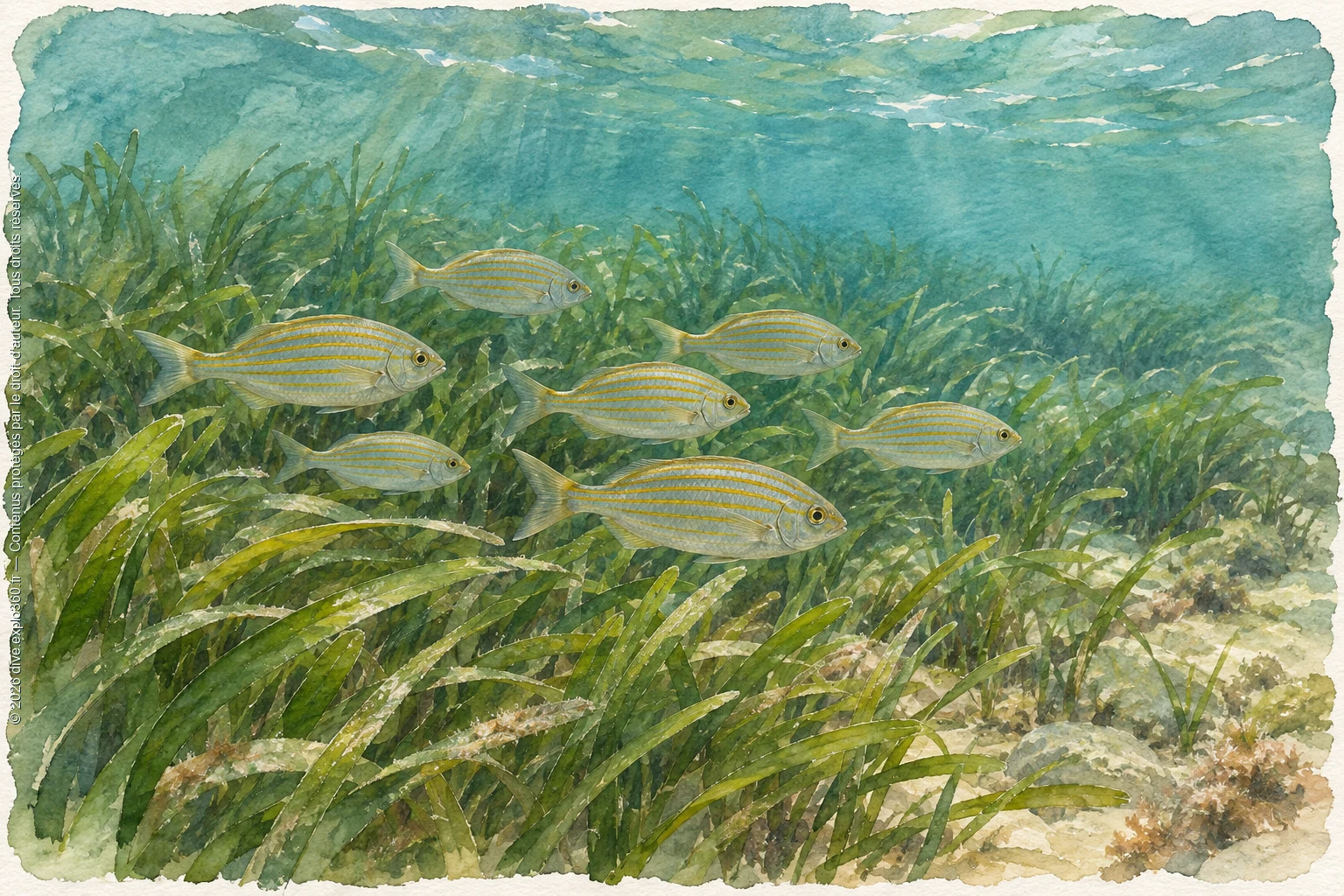
Sea bream and wrasse use the meadow partly to look for prey. Salema can eat living leaf tissue. The canopy also harbours invertebrates and links sandy and rocky areas that fish use as they move.
The nursery role varies by species
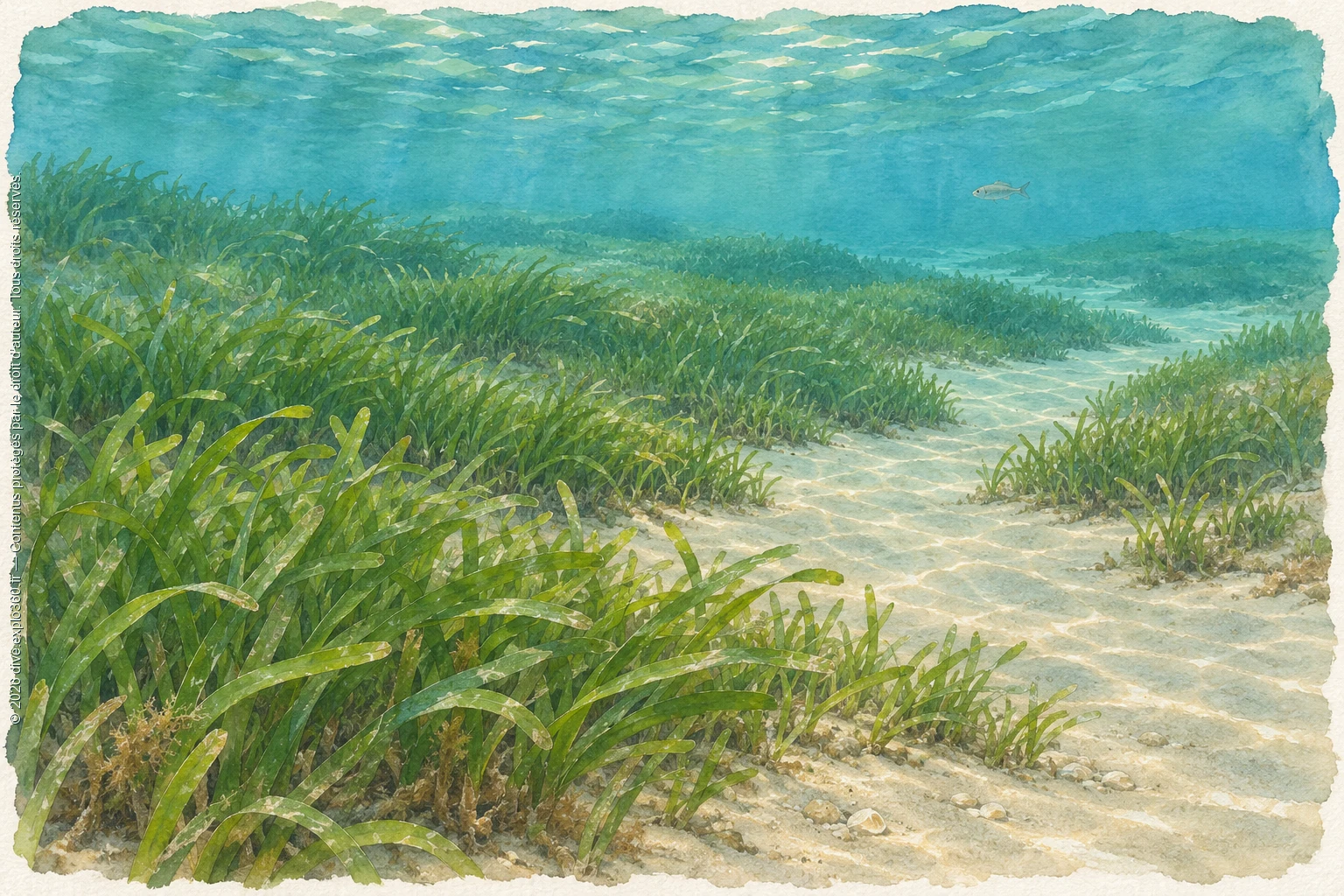
The height and density of the leaves affect local flow, visibility and access for predators. Some sea bream spend part of their juvenile stage in the meadow, while others use sandy shallows, rocks or harbours. The value of the meadow as a nursery depends on the species, its size and the conditions at the site.
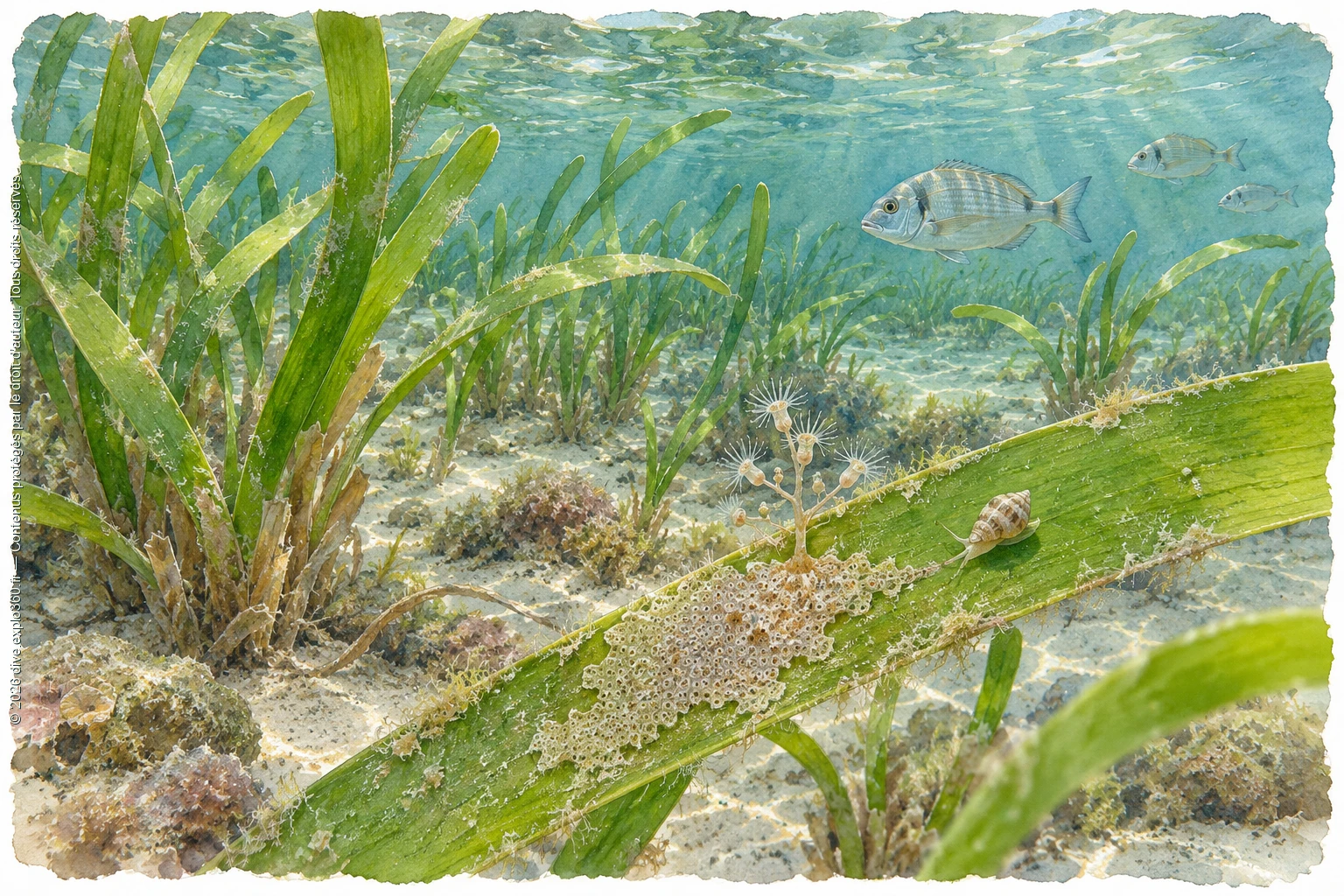
Epiphytes on the leaves
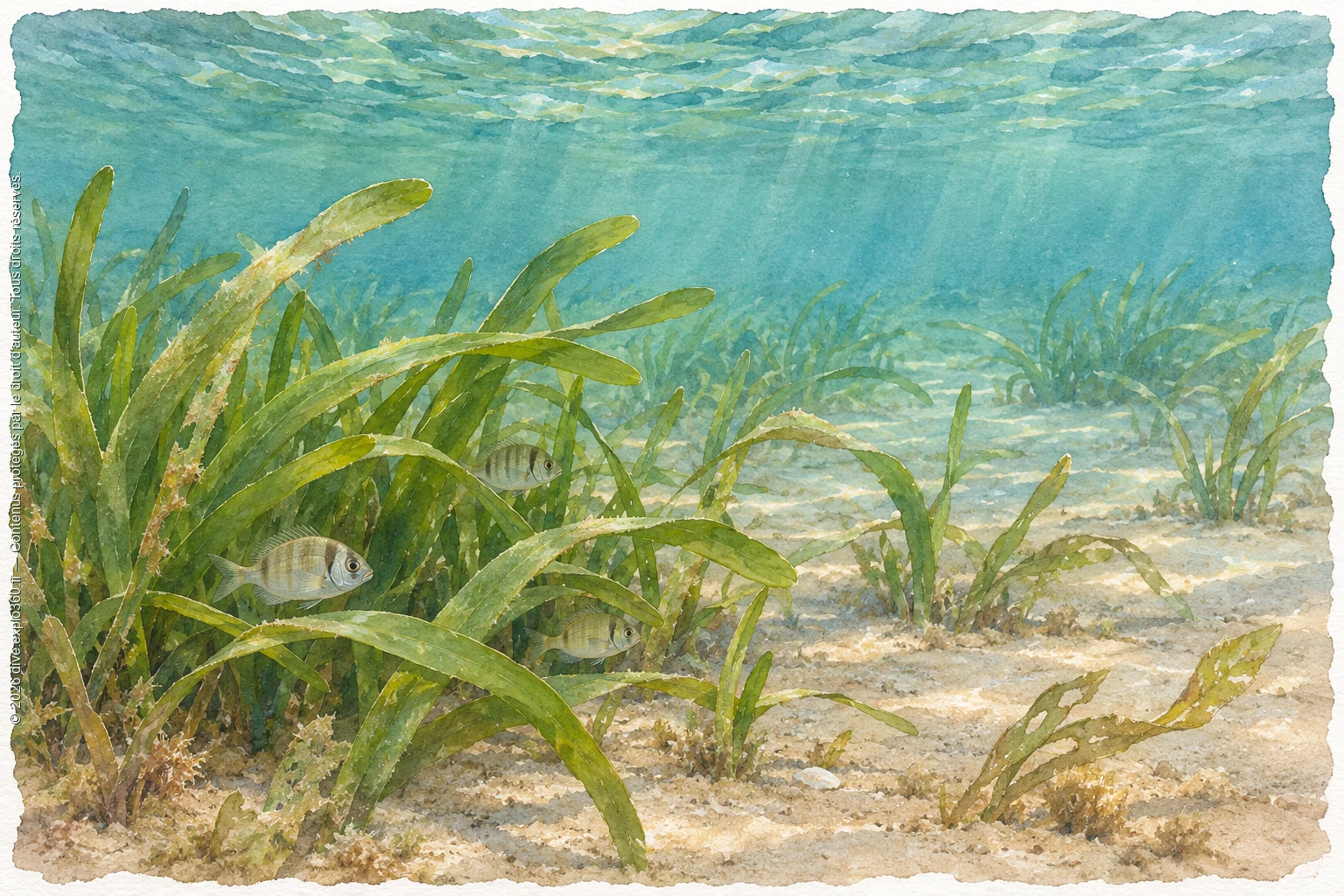
Microscopic algae, bryozoans and hydroids settle on the leaves. Older blades have had more time to acquire epiphytes, and a heavy covering can reduce the light reaching the plant. Snails and crustaceans feed on these surfaces and can in turn become prey for fish.