Four large islands in a maze of waterways
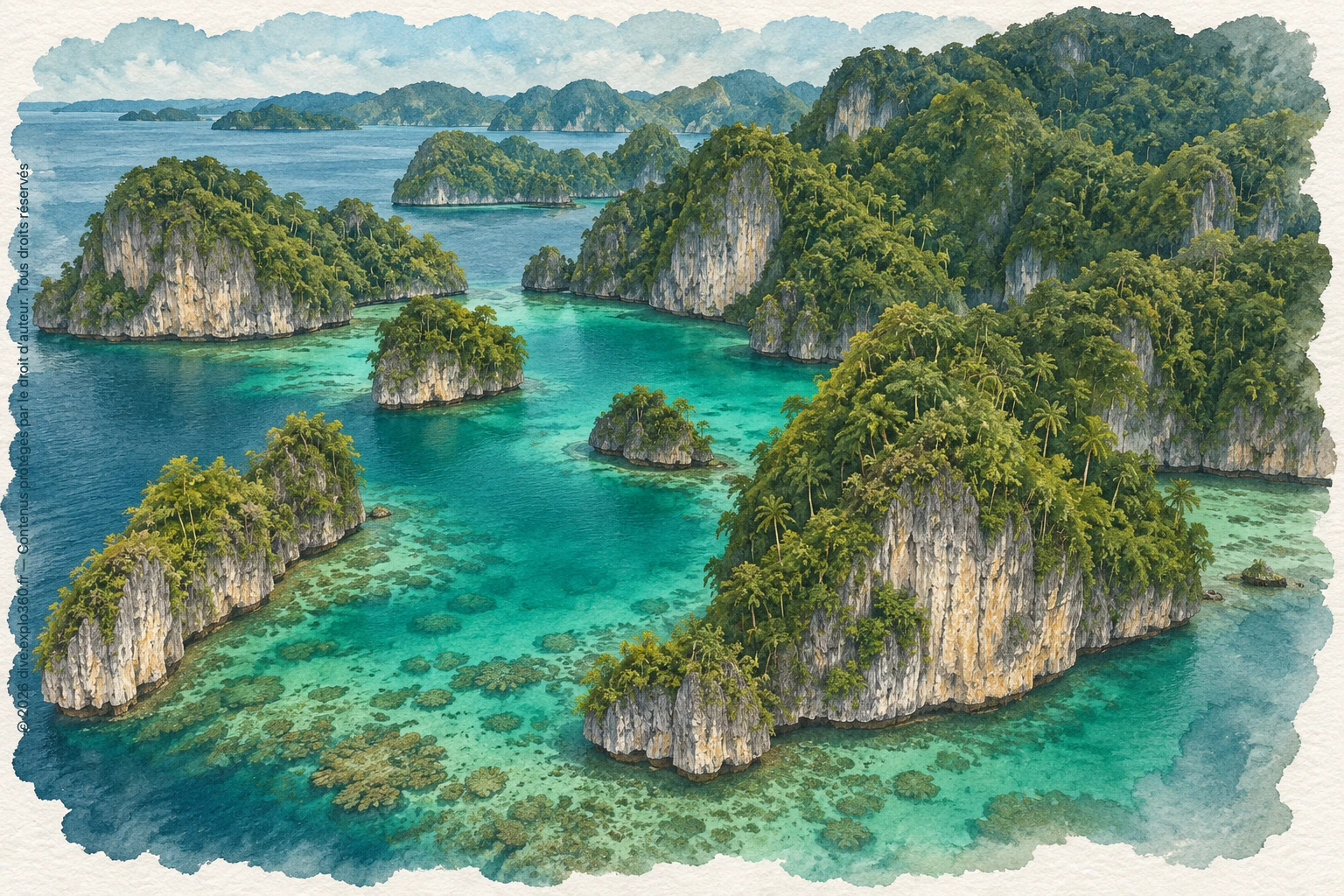
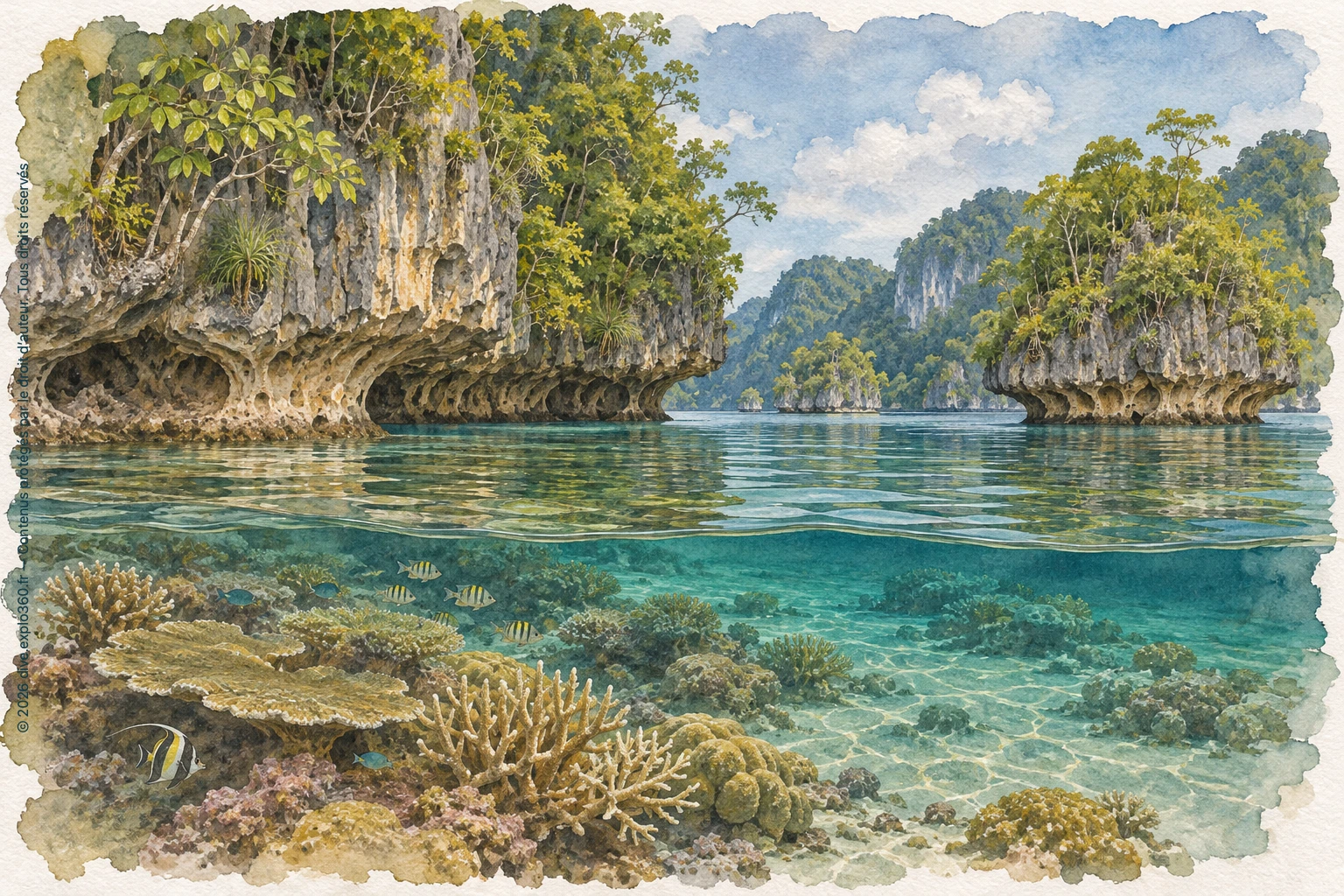
The name Raja Ampat, usually translated as “the four kings”, refers to Waigeo, Batanta, Salawati and Misool. Hundreds of smaller islands surround them, with narrow channels, deep bays, lagoons and reefs exposed to the open sea. In Wayag and parts of Misool, steep limestone towers rise out of the water. Over long periods, carbonate deposits formed rock, tectonic forces lifted it, and water gradually dissolved parts of it.
The terrain is just as varied below the surface. Some reefs drop steeply into deep water. Others spread across shallow platforms. Currents speed up in straits, slow in bays and bend around headlands. Conditions can change within a few kilometres. Water moves freely over an exposed reef and more slowly through some sheltered bays. Mangroves and seagrass meadows occupy stretches of coast where corals are less abundant.
That variety gives organisms with different needs places to settle. A goby among coral branches uses a different habitat from a fish that buries itself in sand. A sponge under an overhang lives in very different conditions from a coral in full light near the surface. In Raja Ampat, those habitats can lie within a short swim of one another.
The range of habitats helps explain how so many species live side by side today. To understand how those species came to be here, we need to look back to when the islands were still taking shape.
How moving plates changed the seas
Tens of millions of years ago, the map of the Indo-Pacific looked very different. Tectonic plates carried continental fragments and chains of volcanic islands across the region. The land that now makes up Indonesia, the Philippines and New Guinea lay in different positions. During the Cenozoic, the Australian, Eurasian and Pacific tectonic systems converged, gradually reshaping the seas between them.
Islands emerged, basins changed shape and routes between the oceans shifted. Marine organisms faced a changing map of habitats and barriers. New barriers split some populations that had once been connected. Other populations came into contact after long periods apart. Over time, populations that remain isolated can accumulate differences. Some eventually become distinct species.
When passages reopen, species from different regions can spread into the same waters. This alternation between isolation and contact helped shape the Coral Triangle. Fossils record a major increase in regional marine diversity beginning around 25 million years ago, with further increases during the Miocene and later periods. Raja Ampat now sits within this wider region, whose geography changed repeatedly.
The history of its marine life began long before the reefs we see today took shape.
When sea level fell by more than a hundred metres
Moving continents were one of several forces reshaping the landscape. During the Pleistocene ice ages, vast amounts of water were locked up in ice sheets. At times, sea level was more than 100 metres below its present level. These changes had enormous consequences for tropical reefs. Continental shelves that are underwater today became dry land. Marine passages grew shallower or disappeared. Land barriers or unfavourable environmental conditions separated some populations.
Elsewhere, organisms could survive on deeper reefs along continental or island slopes. When the ice melted and sea level rose, seawater flooded the coasts again. New habitats became available. Corals could recolonise newly submerged surfaces, while fish and invertebrates regained routes for dispersal. These repeated changes helped reshape where species lived and how their populations were connected.
Regions with many habitat types, a range of depths, and complex marine passages may have offered more places to survive through these changes. Organisms responded in different ways. Some species maintained connections between distant populations, while others experienced lasting separation. Today’s reefs in Raja Ampat sit above a seascape that has changed shape many times.
At the crossroads of two oceans
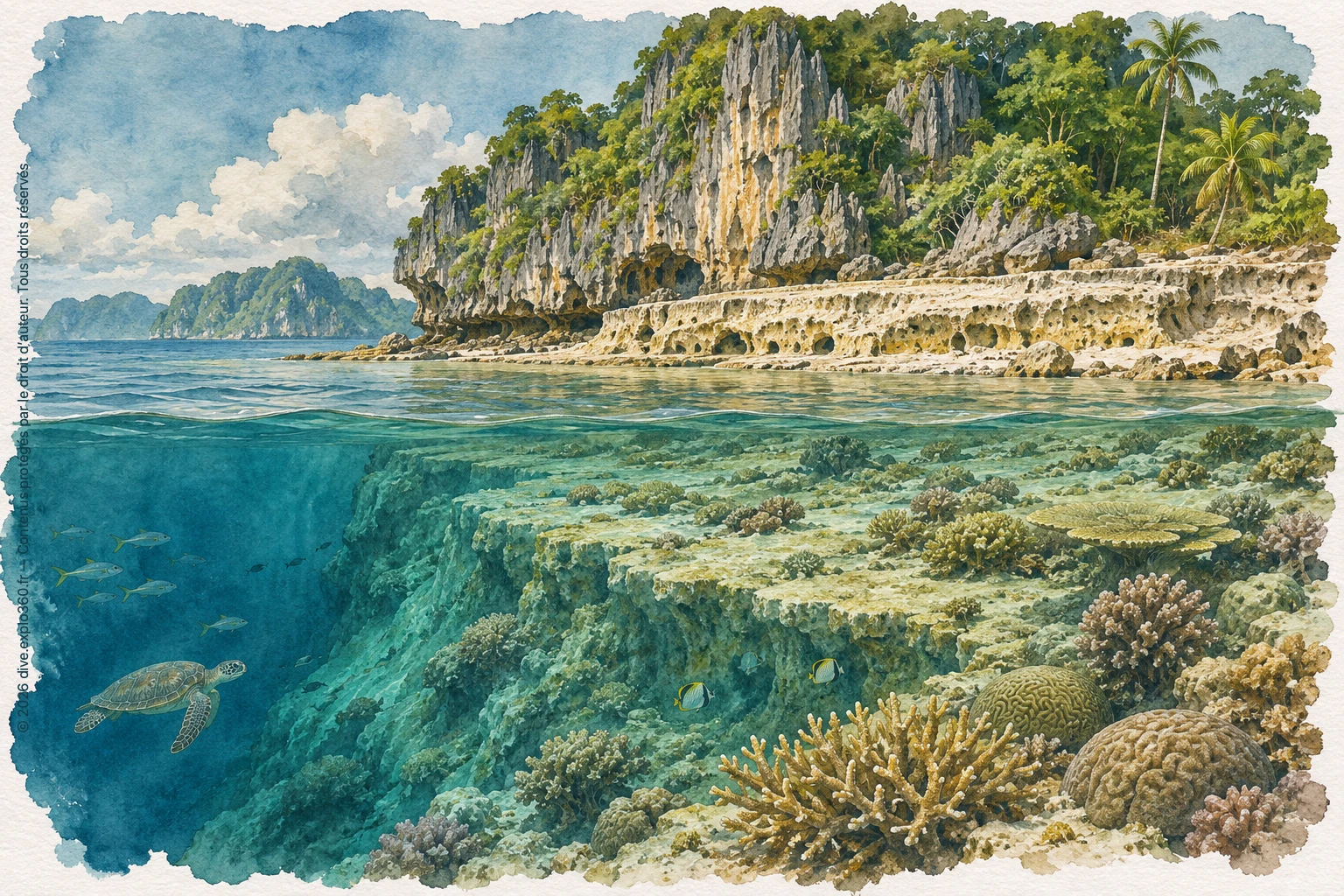
Water still moves between the oceans through the Indonesian islands. The Indonesian Throughflow carries water from the Pacific to the Indian Ocean. It takes several routes through the archipelago’s straits and channels. Around Raja Ampat, islands, narrow straits and underwater ridges steer the flow and change its speed.
Water speeds up in some channels. Elsewhere, eddies can hold particles and plankton in one area for a time. These movements help determine where the next generation of reef animals settles. Adult corals stay fixed in place. In many species, their fertilised eggs develop into larvae that spend days or weeks in the water before settling.
Many reef fish also spend their early lives as larvae in the plankton. Currents can carry these larvae away from the reef where they began life. Some reach a nearby reef, others travel much farther, and many die before finding a place to settle. The journey depends on how long the larvae spend in the water, which currents they encounter and how well they can swim or orient themselves.
The same stretch of water can be a route for one species and a barrier for another. Some species exchange genes across large distances. In others, populations on nearby reefs remain genetically distinct. By connecting some populations and keeping others apart, currents can shape how each evolves.

The hidden journey of the next generation
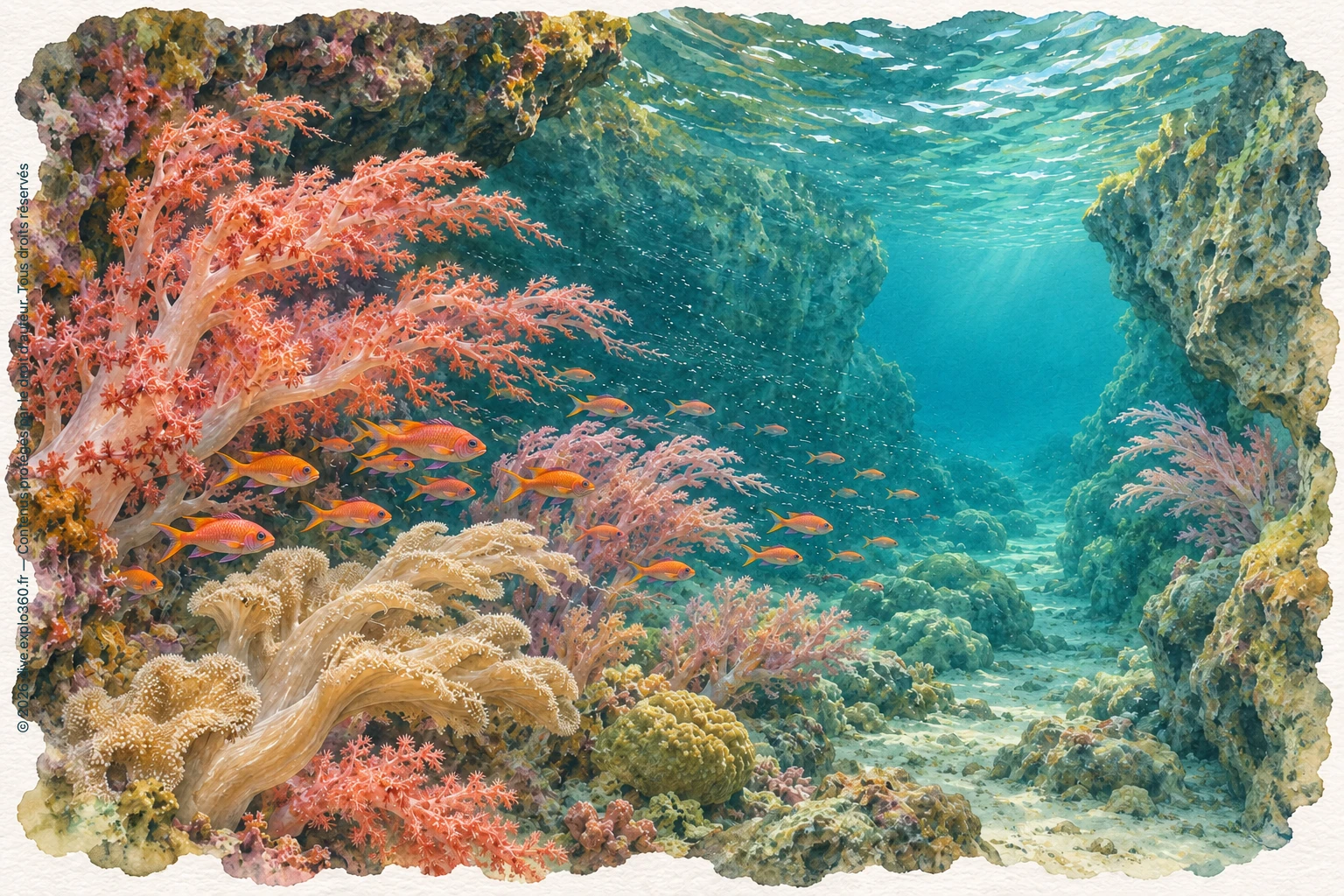
On a reef off Misool, a coral colony releases eggs and sperm into the water. After fertilisation, larvae may drift for a time before they settle. On another reef, fish are spawning. In some species the eggs drift freely. In others, adults guard the eggs until they hatch and the larvae enter the plankton.
Those differences affect how far the young can travel. A larva may rise or sink through layers of water moving in different directions, or spend time circling in an eddy. As some larvae develop, they begin to swim in response to cues that help them find a place to settle. Settlement also depends on finding suitable habitat and food and surviving encounters with predators.
When larvae settle and later reproduce on another reef, they can carry genes between populations. Occasional arrivals may leave most of the genetic differences between populations intact. Genetic studies across the Coral Triangle find both patterns. Some species are well connected across reefs, while others have distinct local populations. Each species has its own network of populations, shaped by its biology and history.
Over generations, dispersal and isolation can both contribute to regional diversity.
A reef is never a single habitat
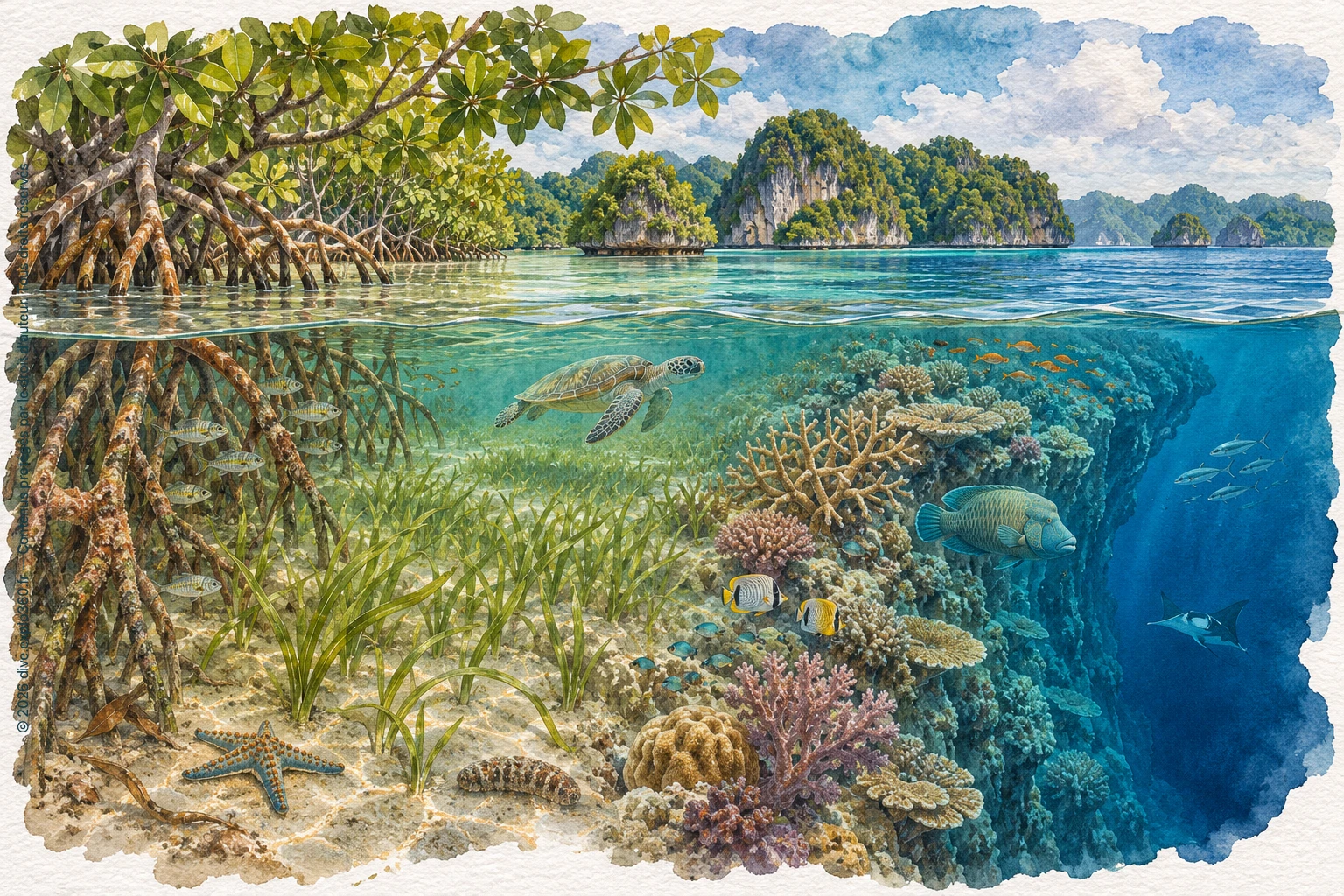
Let’s return underwater. On a slope exposed to the current, branching corals occupy well-lit areas. Small fish, crustaceans, and other hard-to-spot invertebrates live among their branches. Deeper down, the light fades. The shapes of the corals change. Sponges, gorgonians, and other attached organisms occupy some surfaces. At the foot of the reef, the sand is home to gobies that share burrows with shrimp, fish that bury themselves, worms and molluscs.
In a sheltered bay, seagrass meadows provide habitats distinct from coral slopes. Mangroves offer still other conditions, with submerged roots, soft sediments, and water that can be cloudy with suspended sediment. Each habitat offers a distinct set of conditions. Some species spend their entire lives in one type of habitat. Others move between habitats as they develop.
Some fish spend part of their early life in mangroves or seagrass meadows and move onto reefs as adults. These movements depend on the species and on how the habitats are arranged locally. The biodiversity of an archipelago extends beyond the species found on any one coral wall. It also includes species that occupy other habitats.
A greater variety of habitats can support organisms with a wider range of needs. In Raja Ampat, the shapes of the islands, the range of depths and substrates, and the patterns of water circulation create a remarkable variety of ecological conditions.
Why nearby reefs look different
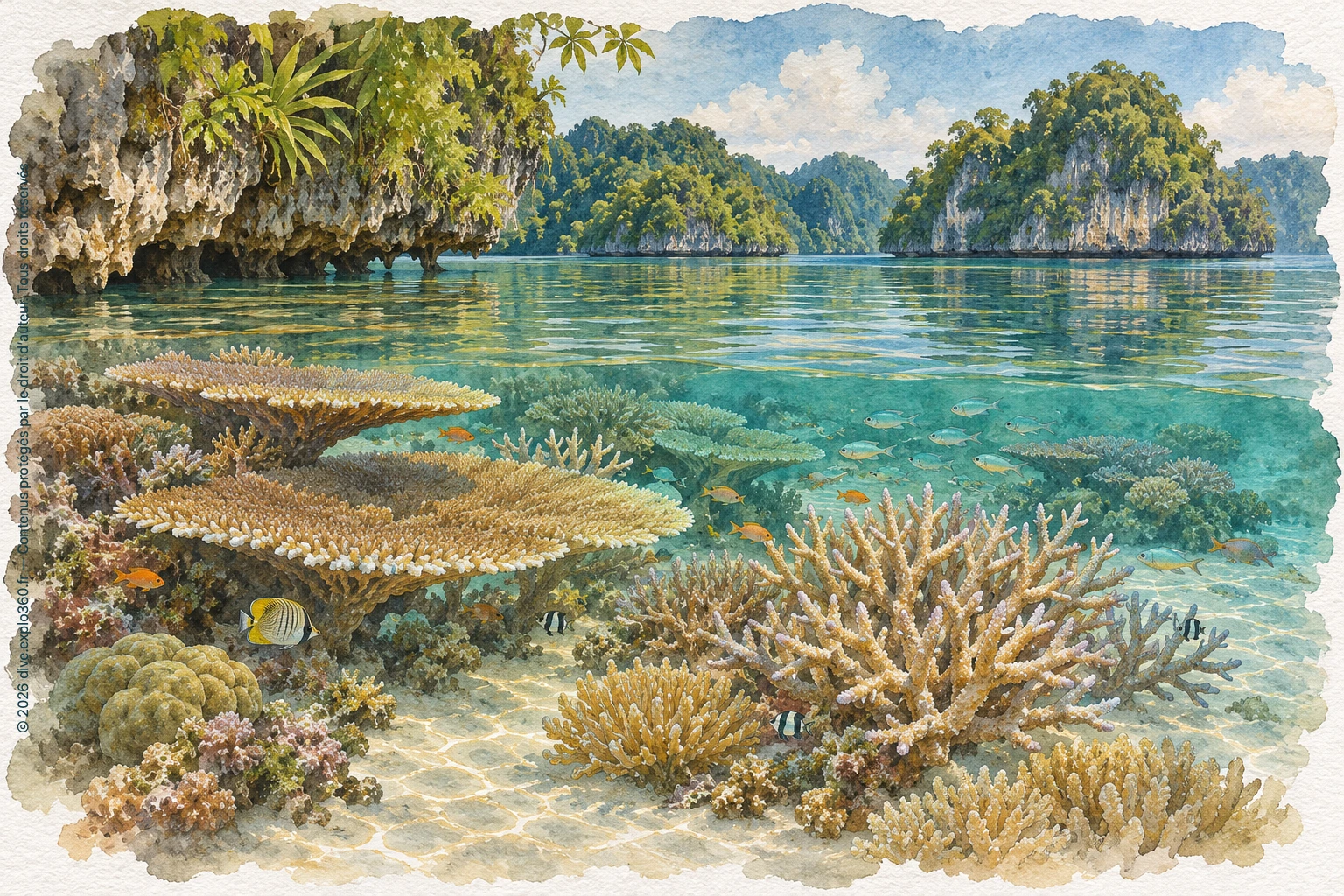
Reefs just a few kilometres apart can support very different communities. On one, branching corals dominate. On the other, massive colonies, encrusting forms or soft corals occupy more space. Depth and light help explain these differences. Exposure to swell, current speed, settling sediment and the supply of nutrients also affect which species thrive.
In passages where water circulates quickly, some filter feeders benefit from a steady supply of food particles. In quieter bays, other species find favourable conditions. The corals themselves do not all have the same requirements. Some species tolerate turbidity better, while others thrive mainly in clearer waters. Competition for space, predation, disease and other interactions also shape these communities.
Regional diversity increases when neighbouring habitats harbour partially different communities. A survey of one reef therefore captures only a fraction of the archipelago’s species. An archipelago-wide survey has to include reef slopes, lagoons, channels, bays and coastal habitats. The exceptional number of species is also the result of this succession of habitats.
Species found almost nowhere else
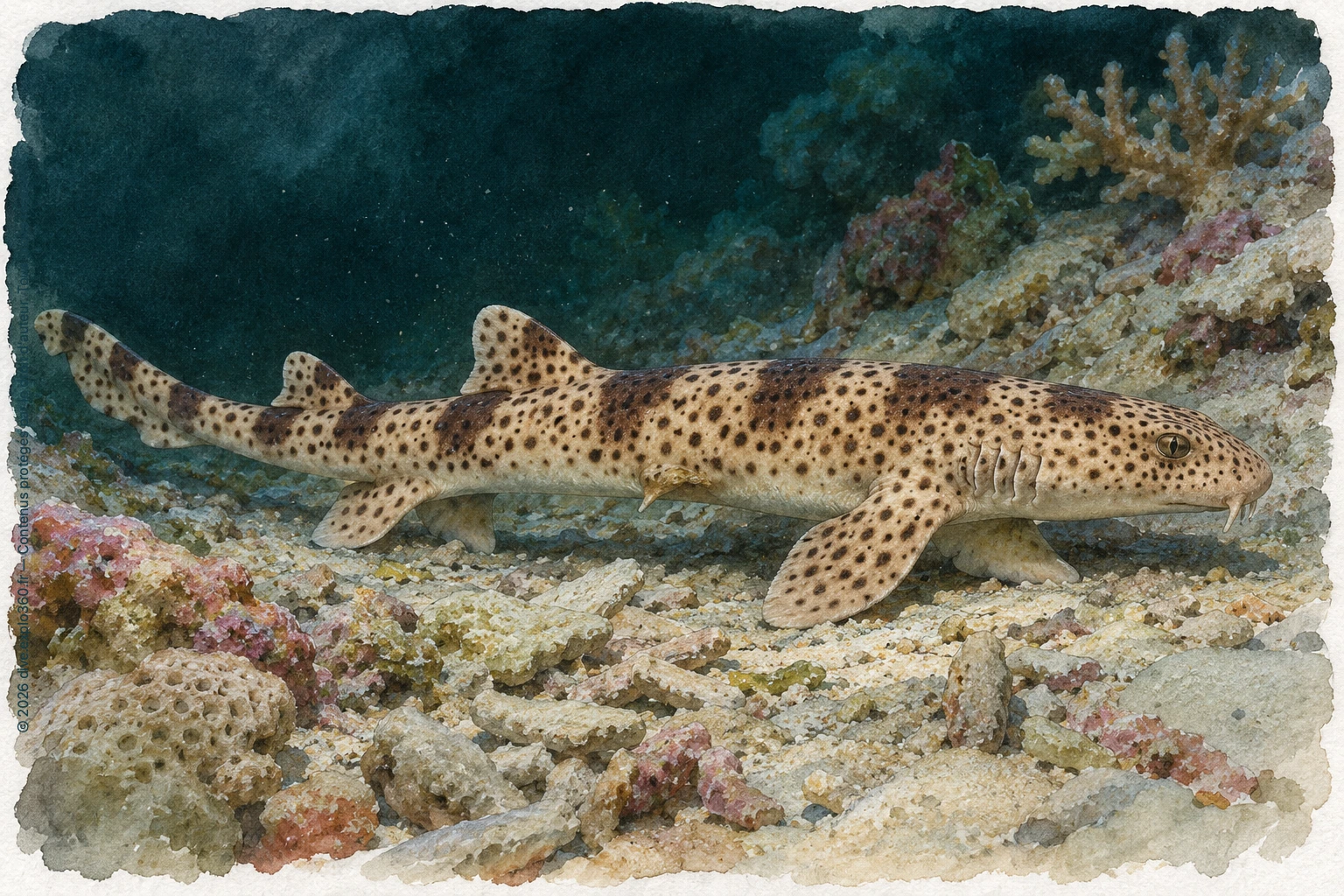
Some species have a wide distribution in the Indo-Pacific and are found on reefs that are thousands of kilometres apart. Others occupy much smaller regions. Around the western extremity of New Guinea, several fish have a limited distribution in this part of Indonesia or in nearby waters. The Raja Ampat epaulette shark, Hemiscyllium freycineti, belongs to a group known as walking sharks.
These small sharks use their pectoral and pelvic fins to walk along the seabed. Several species of the genus occupy relatively limited geographic areas. Their distribution illustrates another dimension of regional biodiversity. A species may become distinct when its populations remain isolated long enough to accumulate evolutionary differences, but geographic isolation does not automatically lead to the emergence of a new species.
Whether populations diverge depends on how long they remain apart, how often they exchange genes and the conditions they live in. In an area where islands and sea crossings have constantly changed, some lineages have evolved in relative isolation. The richness of Raja Ampat includes widely distributed species and others with a much more restricted range.
These two components tell different stories: that of organisms capable of dispersing over long distances and that of populations whose exchanges have remained limited.
Crossroads, cradle or refuge?
Why does the Coral Triangle concentrate so many species?
Several explanations have long been considered. One explanation is that new species evolved in the region. Another is that its extensive, varied habitats helped lineages survive after they disappeared elsewhere. A third possibility is that species from different parts of the Indo-Pacific arrived and became established there.
These explanations are not incompatible. Reconstructions of the geographic history of many reef species show that the Coral Triangle has probably played a major role in their diversification and persistence. In a study of 314 populations across 45 species, the earliest established populations tended to lie closer to the centre of the Coral Triangle.
These results are consistent with an area that has functioned as a centre of origin, a refuge for existing lineages, or both. However, they do not allow Raja Ampat's wealth to be attributed to a single mechanism. The archipelago belongs to a much larger biogeographic region, whose species have been shaped by the same great geological and oceanic transformations.
The current diversity can therefore result from both the evolution of new lineages, the persistence of old species and the arrival of organisms from other regions.
Temperature tells only part of the story
Tropical reefs need favourable conditions for their development. Temperature affects how reef-building corals and their photosynthetic symbionts function. Many coral species thrive within a limited temperature range. Many tropical regions have similar temperatures to Raja Ampat without having the same richness of corals and fish. To understand this difference, we must consider the evolutionary history, the extent of available habitats, the connections between populations and the possibilities of survival during environmental changes.
Temperature may favour some species while excluding others. When it exceeds their tolerance limits, it becomes a source of stress. Even Raja Ampat’s species-rich reefs can suffer during marine heatwaves. The condition of the reefs can also vary across the archipelago.
A very rich inventory indicates how many species have been identified in an area. It does not provide information on the current abundance of each species, the status of colonies, or the resistance of communities to disturbance.
Assessing reef health calls for other measures, such as coral cover and the condition of living colonies.
A richness still being documented
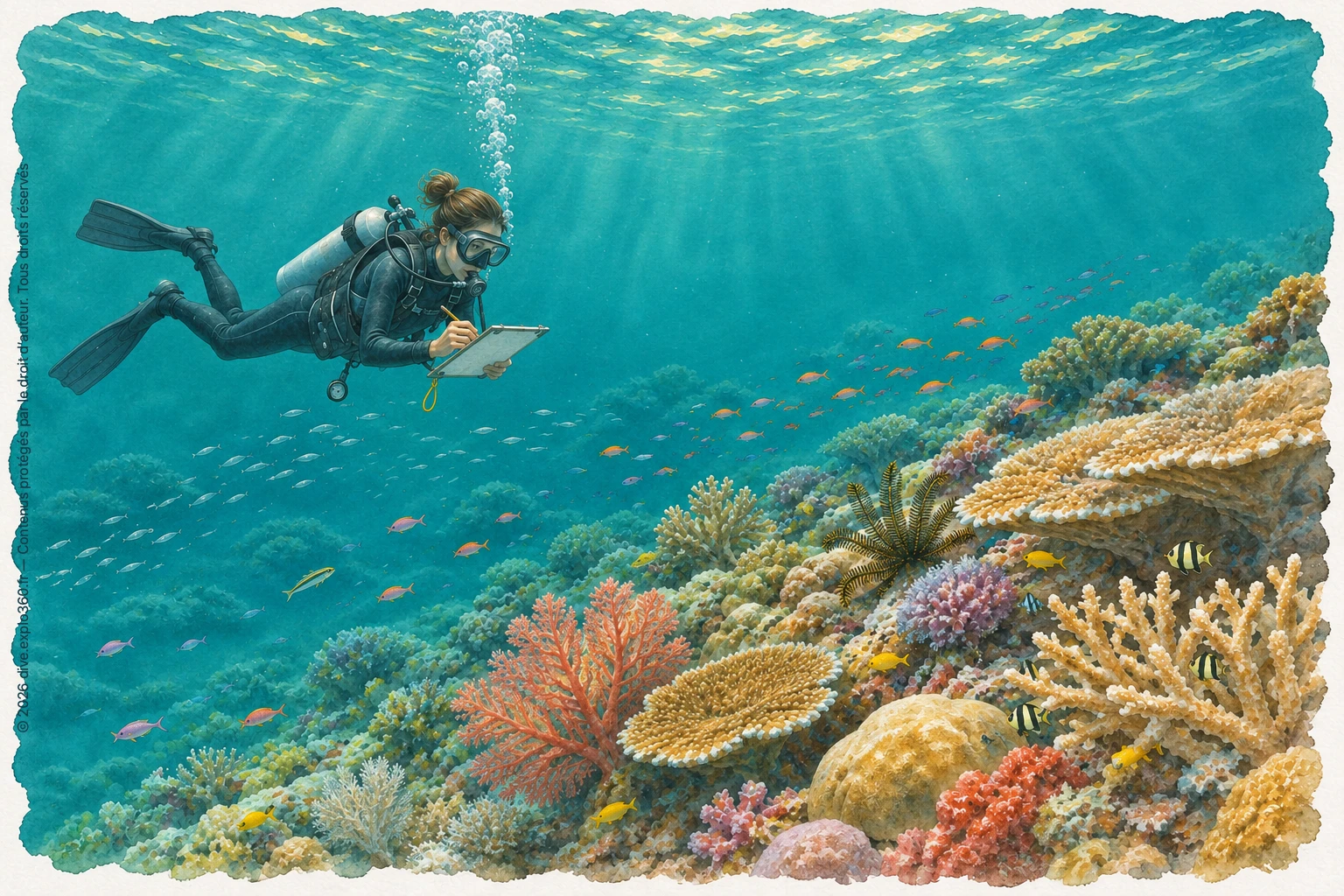
Raja Ampat's inventories continue to grow. Later surveys added records of small, easily overlooked fish, and genetic analyses provided another way to look for species. The methods used influence the results. Visual surveys favour species that can easily be observed during a dive. Nocturnal fish, those that remain hidden in cracks and some very small species can go unnoticed.
The analysis of environmental DNA provides additional information. Fragments of genetic material present in the water allow the detection of organisms that have not necessarily been seen directly. These methods revealed species absent from some visual inventories, while presenting their own limits of identification and sampling. The scope of a survey matters when comparing totals.
Counts vary according to the date, groups considered, geographic boundaries and changes in classification. Some publications focus on the archipelago alone, others on the entire Bird's Head Peninsula region. A 2021 compilation listed 1,628 reef fish species for Raja Ampat. Corals of the World lists 567 hard coral species confirmed or strongly suspected to occur in the archipelago.
Both totals are snapshots that can change as new records and taxonomic revisions appear.
Interactive quiz
Test your knowledge
5 question(s) to test your knowledge.
Interactive quiz
Test your knowledge
Question 1 out of 5Score: 0
Where does the name Raja Ampat come from?
What happened to some shallow seafloors during ice ages?
What can currents do to larvae?
Why might the same fish use several habitats?
How can scientists complement dive surveys?
Final result
Quiz completed
correct answers
Millions of years in a few metres of water
Back in the channel, the current still sweeps past the wall. Schools of fish move above the corals, and tiny species shelter in the crevices. A few kilometres away, a sheltered bay supports a different community. A deeper slope has others again. Warm water helps reef-building corals grow within their temperature range. The distribution of species also bears the imprint of moving plates and changing sea levels. Habitats were separated and reconnected, and currents carried larvae between some reefs.
Some species evolved in the region, others survived there through environmental changes, and others arrived from neighbouring waters. Today, each bay, slope and strait provides a different set of conditions. Those differences help explain why a survey of one reef gives only a glimpse of the region’s diversity. A diver can cross a reef in a few minutes. The fish and corals encountered along the way belong to lineages whose histories stretch back through millions of years of changing seas.
Scientific references
Explore the same world