The four main islands
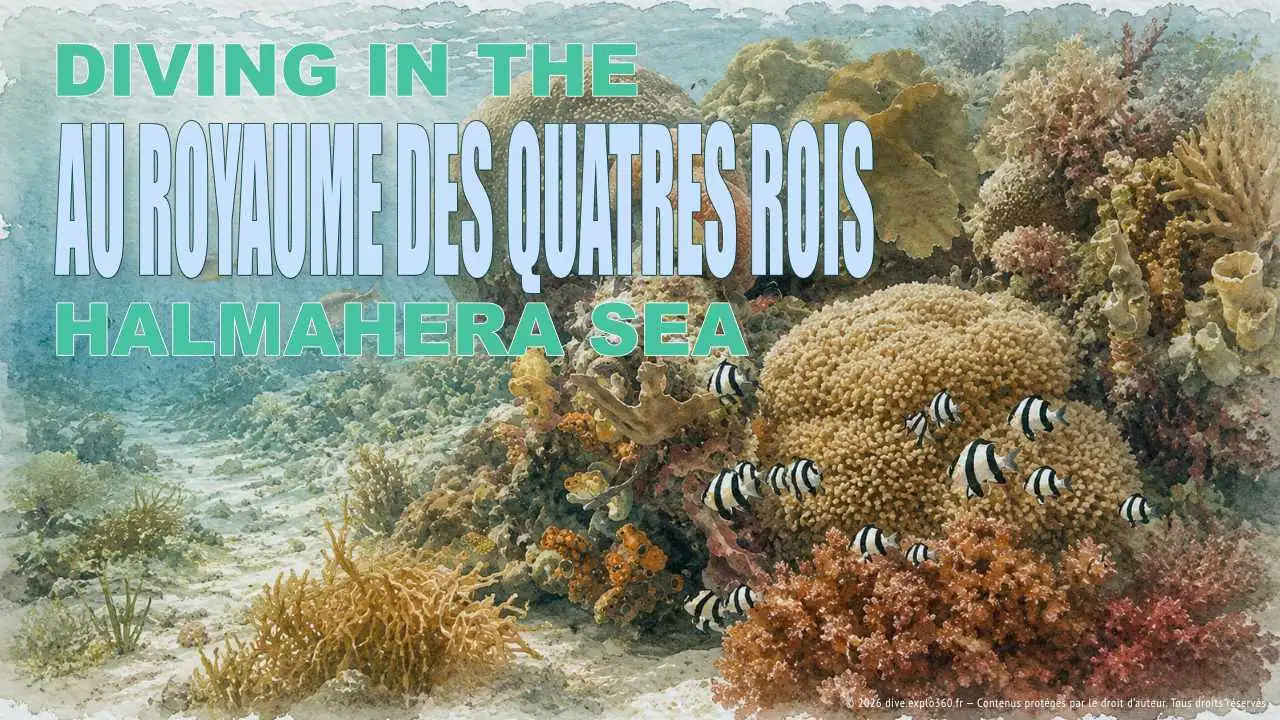
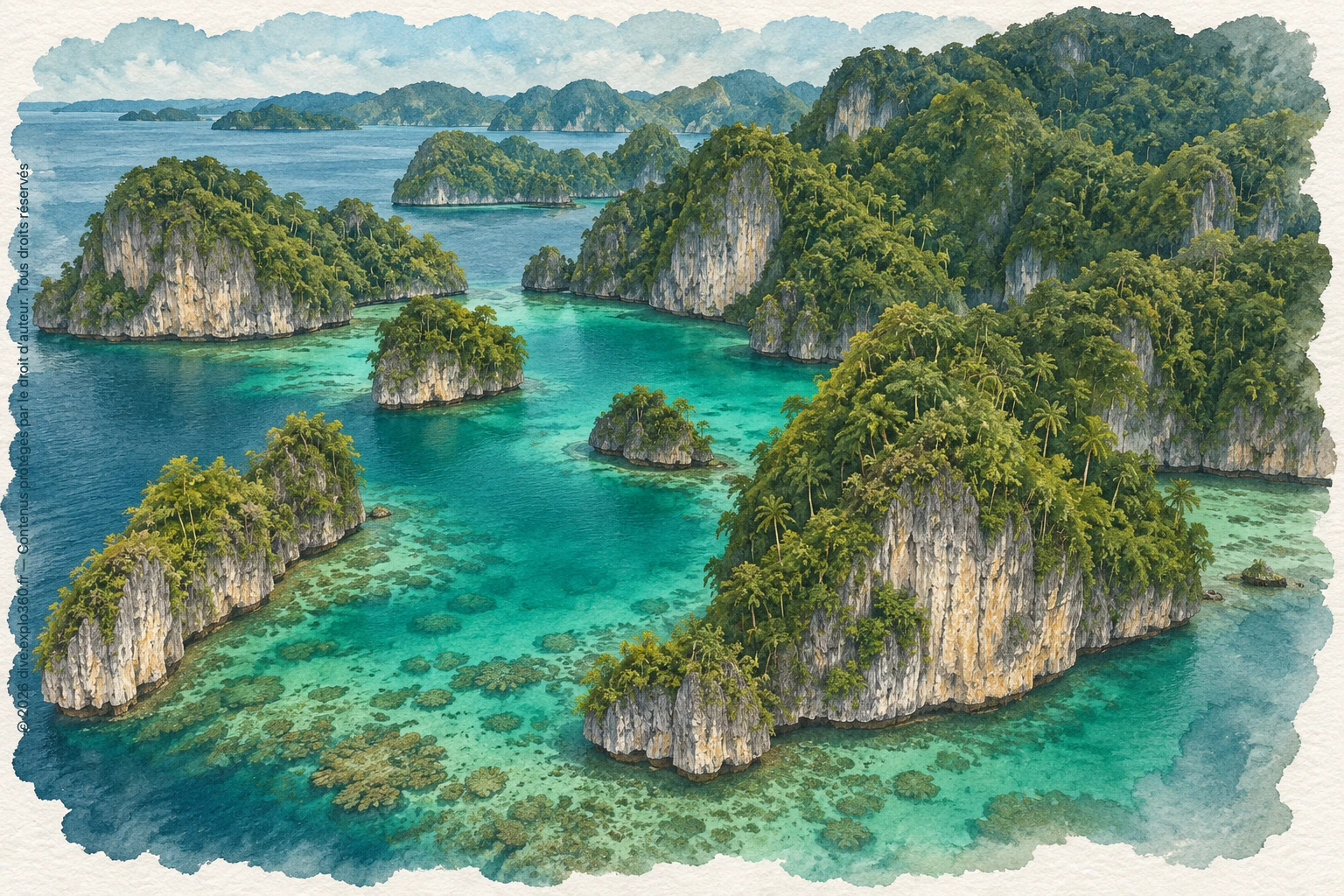
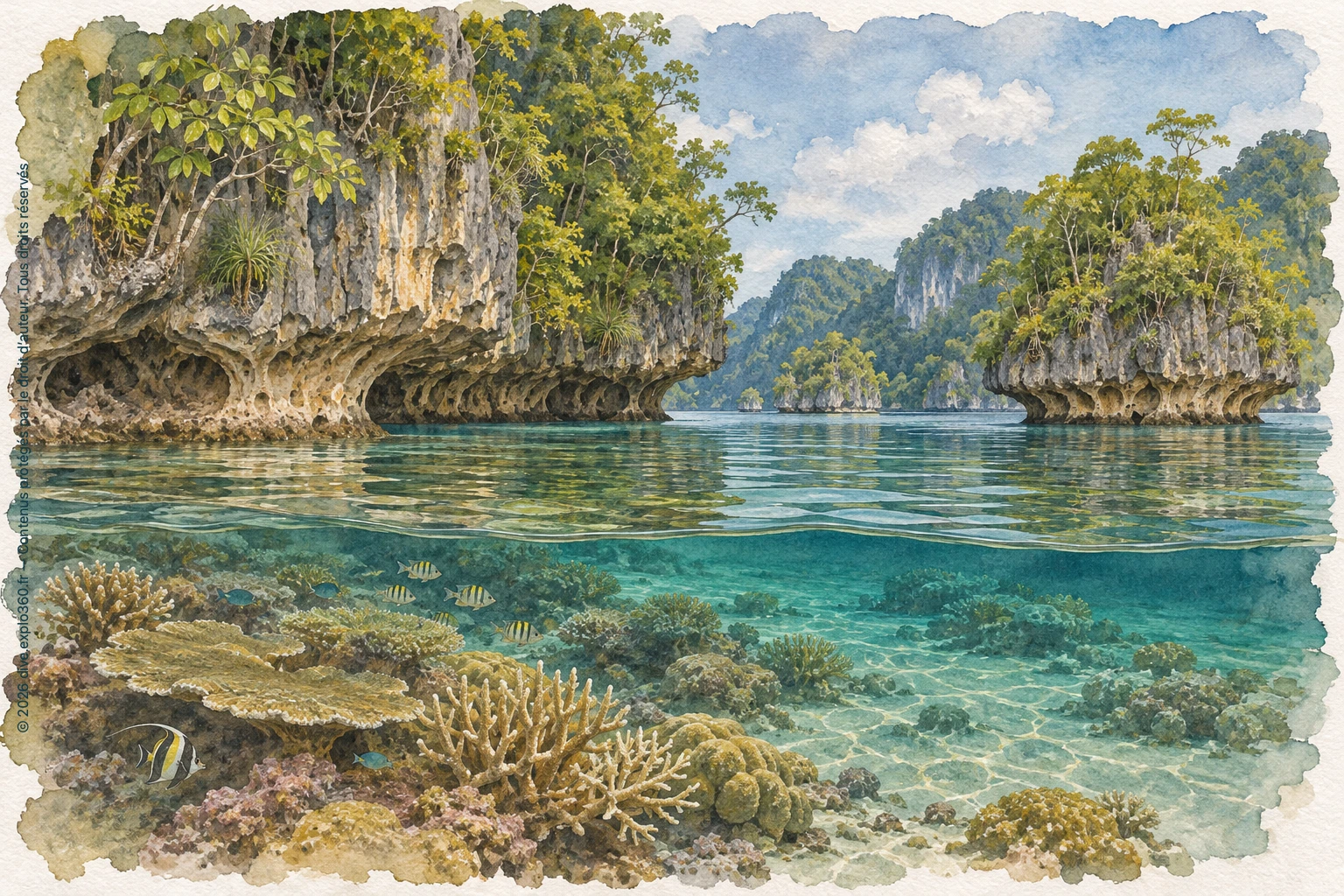
Waigeo, Batanta, Salawati and Misool are the four main islands that give Raja Ampat its name, “the four kings”. Between these islands and the smaller ones lie quiet bays and channels where the water rushes through.
When land moves
As tectonic plates moved over millions of years, islands shifted and sea passages opened or closed. These changes altered the routes water and marine animals could take between the Pacific and Indian oceans.
A lower sea
During ice ages, so much water was stored in ice sheets that sea level sometimes fell by more than a hundred metres. Shallow seabeds became dry land, and populations that had once been connected could become separated.
Water between two oceans
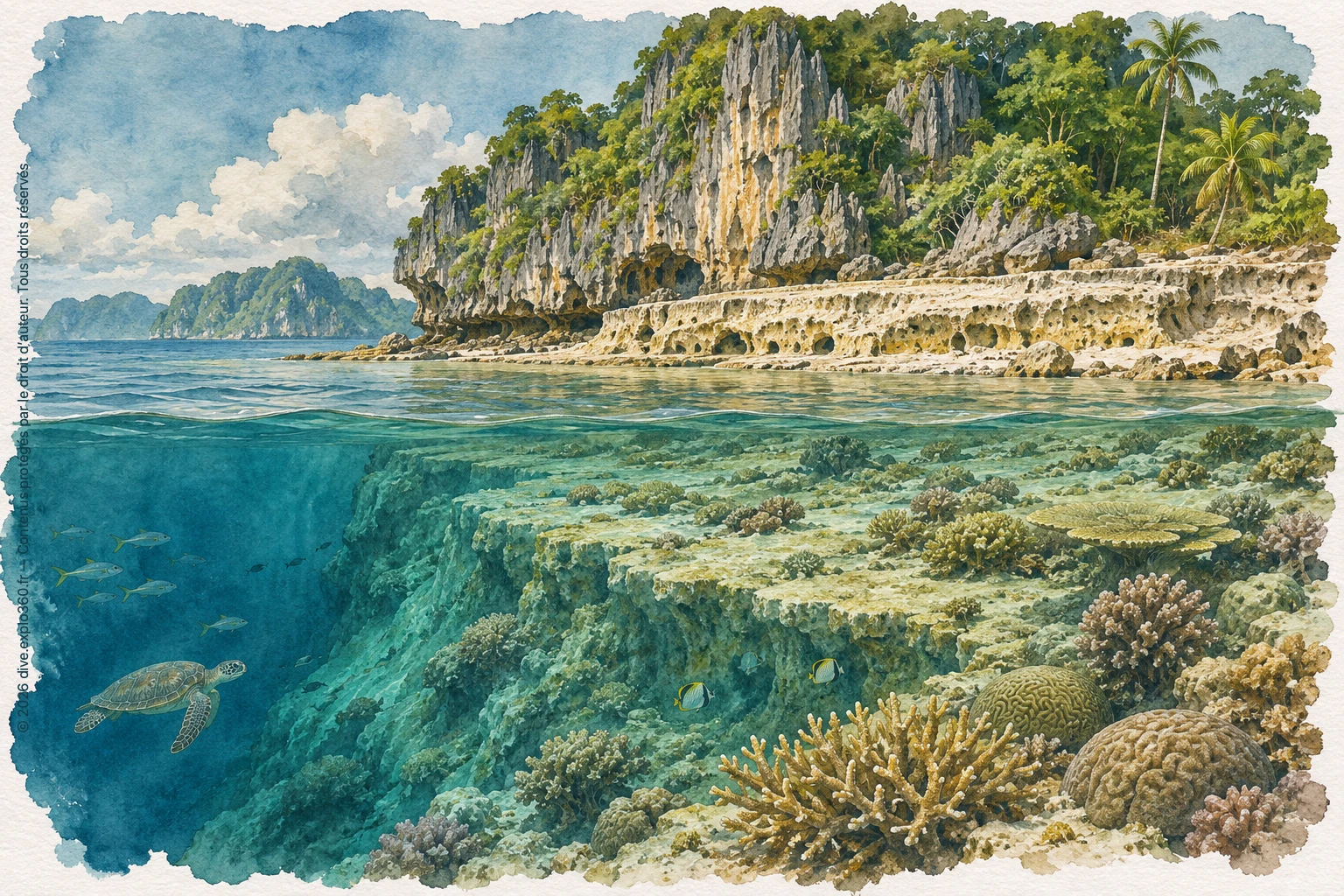
Pacific water flows between the Indonesian islands and reaches the Indian Ocean. The Indonesian Throughflow runs through a network of straits and channels.

Larvae on the move
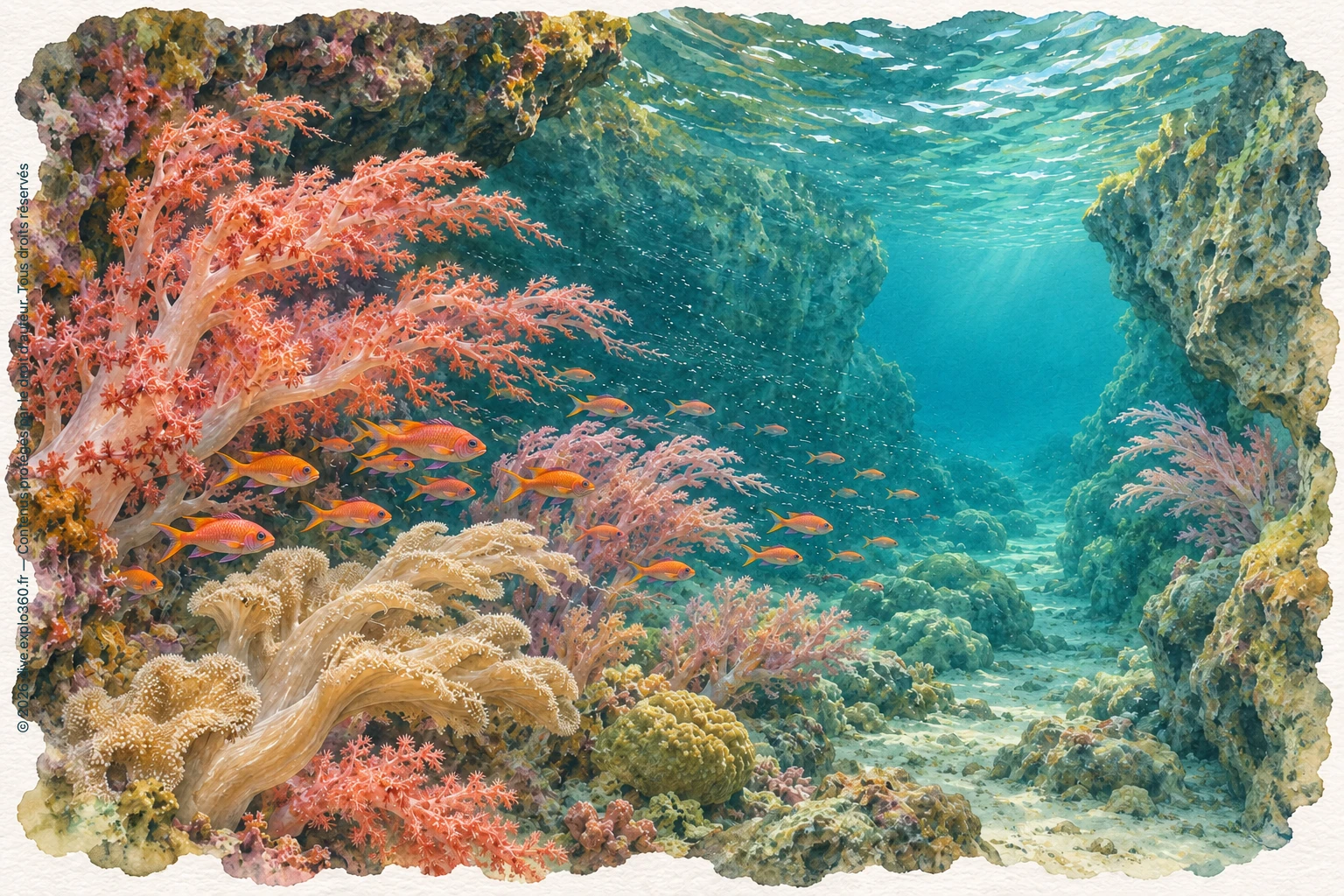
Many corals and fish begin life as tiny larvae. Currents may carry them to another reef or keep them near where they started. To settle, they need to reach a place where they can survive.
Many kinds of shelter
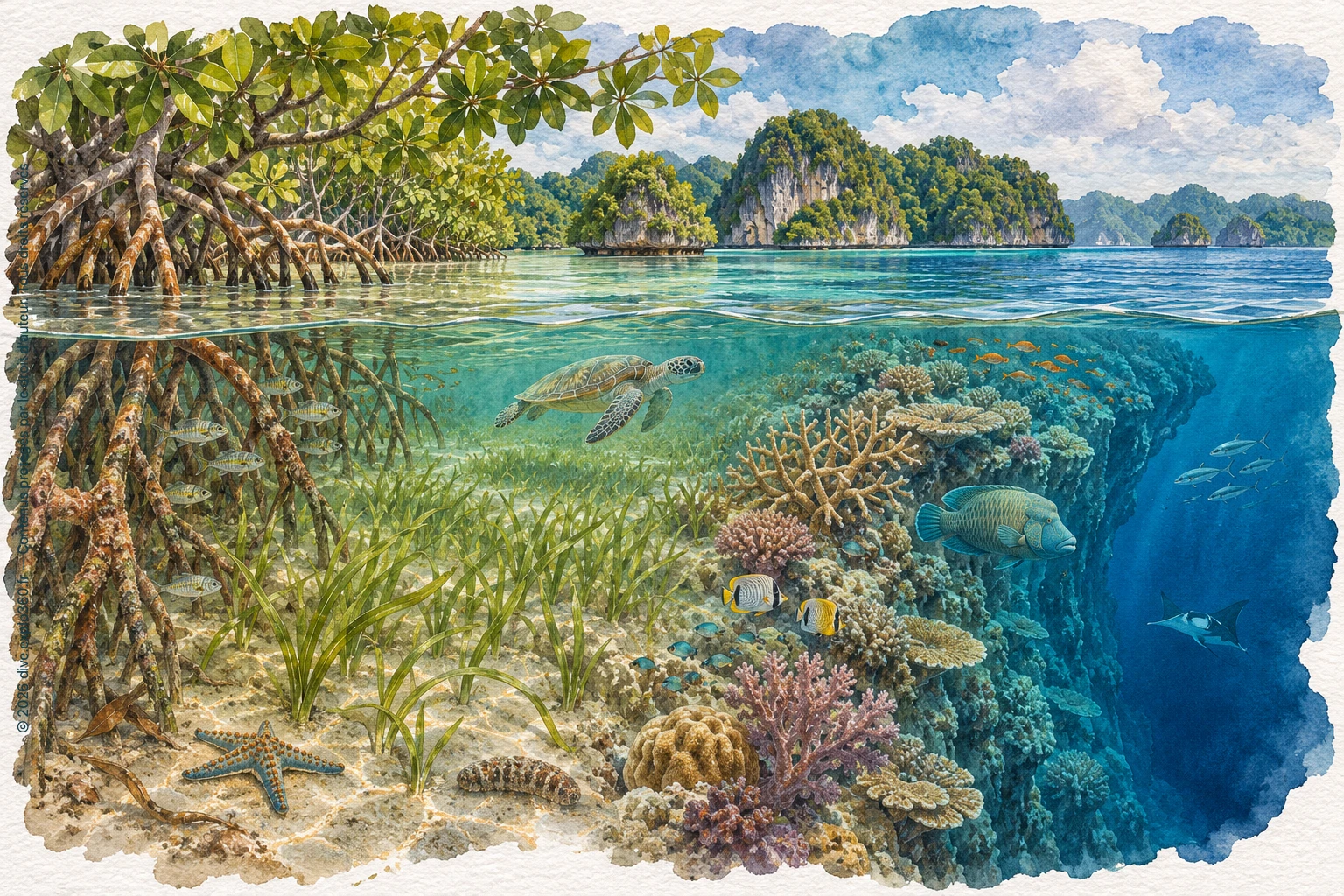
Some fish hide among coral branches. Others shelter among mangrove roots or seagrass. A fish might grow up in a sheltered meadow and move onto the reef as an adult.
Two reefs, two landscapes
A quiet bay and a slope swept by strong currents may be home to different animals. Light, depth and water movement affect which species are found there.
Species found close to home
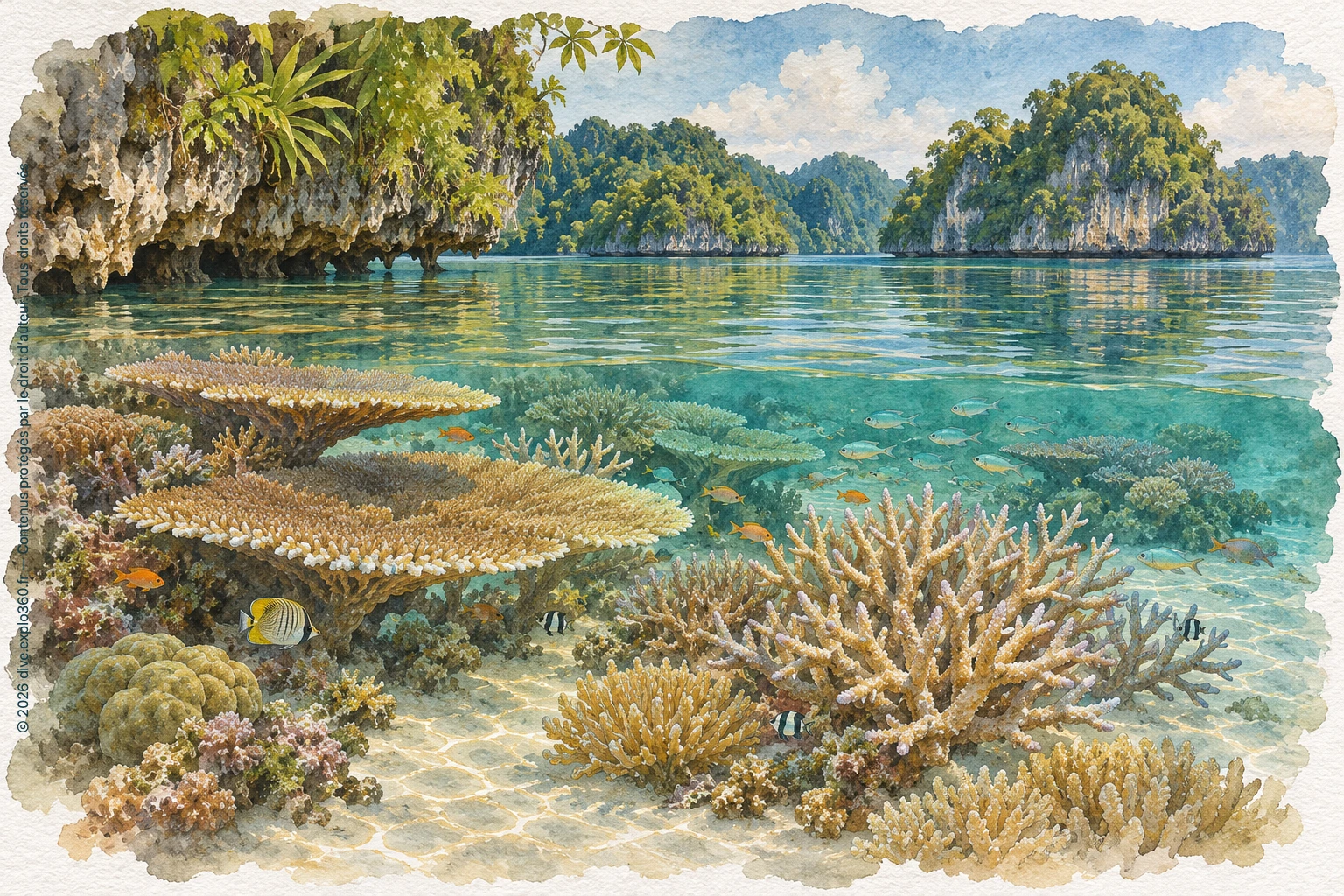
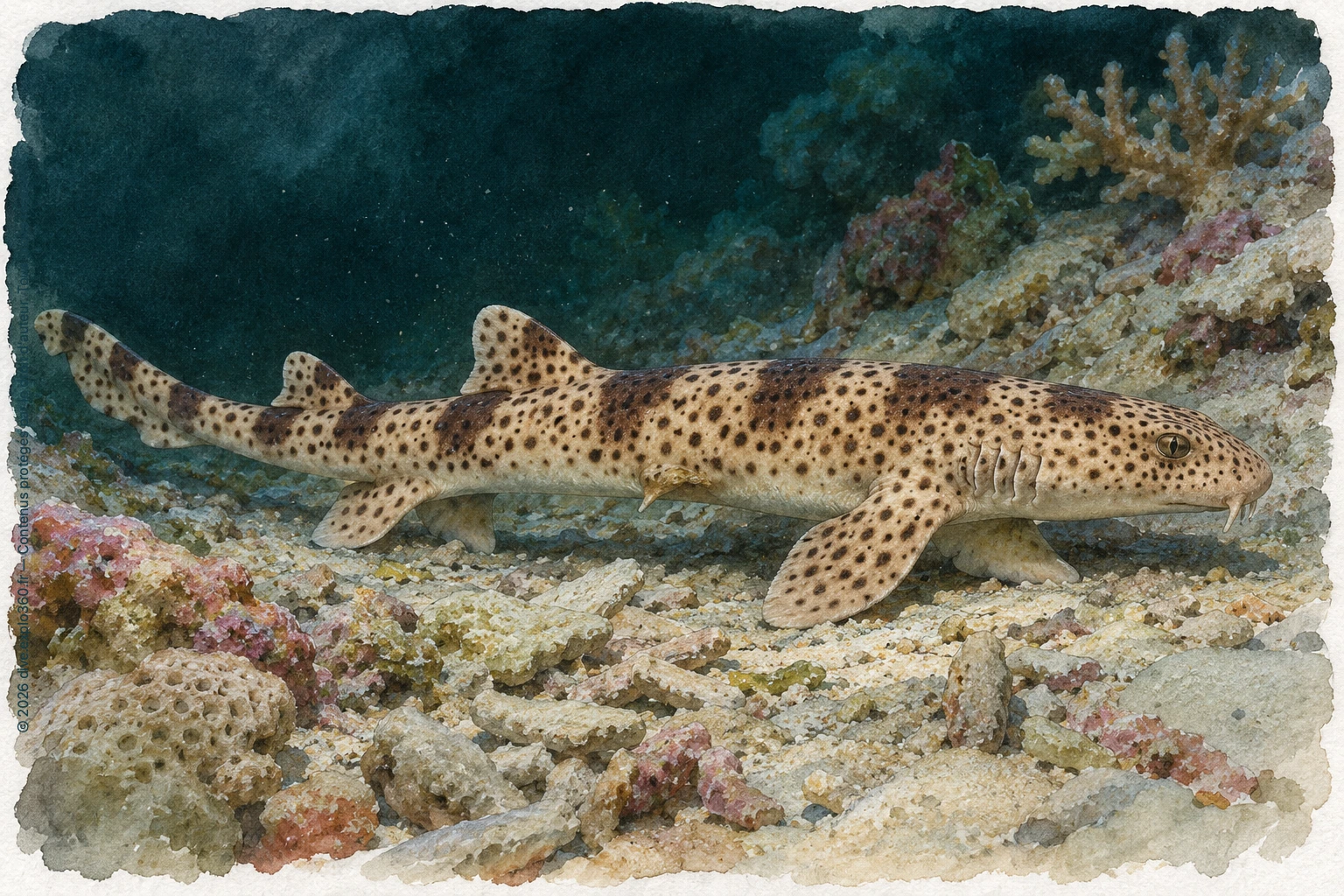
Some fish are found on reefs thousands of kilometres apart. The Raja Ampat epaulette shark, a small shark that can walk along the seabed on its fins, lives in a much smaller area. A species is endemic when it occurs naturally only in a particular region.
Where did all these species come from?
Some species evolved in the Coral Triangle. Others spread there from nearby seas or survived there when conditions changed elsewhere. All three processes can add to the number of species found in the region today.
Warm water and much more
Water temperature matters for corals. Light, currents and shelter also shape life on reefs. Other tropical regions have warm waters but differ in their habitat diversity and history.
How do we count species?
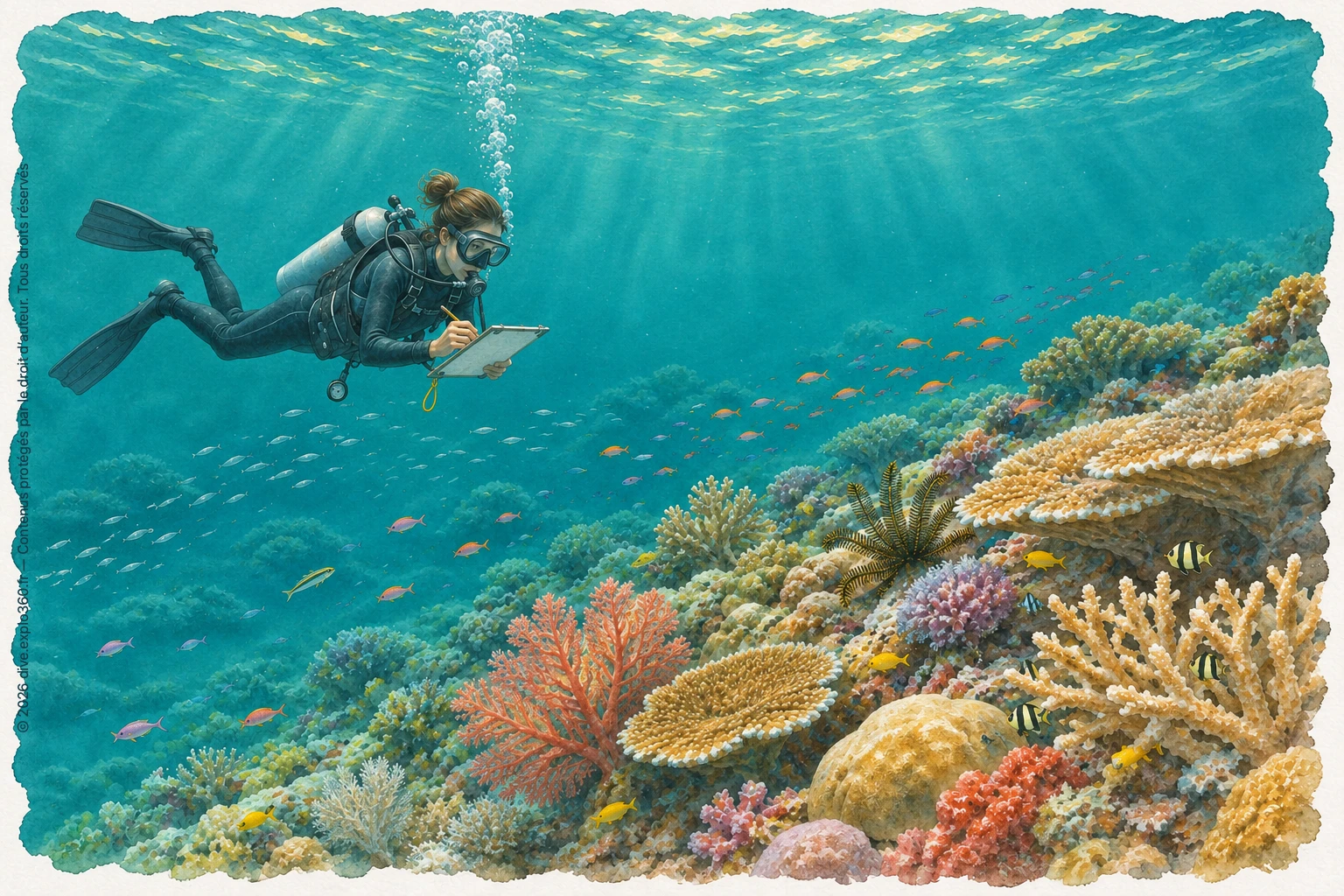
Divers record the species they see. Scientists can also sample seawater for environmental DNA, the traces of genetic material that animals leave behind. It can reveal species that hide in cracks or come out after dark.
Interactive quiz
Test what you know
5 question(s) to test your knowledge.
Interactive quiz
Test what you know
Question 1 out of 5Score: 0
Where does the name Raja Ampat come from?
What happened to some shallow seafloors during ice ages?
What can currents do to larvae?
Why might the same fish use several habitats?
How can scientists complement dive surveys?
Final result
Quiz completed
correct answers
Conclusion — Why life is so varied here
The islands and their surroundings have changed over millions of years. Today, currents still carry young animals between reefs, and bays, slopes and seagrass beds offer different places to live. That helps explain why a count on one reef tells only part of Raja Ampat’s story.
Scientific references
Explore the same world