The four main islands
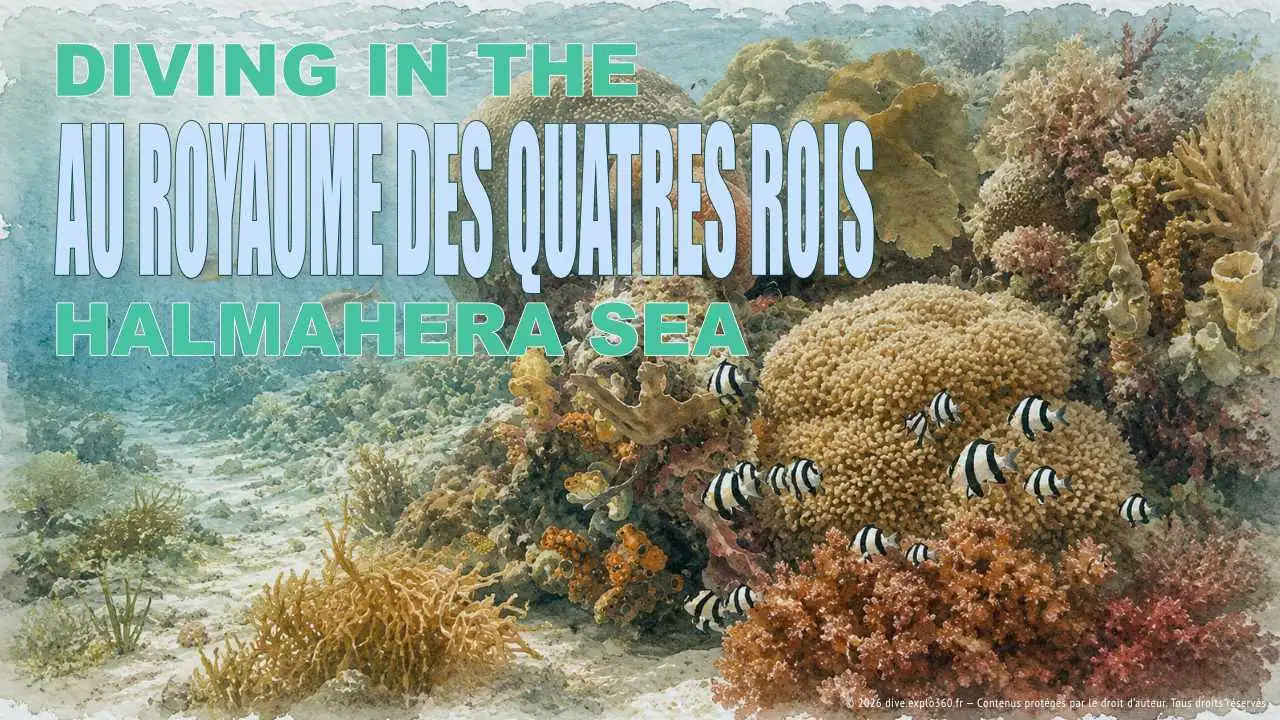
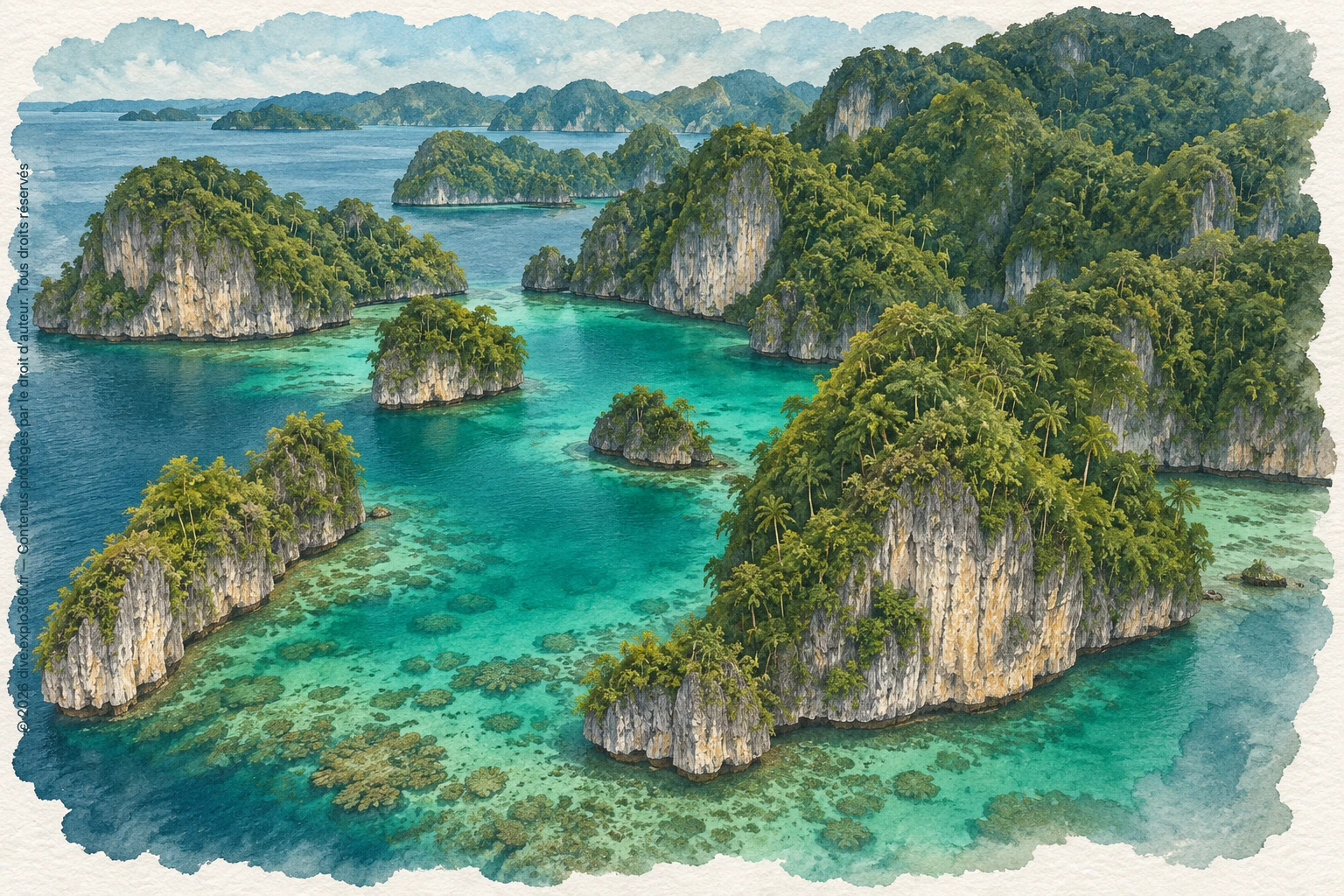
Raja Ampat takes its name, “the four kings”, from Waigeo, Batanta, Salawati and Misool. These four islands and their smaller neighbours enclose sheltered bays and narrow channels, while outer reefs face open-ocean swell. The resulting range of currents and wave exposure creates different conditions for reef communities.
When land moves
Over millions of years, plate movements shifted islands and opened or closed passages between the Pacific and Indian oceans. As the geography changed, so did the distribution of coastal habitats and the routes by which marine organisms could disperse.
A lower sea
During Pleistocene glaciations, growing ice sheets stored enough water for sea level to fall by more than a hundred metres at times. As shallow seabeds emerged, some populations lost connections with neighbouring reefs. Rising seas during warmer intervals flooded former coastlines and reopened some dispersal routes.
Water between two oceans
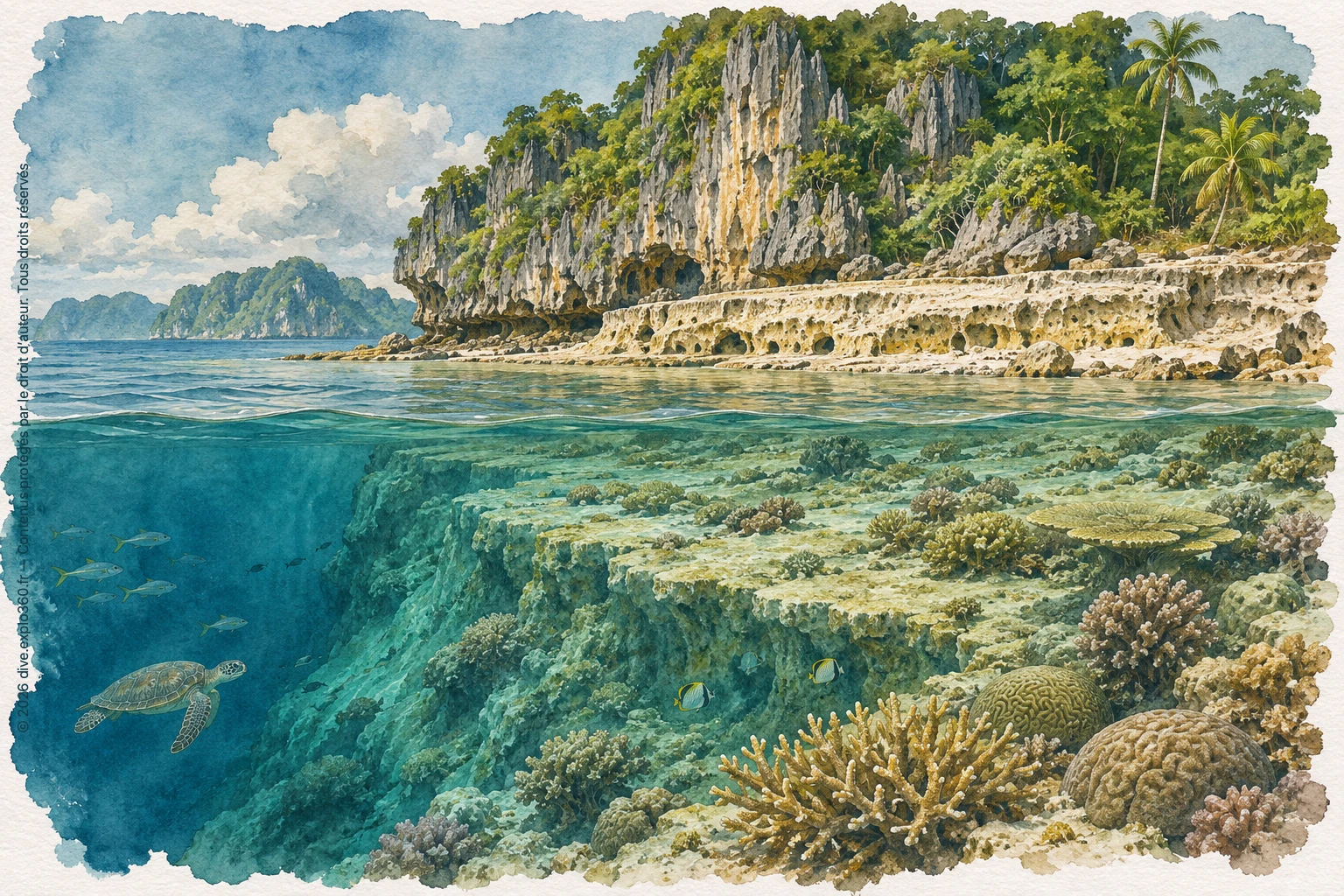
Pacific water flows between the Indonesian islands and reaches the Indian Ocean. The Indonesian Throughflow runs through a network of straits and channels. Topography and tides shape the local flows that organisms experience.

Larvae on the move
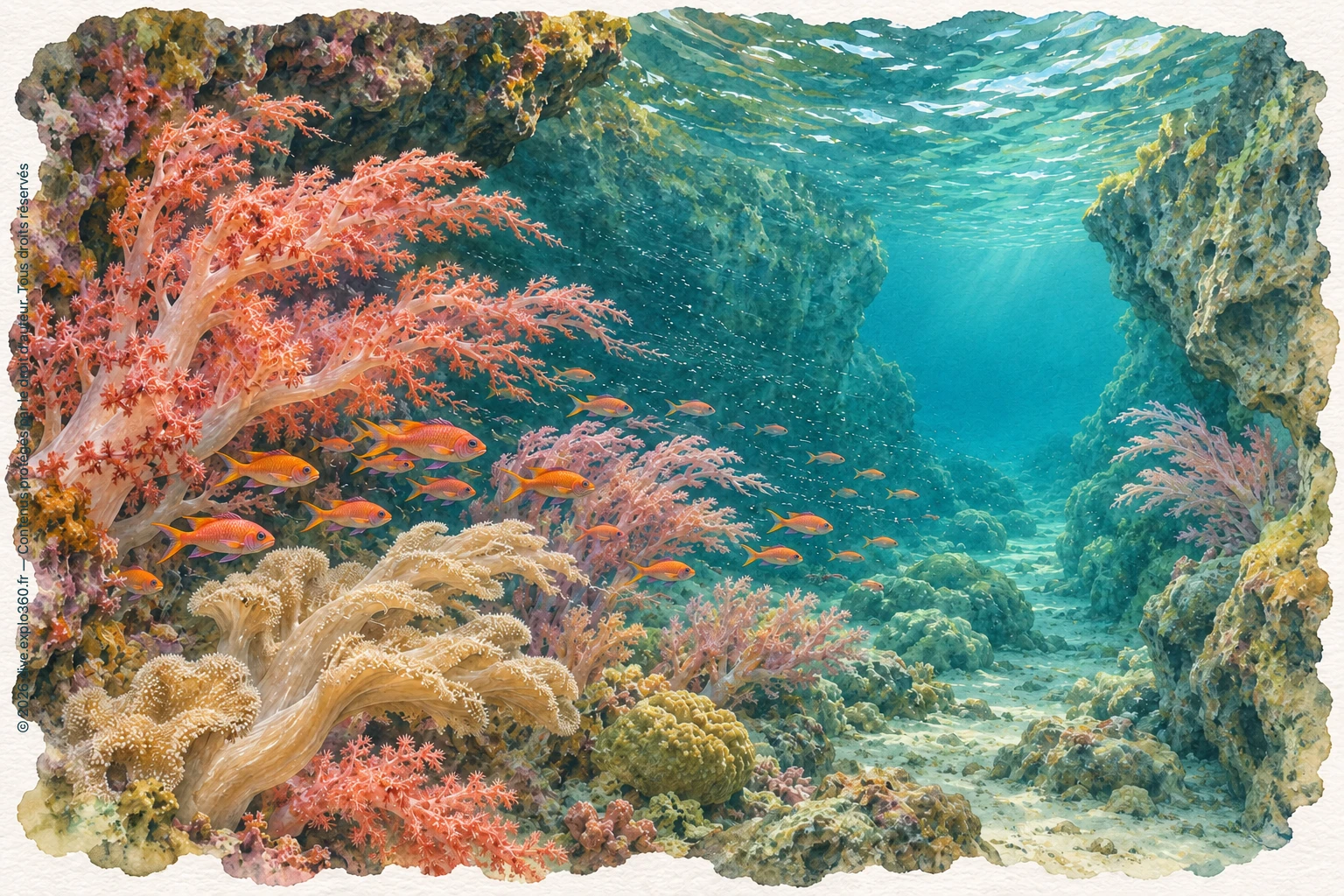
Currents can carry larvae to another reef or retain them close to their birthplace. How far larvae disperse depends on the local flow, how long they spend in the plankton and, for some species, how they swim or orient themselves. Successful settlement also requires suitable habitat when the larvae are ready.
Many kinds of shelter
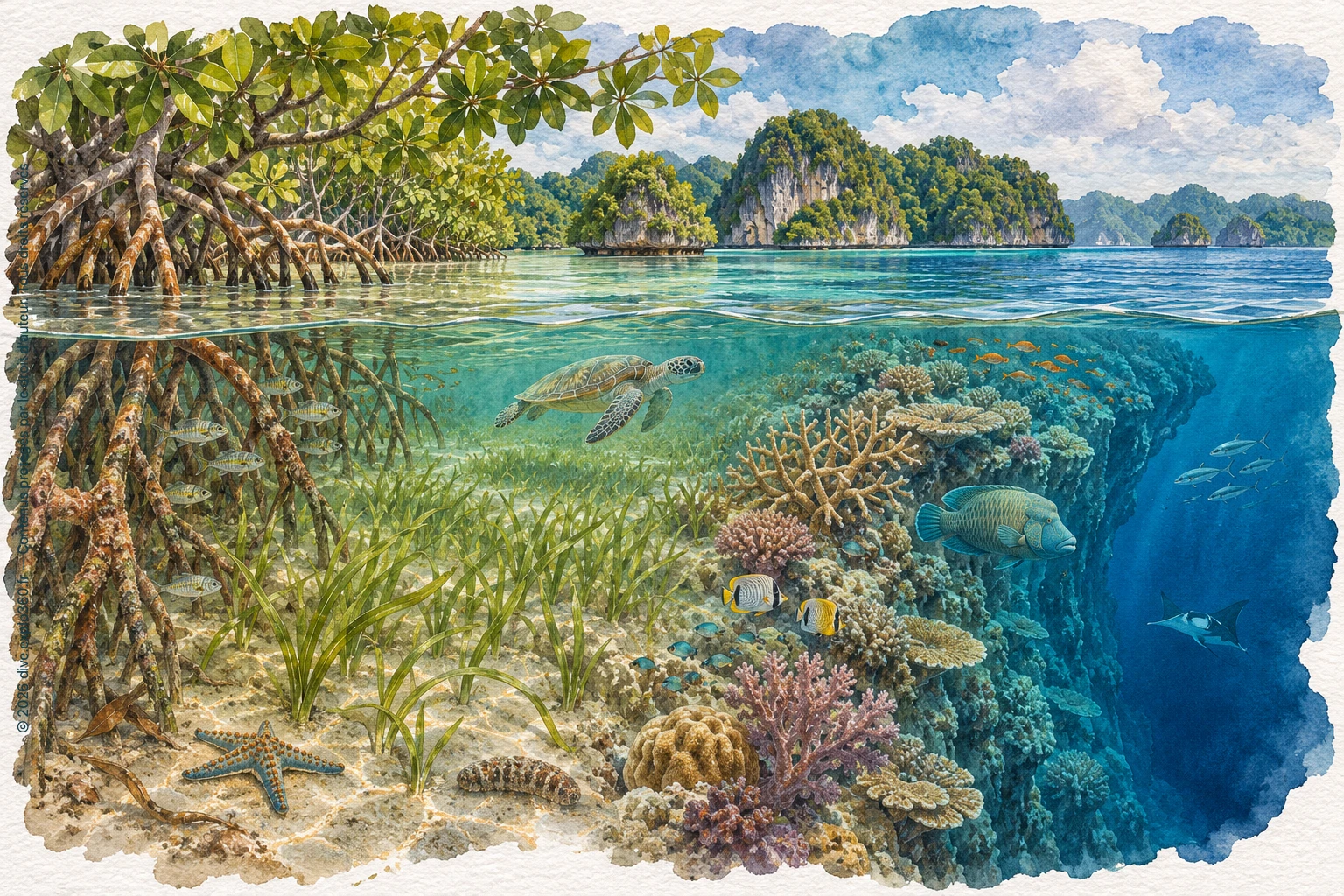
Some fish hide between coral branches. Others shelter among mangrove roots or in seagrass beds. The same fish can use different habitats as it grows. Nearby complementary habitats help some species find shelter and food at different life stages.
Two reefs, two landscapes
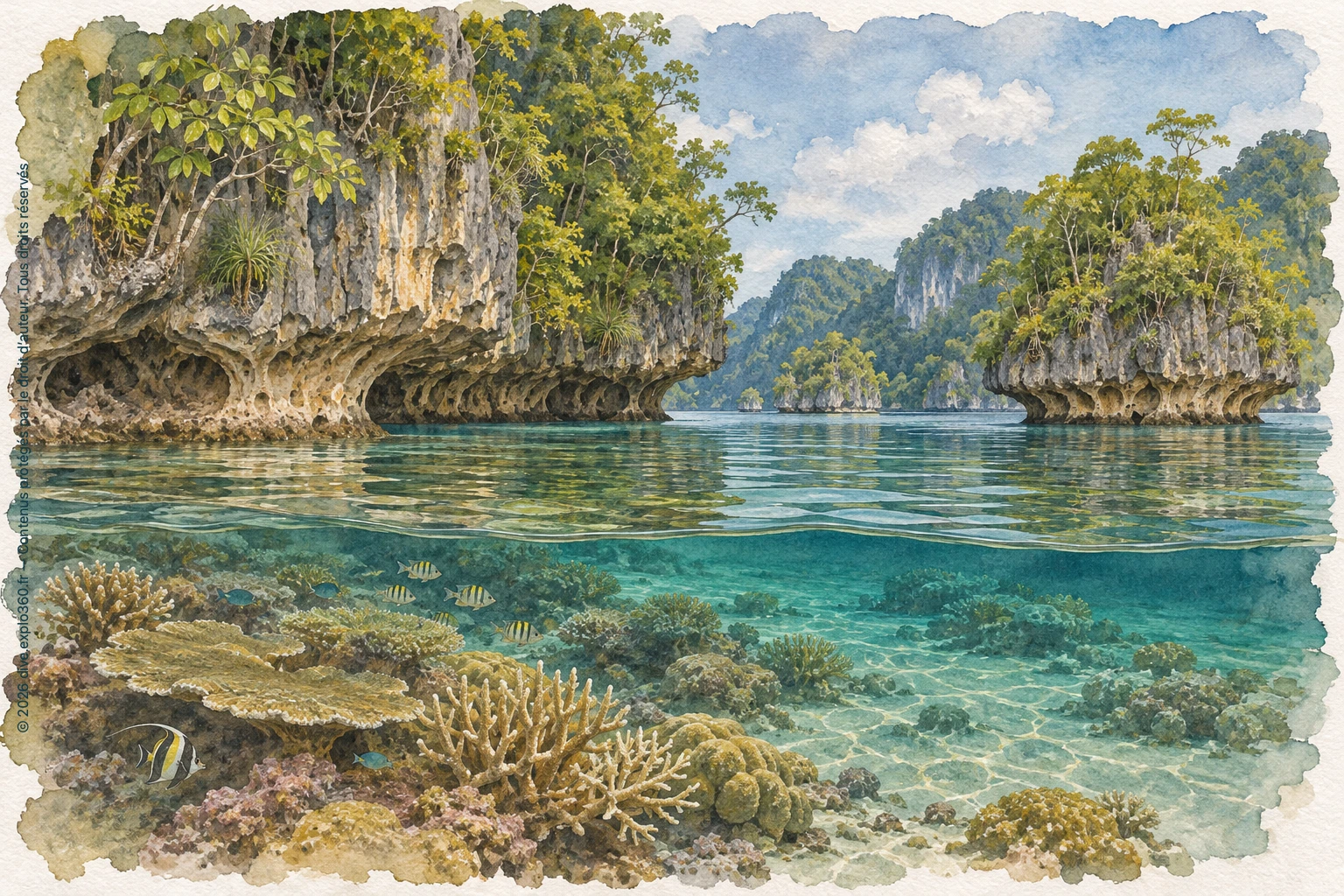
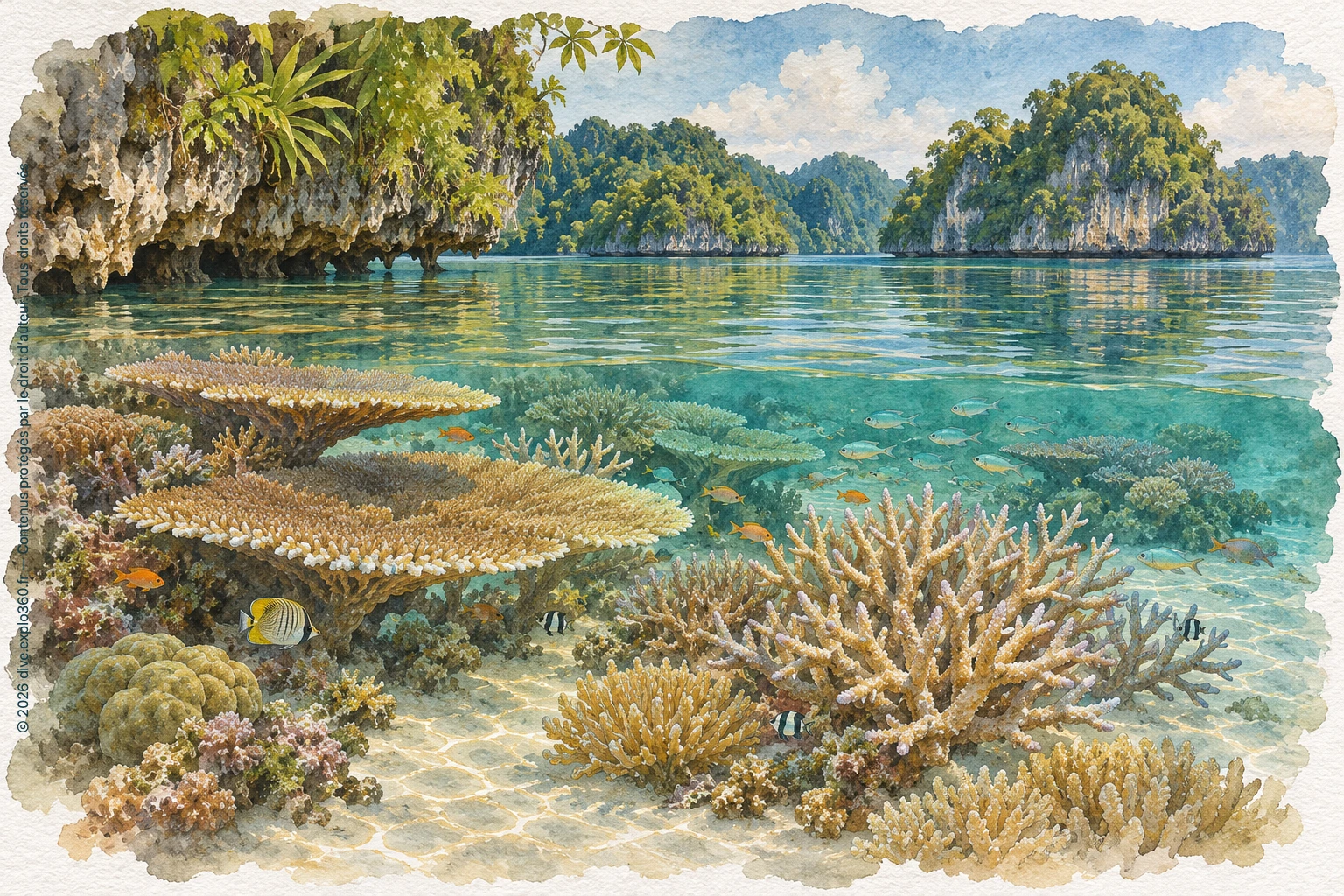
Differences in light, depth and water movement can give a sheltered bay and an exposed slope very different communities. As species composition changes from reef to reef, the archipelago can support more species than any individual site.
Species found close to home
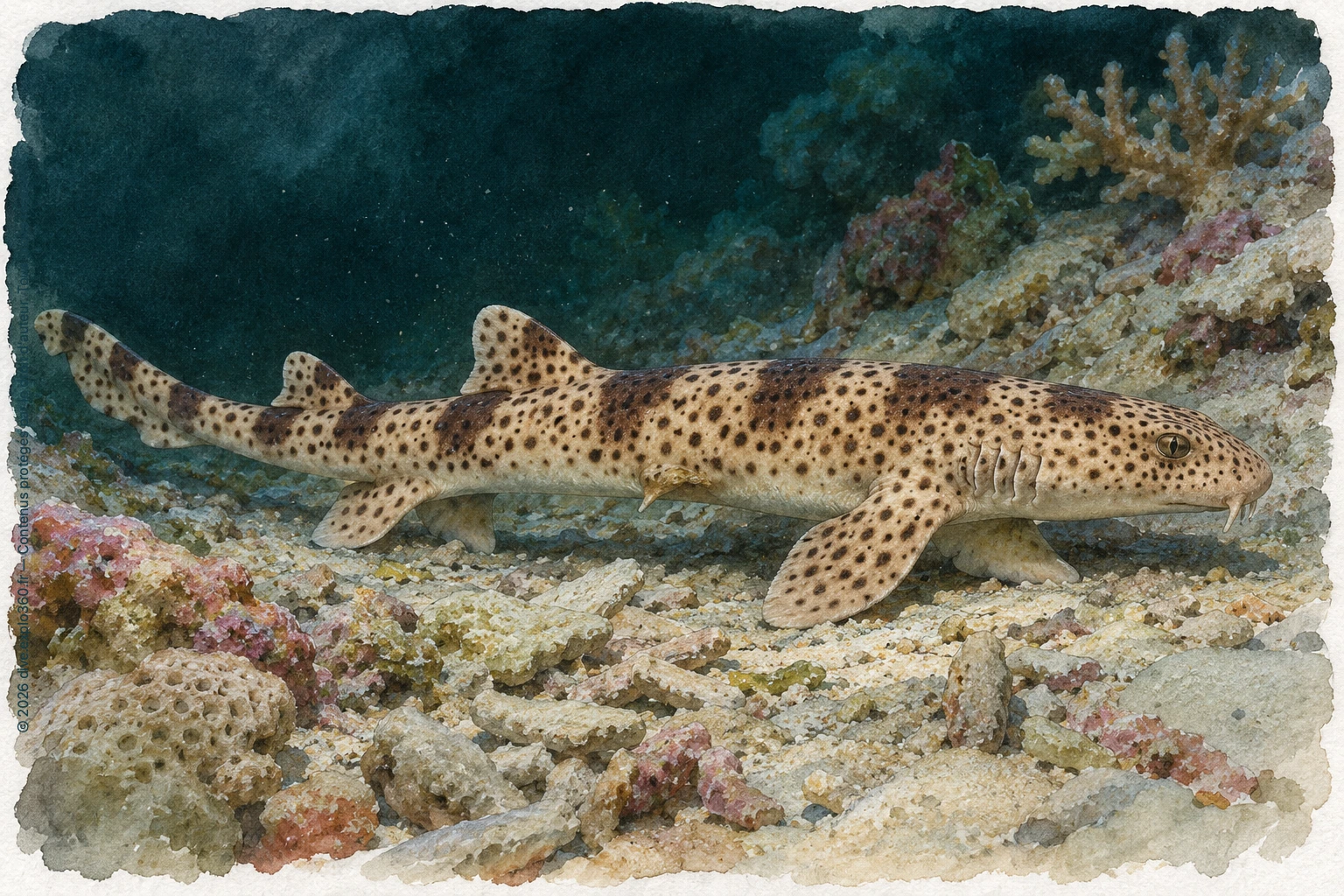
Some fish range across much of the Indo-Pacific. The Raja Ampat epaulette shark, which can walk along the seabed on its fins, occupies a much smaller range. Endemism is the natural restriction of a species to a particular region. A small range may reflect limited dispersal or a history of isolation.
Where did all these species come from?
The Coral Triangle may have generated new species, received species from elsewhere and provided refuge when conditions became unsuitable in other regions. Researchers compare species ranges and reconstruct evolutionary histories to assess how much each process contributed.
Warm water and much more
Temperature affects the physiology of reef-building corals and their symbionts. Other tropical regions have similarly warm seas, but differ in their habitat diversity and geological history. Those differences matter when comparing regional species richness.
How do we count species?
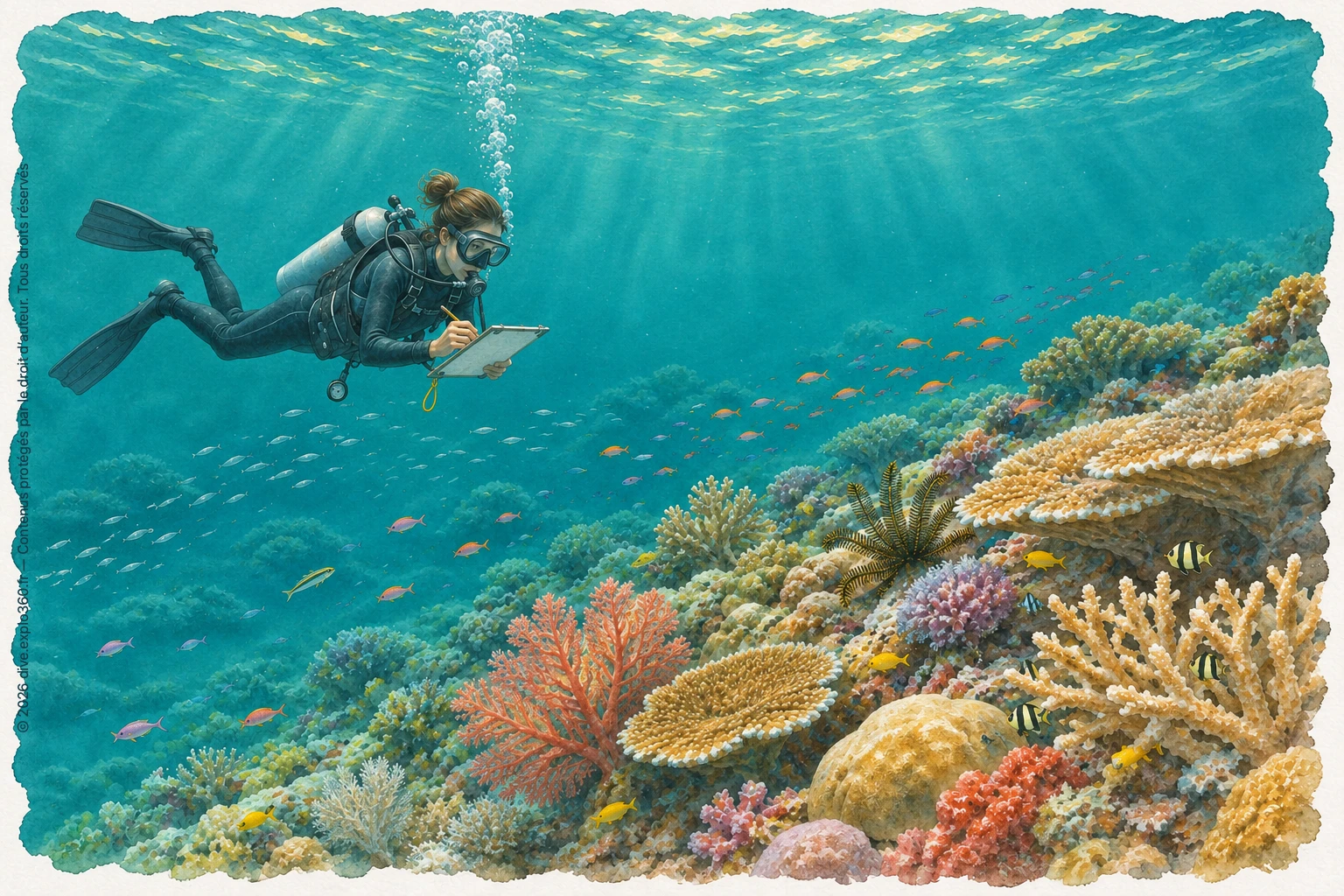
Visual surveys tend to miss small, nocturnal or well-hidden fish. Scientists can also analyse environmental DNA from water samples to detect species that divers may overlook. A DNA detection can provide evidence of a species’ presence without directly measuring its abundance.
Interactive quiz
Test your knowledge
5 question(s) to test your knowledge.
Interactive quiz
Test your knowledge
Question 1 out of 5Score: 0
Where does the name Raja Ampat come from?
What happened to some shallow seafloors during ice ages?
What can currents do to larvae?
Why might the same fish use several habitats?
How can scientists complement dive surveys?
Final result
Quiz completed
correct answers
Conclusion — Why life is so varied here
Plate movements and changing sea levels altered which populations could exchange genes. Today, currents still shape larval dispersal, while differences among habitats determine where many animals can settle. The archipelago’s diversity reflects how these processes have worked together over time.
Scientific references
Explore the same world