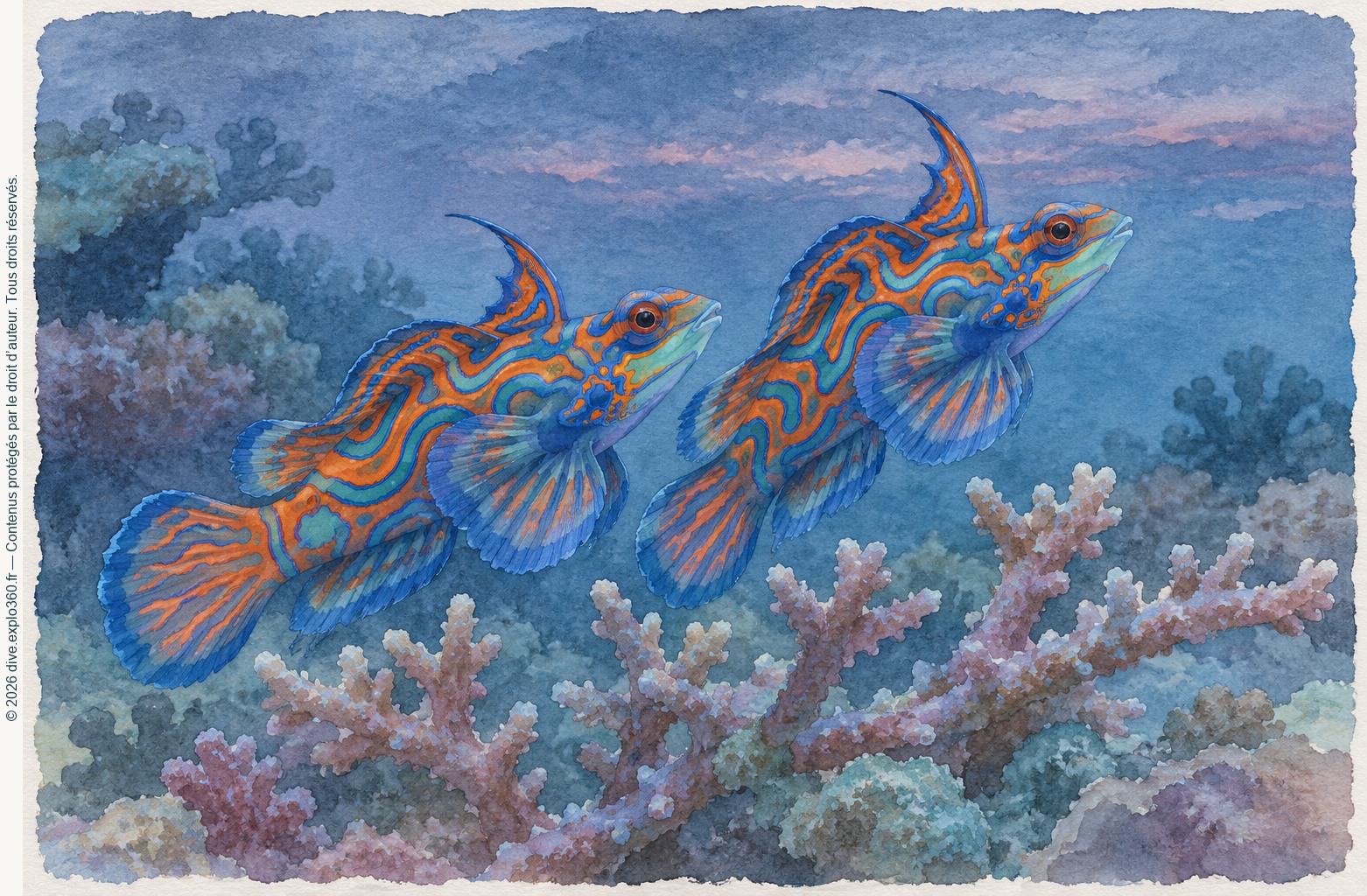
A coordinated ascent
At dusk, two mandarinfish line up and rise before releasing their gametes. Fertilisation is external. In field and laboratory studies, females spawned with males larger than themselves. Female preference and the ability of large males to monopolise spawning opportunities can both contribute to this pattern.
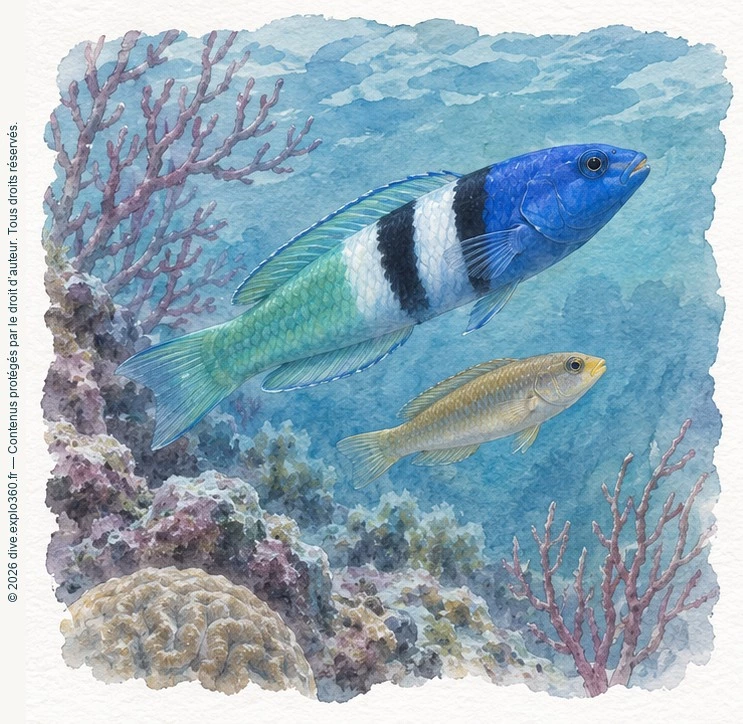
Sex change on a reef
Territorial male bluehead wrasses spawn in pairs, while smaller males may take part in group spawning. Following the removal of a dominant male, a large female can quickly start to defend the territory. Gonadal transformation follows. This is protogyny, a form of sequential hermaphroditism.
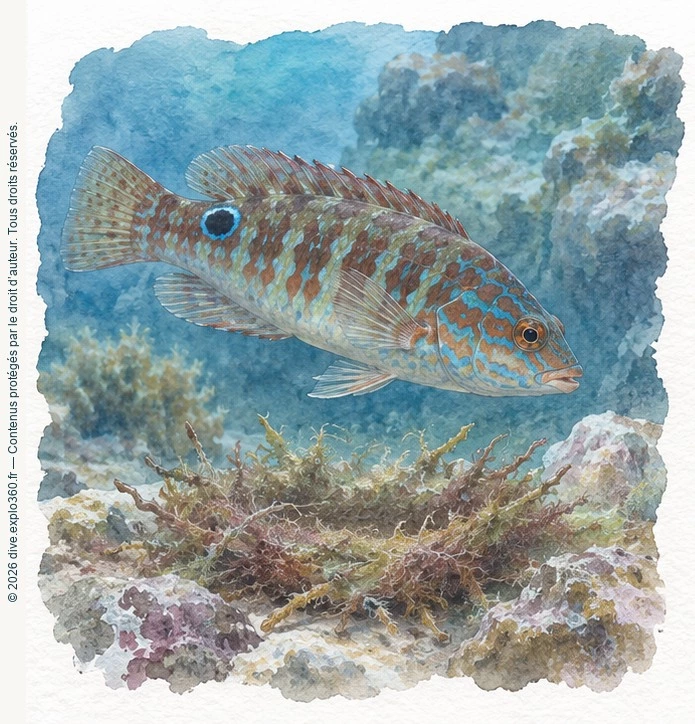
Nest builders and their rivals
Male ocellated wrasses gather algae to build nests. The builder attracts females and tends the eggs, while other males adopt different tactics. Satellite males may help him defend the nest while fertilising some of the eggs. Other males sneak in during spawning. Females may use the spawning activity they observe around the nest when choosing where to lay their eggs.
The mandarinfish dance
As the pair rises, eggs and sperm are released close together in the water. This coordination in space and time helps the gametes meet during external fertilisation.
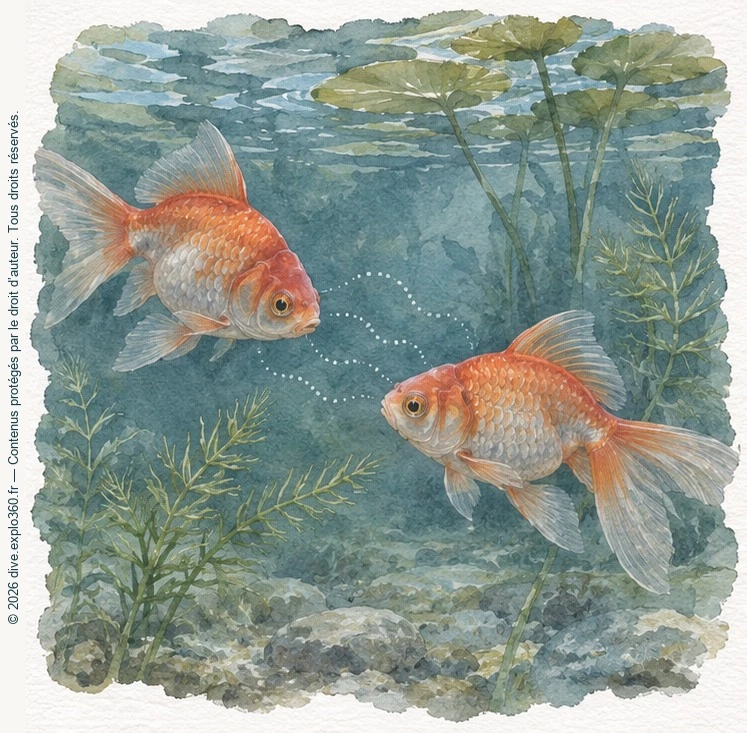
From signal to response
In fresh water, female goldfish release a steroid before ovulation that triggers hormonal responses in males. Other signals released after ovulation have a stronger effect on behaviour. Experiments can measure a hormonal response separately from changes in behaviour, such as how a male approaches a mate.