 Habitat
 Depth
 Group
 Role
 Size
 Good to know
WHAT DOES IT LOOK LIKE?
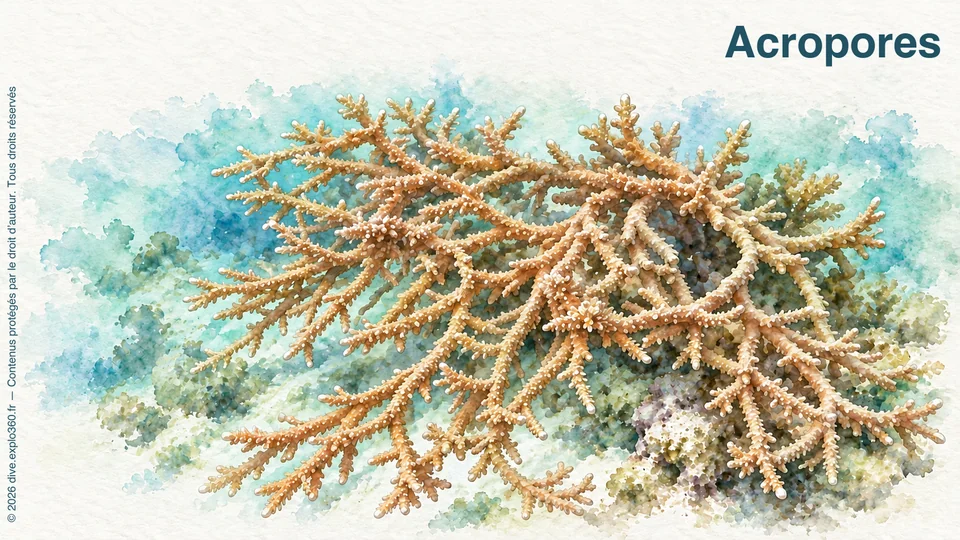
From upright branches to broad tables, Acropora corals (Acropora spp.) take several shapes. Small cups in their hard skeleton house the polyps, the animals making up the colony.
At this scale, two very similar colonies may belong to different species. Cup arrangement and skeletal details can help separate them where the outline alone leaves doubt.
WHERE DOES IT LIVE?
An Acropora colony remains anchored to a hard surface, but conditions differ across a reef. Light, water circulation and temperature help determine which species occur in each area. The reef sectors and depths occupied vary within this large group of corals.
WHAT DOES IT EAT?
Some of an Acropora coral’s nutrition takes place within its tissues. Resident microalgae use light to make organic compounds, including sugars, and transfer some of them to the coral. This supply comes from a lasting partnership rather than from the coral swallowing the algae. The polyps also catch small planktonic prey with their tentacles. These meals supplement the products of photosynthesis and provide materials needed to build living tissue. Light and resources available in the water both contribute to the colony’s nutrition, with their importance varying among species and conditions.
GO FURTHER WITH AMIGANSEAU
Unlock the full profile
Deepen your knowledge with the exclusive chapters and interactive resources included in an AMIGANSEAU licence.
Subscribing to Dive.Explo360 means supporting a different way to discover marine life.
Our independent platform is entirely self-funded and relies solely on subscriptions. Every licence helps us continue our work, create new content, and share what we know about the marine world with as many people as possible.
Starting at €80 per year, your support makes all the difference.
 Understand the species