Habitat
 Depth
 Group
 Role
 Size
WHAT DOES IT LOOK LIKE?
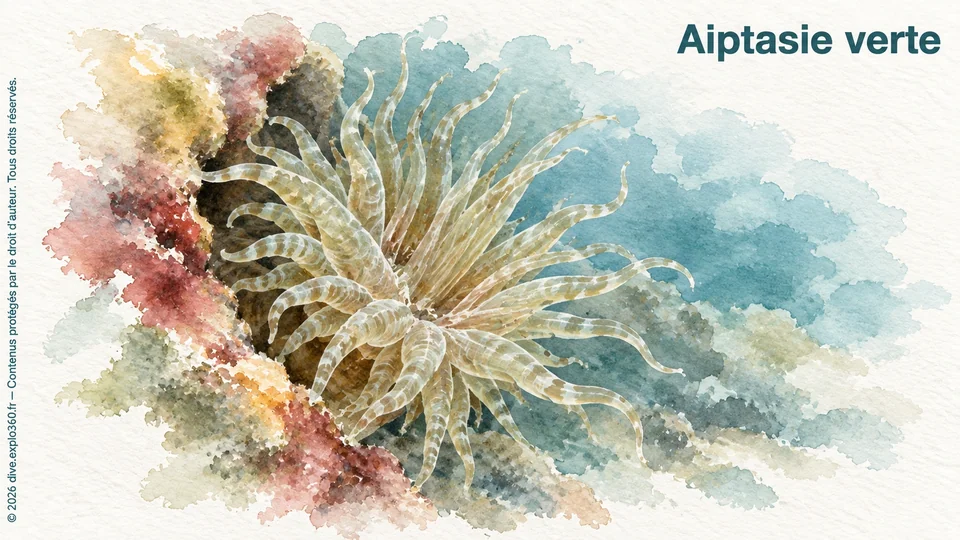
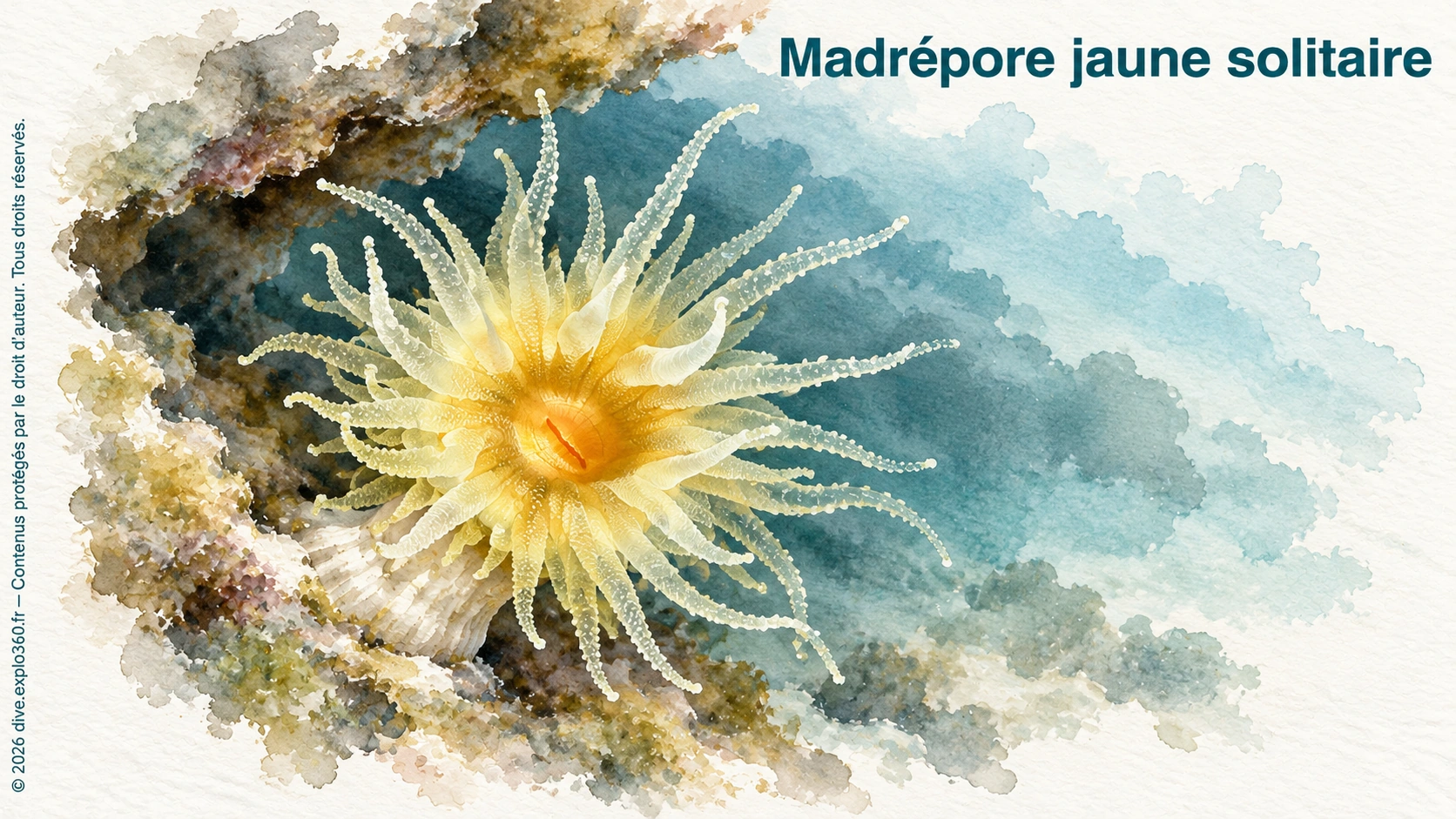
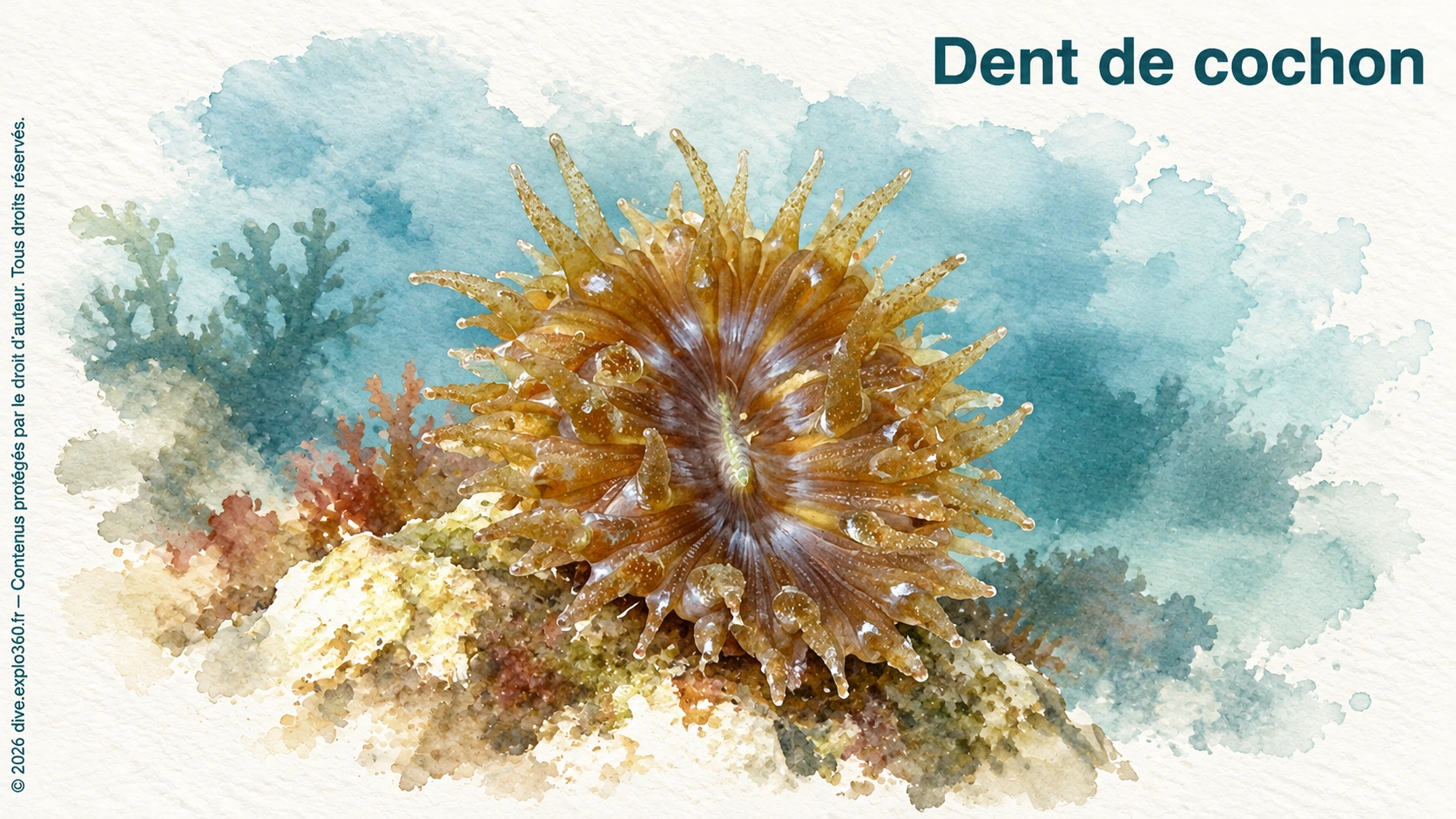
The green aiptasia (Aiptasia mutabilis) has tentacles that taper from broad bases to fine tips. The longest tentacles are in the inner rings. Pale mottling or net-like patterns show through the translucent tentacles, which can have brown, green or bluish tones. Despite its name, the anemone is not always predominantly green.
WHERE DOES IT LIVE?
It attaches in cracks and holes on Mediterranean rocky seabeds, from the surface to around thirty metres according to field descriptions. The refuge shelters much of the column while tentacles extend beyond it.
Attachment is not permanent in the way of an organism cemented to rock. The anemone can use its base and contractions to change position slowly. Apparent size therefore also depends on extension and the depth of the occupied hollow.
WHAT DOES IT EAT?
The green aiptasia’s flame-shaped tentacles take prey through contact with stinging cells. Animal food then reaches the central mouth. The anemone may also host microalgae within its tissues. These long-term partners use light for photosynthesis and remain in the tissues without being digested. Prey capture is established, while the nutritional share supplied by algal partners is less precisely described for this species.
GO FURTHER WITH AMIGANSEAU
Unlock the full profile
Deepen your knowledge with the exclusive chapters and interactive resources included in an AMIGANSEAU licence.
- HOW DOES IT REPRODUCE?
- OUR OBSERVATIONS
- ARTICLE
Also included in the full profile
- Advanced navigation between description, ecological context, observations and behaviour
- Interactive food chain to explore the species’ feeding relationships
 Understand the species