Partners and information

Contact us

Verification code

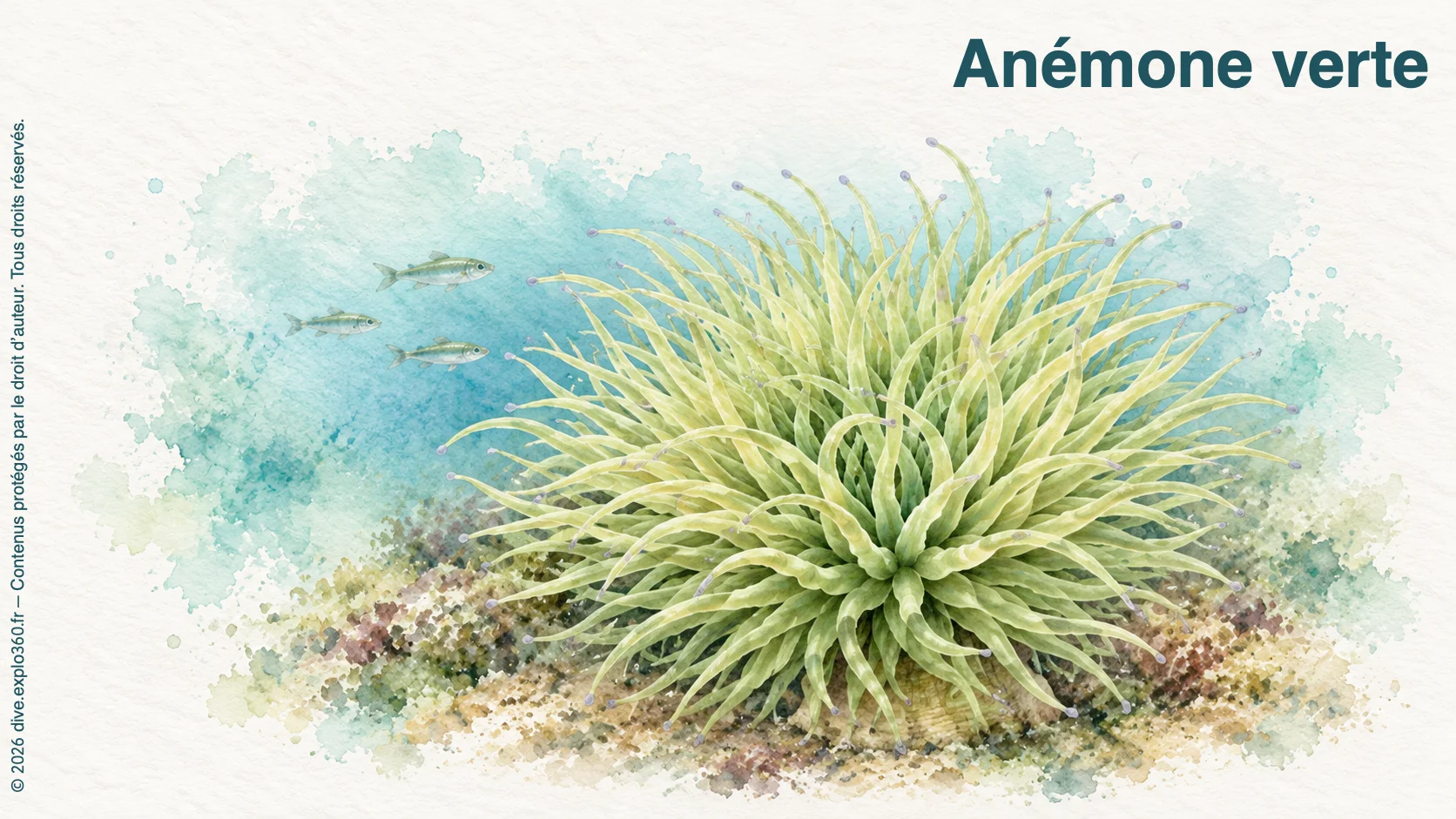
Green aiptasia

Distribution : Mediterranean

On 22 October 2008, scientists were surveying the seabed in a bay near Foça, Turkey. Beneath rocks, eight metres underwater, they spotted a green aiptasia. The animal was already known to science, but its presence in Turkish waters had never been formally reported. An apparently ordinary encounter became a first for the country's marine species records.

Images being acquired · Your video or photos here

Habitat of Green aiptasia Habitat
Rocky habitat
Depth range of Green aiptasia Depth
0-30 m
Biological group of Green aiptasia Group
Ecological role of Green aiptasia Role
Predator

Size

Column up to about 12 cm high and 3 cm across

WHAT DOES IT LOOK LIKE?

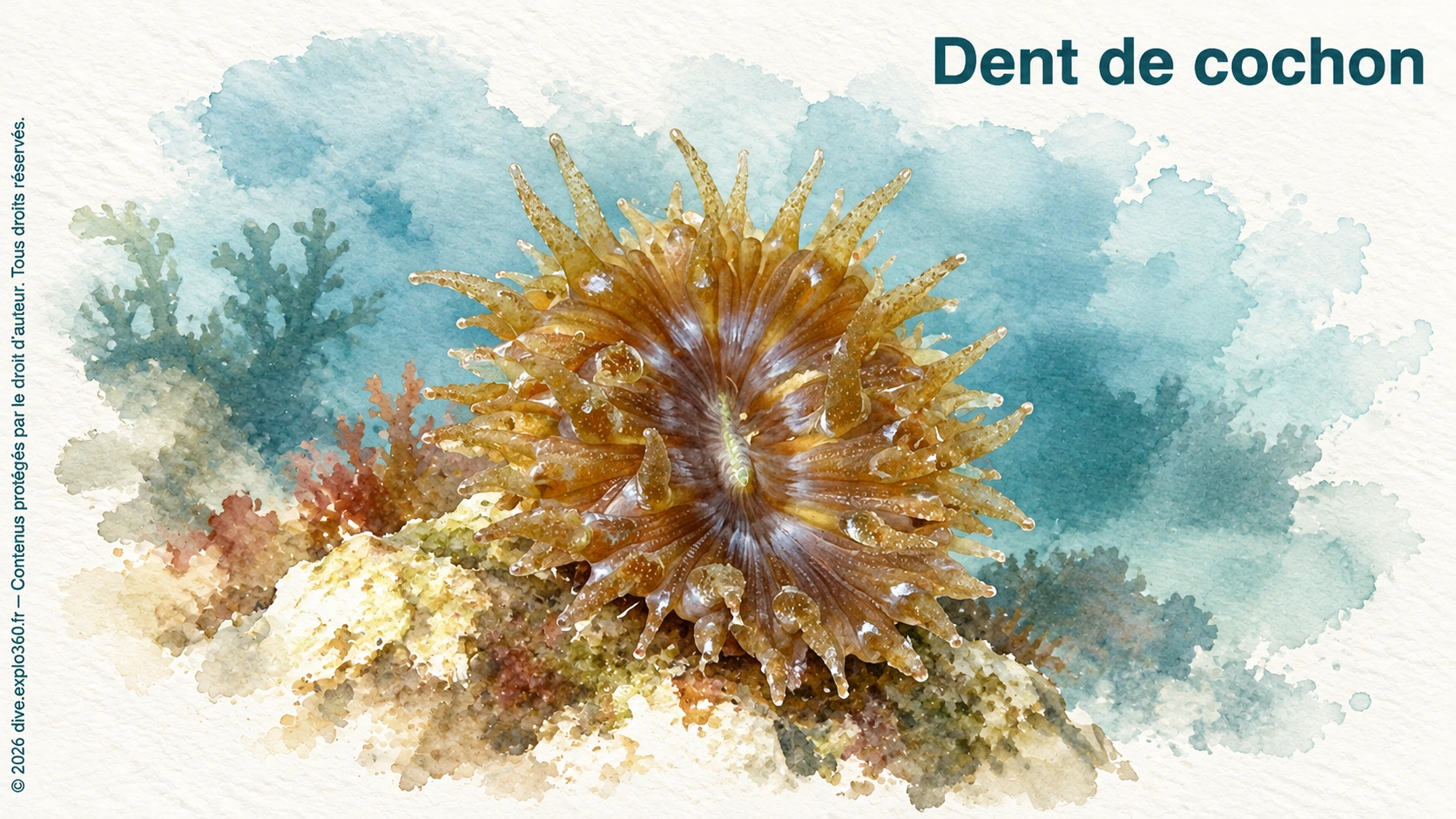
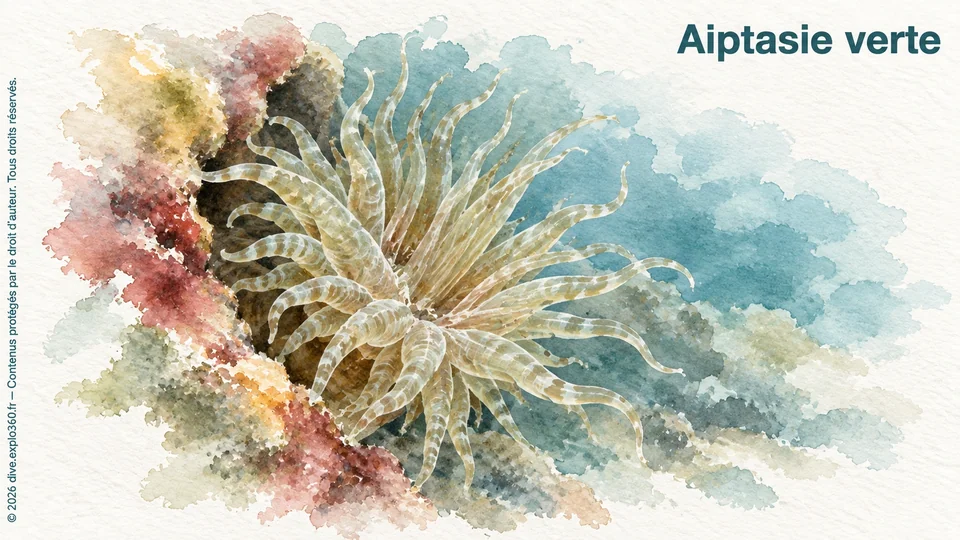
The green aiptasia’s tentacles resemble flames: broad at the base, they taper into points. Pale mottling and net-like markings run across the translucent tentacles. They are often mostly brown, with shades of white, green or blue.

GO FURTHER WITH AMIGANSEAU

Unlock the full profile

Deepen your knowledge with the exclusive chapters and interactive resources included in an AMIGANSEAU licence.

Choose my licence
  • WHERE DOES IT LIVE?
  • WHAT DOES IT EAT?
  • HOW DOES IT REPRODUCE?
  • OUR OBSERVATIONS

Also included in the full profile

  • Advanced navigation between description, ecological context, observations and behaviour
  • Interactive food chain to explore the species’ feeding relationships
An active licence gives access to enriched profiles and AMIGANSEAU exploration tools.
Green aiptasia

Understand the species

What is this species’ ecological role?

AMIGANSEAU Explorer Premium

Access enriched species profiles with advanced content (audio, infographics and detailed articles).

Explore all species easily through a single interface.

Enjoy a smooth, fast learning experience suited to every level.

🔒 The full profile is available with a paid subscription only.

Discover licences

POURSUIVRE L’EXPLORATION

Explore further

ArticleWhat marine animals do and why it mattersRead the article →ArticlePHYLA WITHOUT THE FUSSRead the article →