Habitat
 Depth
 Group
 Role
 Size
WHAT DOES IT LOOK LIKE?
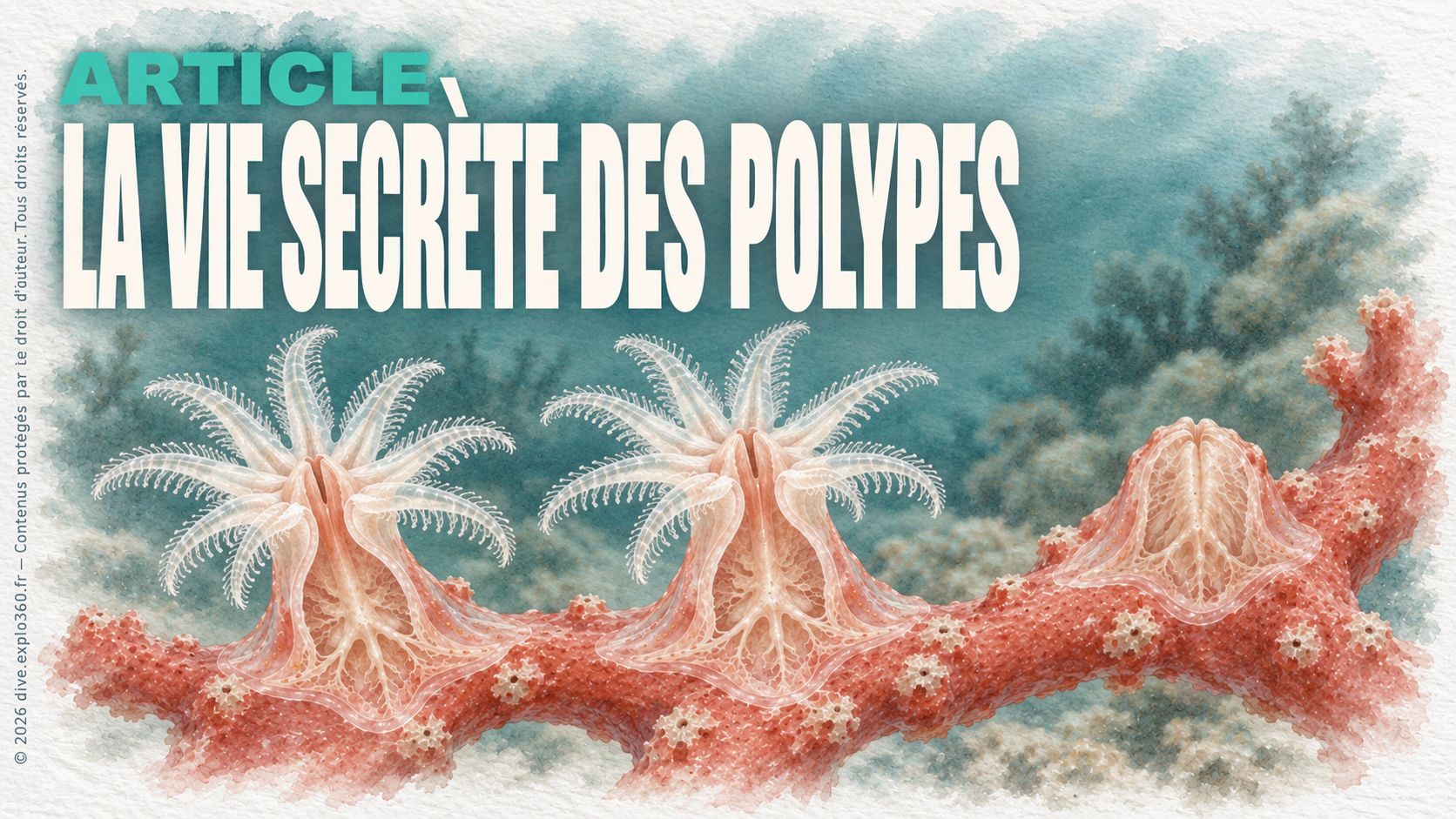
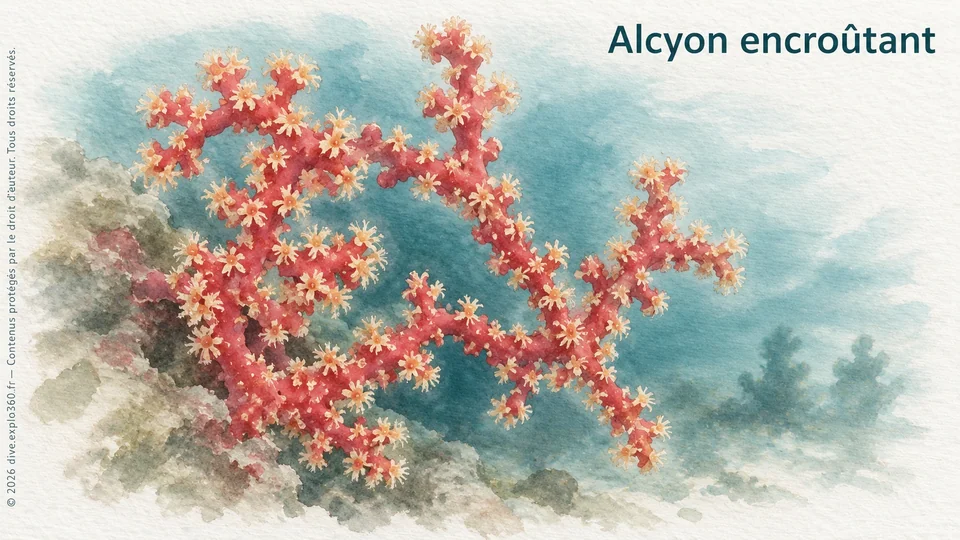
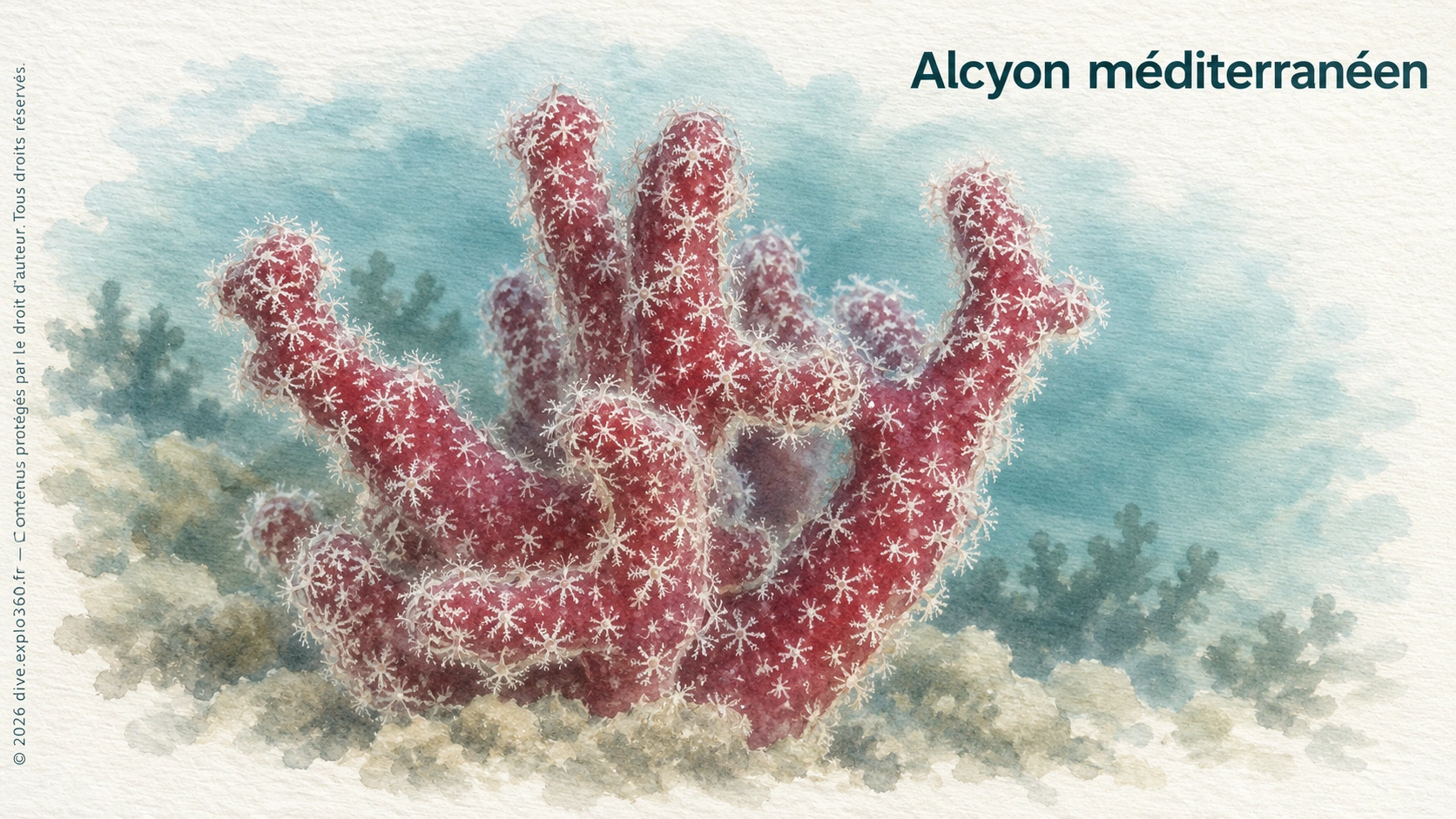
Pale polyps often contrast with a violet-red to pink layer in the encrusting soft coral (Alcyonium coralloides), though white or yellowish forms also occur. The polyps, the individual animals in the colony, protrude at irregular intervals and may leave some areas bare. Each has eight finely branched tentacles. When the coral covers a large branch, the branch gets its shape from the organism underneath.
WHERE DOES IT LIVE?
In the Mediterranean it frequently develops on sea fans, notably in rocky and coralligenous habitats. Branches where tissue has disappeared offer settlement sites. Overgrowth may then extend elsewhere on the supporting structure.
Records exist along French coasts, from the Côte Bleue to the Var and Roussillon. It also occurs in the Atlantic, where small forms attached directly to rock are more common. Such regional differences should not obscure a Mediterranean encounter’s description.
WHAT DOES IT EAT?
A branch covered by encrusting soft coral bears many small capture sites. Each polyp extends tentacles into water to receive plankton or current-borne organic particles, then passes food to its own mouth. Growing on a sea fan does not mean the colony eats it. The skeleton provides a surface, while food comes from the surrounding water. Capture occurs at the scale of polyps spread over the encrusting colony.
GO FURTHER WITH AMIGANSEAU
Unlock the full profile
Deepen your knowledge with the exclusive chapters and interactive resources included in an AMIGANSEAU licence.
Subscribing to Dive.Explo360 means supporting a different way to discover marine life.
Our independent platform is entirely self-funded and relies solely on subscriptions. Every licence helps us continue our work, create new content, and share what we know about the marine world with as many people as possible.
Starting at €80 per year, your support makes all the difference.
 Understand the species