Habitat
 Depth
 Group
 Role
 Average size
WHAT DOES IT LOOK LIKE?
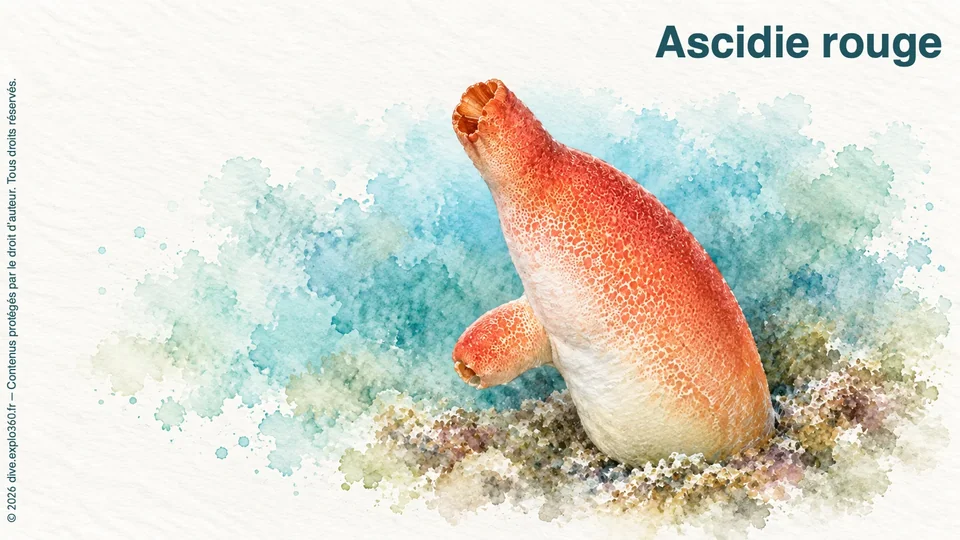
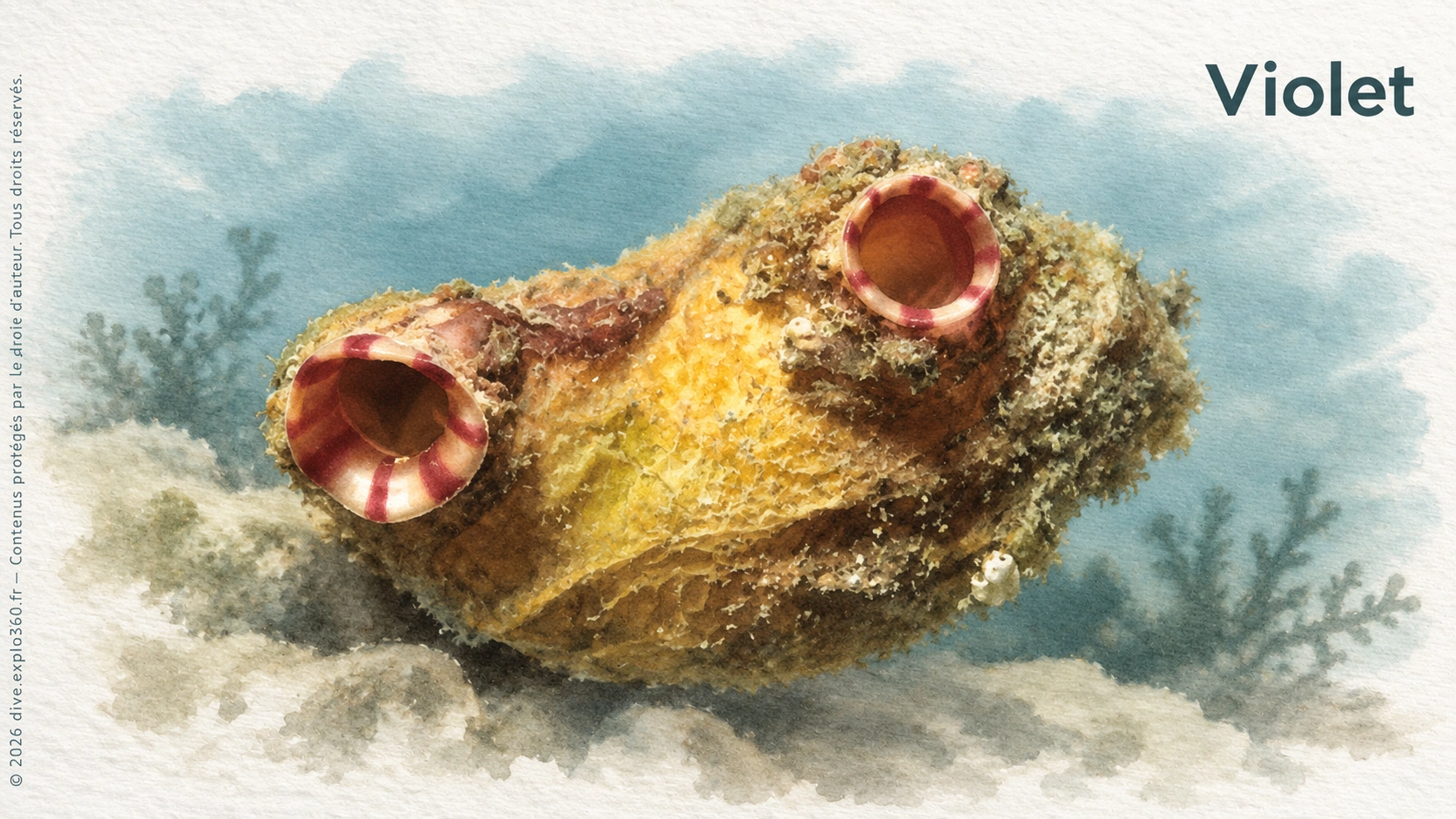
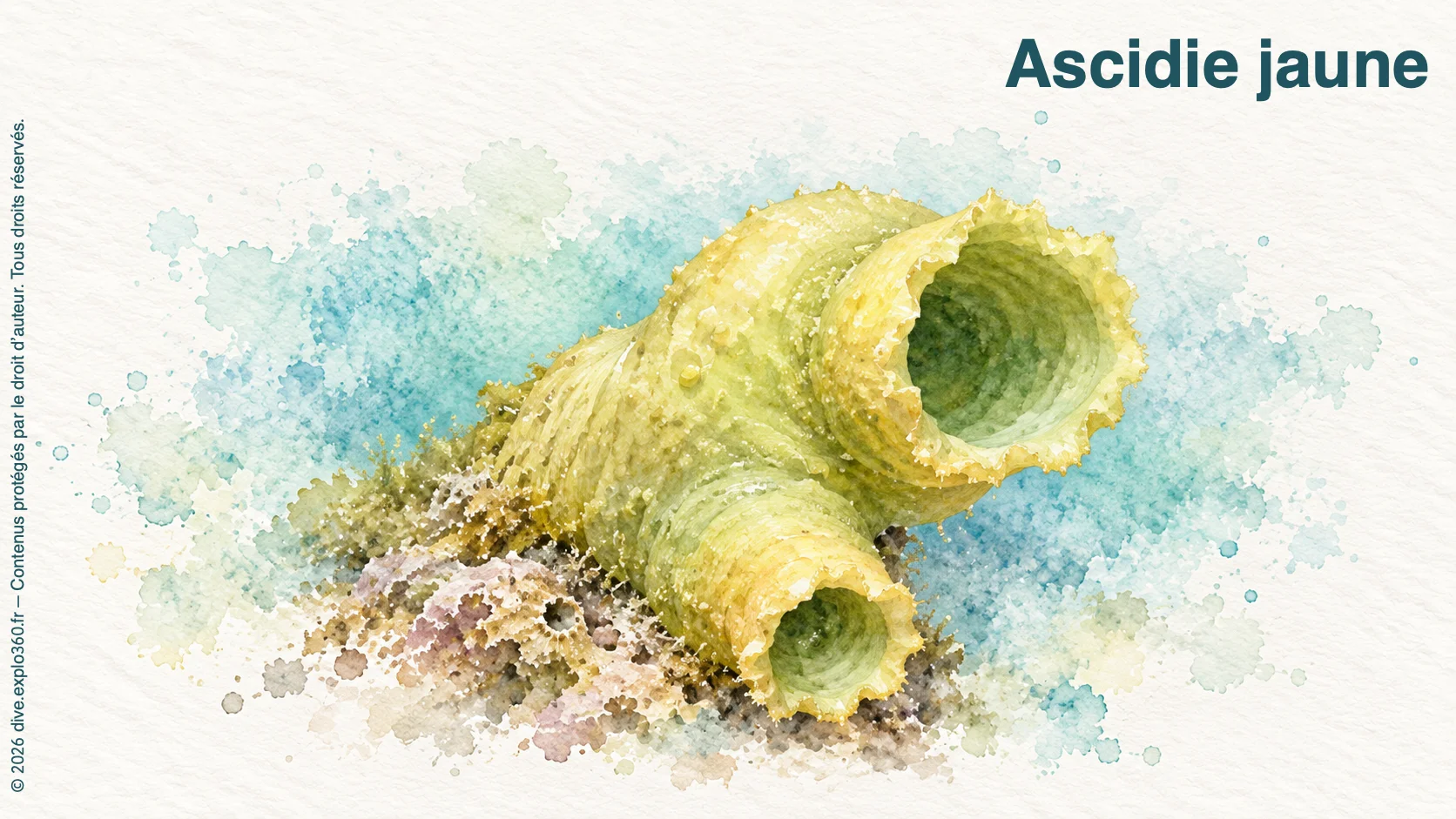
The red sea squirt (Halocynthia papillosa) looks like a small pouch that can be rounded or elongated. It is bright red, sometimes with an orange tinge. Its thick outer covering, called the tunic, is covered in small bumps.
Two siphons, the body openings, stand out on this pouch, one towards the top and the other at the side.
WHERE DOES IT LIVE?
Shaded parts of rocks, drop-offs and walls are common red sea squirt habitats. Attached to a hard surface, it often remains exposed to moderate current. Surface orientation and shade cast by the structure are useful features when locating suitable positions.
WHAT DOES IT EAT?
The red sea squirt’s food combines minute living organisms with non-living organic particles. Bacteria, diatoms and ciliates are among its food resources. Water brings them into the branchial sac, where the internal filter retains them. Bound in mucus, particles are then carried towards the stomach by beating cilia. The animal therefore takes a range of suspended foods rather than microscopic algae alone. The contribution of different resources changes with the foods available in the water.
GO FURTHER WITH AMIGANSEAU
Unlock the full profile
Deepen your knowledge with the exclusive chapters and interactive resources included in an AMIGANSEAU licence.
- HOW DOES IT REPRODUCE?
- OUR OBSERVATIONS
- ARTICLE
Also included in the full profile
- Advanced navigation between description, ecological context, observations and behaviour
- Interactive food chain to explore the species’ feeding relationships
- Natural history podcast and dive debrief
- Infographic and illustrated summary profile
- Additional photographic observations
 Understand the species