Habitat
 Depth
 Group
 Role
 Size
WHAT DOES IT LOOK LIKE?
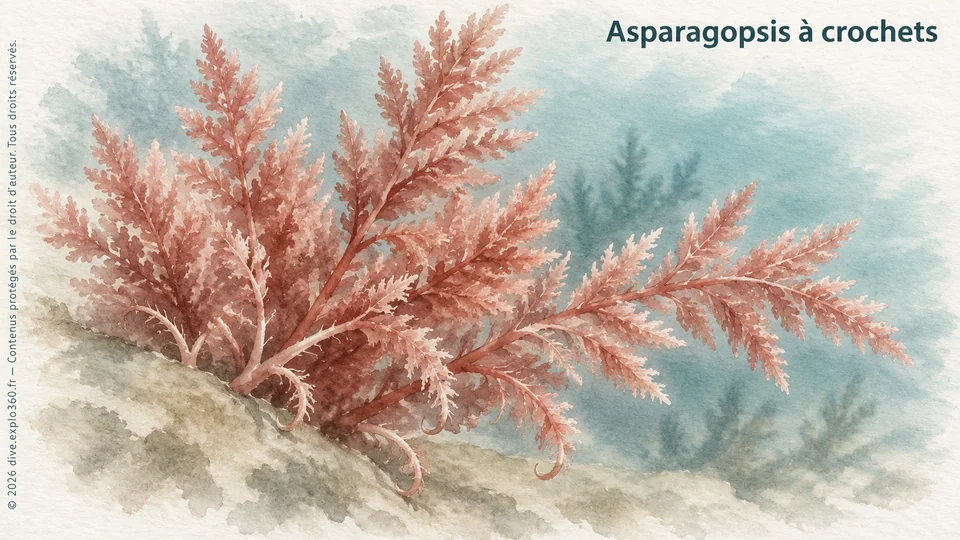
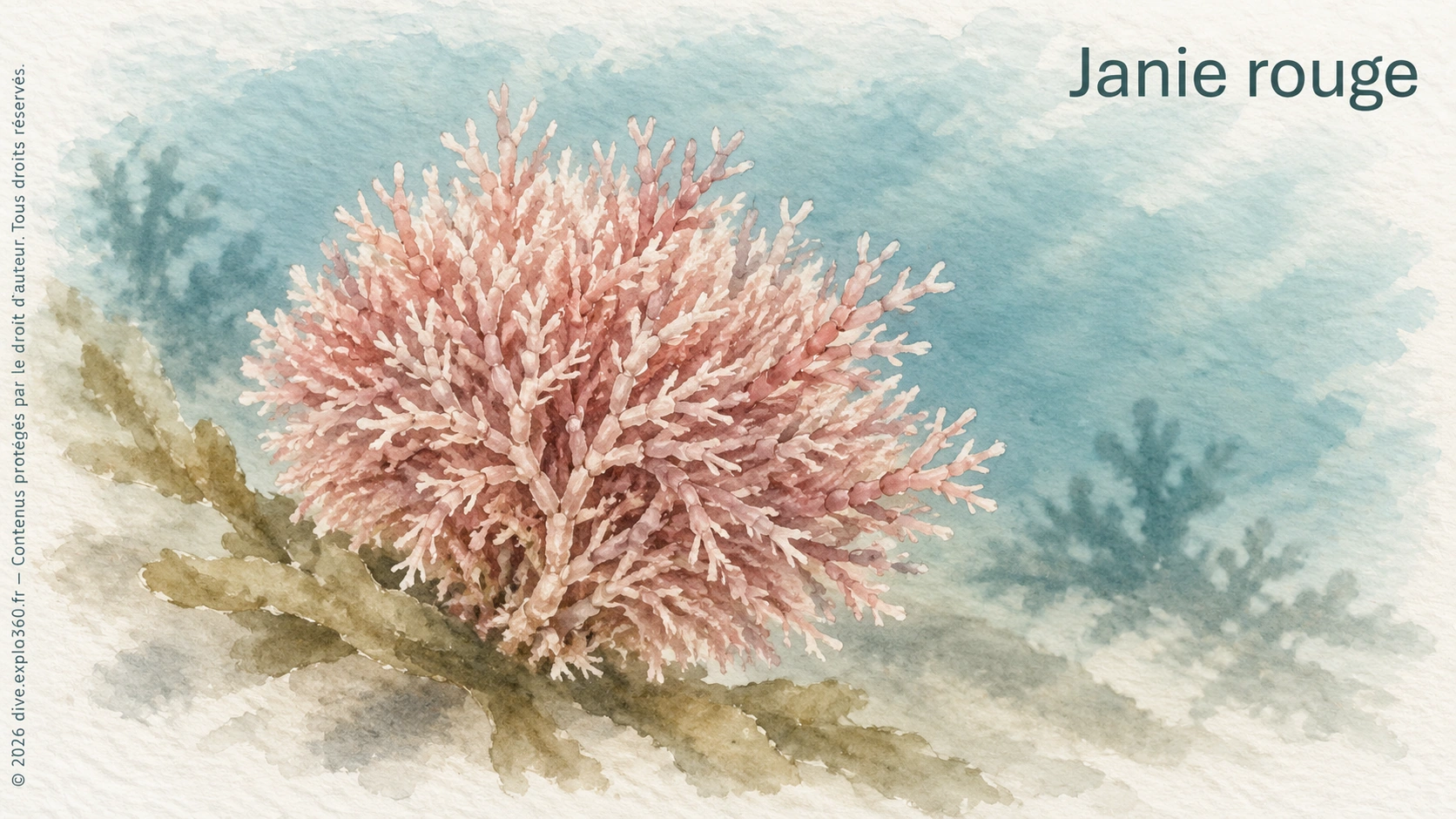
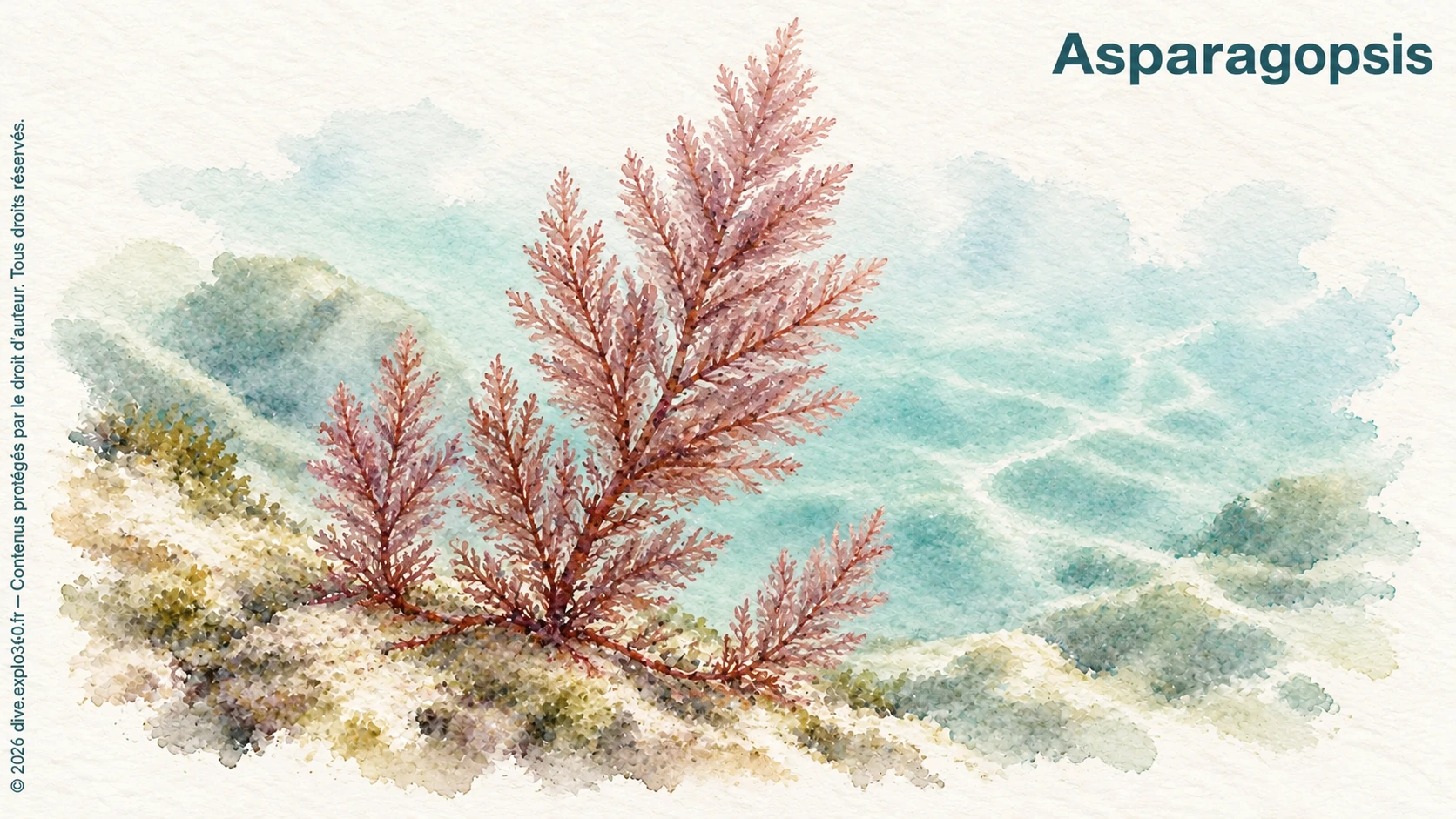
Some branches of harpoon weed (Asparagopsis armata) have curved, harpoon-like hooks. These branches are sparser and stand out against the feathery pink to rosy-red tuft, which can be pyramid-shaped. In another form, the alga looks quite different, with small tufts like cotton pompoms.
WHERE DOES IT LIVE?
It grows in lit shallow water on rocks and often epiphytically, meaning on other algae used as support. The harpoon form develops mainly in the cooler season in the western Mediterranean.
Southern Hemisphere in origin, it is introduced along French coasts. Its seasonal patterns in the Atlantic and Mediterranean should be described separately.
WHAT DOES IT EAT?
Numerous plastids in the surface cells of harpoon weed’s branches capture light through their pigments. Photosynthesis uses this energy to manufacture organic molecules from carbon available in seawater. These products support the alga’s activities and growth. Dissolved mineral nutrients absorbed from seawater provide other materials needed for its tissues.
GO FURTHER WITH AMIGANSEAU
Unlock the full profile
Deepen your knowledge with the exclusive chapters and interactive resources included in an AMIGANSEAU licence.
- HOW DOES IT REPRODUCE?
- OUR OBSERVATIONS
- ARTICLE
Also included in the full profile
- Advanced navigation between description, ecological context, observations and behaviour
- Interactive food chain to explore the species’ feeding relationships
 Understand the species