Habitat
 Depth
 Group
 Role
 Size
WHAT DOES IT LOOK LIKE?
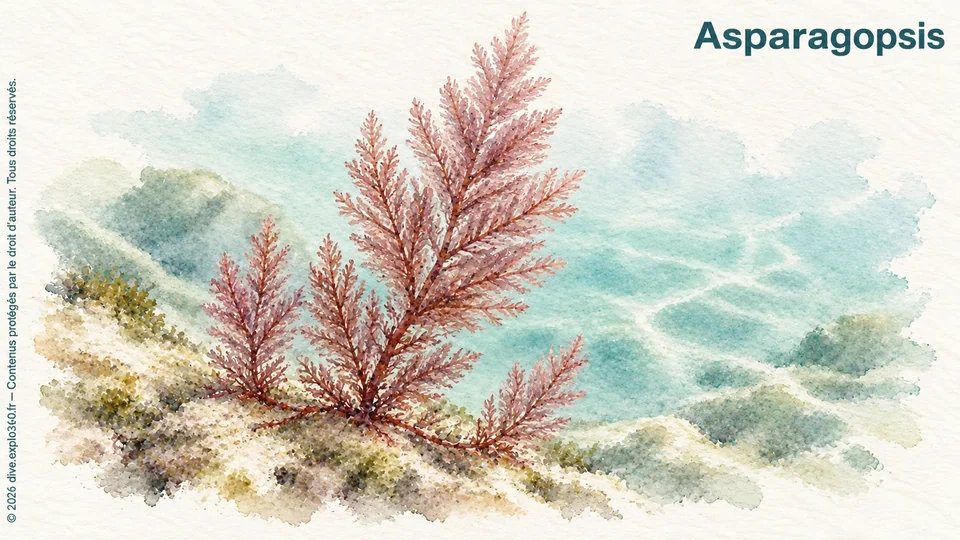
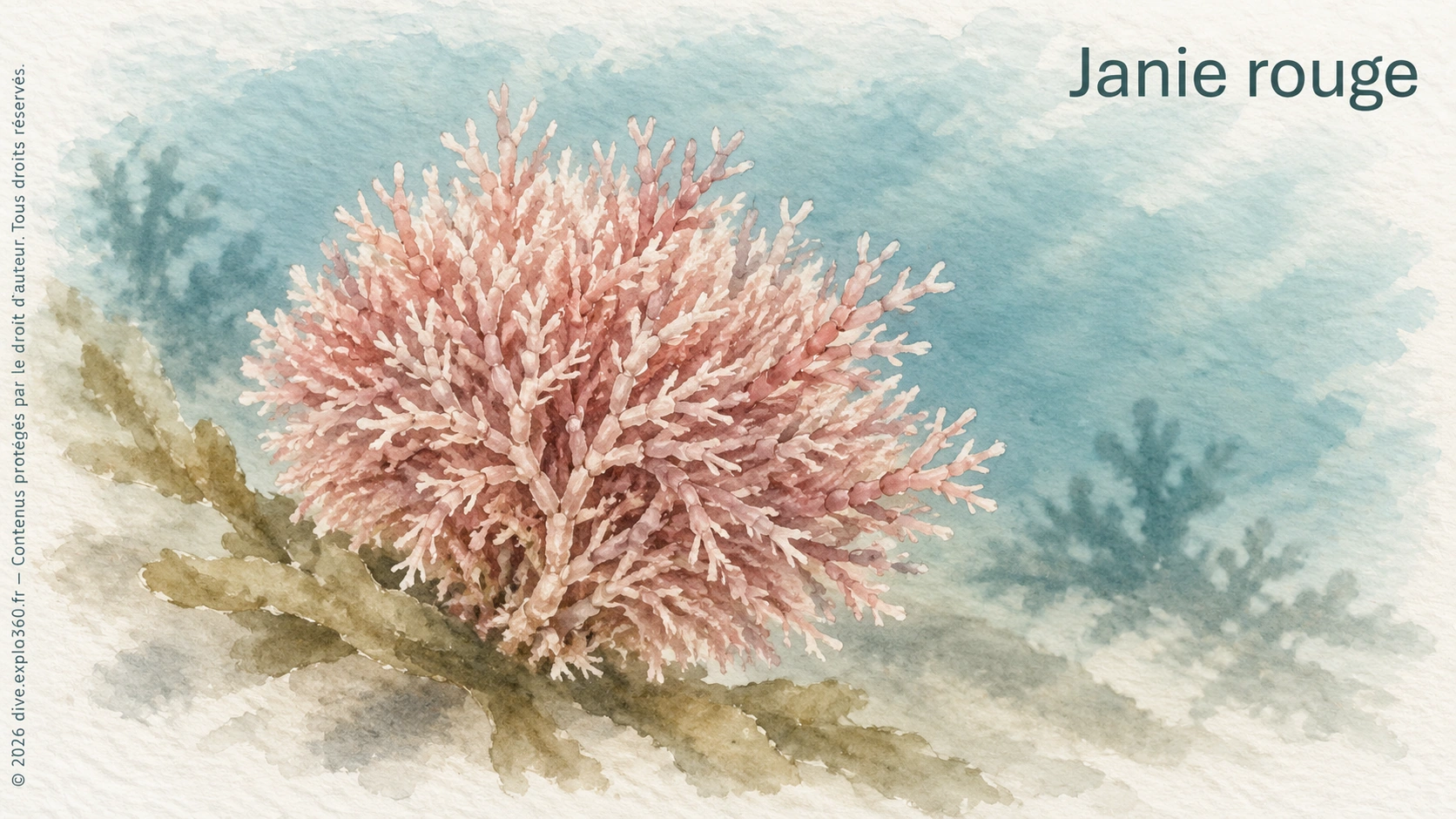
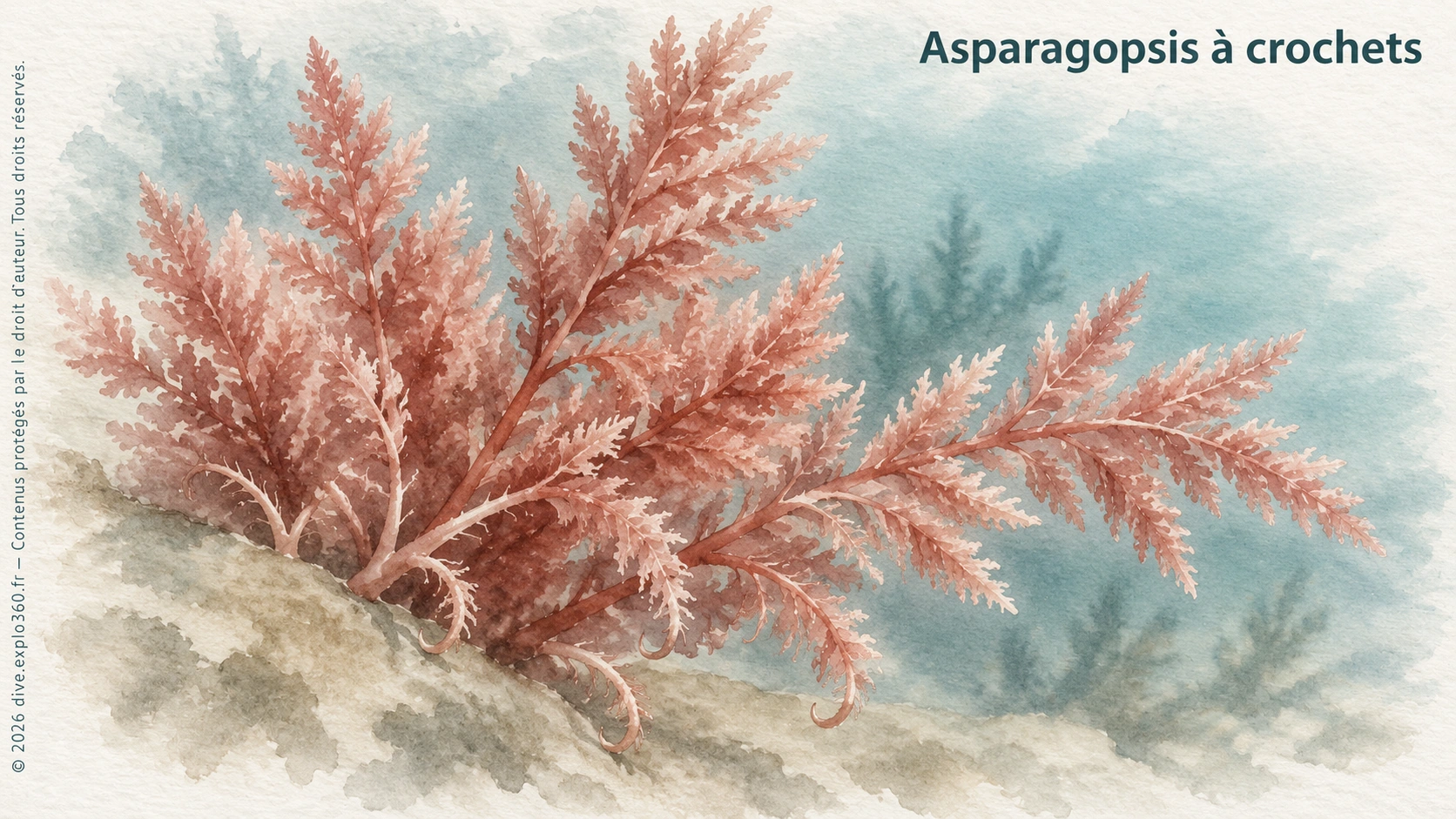
The branches of this asparagopsis (Asparagopsis taxiformis) can form a pyramid. Its upright tuft grows to around 30 cm tall and ranges from greyish pink to reddish brown. The numerous branches often grow more densely near the top. This form lacks the harpoon-like hooks of harpoon weed.
WHERE DOES IT LIVE?
Well-lit rock surfaces are a characteristic habitat of this asparagopsis. It is documented along the French Mediterranean coast and in many warm seas. Studied western Mediterranean records extend from shallow water to around thirty metres, without defining a common limit across its entire range.
WHAT DOES IT EAT?
Organic matter production in the red plume seaweed depends on light. Captured by pigments, this energy allows dissolved carbon to be incorporated into organic molecules. Water also supplies mineral nutrients for growth. Its nutrition combines photosynthesis with uptake of dissolved substances.
GO FURTHER WITH AMIGANSEAU
Unlock the full profile
Deepen your knowledge with the exclusive chapters and interactive resources included in an AMIGANSEAU licence.
- HOW DOES IT REPRODUCE?
- OUR OBSERVATIONS
- ARTICLE
Also included in the full profile
- Advanced navigation between description, ecological context, observations and behaviour
- Interactive food chain to explore the species’ feeding relationships
 Understand the species