Habitat
 Depth
 Group
 Role
 Size
WHAT DOES IT LOOK LIKE?
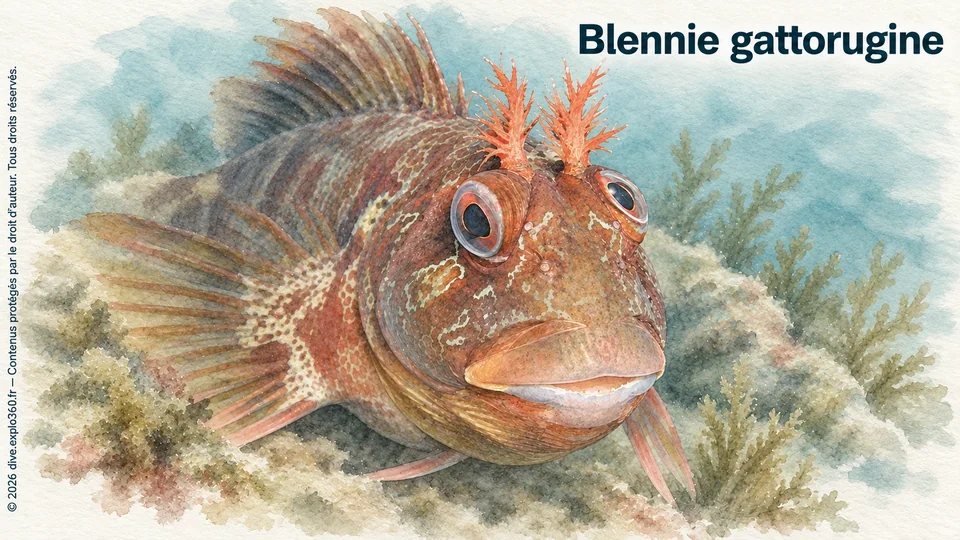
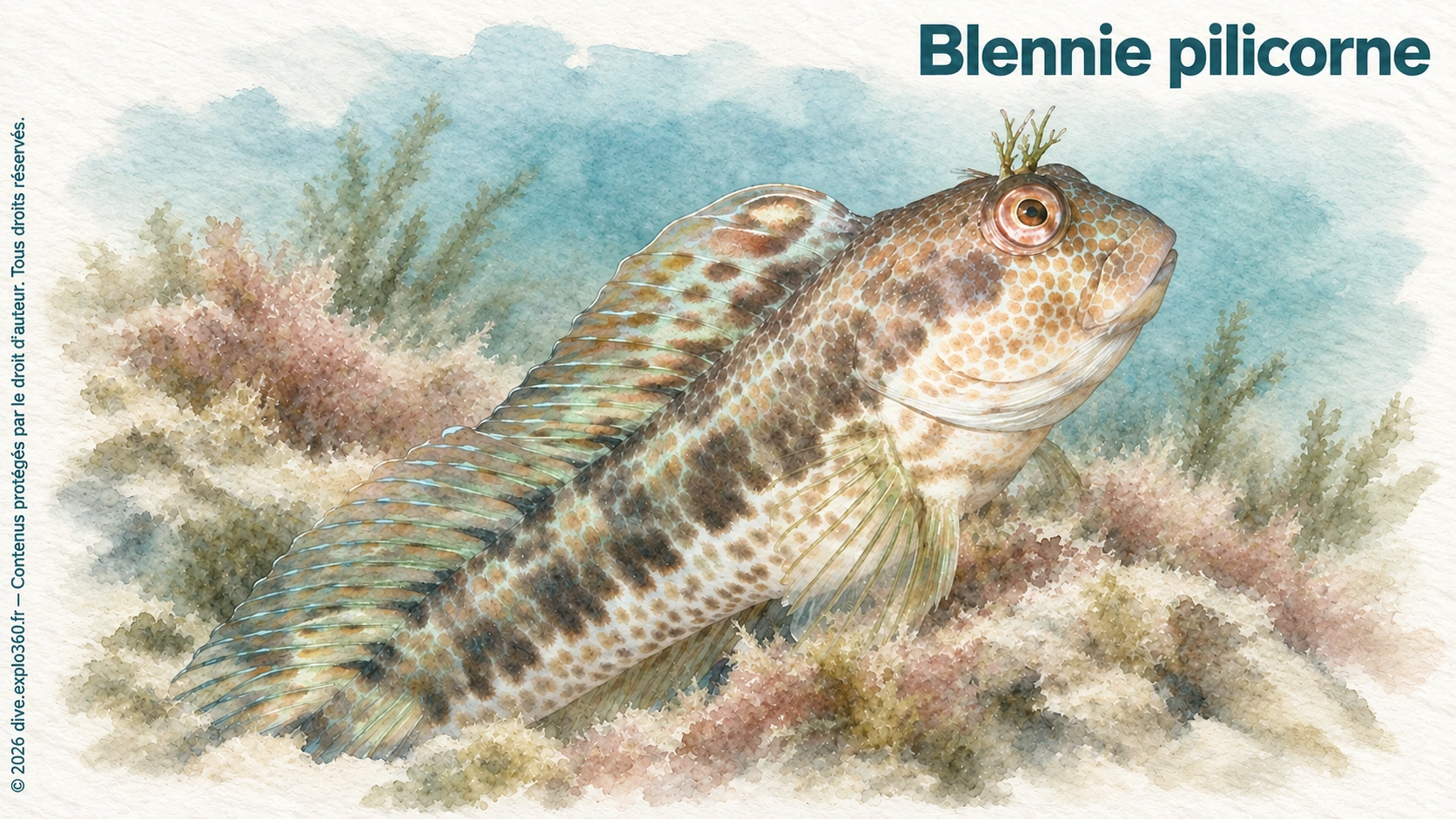
The tompot blenny (Parablennius gattorugine) has tufts of branching skin filaments above its eyes. The tufts are larger in males. Six to eight dark brown bars alternate with paler patches mottled with yellow-orange on its long, bulky body. The dorsal fin runs along the back behind the rounded forehead.
WHERE DOES IT LIVE?
It frequents algae-covered rocky bottoms between about 3 and 30 metres. Holes and crevices provide refuges.
It is more active at dusk, as light fades, but can still be watched during the day. It moves close to the bottom and its shelters.
WHAT DOES IT EAT?
Bottom invertebrates offer the tompot blenny several kinds of food. It eats crustaceans, molluscs, annelid worms and echinoderms, as well as jewel anemones, small anemones that live attached to surfaces. Some resources are fixed to surfaces while others move. Algae are eaten too, giving a broader menu than that of an exclusively grazing blenny.
GO FURTHER WITH AMIGANSEAU
Unlock the full profile
Deepen your knowledge with the exclusive chapters and interactive resources included in an AMIGANSEAU licence.
- HOW DOES IT REPRODUCE?
- OUR OBSERVATIONS
- ARTICLE
Also included in the full profile
- Advanced navigation between description, ecological context, observations and behaviour
- Interactive food chain to explore the species’ feeding relationships
 Understand the species