Partners and information

Contact us

Verification code

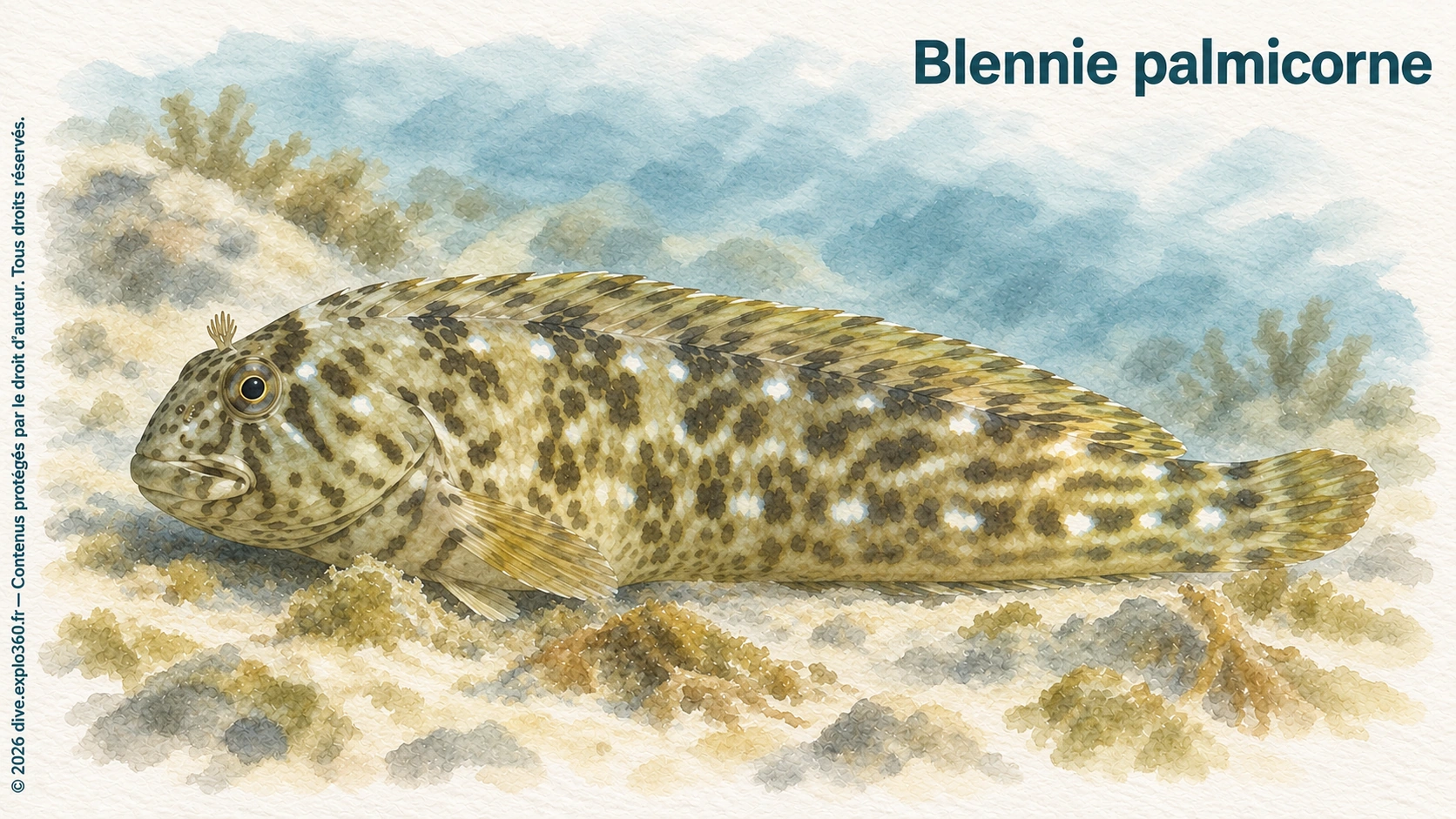
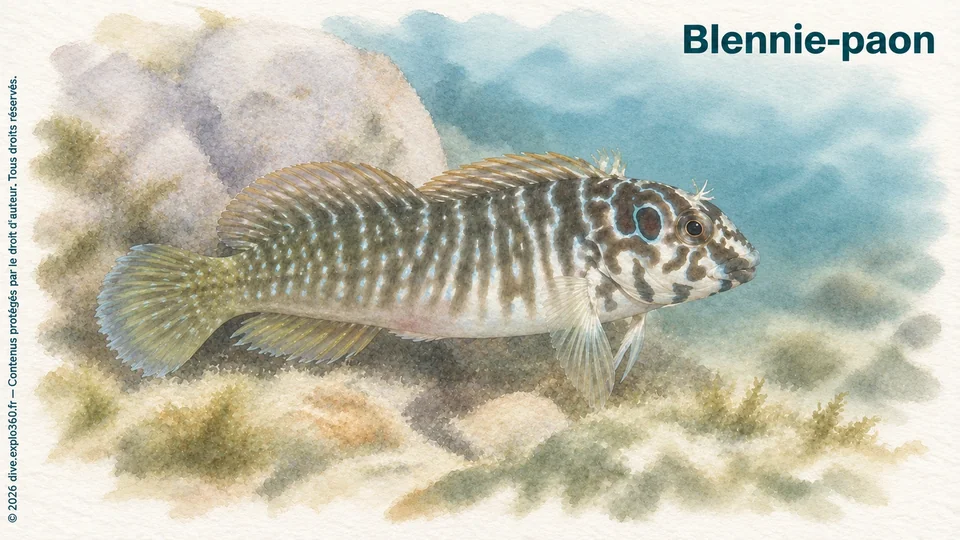
Peacock blenny

Distribution : Mediterranean

Some small male peacock blennies resemble females. They may fertilise eggs in a guarding male’s nest without owning a shelter, an alternative breeding tactic involving no sex change.

Images being acquired · Your video or photos here

Habitat of Peacock blenny Habitat
Rocky habitat, Gravel
Depth range of Peacock blenny Depth
0-5 m
Biological group of Peacock blenny Group
Ecological role of Peacock blenny Role
Predator, Herbivore

Size

Up to 13 cm

WHAT DOES IT LOOK LIKE?

The peacock blenny (Salaria pavo) has an ocellus, an eye-like spot, ringed in blue or pink behind the real eye. Its strongly flattened body carries blue lines at the front and dots towards the rear. Males have a head crest and brighter colours; little filaments above the eyes remain short and simple.

GO FURTHER WITH AMIGANSEAU

Unlock the full profile

Deepen your knowledge with the exclusive chapters and interactive resources included in an AMIGANSEAU licence.

Choose my licence
  • WHERE DOES IT LIVE?
  • WHAT DOES IT EAT?
  • HOW DOES IT REPRODUCE?
  • OUR OBSERVATIONS
  • ARTICLE

Also included in the full profile

  • Advanced navigation between description, ecological context, observations and behaviour
  • Interactive food chain to explore the species’ feeding relationships
An active licence gives access to enriched profiles and AMIGANSEAU exploration tools.
Peacock blenny

Understand the species

What is this species’ ecological role?

AMIGANSEAU Explorer Premium

Access enriched species profiles with advanced content (audio, infographics and detailed articles).

Explore all species easily through a single interface.

Enjoy a smooth, fast learning experience suited to every level.

🔒 The full profile is available with a paid subscription only.

Discover licences

POURSUIVRE L’EXPLORATION

Explore further

ArticleWHAT IF IT ALL HAPPENED UNDERWATER?Read the article →ArticleWhat marine animals do and why it mattersRead the article →ArticlePHYLA WITHOUT THE FUSSRead the article →