Habitat
 Depth
 Group
 Role
 Size
WHAT DOES IT LOOK LIKE?
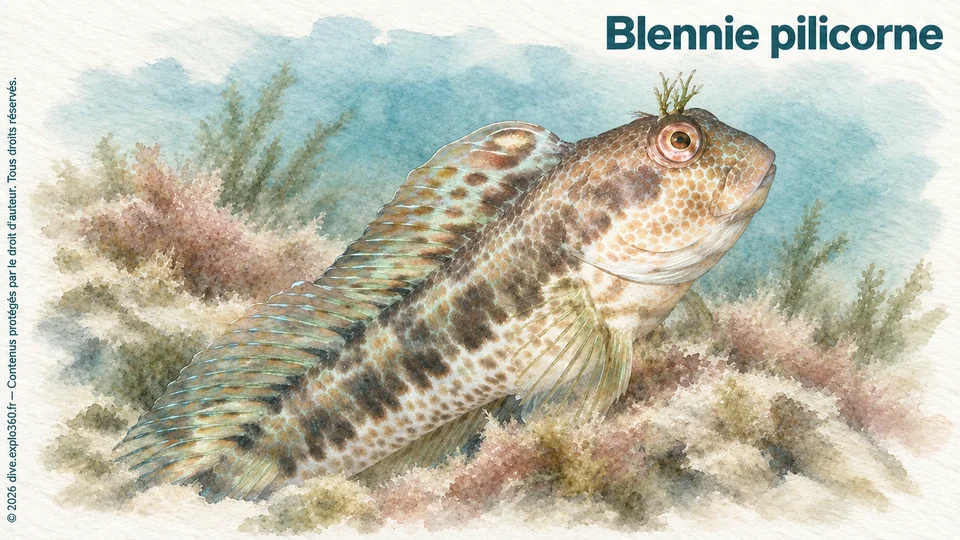
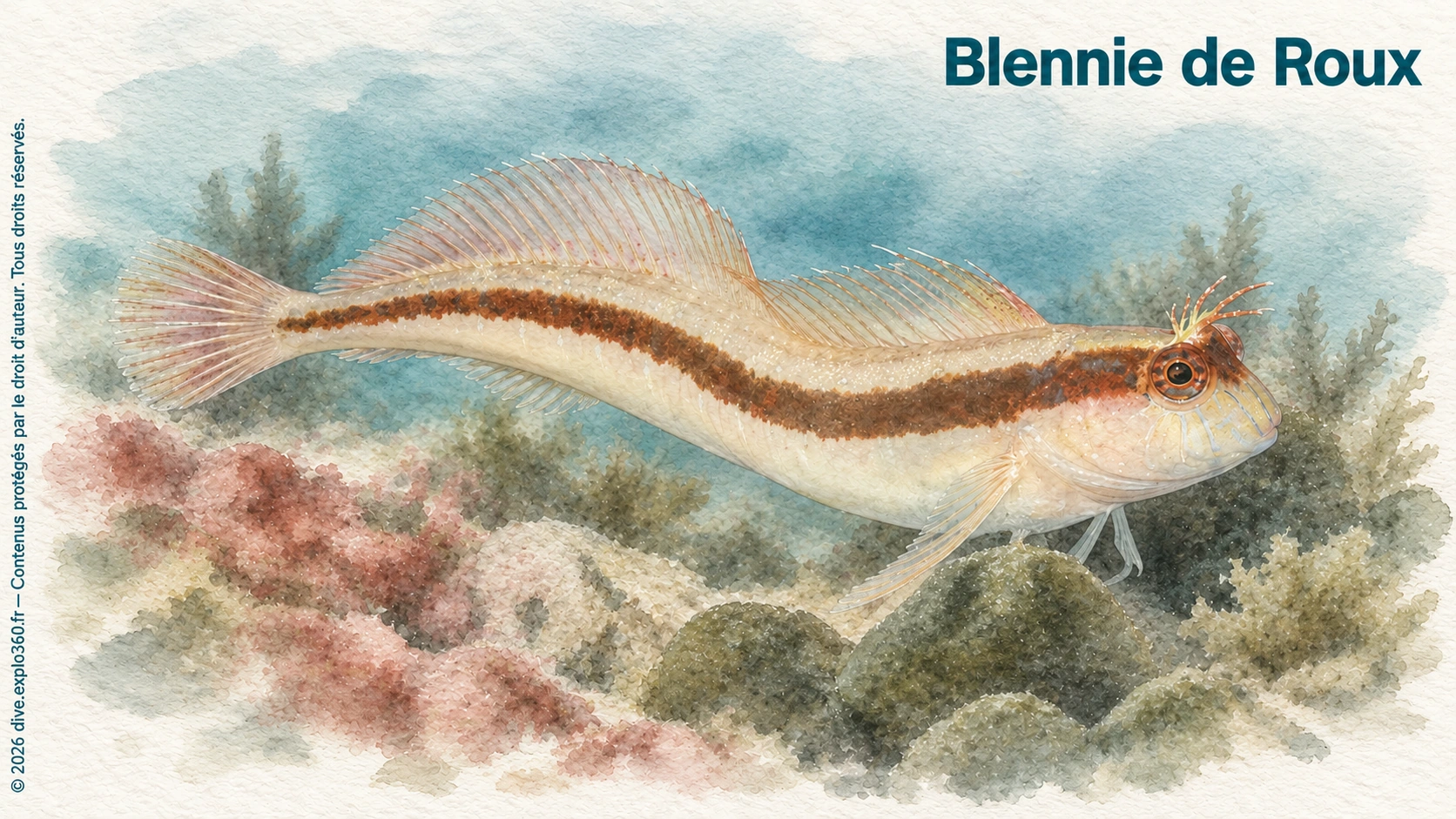
A pale, net-like pattern on the cheeks helps identify the ringneck blenny (Parablennius pilicornis), whose colour varies widely. It can be almost entirely yellow, mottled brown, or pale with dark bands. Males turn blue-black in breeding colours. Other features include high-set eyes, short branching filaments above them and a long dorsal fin.
WHERE DOES IT LIVE?
They frequent rocky bottoms with holes and cracks, between about 3 and 40 metres. Such areas may be exposed to currents and surge, wave movement against the rocks.
A fish settles, swims a short distance and changes its lookout point.
WHAT DOES IT EAT?
The ringneck blenny can take small animal prey, eat algae and use remains. Crustaceans, molluscs and polychaete worms are reported foods. In a studied Brazilian population, crustaceans and algae were prominent, followed by molluscs. Feeding on a dead crab’s shell adds scavenging to the picture. The menu extends well beyond carrion alone, and the resources need not contribute equally across places and periods.
GO FURTHER WITH AMIGANSEAU
Unlock the full profile
Deepen your knowledge with the exclusive chapters and interactive resources included in an AMIGANSEAU licence.
- HOW DOES IT REPRODUCE?
- OUR OBSERVATIONS
- ARTICLE
Also included in the full profile
- Advanced navigation between description, ecological context, observations and behaviour
- Interactive food chain to explore the species’ feeding relationships
 Understand the species