Habitat
 Depth
 Group
 Role
 Size
WHAT DOES IT LOOK LIKE?
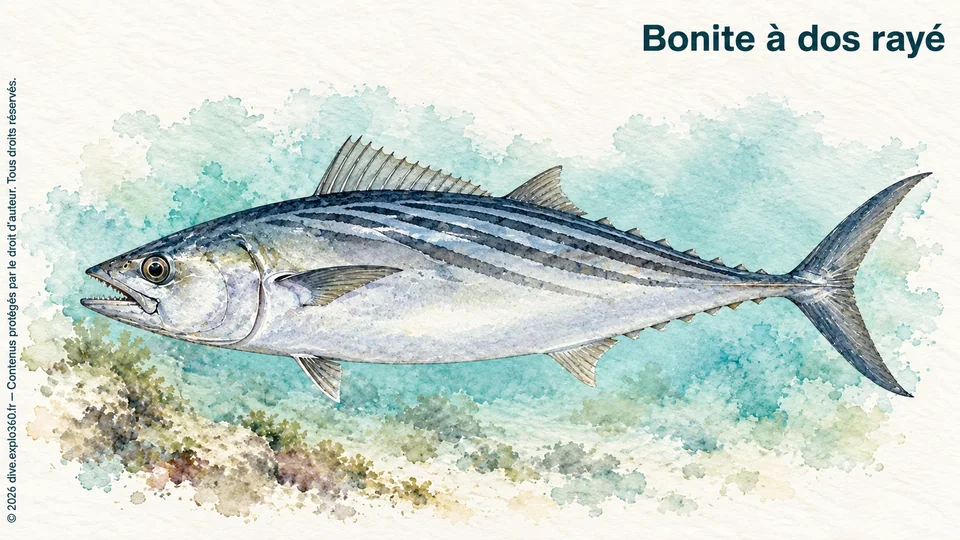
Slanting bands on the Atlantic bonito’s back contrast with its plain belly (Sarda sarda). Its silver body tapers towards the narrow base of the tail. The two dorsal fins are close together. Farther back, a row of seven to nine tiny fins called finlets runs along the top and a row of six to eight runs along the underside, just ahead of the forked tail.
WHERE DOES IT LIVE?
The distribution includes Atlantic and Mediterranean waters, including the Black Sea. Neritic waters above the continental shelf are important. Seasonal movement brings groups near coasts, but surface sightings do not exclude deeper use. A combined interval records occurrence without implying constant frequency at every site.
WHAT DOES IT EAT?
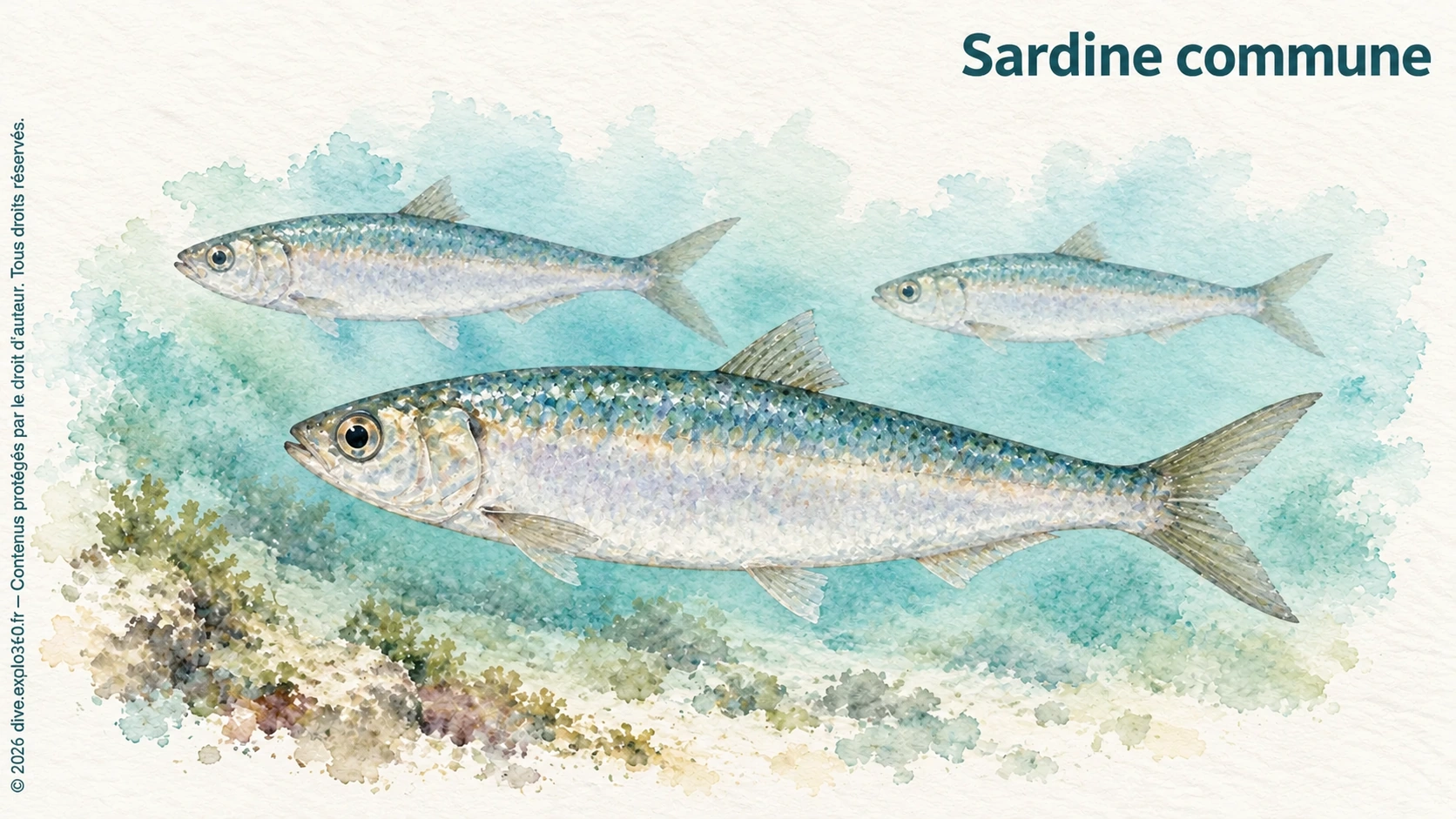
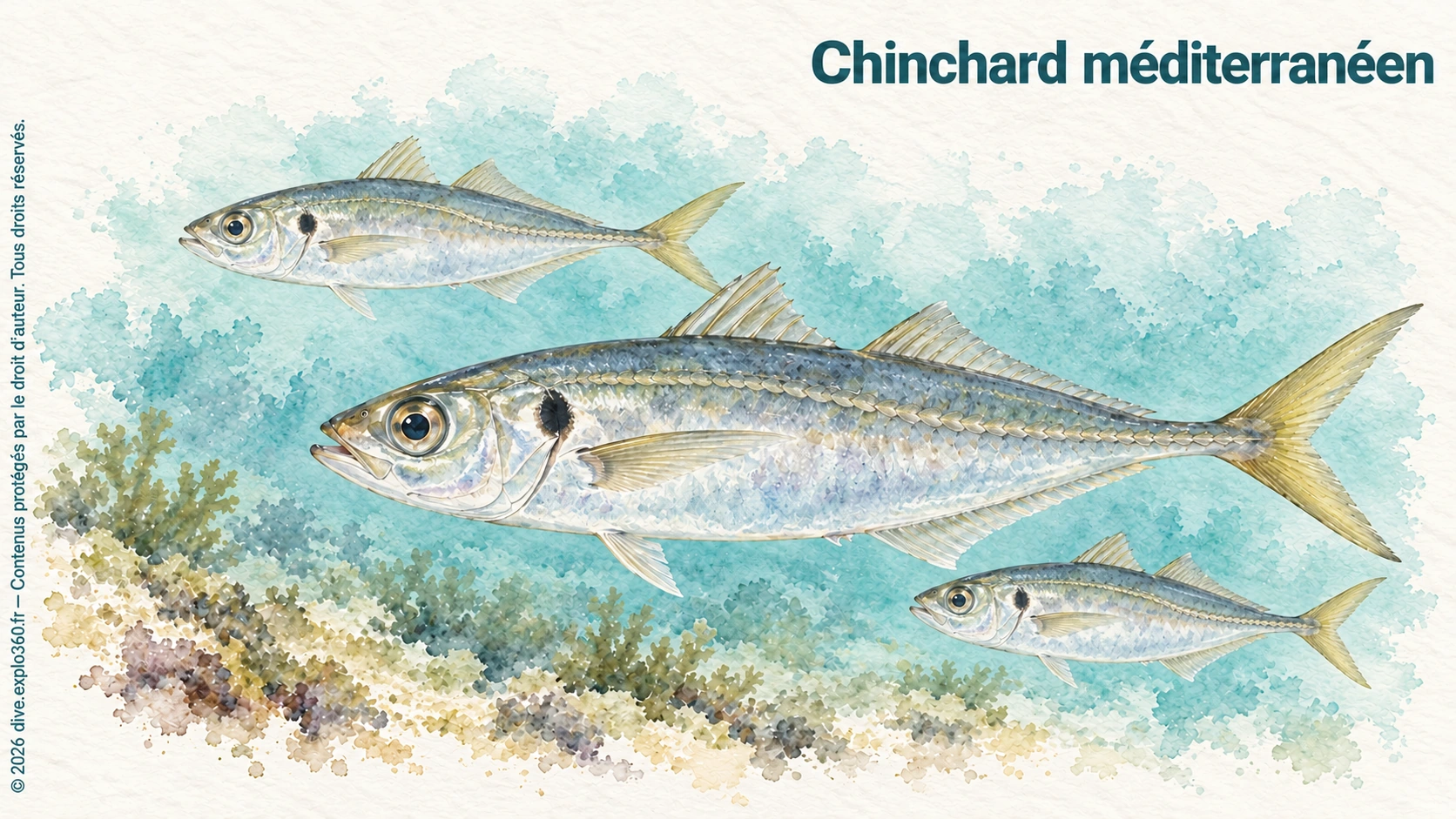
Fish provide most meals for the Atlantic bonito. Reported resources include small clupeids, the group containing sardines and herrings, as well as mackerel and gadids. Its large mouth seizes these mobile open-water prey.
GO FURTHER WITH AMIGANSEAU
Unlock the full profile
Deepen your knowledge with the exclusive chapters and interactive resources included in an AMIGANSEAU licence.
Subscribing to Dive.Explo360 means supporting a different way to discover marine life.
Our independent platform is entirely self-funded and relies solely on subscriptions. Every licence helps us continue our work, create new content, and share what we know about the marine world with as many people as possible.
Starting at €80 per year, your support makes all the difference.
 Understand the species