


 Habitat
 Depth
 Group
 Role
 Average size
WHAT DOES IT LOOK LIKE?
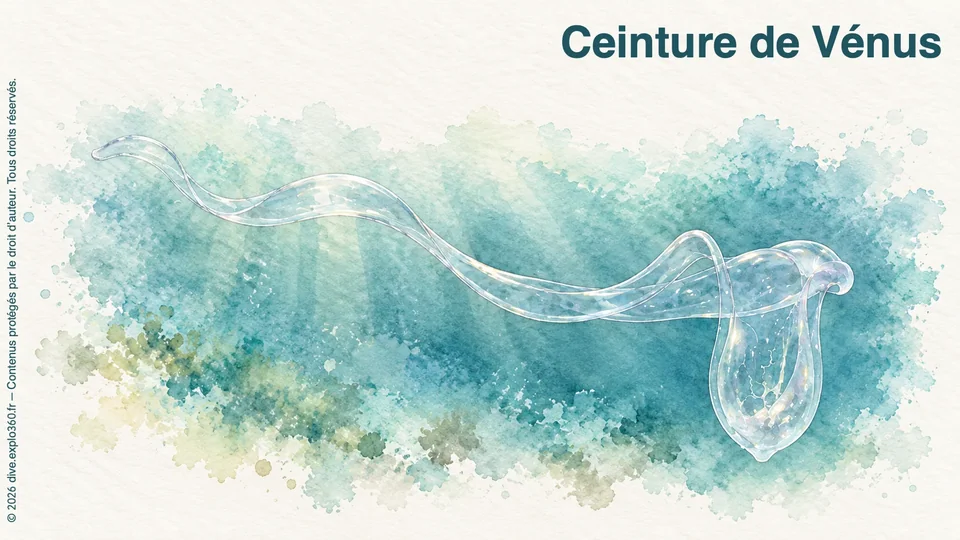
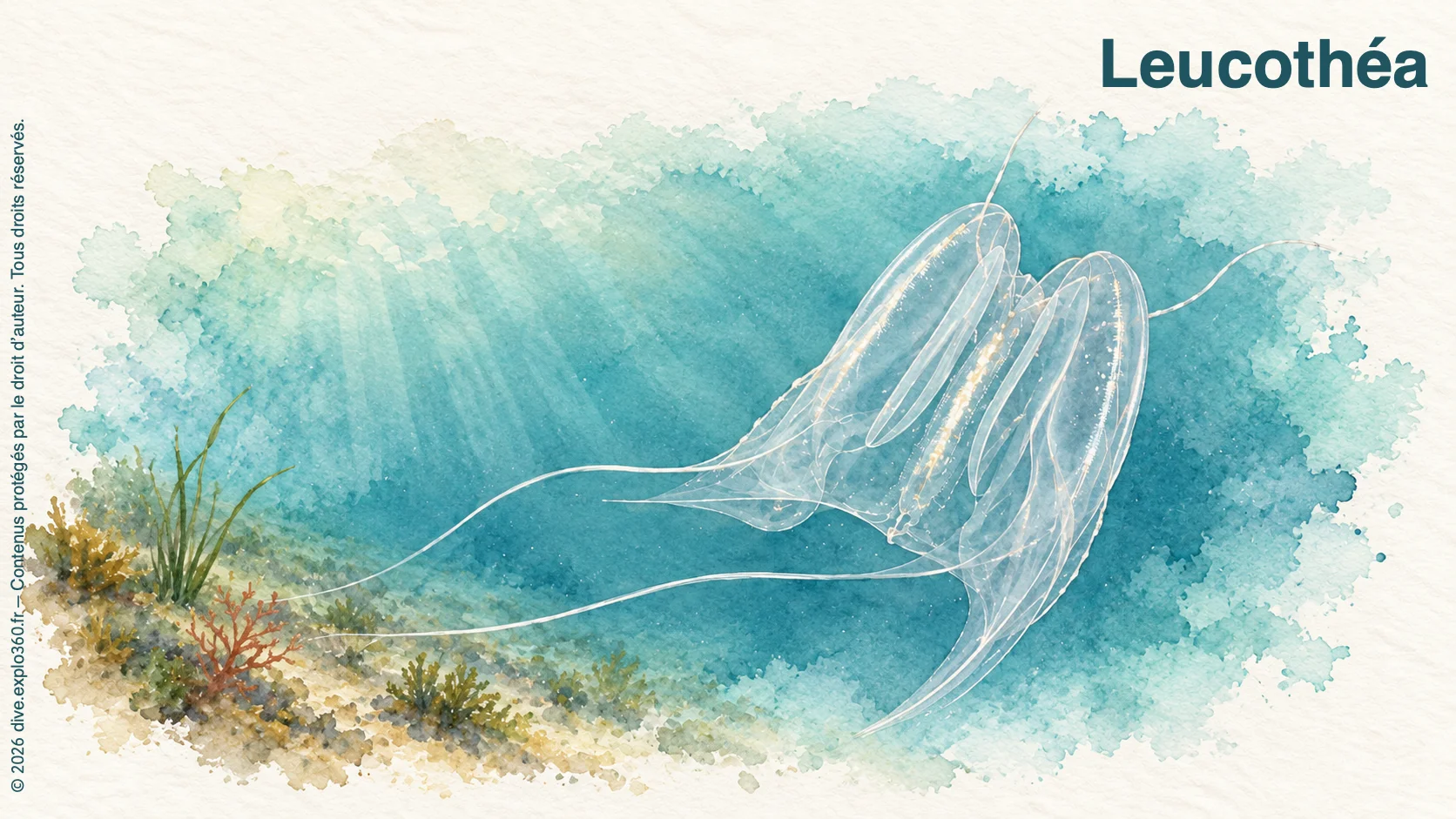
Venus’ girdle (Cestum veneris) looks like a long, transparent ribbon. Its flat, flexible body ripples in waves and can show shades or flashes of blue, pink and violet.
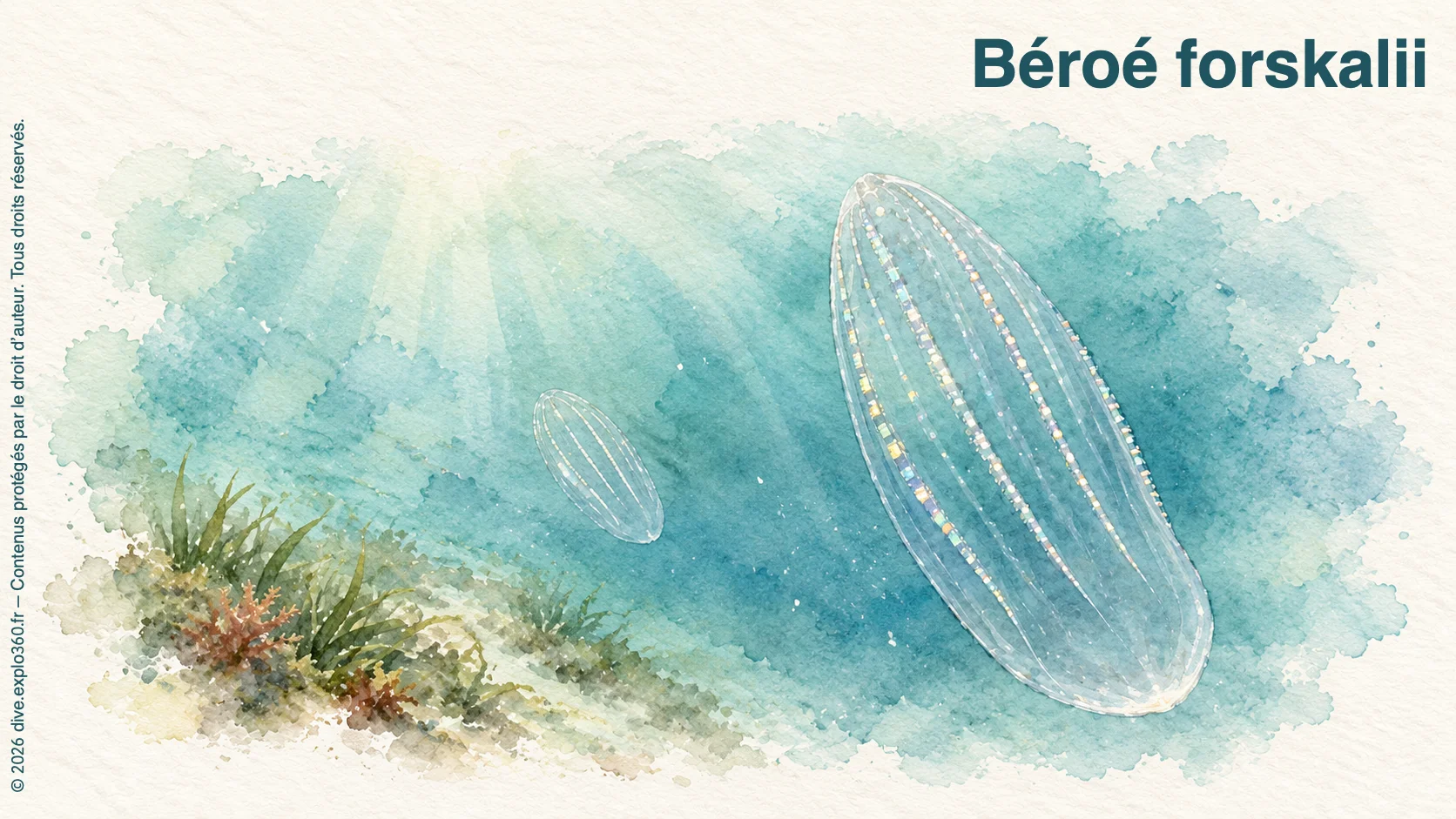
Four long comb rows are visible along the body. Made of cilia, tiny moving filaments, these combs sometimes show iridescent reflections whose colours change with the light. The shining rows then emphasise an outline made subtler by transparency.
WHERE DOES IT LIVE?
A pelagic species, it lives in open water and drifts with the currents.
It is most often found near the surface, but can also occur at different depths in the water column.
WHAT DOES IT EAT?
Venus’ girdle catches small planktonic animals with tentacles near its mouth, at the centre of the ribbon. These tentacles bear adhesive cells called colloblasts, which hold the prey. The prey is then carried to the mouth. Unlike jellyfish, comb jellies use sticky cells rather than stinging cells to capture food.
GO FURTHER WITH AMIGANSEAU
Unlock the full profile
Deepen your knowledge with the exclusive chapters and interactive resources included in an AMIGANSEAU licence.
- HOW DOES IT REPRODUCE?
- OUR OBSERVATIONS
- ARTICLE
Also included in the full profile
- Advanced navigation between description, ecological context, observations and behaviour
- Interactive food chain to explore the species’ feeding relationships
- Natural history podcast and dive debrief
- Infographic and illustrated summary profile
 Understand the species
