Partners and information

Contact us

Verification code

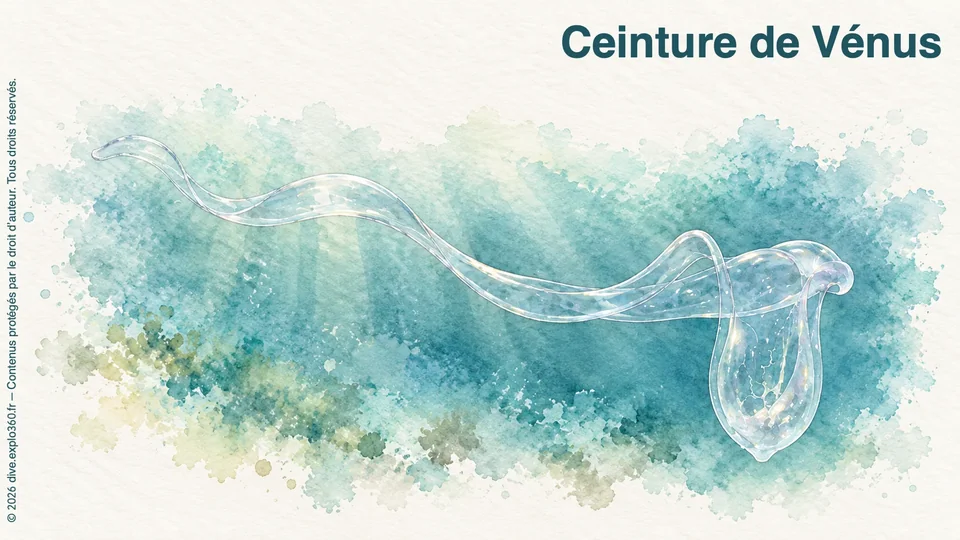
Venus' Girdle

Distribution : Mediterranean · Indian Ocean · Pacific Ocean · Caribbean Sea

No sting is needed to catch a meal! Venus's girdle has tiny tentacles covered in sticky cells. Small plankton animals become trapped on them before being carried towards its mouth. A very different way of hunting from that of jellyfish.

Photos being acquired · Your photos here

Habitat of Venus' Girdle Habitat
Open water
Depth range of Venus' Girdle Depth
1-10 m
Biological group of Venus' Girdle Group
Ecological role of Venus' Girdle Role
Predator

Average size

45 cm

WHAT DOES IT LOOK LIKE?

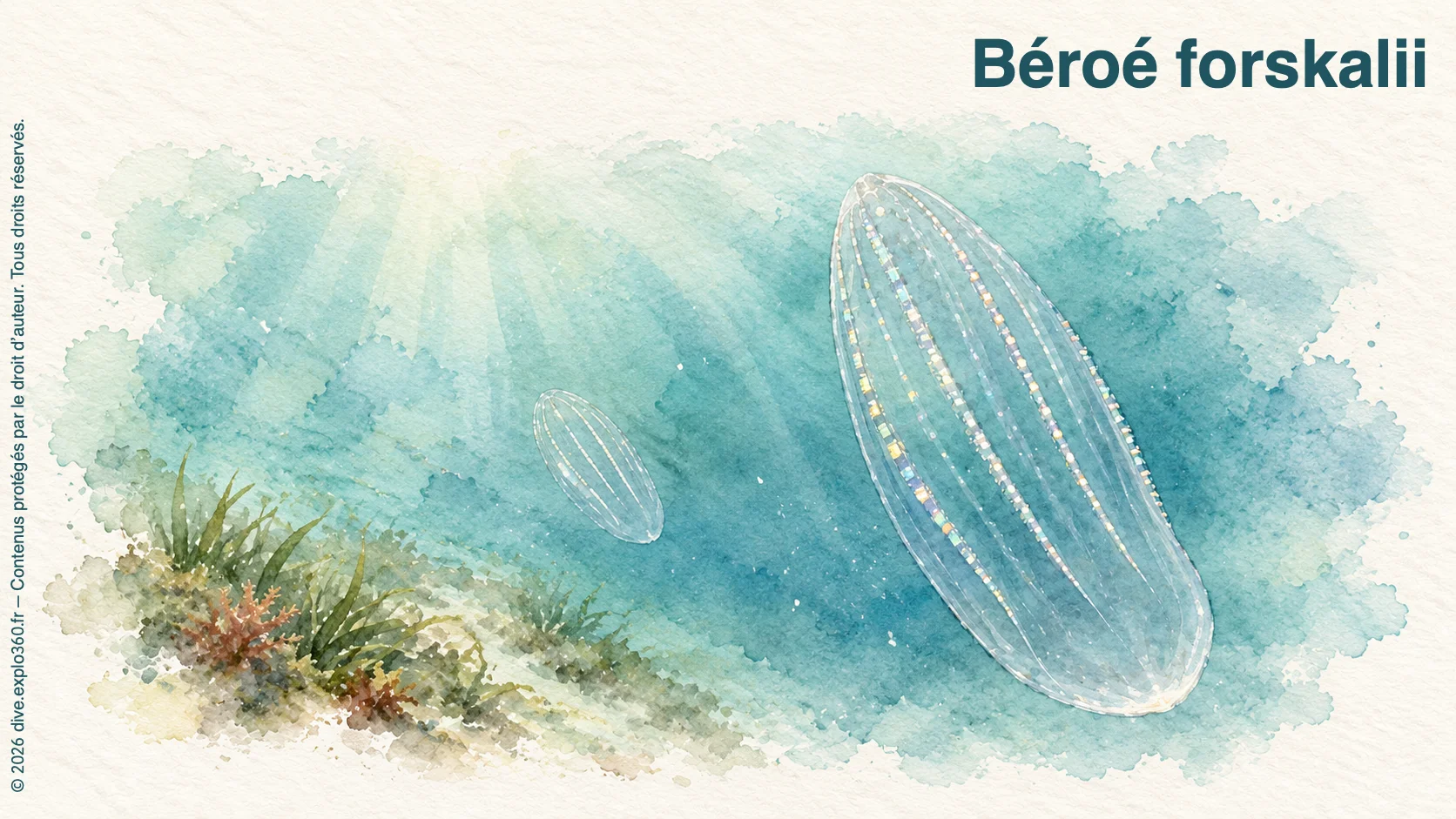
Venus’ girdle forms a long, transparent ribbon. Its very flat, flexible body ripples in waves.

Comb rows run along the ribbon. The combs are made of tiny moving filaments, the cilia, and may show coloured reflections.

Blue, pink or purple can appear with the light on the animal. The outline remains a ribbon rather than a jellyfish bell.

GO FURTHER WITH AMIGANSEAU

Unlock the full profile

Deepen your knowledge with the exclusive chapters and interactive resources included in an AMIGANSEAU licence.

Choose my licence
  • WHERE DOES IT LIVE?
  • WHAT DOES IT EAT?
  • HOW DOES IT REPRODUCE?
  • OUR OBSERVATIONS

Also included in the full profile

  • Advanced navigation between description, ecological context, observations and behaviour
  • Interactive food chain to explore the species’ feeding relationships
  • Natural history podcast and dive debrief
  • Infographic and illustrated summary profile
An active licence gives access to enriched profiles and AMIGANSEAU exploration tools.
Venus' Girdle

Understand the species

What is this species’ ecological role?

AMIGANSEAU Explorer Premium

Access enriched species profiles with advanced content (audio, infographics and detailed articles).

Explore all species easily through a single interface.

Enjoy a smooth, fast learning experience suited to every level.

🔒 The full profile is available with a paid subscription only.

Discover licences

POURSUIVRE L’EXPLORATION

Articles related to this species

ArticlePHYLA WITHOUT THE FUSSRead the article →