Partners and information

Contact us

Verification code

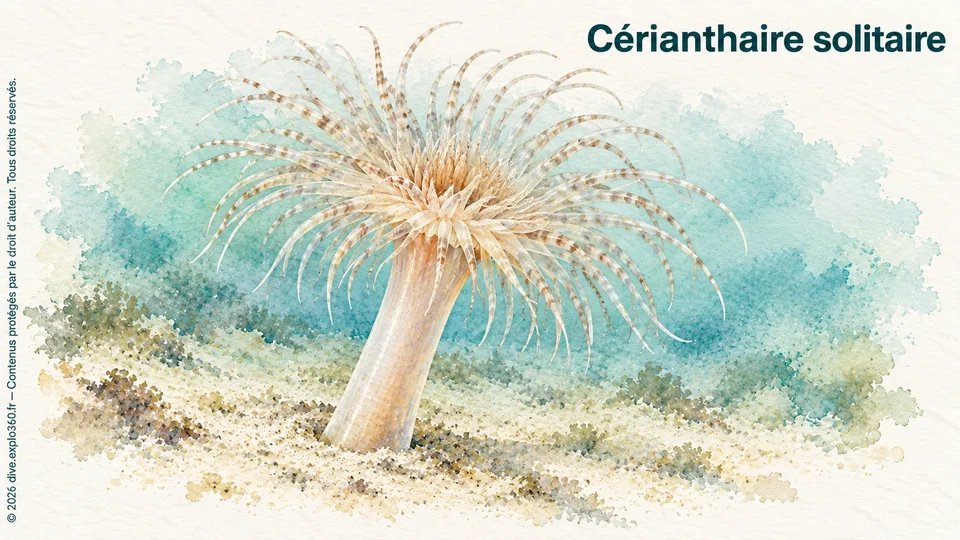
Solitary tube anemone

Distribution : Mediterranean, Black Sea and some eastern Atlantic stations. French occurrence confirmed in Thau by ATLASea in 2026. A single photograph may retain identification uncertainty.

The solitary tube anemone doesn't always live up to its name! Inside the tube where it hides, another small animal may sometimes build its own home. Two neighbours living almost in the same place, yet looking completely different.

Images being acquired · Your video or photos here

Habitat of Solitary tube anemone Habitat
Sand, Mud
Depth range of Solitary tube anemone Depth
2-50 m
Biological group of Solitary tube anemone Group
Ecological role of Solitary tube anemone Role
Predator

Size

Column to 40 cm; crown to 30 cm

WHAT DOES IT LOOK LIKE?

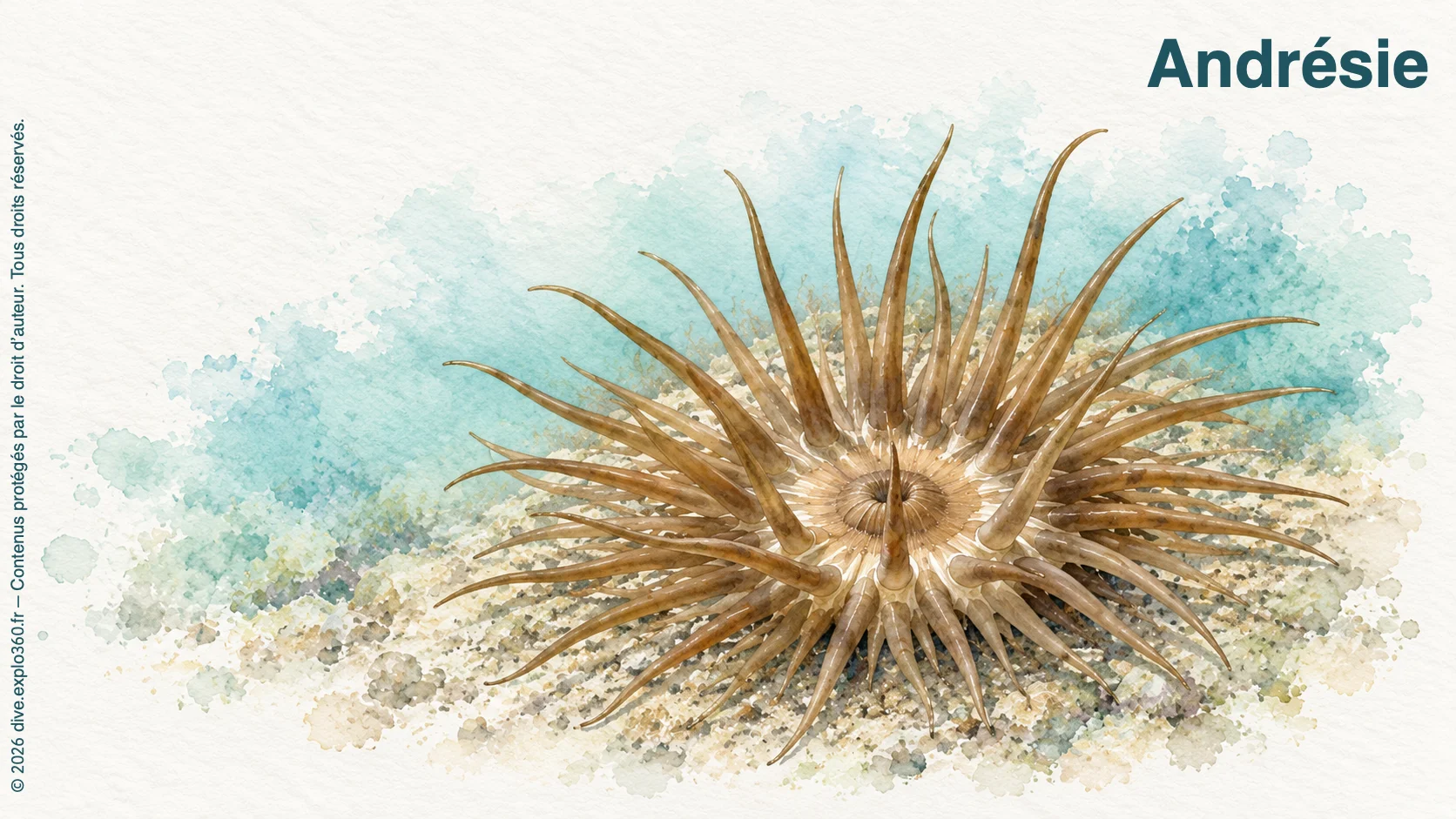
This solitary tube anemone spreads long thin tentacles, sometimes striped with brown. Another, much shorter ring surrounds the mouth. The upright body beneath the tentacles is pale and smooth.

GO FURTHER WITH AMIGANSEAU

Unlock the full profile

Deepen your knowledge with the exclusive chapters and interactive resources included in an AMIGANSEAU licence.

Choose my licence
  • WHERE DOES IT LIVE?
  • WHAT DOES IT EAT?

Also included in the full profile

  • Advanced navigation between description, ecological context, observations and behaviour
  • Interactive food chain to explore the species’ feeding relationships
An active licence gives access to enriched profiles and AMIGANSEAU exploration tools.
Solitary tube anemone

Understand the species

What is this species’ ecological role?

AMIGANSEAU Explorer Premium

Access enriched species profiles with advanced content (audio, infographics and detailed articles).

Explore all species easily through a single interface.

Enjoy a smooth, fast learning experience suited to every level.

🔒 The full profile is available with a paid subscription only.

Discover licences

POURSUIVRE L’EXPLORATION

Explore further

ArticleTHE SECRETS OF SANDRead the article →ArticleWhat marine animals do and why it mattersRead the article →