Habitat
 Depth
 Group
 Role
 Size
WHAT DOES IT LOOK LIKE?
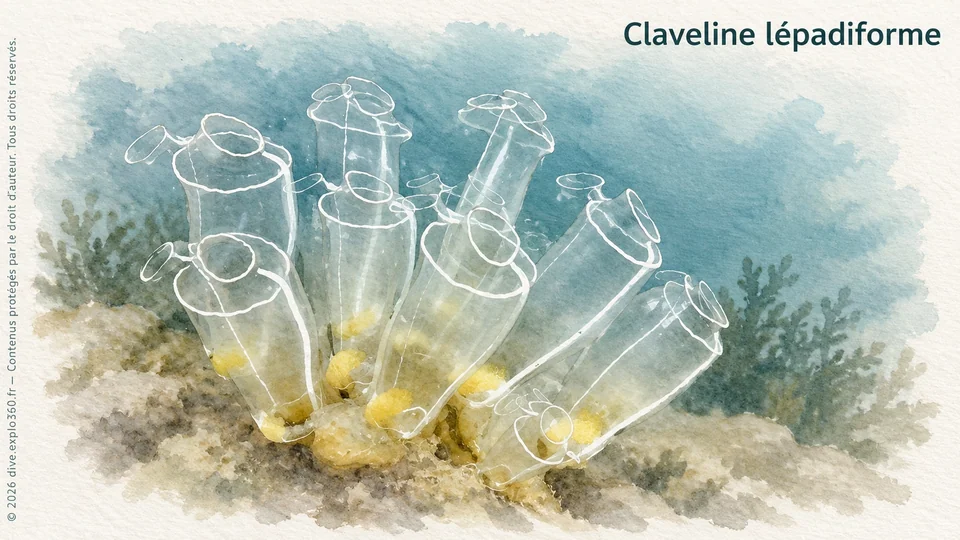
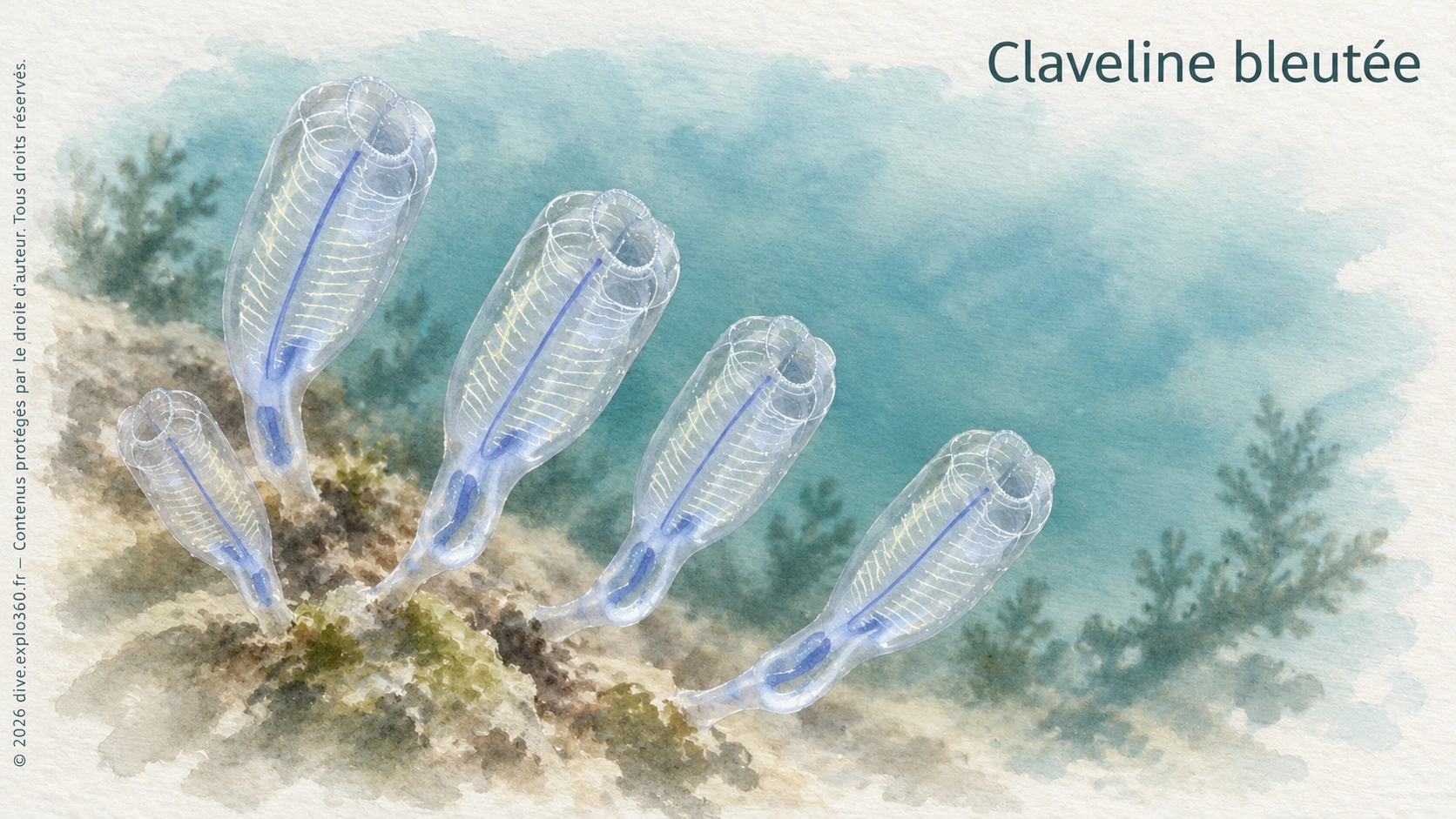
Each transparent bell in a cluster of light-bulb sea squirts (Clavelina lepadiformis) is a separate animal. White lines and rings mark its tunic, the outer covering through which you can see internal structures. The two openings near the top, called siphons, are distinct, and thin extensions link the bases of neighbouring animals.
WHERE DOES IT LIVE?
It attaches to rocks, shells and other hard natural or artificial surfaces. French Mediterranean records notably concern rocky walls, while the group also occurs in harbours.
The light-bulb sea squirt can form clusters in quite different habitats, including coastal rocky walls and submerged harbour structures. How long the zooids remain visible can vary between populations and with local conditions.
WHAT DOES IT EAT?
An open light-bulb sea squirt moves water between two siphons. The branchial sac retains plankton and organic particles on a mucus filter. Cilia convey captured food to the digestive tract. Filtered water follows a different route through branchial slits to the exhalant siphon. Each individual in a group performs its own collection. Transparency notably reveals the stomach near the body’s base, away from the large intake.
GO FURTHER WITH AMIGANSEAU
Unlock the full profile
Deepen your knowledge with the exclusive chapters and interactive resources included in an AMIGANSEAU licence.
Subscribing to Dive.Explo360 means supporting a different way to discover marine life.
Our independent platform is entirely self-funded and relies solely on subscriptions. Every licence helps us continue our work, create new content, and share what we know about the marine world with as many people as possible.
Starting at €80 per year, your support makes all the difference.
 Understand the species