Habitat
 Depth
 Group
 Role
 Size
WHAT DOES IT LOOK LIKE?
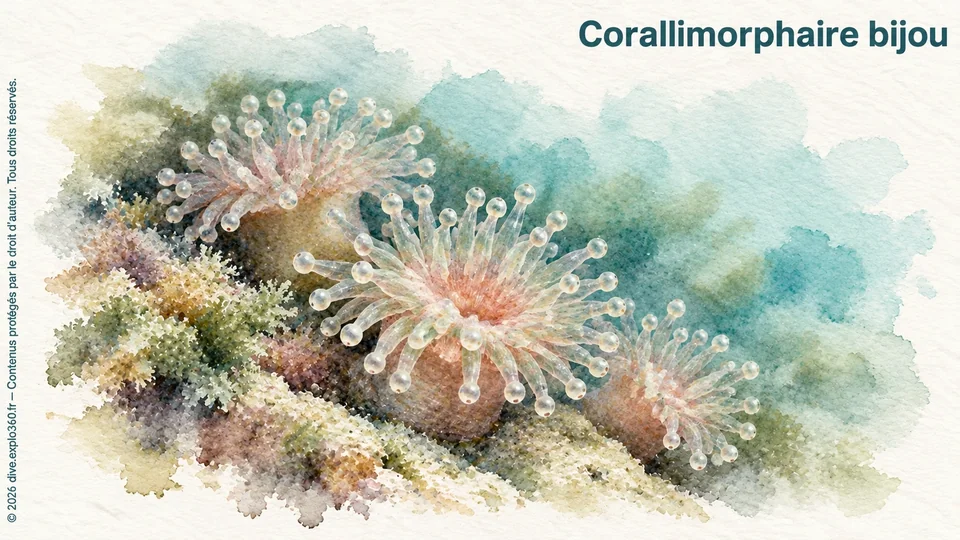
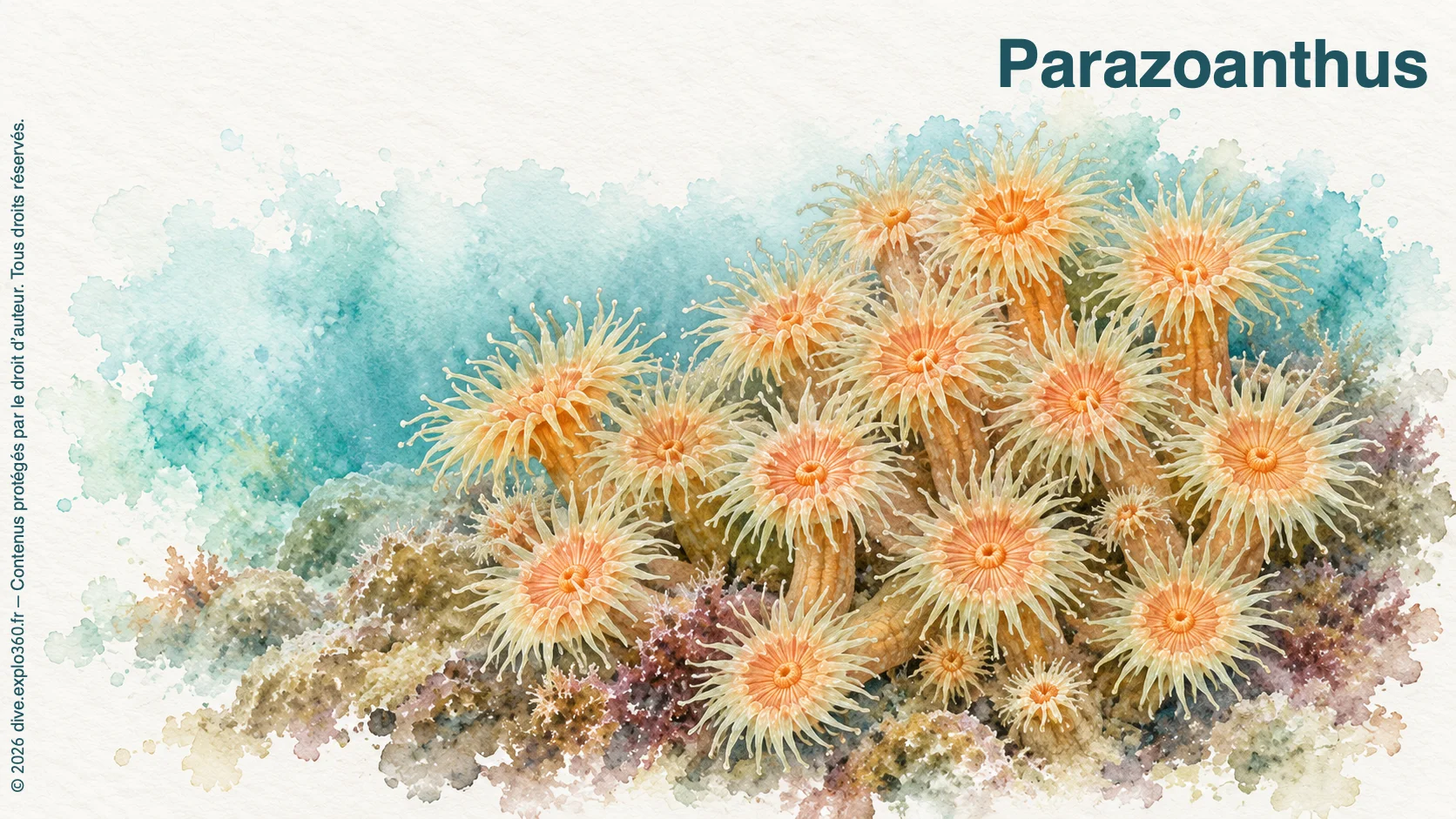
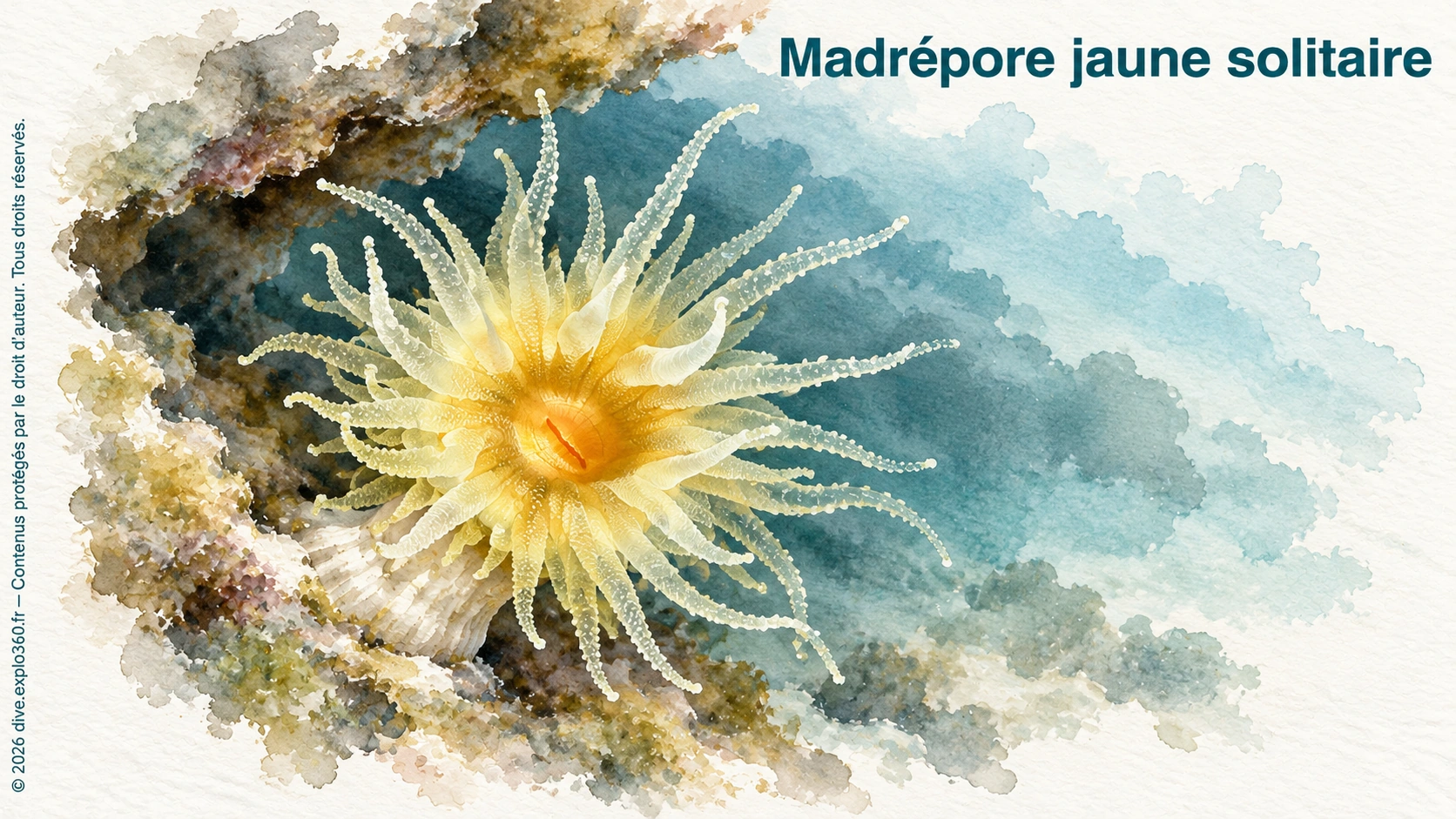
The jewel anemone (Corynactis viridis) has rounded swellings called acrospheres at the tips of its tentacles. These often pale tips form a ring around a disc about 10 to 15 mm across. The anemone has a short, soft column and can be pink, orange or green. It has no cup-shaped skeleton.
WHERE DOES IT LIVE?
The jewel anemone attaches to hard surfaces, particularly shaded rock walls, overhangs and sometimes wrecks. Found in the Mediterranean and northeastern Atlantic, it may form tightly packed groups over small areas. In the Mediterranean it has been recorded down to around 100 metres, but it also occurs in shallow water where the rock remains shaded.
WHAT DOES IT EAT?
Around the jewel anemone’s mouth, tentacles capture small planktonic prey. Their stinging cells contribute to capture. Food is then transferred to the central opening and ingested by the polyp.
GO FURTHER WITH AMIGANSEAU
Unlock the full profile
Deepen your knowledge with the exclusive chapters and interactive resources included in an AMIGANSEAU licence.
- HOW DOES IT REPRODUCE?
- OUR OBSERVATIONS
- ARTICLE
Also included in the full profile
- Advanced navigation between description, ecological context, observations and behaviour
- Interactive food chain to explore the species’ feeding relationships
 Understand the species