Partners and information

Contact us

Verification code

Warty crab

Distribution : Mediterranean

A fragment of a crab claw may seem insignificant beside prehistoric pottery or stone tools. Yet such remains can reveal what coastal communities ate thousands of years ago. Warty crabs have been identified in Neolithic archaeological deposits in France. You can still encounter the same species among coastal rocks today, linking a living animal to an ancient food tradition.

Images being acquired · Your video or photos here

Habitat of Warty crab Habitat
Rocky habitat
Depth range of Warty crab Depth
0-6 m
Biological group of Warty crab Group
Ecological role of Warty crab Role
Predator

Size

Carapace 7–9 cm wide, excluding legs

WHAT DOES IT LOOK LIKE?

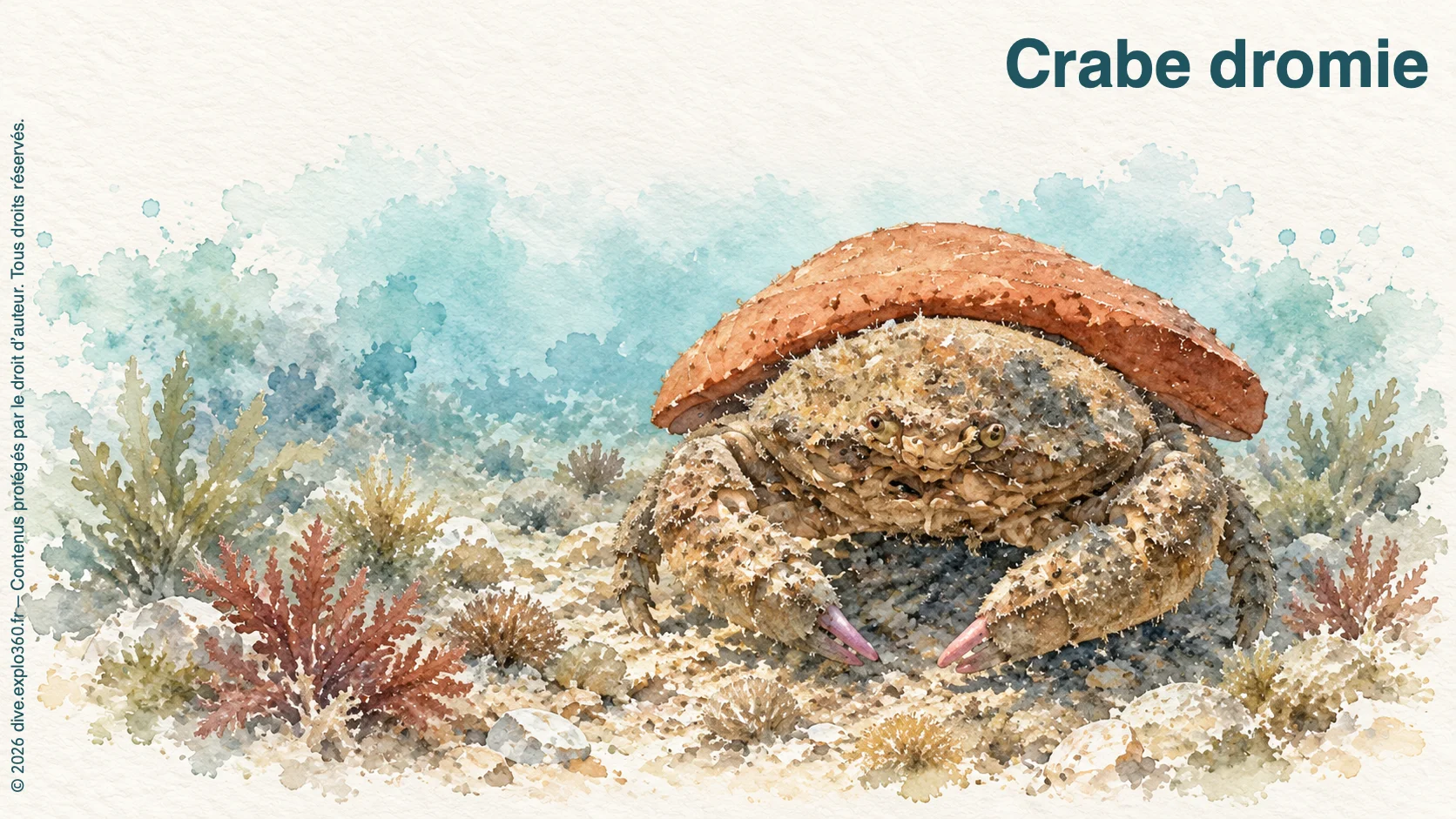
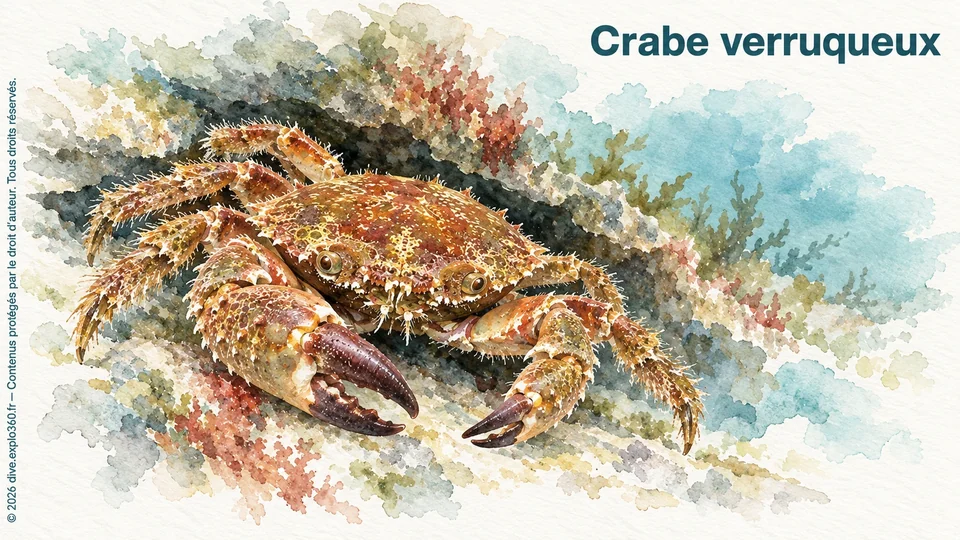
The warty crab (Eriphia verrucosa) has a broad flat shell with tubercles, small projecting bumps. Points edge the front, with a notch in the middle of the forehead. The claws are bulky, unequal and dark-tipped. Legs carry setae, fine hair-like projections.

GO FURTHER WITH AMIGANSEAU

Unlock the full profile

Deepen your knowledge with the exclusive chapters and interactive resources included in an AMIGANSEAU licence.

Choose my licence
  • WHERE DOES IT LIVE?
  • WHAT DOES IT EAT?
  • HOW DOES IT REPRODUCE?
  • OUR OBSERVATIONS
  • ARTICLE

Also included in the full profile

  • Advanced navigation between description, ecological context, observations and behaviour
  • Interactive food chain to explore the species’ feeding relationships
An active licence gives access to enriched profiles and AMIGANSEAU exploration tools.
Warty crab

Understand the species

What is this species’ ecological role?

AMIGANSEAU Explorer Premium

Access enriched species profiles with advanced content (audio, infographics and detailed articles).

Explore all species easily through a single interface.

Enjoy a smooth, fast learning experience suited to every level.

🔒 The full profile is available with a paid subscription only.

Discover licences

POURSUIVRE L’EXPLORATION

Explore further

ArticleWhat marine animals do and why it mattersRead the article →ArticlePHYLA WITHOUT THE FUSSRead the article →