Habitat
 Depth
 Group
 Role
 Size
WHAT DOES IT LOOK LIKE?
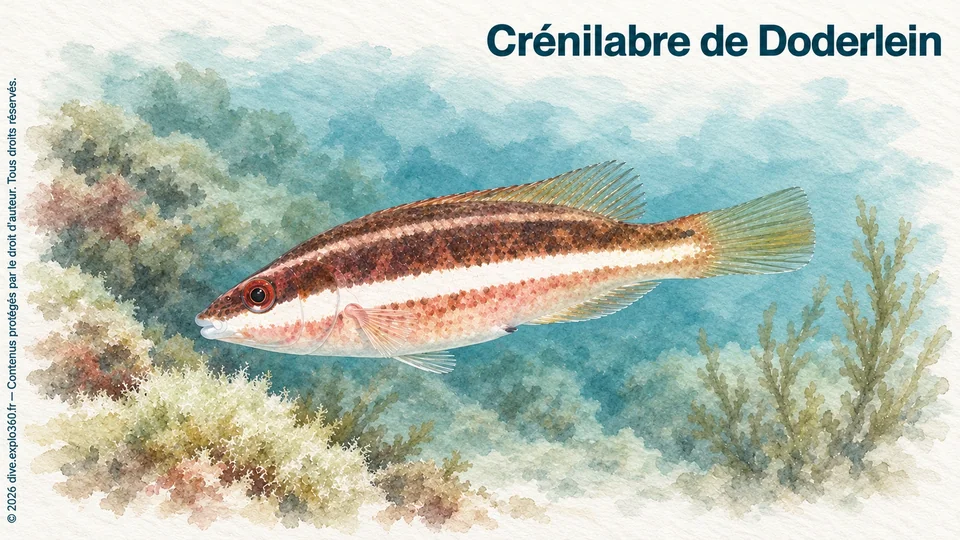
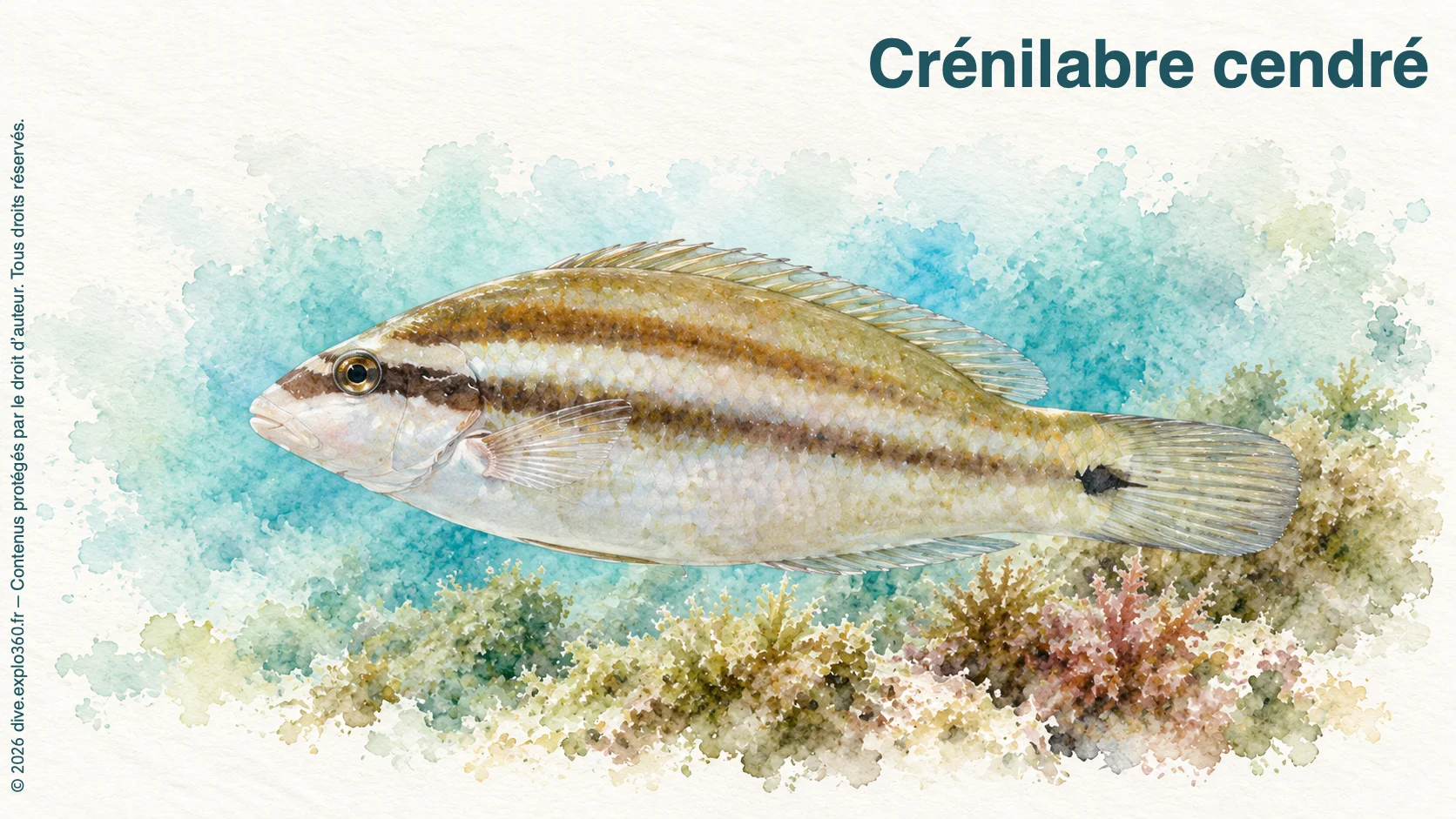
The long-striped wrasse (Symphodus doderleini) has two white stripes, a broad one along the middle of its side and a thinner one above it. Its slender, reddish-brown body is darker on the back and paler underneath. There may also be a red mark behind the eye and a black mark just ahead of the tail. Males and females look similar, although males develop a deeper red during breeding.
WHERE DOES IT LIVE?
The species mainly frequents seagrass beds and, to a lesser extent, neighbouring rocky bottoms. It is often found between 5 and 30 metres deep.
Seagrass provides shelter, as well as many small animals associated with leaves and nearby surfaces.
WHAT DOES IT EAT?
The longstriped wrasse feeds on small animals among seagrass leaves and on nearby seabeds. It eats marine worms, small molluscs and amphipods, tiny crustaceans. It also consumes bryozoans, colonial animals attached to leaves, seaweed or rocks.
GO FURTHER WITH AMIGANSEAU
Unlock the full profile
Deepen your knowledge with the exclusive chapters and interactive resources included in an AMIGANSEAU licence.
Subscribing to Dive.Explo360 means supporting a different way to discover marine life.
Our independent platform is entirely self-funded and relies solely on subscriptions. Every licence helps us continue our work, create new content, and share what we know about the marine world with as many people as possible.
Starting at €80 per year, your support makes all the difference.
 Understand the species