Partners

Contact us

Verification code

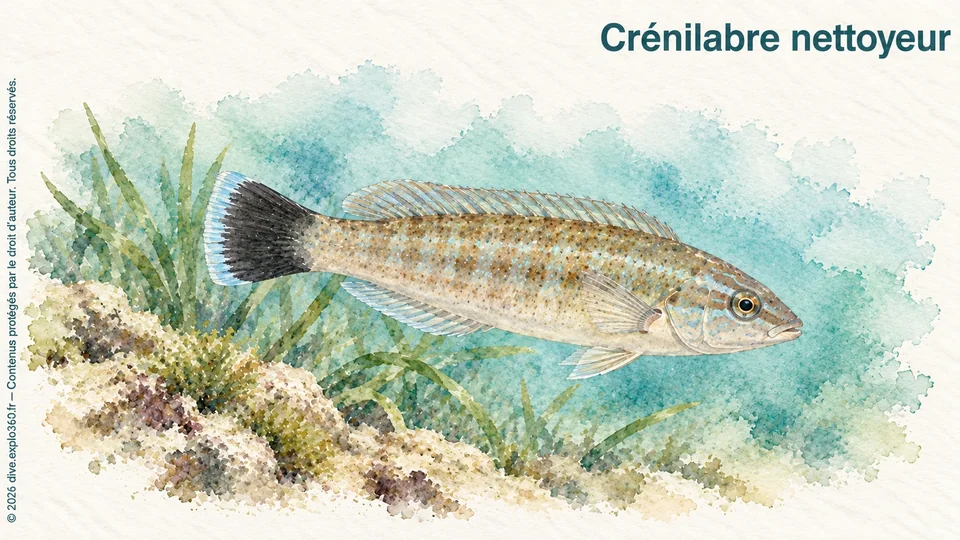
Black-tailed wrasse

Distribution : Mediterranean species, notably along rock–seagrass boundaries. Formerly Symphodus melanocercus: the same species, not a second catalogue entry.

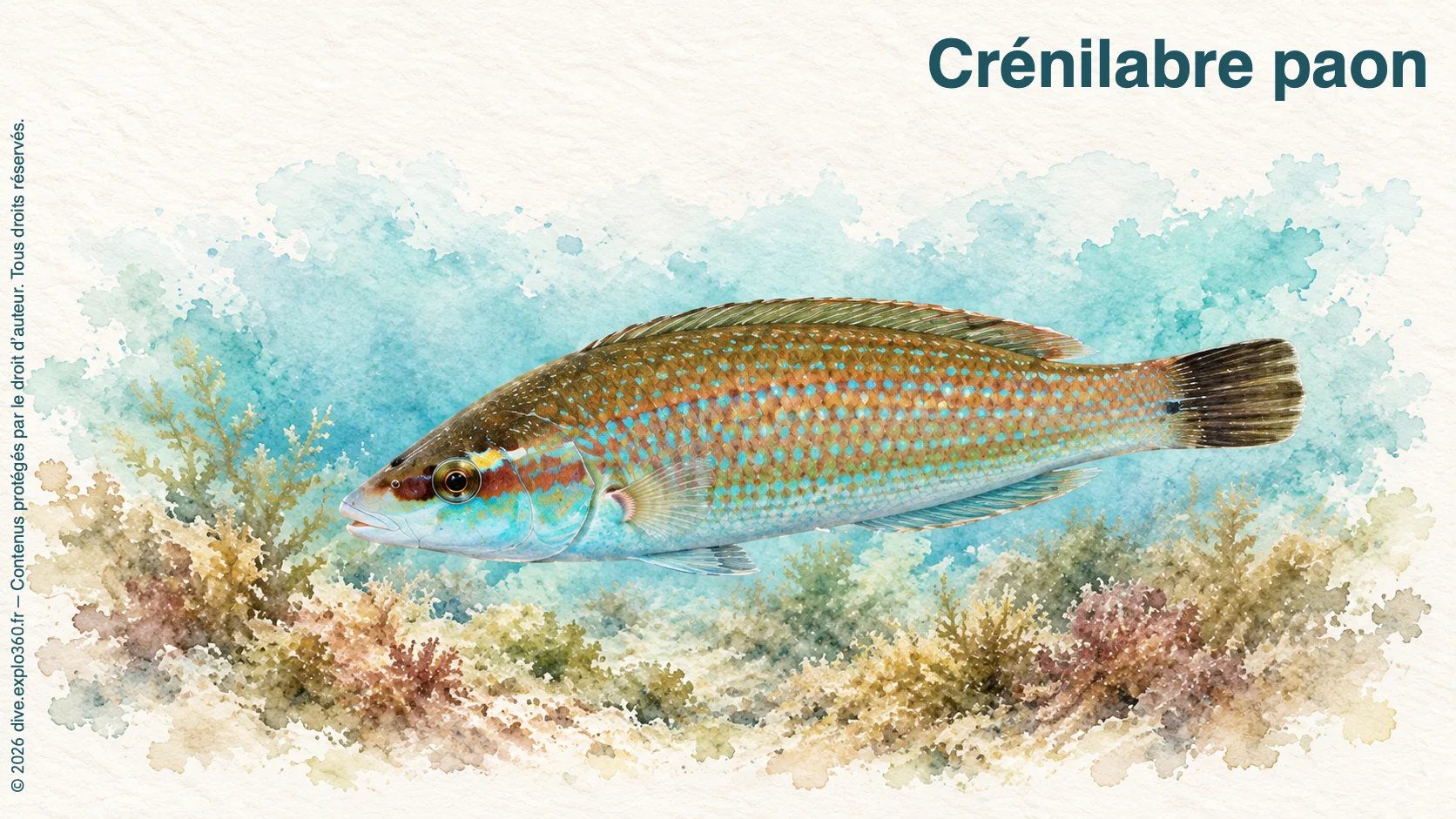
Underwater observations along the Provençal coast reveal an unexpected variety of postures among the black-tailed wrasse's clients. A peacock wrasse may hold itself at a steep angle with its fins extended, while a painted comber opens its gill covers to expose areas that are normally protected. The encounter depends on the behaviour of both fish. Watch the larger animal's posture and you may recognise a cleaning session before you even see the cleaner.

Images being acquired · Your video or photos here

Habitat of Black-tailed wrasse Habitat
Rocky habitat, Seagrass meadow
Depth range of Black-tailed wrasse Depth
0-25 m
Biological group of Black-tailed wrasse Group
Ecological role of Black-tailed wrasse Role
Predator

Size

Up to 14 cm according to DORIS

WHAT DOES IT LOOK LIKE?

The rear two-thirds of the blacktailed wrasse’s tail fin (Centrolabrus melanocercus) are black with a pale edge. The beige body has a bluish tint that can be much stronger in breeding males. A single continuous fin runs along the back. The fish reaches about 14 cm.

WHERE DOES IT LIVE?

The cleaning wrasse uses rocky seabeds and Mediterranean seagrass meadows, particularly where they meet. It occurs down to around twenty-five metres. It may move beside walls and among Neptune grass leaves without remaining associated with a single surface type.

WHAT DOES IT EAT?

The blacktailed wrasse picks small parasites from the skin and fins of other fish. These include tiny crustaceans, but cleaning is not its only way of feeding. It also catches amphipods, copepods and marine worms. It may eat hydroids and bryozoans, small animals attached to rocks or algae.

GO FURTHER WITH AMIGANSEAU

Unlock the full profile

Deepen your knowledge with the exclusive chapters and interactive resources included in an AMIGANSEAU licence.

Subscribing to Dive.Explo360 means supporting a different way to discover marine life.

Our independent platform is entirely self-funded and relies solely on subscriptions. Every licence helps us continue our work, create new content, and share what we know about the marine world with as many people as possible.

Starting at €80 per year, your support makes all the difference.
Choose my licence
An active licence gives access to enriched profiles and AMIGANSEAU exploration tools.
Black-tailed wrasse

Understand the species

What is this species’ ecological role?

AMIGANSEAU Explorer Premium

Access enriched species profiles with advanced content (audio, infographics and detailed articles).

Explore all species easily through a single interface.

Enjoy a smooth, fast learning experience suited to every level.

🔒 The full profile is available with a paid subscription only.

Discover licences

POURSUIVRE L’EXPLORATION

Explore further

ArticleTHE SECRETS OF THE SEAGRASS MEADOWRead the article →JourneysJourney through Neptune Grass meadowsDiscover → →ArticleWHAT IF IT ALL HAPPENED UNDERWATER?Read the article →