Habitat
 Depth
 Group
 Role
 Size
WHAT DOES IT LOOK LIKE?
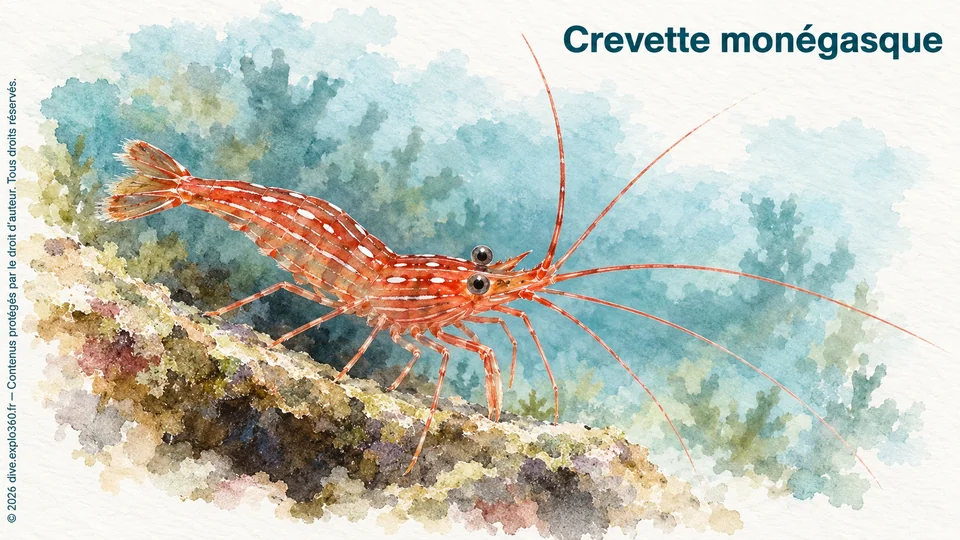
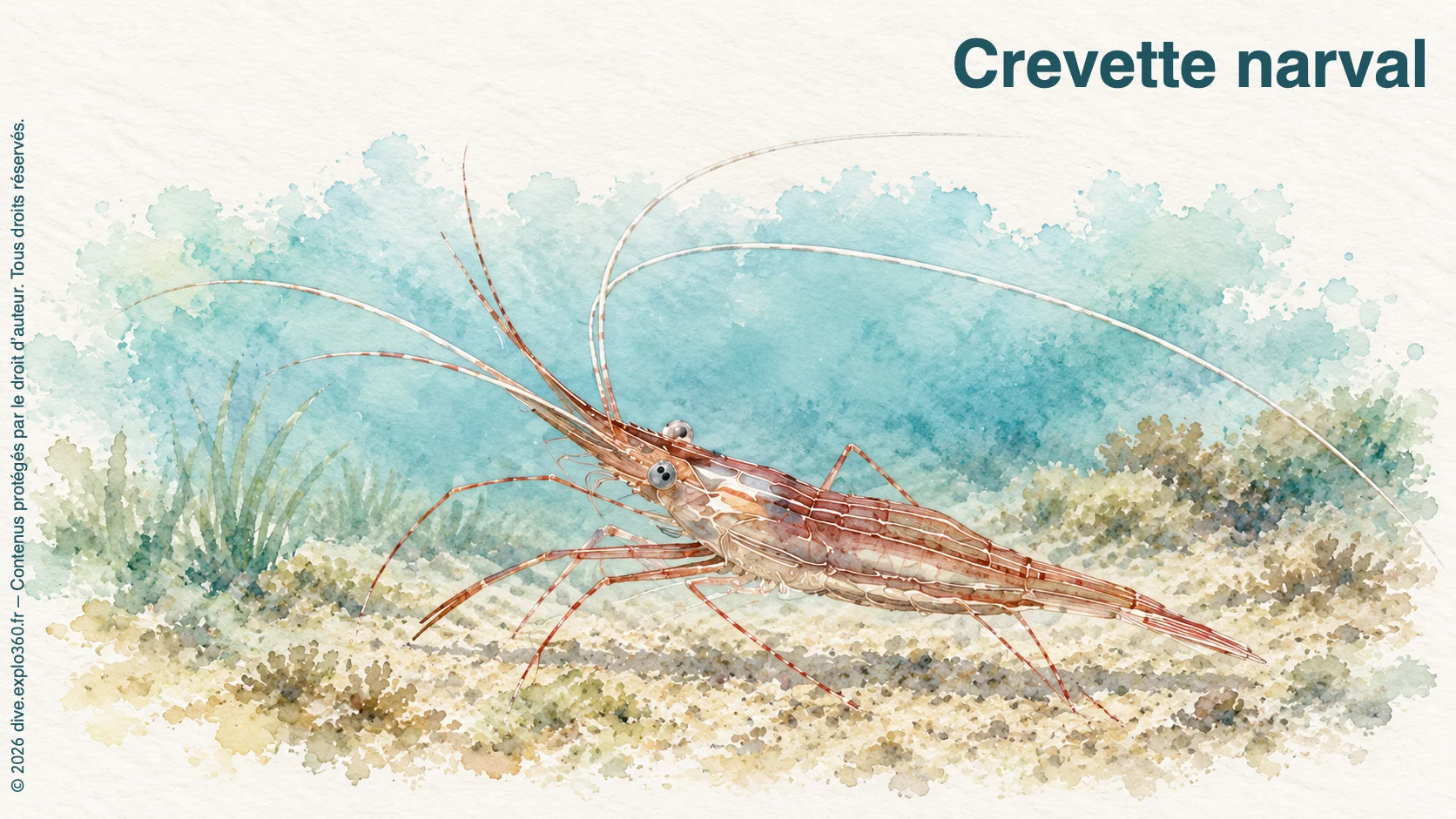
By day, red lines edged in white run along the body of the Monaco shrimp (Lysmata seticaudata). At night, the lines fade and bands across the body become easier to see. The shrimp has red antennae, very dark eyes and a short rostrum, the pointed extension of the head.
WHERE DOES IT LIVE?
It uses rocks and their cavities, often between four and sixty metres. By day, it stays in dark fissures, sometimes on walls or ceilings. It becomes more mobile at night.
Its range includes the Mediterranean and temperate eastern Atlantic. It may share shelter with a moray, conger or other fish.
WHAT DOES IT EAT?
The Monaco shrimp feeds partly on parasites and skin fragments it removes from fish. It may clean a moray eel inside its mouth and near its gill openings. It also eats food scraps and searches for small animals in rocky crevices, especially at night. Cleaning thus provides some of its food, but it can also feed without a fish nearby.
GO FURTHER WITH AMIGANSEAU
Unlock the full profile
Deepen your knowledge with the exclusive chapters and interactive resources included in an AMIGANSEAU licence.
- HOW DOES IT REPRODUCE?
- OUR OBSERVATIONS
- ARTICLE
Also included in the full profile
- Advanced navigation between description, ecological context, observations and behaviour
- Interactive food chain to explore the species’ feeding relationships
 Understand the species