


 Habitat
 Depth
 Group
 Role
 Size
 Good to know
WHAT DOES IT LOOK LIKE?
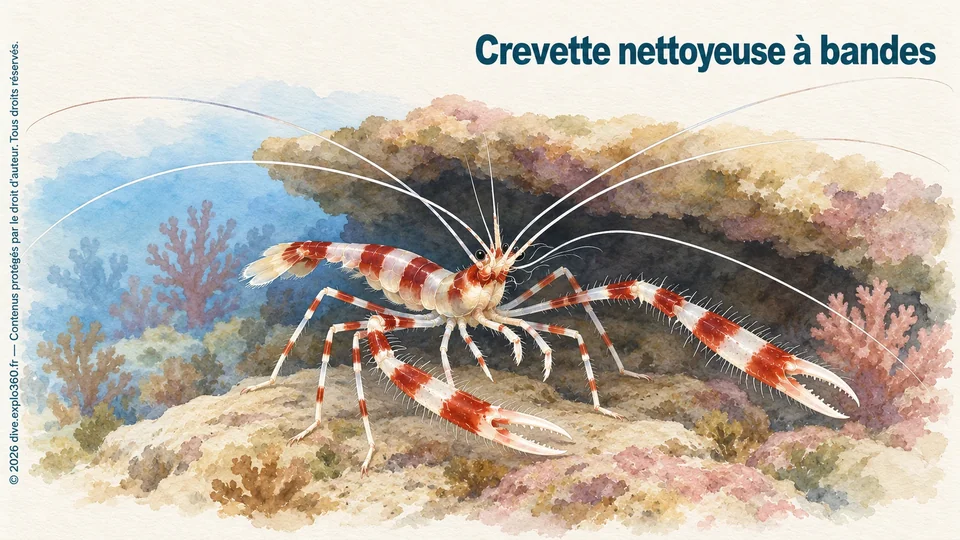
Long white antennae make the banded coral shrimp (Stenopus hispidus) look much larger. Its red and white body measures about 4 to 9 cm, excluding the antennae. It has ten legs, with the large claws on the third pair. The small appendages beneath the abdomen, the rear part of the body, are separate from those legs.
WHERE DOES IT LIVE?
The banded coral shrimp inhabits tropical reefs in the Red Sea, Indo-Pacific and Atlantic. It uses caves, cracks and overhangs, often as a pair. Refuges occur from shallow water to several tens of metres, generally beside rocky or coral supports offering a sheltered place for the body. Long antennae can project into water while the body remains hidden within the shade of the same refuge. Partners use a local shelter, but larvae spend a stage in water before joining a bottom-associated habitat.
WHAT DOES IT EAT?
The banded coral shrimp removes small parasites and debris from the skin, fins and sometimes near the gills of fish approaching its shelter. It picks them up with its claws and brings them to its mouth. It may also eat small animals and food scraps found around rocks. Cleaning fish therefore provides part of its food, but does not necessarily account for every meal.
GO FURTHER WITH AMIGANSEAU
Unlock the full profile
Deepen your knowledge with the exclusive chapters and interactive resources included in an AMIGANSEAU licence.
- HOW DOES IT REPRODUCE?
- OUR OBSERVATIONS
- ARTICLE
Also included in the full profile
- Advanced navigation between description, ecological context, observations and behaviour
- Interactive food chain to explore the species’ feeding relationships
 Understand the species

