 Habitat
 Depth
 Group
 Role
 Size
WHAT DOES IT LOOK LIKE?
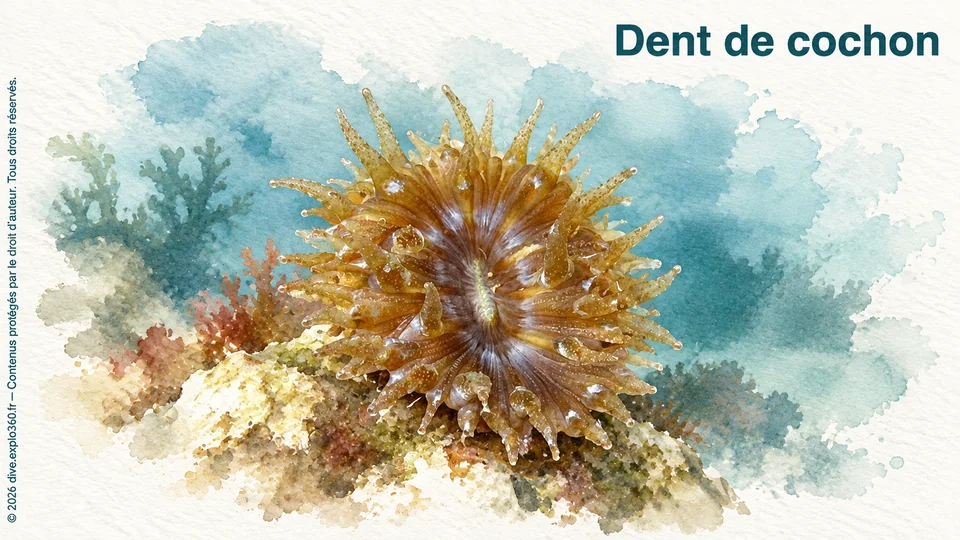
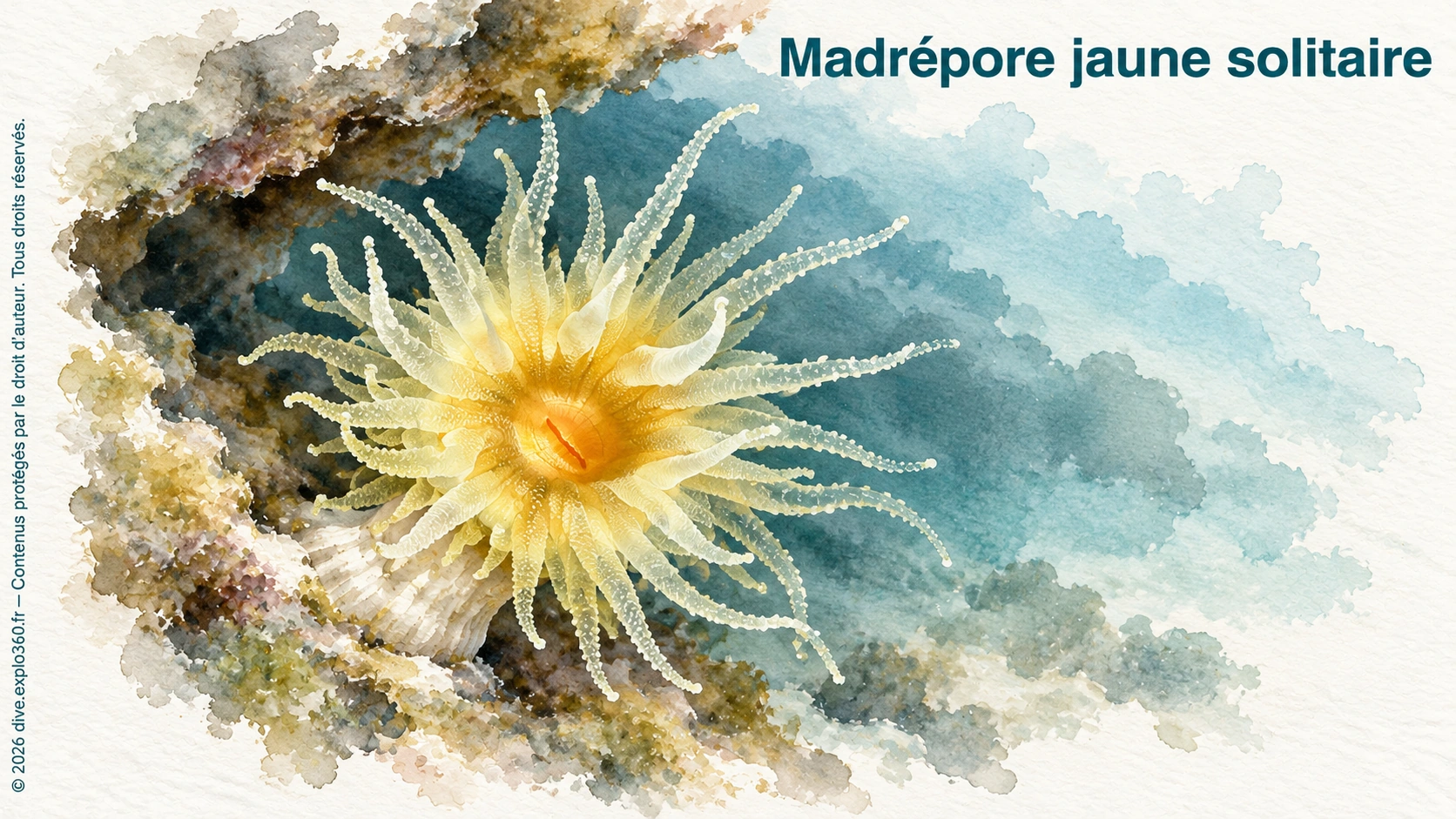
In this solitary coral (Balanophyllia europaea), short tentacles surround the mouth of the polyp, the soft-bodied animal that covers the skeleton. It has a compact, oval shape. Its brown colour can have green, red or yellow tones, which make the living coral look different from the bare cup of its skeleton.
WHERE DOES IT LIVE?
On well-lit rocks and stones, the pig-tooth coral sometimes occupies very small available surfaces. It is documented along the French Mediterranean coast from shallow water to several tens of metres, depending on the site. Light reaching the surface is a useful feature for describing its habitat.
WHAT DOES IT EAT?
The pig-tooth coral feeds in two ways. Its tentacles catch small planktonic animals, mainly at night. Stinging cells help it hold the prey, which it then brings to its mouth. It also receives nutrients produced using light by microscopic algae living in its tissues, called zooxanthellae. Through photosynthesis, these algae produce organic matter, some of which benefits the coral.
GO FURTHER WITH AMIGANSEAU
Unlock the full profile
Deepen your knowledge with the exclusive chapters and interactive resources included in an AMIGANSEAU licence.
- HOW DOES IT REPRODUCE?
- OUR OBSERVATIONS
- ARTICLE
Also included in the full profile
- Advanced navigation between description, ecological context, observations and behaviour
- Interactive food chain to explore the species’ feeding relationships
 Understand the species