Habitat
 Depth
 Group
 Role
 Size
WHAT DOES IT LOOK LIKE?
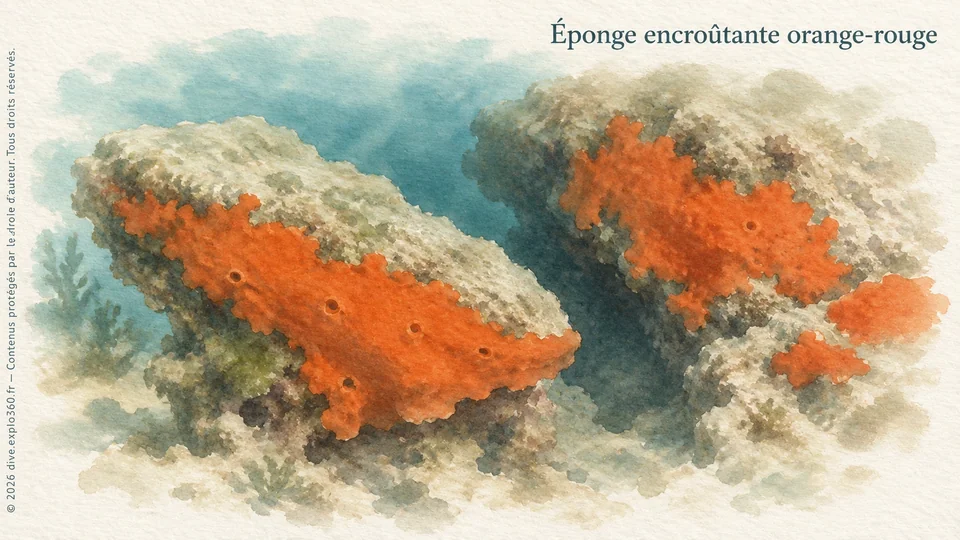
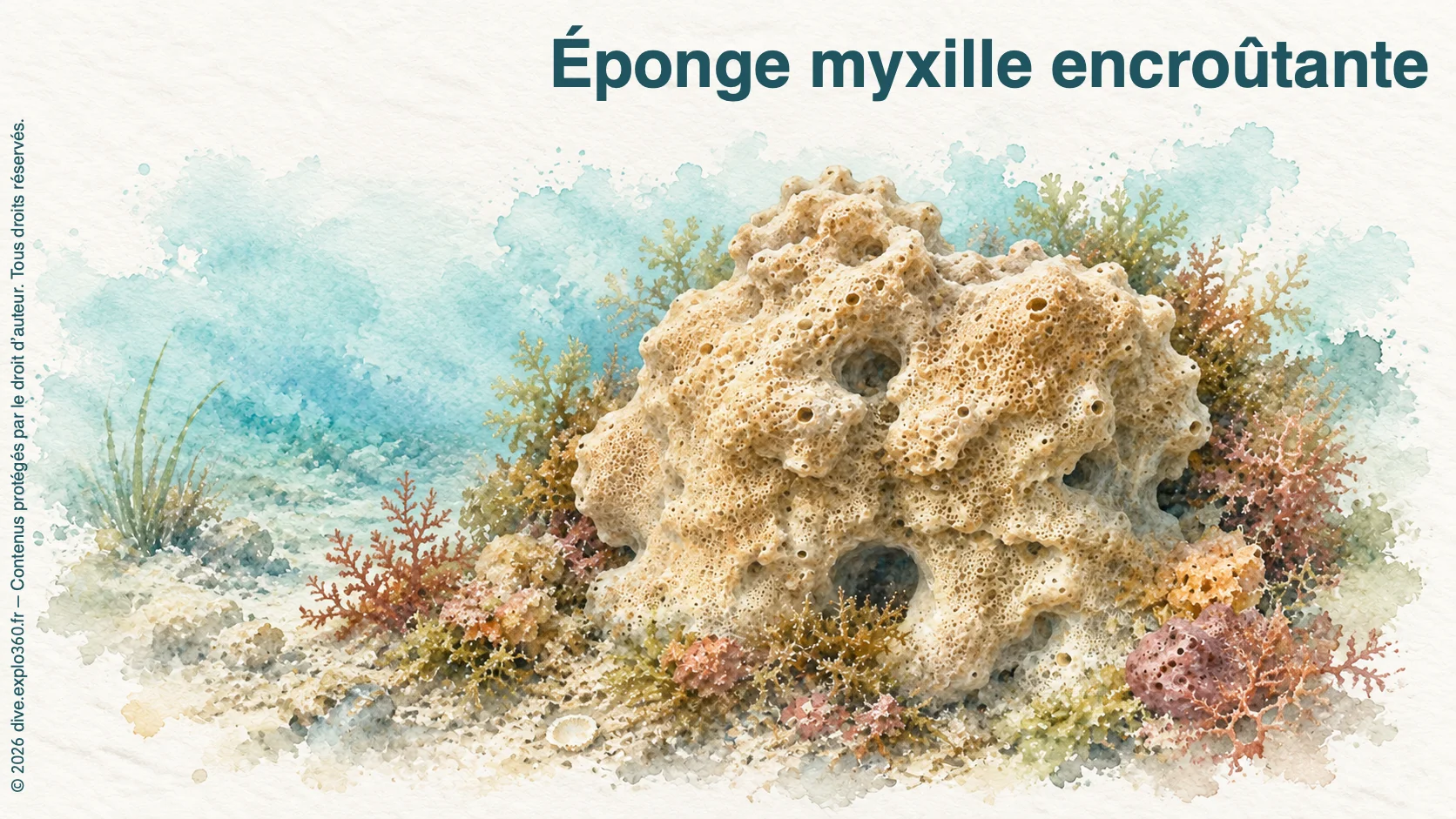
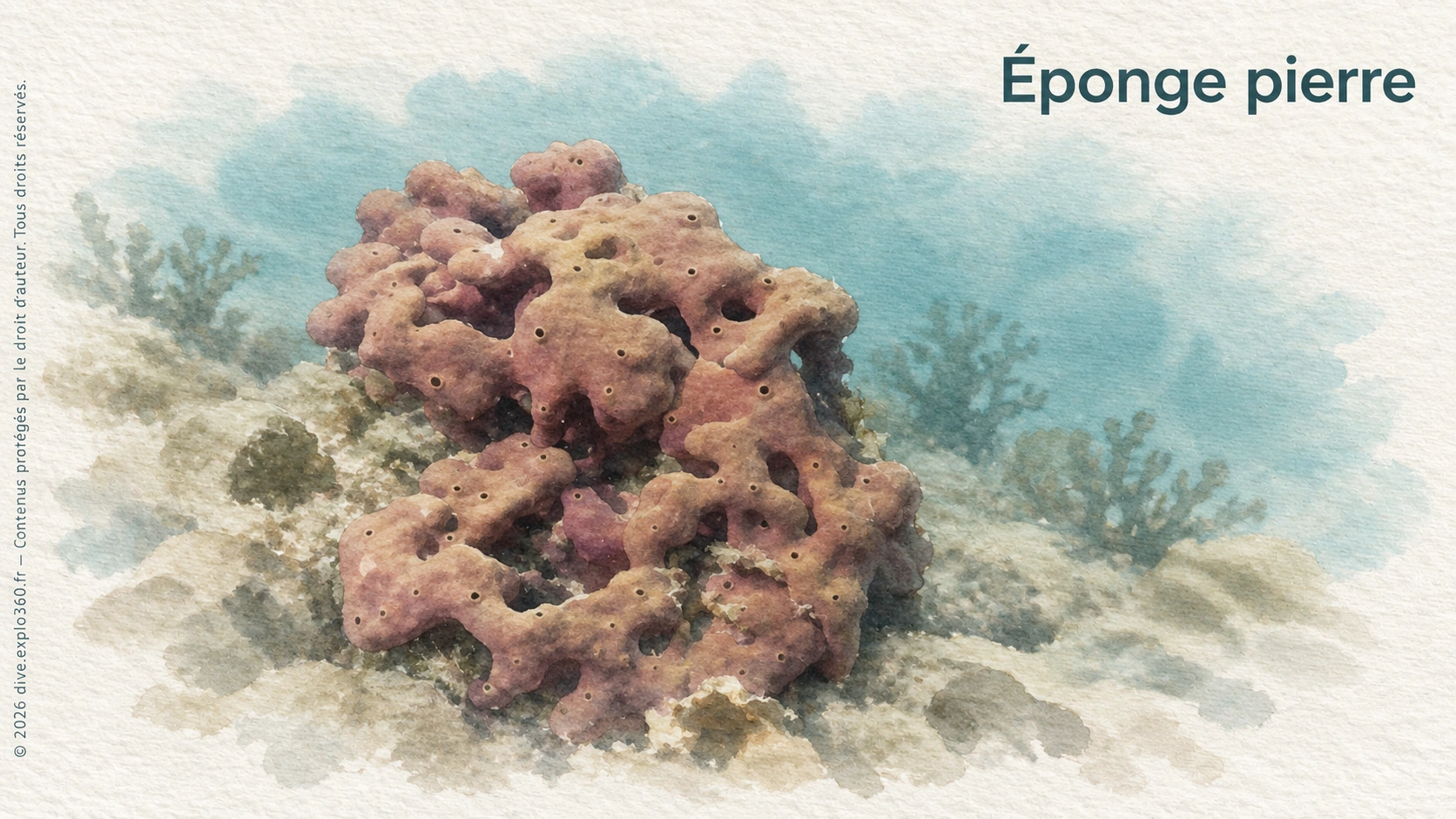
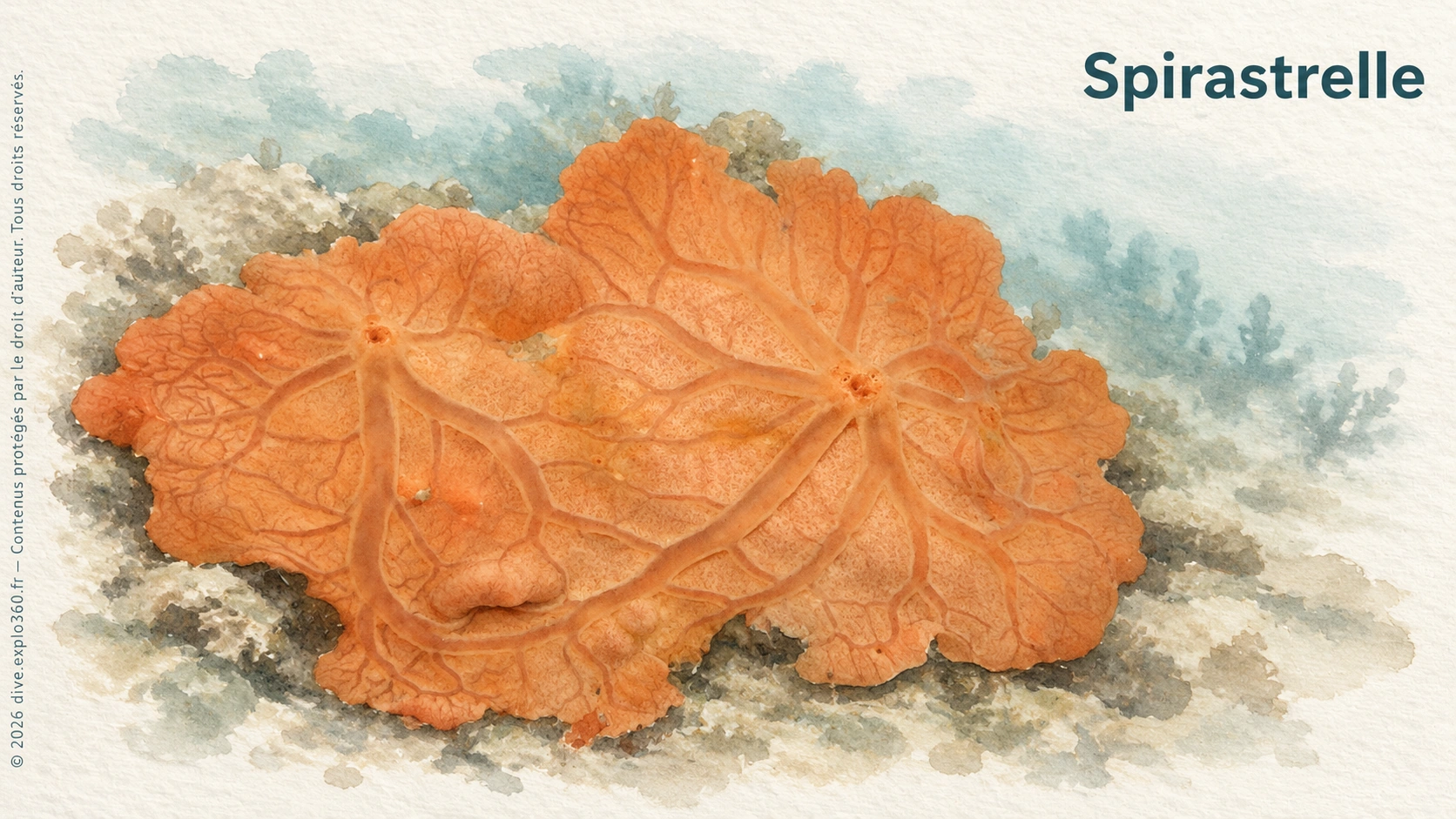
A network of channels like veins shows through the orange to reddish-orange layer of this encrusting sponge (Crambe crambe). The channels lead to the oscules, the main visible openings. The sponge follows the contours of the shell or rock it covers, which can make it look thicker than it is. Other orange sponges look similar, so it can be hard to identify by sight alone.
WHERE DOES IT LIVE?
This sponge occupies hard Mediterranean surfaces from shallow water to several tens of metres. Along French coasts it is recorded on rocks, parts of Neptune grass and mollusc shells, including Noah’s ark shells and thorny oysters.
WHAT DOES IT EAT?
The orange-red encrusting sponge feeds by filtering seawater. Water enters through tiny pores distributed across its surface. Inside, cells trap bacteria, single-celled algae and other food particles. Filtered water then moves through channels that converge on the oscula, the large openings visible on the sponge's surface. These openings release the water, while food is captured within the tissues.
GO FURTHER WITH AMIGANSEAU
Unlock the full profile
Deepen your knowledge with the exclusive chapters and interactive resources included in an AMIGANSEAU licence.
Subscribing to Dive.Explo360 means supporting a different way to discover marine life.
Our independent platform is entirely self-funded and relies solely on subscriptions. Every licence helps us continue our work, create new content, and share what we know about the marine world with as many people as possible.
Starting at €80 per year, your support makes all the difference.
 Understand the species