Habitat
 Depth
 Group
 Role
 Average size
WHAT DOES IT LOOK LIKE?
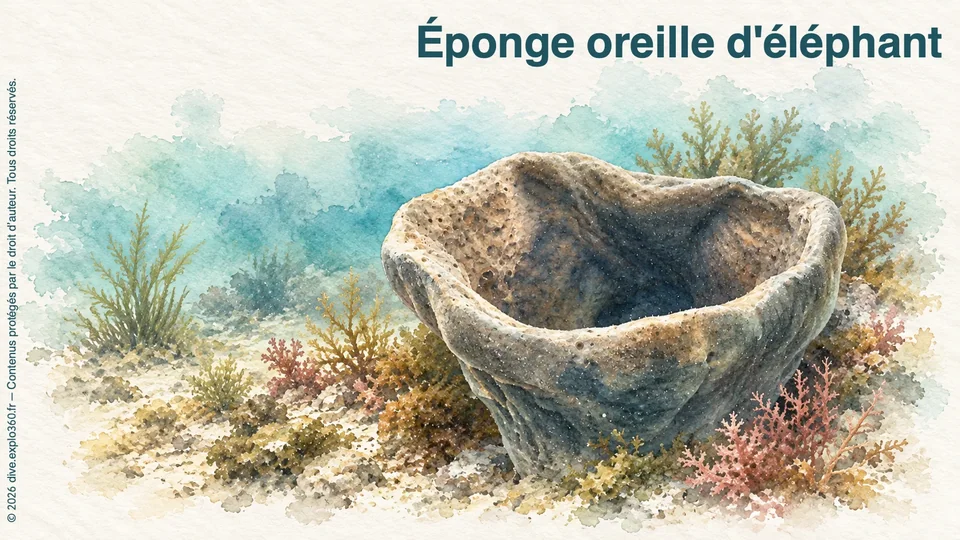
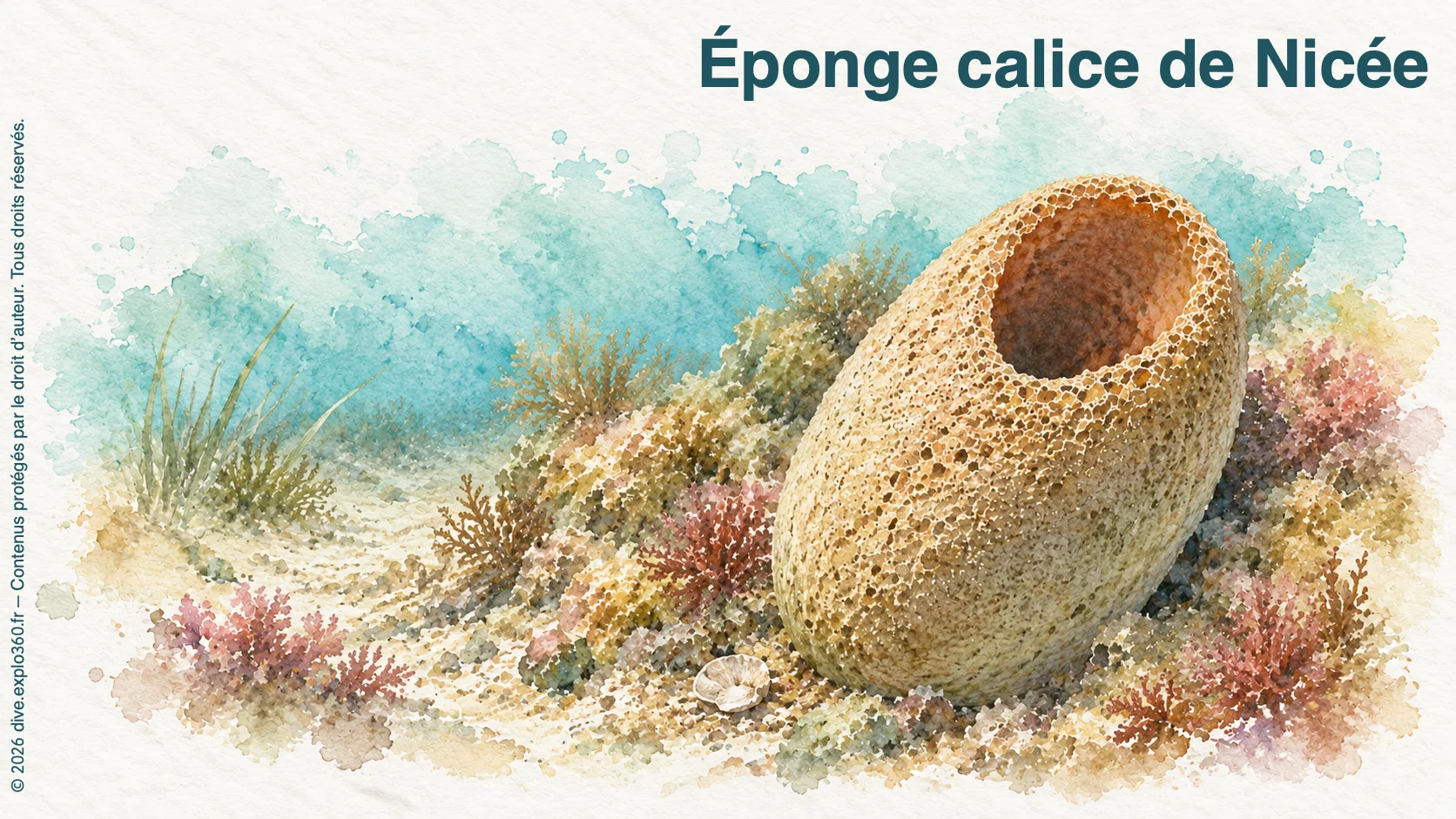
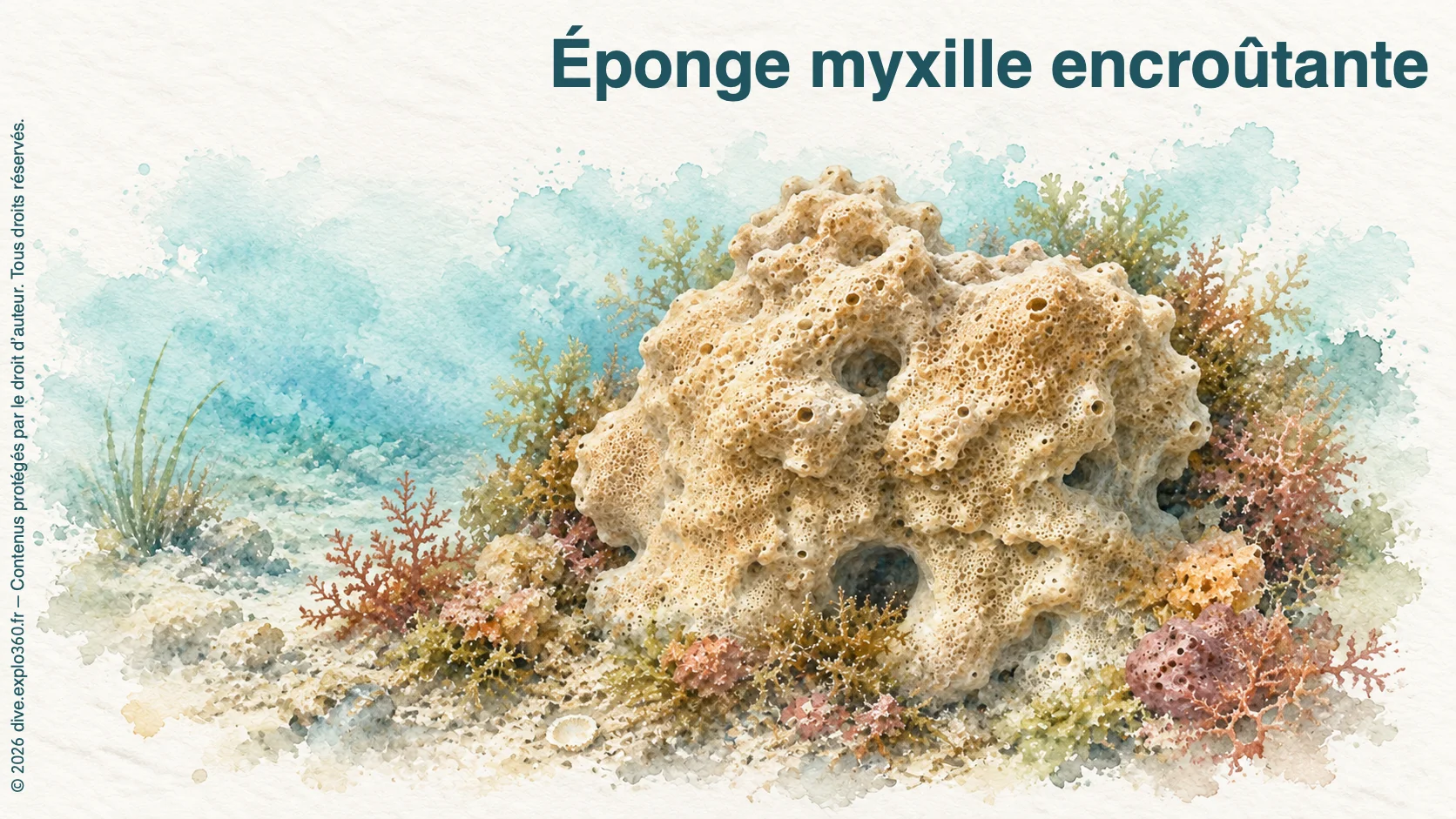
The elephant ear sponge (Spongia lamella) forms a broad, thick sheet that spreads like a fan or curves into a bowl. It ranges in colour from dark brown to dark grey.
Oscules, the visible surface openings, add a dotted pattern to the wall. Outlines may be irregular while retaining the broad leaf-like appearance.
WHERE DOES IT LIVE?
It grows on hard substrates, mainly rocky seabeds and coralligenous areas. It occurs at different depths in generally well-oxygenated water containing little sediment.
WHAT DOES IT EAT?
The elephant-ear sponge feeds by filtering seawater. Water enters through tiny pores across its broad walls. Inside, cells called choanocytes maintain water flow by beating their flagella and trap bacteria, single-celled algae and fine organic particles. Filtered water leaves through openings visible on the sponge's surface, called oscula. Food is therefore captured within its walls, not in the large hollow formed by its cup-shaped body.
GO FURTHER WITH AMIGANSEAU
Unlock the full profile
Deepen your knowledge with the exclusive chapters and interactive resources included in an AMIGANSEAU licence.
- HOW DOES IT REPRODUCE?
- OUR OBSERVATIONS
- ARTICLE
Also included in the full profile
- Advanced navigation between description, ecological context, observations and behaviour
- Interactive food chain to explore the species’ feeding relationships
- Infographic and illustrated summary profile
 Understand the species